From weddings and trade shows to corporate gatherings and festivals — here is what event professionals are learning about the speed, flexibility, and branding power of inflatable structures.
Two event planners are sitting in front of the same venue layout. One has a stack of floor plans, a crew of twelve, and a two-day setup window for a traditional frame tent. The other arrives with a compact rolling case, a blower, and a single assistant. Ninety minutes later, the second planner is testing the LED lighting inside a fully branded
inflatable tent for events while the first crew is still tightening bolts.
This is not a hypothetical. The speed comparison is real, and it is changing how event rental companies, exhibition organizers, and brand activation teams think about temporary shelter. The question is no longer whether an inflatable tent can do the job. The question is why anyone would still choose the slower option.
What Makes an Inflatable Tent Different
A traditional tent relies on a rigid frame — aluminum poles, steel connectors, cross-bracing, and tensioned fabric panels that require multiple people to assemble. An
outdoor inflatable tent replaces the entire metal skeleton with air beams. A continuous blower keeps the structure rigid, and the fabric skin is integrated with the air frame from the start. The result is a shelter that goes up in minutes instead of hours, packs down to a fraction of the transport volume, and requires no specialized rigging crew.
For event professionals, the practical difference plays out in three areas that matter most: labor cost, setup time, and venue flexibility. An inflatable tent can be deployed on grass, sand, asphalt, or concrete without ground anchors in every corner — the structure's weight distribution and low center of gravity do a lot of the work. When the event ends, deflation is as fast as inflation. The entire unit rolls into a storage bag that fits in a standard van.
Beyond the Basic Shelter: Types of Inflatable Tents for Events
Not all inflatable event tents serve the same purpose. The right choice depends on the event format, the number of guests, and the impression you want to leave.
Cube and tunnel tents are the workhorses of trade shows and outdoor markets. Their straight walls maximize usable interior space, and multiple units can be connected to create a continuous exhibition walkway.
Dome tents — including the increasingly popular
inflatable dome tent — offer a 360-degree panoramic view through transparent PVC walls, making them a favorite for product launches, pop-up dining experiences, and stargazing events.
Party tents come in larger footprints with higher ceilings, designed for weddings, gala dinners, and corporate receptions where guests expect more than just a roof over their heads.
There are also specialized formats: inflatable sport tents for sideline coverage at tournaments, inflatable car tents for mobile auto detailing, spray booth tents for on-site painting, and even inflatable shelters configured for emergency response and field hospitals. The common thread is that each one starts from the same principle — air replaces metal, and setup time shrinks accordingly.
Customization: Your Brand, Your Dimensions, Your Rules
The phrase "off the shelf" does not apply here. Every
custom inflatable tent can be built to a specific size, color scheme, and branding specification. Customer logos and artwork are printed directly onto the fabric — not applied as stickers or banners that peel after a season. Custom shapes are achievable, from geometric cubes to arched tunnels and transparent domes. If you can describe it in a sketch, a photograph, or a site plan, it can be designed and produced.
This level of customization matters for event professionals who work across different venues and client briefs. A tent that fits a 10-meter-wide trade show booth may be too large for a boutique wedding on a terrace. A tent designed for a golf tournament hospitality area needs different window placement than one built for a music festival VIP lounge. The ability to specify dimensions, door configurations, window panels, and ventilation openings — rather than choosing from a fixed catalog — is what separates a generic rental from a branded experience.
What Customization Options Are Available
- Custom sizes — width, length, and height built to your event footprint
- Full-color logo and artwork printing on exterior and interior panels
- Choice of materials — commercial-grade PVC tarpaulin, Oxford fabric, nylon, or TPU
- Door and window placement specified by the customer
- Blower voltage options — 110V, 220V, or 380V to match local power standards
- LED lighting integration within the tent walls for evening events
Quality and Safety: What to Look for in a Manufacturer
A tent that holds air for an afternoon is one thing. A tent that holds up through wind, repeated inflation cycles, and cross-continental shipping is another. The difference lies in the materials, the manufacturing process, and the testing standards behind the product.
Commercial-grade PVC tarpaulin forms the foundation of most inflatable event tents. Seams are reinforced with precision sewing equipment and waterproof nylon thread, with additional reinforcement at high-load areas. For airtight structures, high-temperature fusion welding replaces stitching to create a continuous seal. D-ring and round metal anchor systems are integrated at stress points for wind resistance and secure installation.
Certifications provide a baseline for material safety. Relevant materials used in inflatable tents have passed EN71, EN14960, and RoHS-related testing. Blowers meet CE or UL requirements depending on the destination market. Products are inspected and tested before shipment, and a repair kit is included with every unit — a detail that matters when an event is three days away and a small tear needs to be fixed on site.
The Logistics: Production, Packaging, and Delivery
For event businesses, procurement timing is as important as product quality. A typical production cycle for a regular inflatable product runs 6 to 15 days, excluding transit time. Complex or large custom orders may take longer, but the factory can work from a description, drawing, photograph, or site plan to begin the design process immediately.
Packaging is designed for protection during international transit: soft carpet protection wraps the product, waterproof PVC bags form the middle layer, and outer PE film provides abrasion resistance. Large products ship on steel pallets. Air and sea freight are both available, with indicative transit times of 5 to 7 days by air and 15 to 30 days or more by sea. The minimum order quantity is one piece — a policy that lets event companies test a new tent design before committing to a fleet.
What an Inflatable Party Tent Unlocks for Your Business
An
inflatable party tent is not just a shelter — it is a revenue-generating asset. Rental companies that add inflatable tents to their inventory report faster turnaround between events, lower crew costs per setup, and the ability to take on bookings that require rapid deployment and teardown. Event planners gain a structure that arrives as a compact package and becomes a branded venue in under two hours. Brand managers get a fully customized canvas that carries their logo on every visible surface.
The tent itself becomes part of the attraction. A transparent dome tent with integrated LED lighting at a nighttime product launch. A tunnel-shaped inflatable walkway guiding guests into a festival. A cube tent with printed artwork serving as a pop-up retail space. These are not hypothetical scenarios — they are the kind of briefs that inflatable tent manufacturers receive every week.
Ready to Bring an Inflatable Tent to Your Next Event?
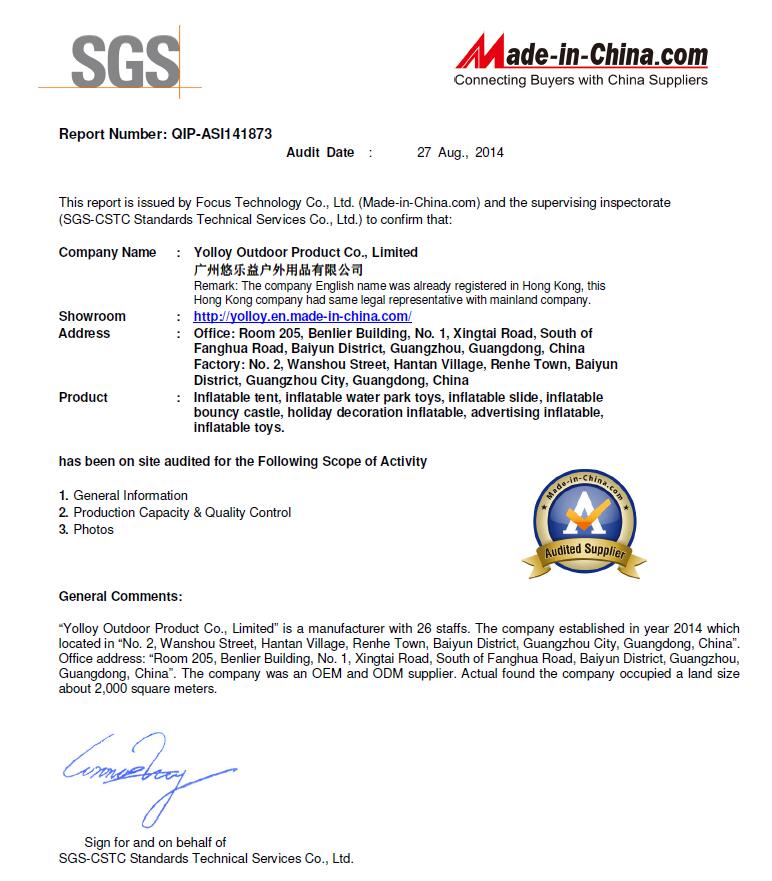
YOLLOY Outdoor Product Co., Limited designs and manufactures custom inflatable tents from its production facility in Guangzhou, China. Every project starts with a conversation about your event requirements — size, shape, branding, material, and timeline. Designers prepare simulation renderings from your proposal, revise until approval, and release for factory production. Products ship with appropriately powered blowers, a repair kit, and packaging built for international transit.
Browse the full product range at
www.yolloy.net or contact the team directly at
[email protected] to discuss your custom inflatable tent project. Inquiries are answered within 24 hours.