When summer arrives and families head to the lake, the question on every parent's mind is the same: "Is an inflatable slide for lake safe for children?" The short answer is yes — when the slide is built with the right materials, certified to safety standards, and used under proper supervision, an inflatable slide can be one of the safest and most enjoyable water toys for kids. But the real answer lies in understanding what makes a slide safe, what to look for, and how to use it responsibly. Let's break it down.
What Makes an Inflatable Lake Slide Safe for Children?
Safety in an inflatable lake slide comes down to three core pillars: design, materials, and manufacturing standards. A well-designed slide incorporates features that actively reduce risk, rather than simply meeting the bare minimum.
Soft, Rounded Edges
Children are naturally energetic, and bumps and scrapes can happen during active play. High-quality inflatable slides feature cushioned, rounded edges throughout the structure. Every potential contact point — from the top of the climbing wall to the side rails — is designed to absorb impact. This soft-edge design significantly reduces the likelihood of abrasions, making the slide forgiving even when kids are at their most enthusiastic.
Non-Slip Climbing and Standing Surfaces
Wet surfaces and fun are a natural combination — but they can also be a dangerous one. The best inflatable slides incorporate specially textured, non-slip materials on all climbing and standing areas. This textured surface provides reliable grip even when soaked, giving children the confidence to climb without slipping and parents the peace of mind to relax. In a dynamic water environment where excitement is constant, this feature is non-negotiable.
Reinforced Seams and Multi-Chamber Construction
The structural integrity of an inflatable depends heavily on its seams. Premium slides use double-stitched or heat-welded seams with extra reinforcement at high-stress points. Many also feature multiple independent air chambers — if one chamber loses pressure, the rest of the structure remains inflated, giving parents time to get children off safely. This redundancy is a critical safety feature that budget models often skip.
Material Quality: The Foundation of Child Safety
The materials used in an inflatable slide directly affect both safety and durability. Commercial-grade PVC tarpaulin is the industry standard for quality inflatables. This material offers high tensile strength, tear resistance, and puncture resistance — all essential for withstanding the enthusiastic play of children and the demands of an outdoor lake environment.
Beyond basic strength, look for UV-resistant coatings that protect the material from sun degradation. Constant exposure to sunlight can weaken untreated materials over time, leading to unexpected tears or seam failures. A quality UV coating preserves both the vibrant colors and the structural integrity of the slide across multiple seasons. For parents and commercial operators alike, this means a safer product that lasts longer.
Safety Certifications: What Parents Should Look For
When evaluating whether an inflatable slide is safe for children, certifications are your best objective guide. Reputable manufacturers have their products tested against recognized international standards. The EN71 standard, for example, is a European safety standard specifically for toys and children's products — it tests for mechanical and physical properties, flammability, and chemical composition. A slide that has passed EN71 testing has been verified as non-toxic, structurally sound, and safe for child use.
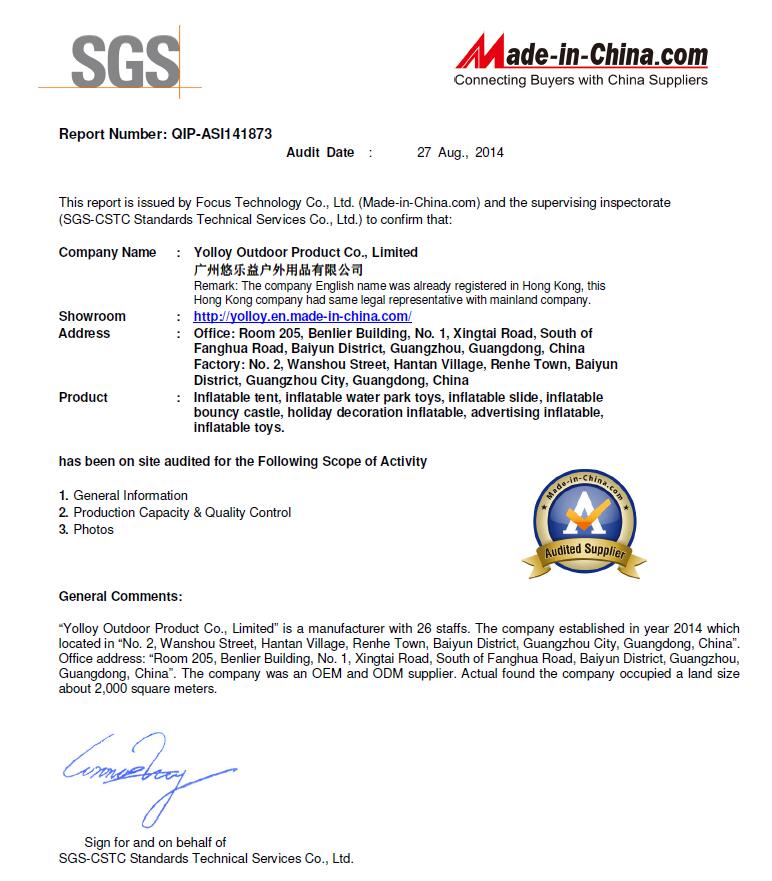
Additionally, look for manufacturers that perform 100% leakage testing on every unit before shipping. This means each slide is fully inflated and left for an extended period to detect any pinholes or weak spots. A company that tests every single product — not just batch samples — demonstrates a genuine commitment to safety and quality control.
Proper Setup and Anchoring for Lake Use
Even the safest inflatable slide requires proper installation to ensure child safety. When using a slide on a lake, anchoring is particularly important. Lakes can have currents, wind, and changing water levels that a backyard pool does not. A securely anchored slide stays in place and prevents unintended drifting into deeper water or toward obstacles.
Key setup guidelines include: anchoring the slide in water deep enough for safe landing but not so deep that children cannot stand; using the manufacturer's recommended anchor system with appropriate weights or stakes; ensuring the landing zone is clear of submerged rocks, tree branches, or dock edges; and checking all anchor points before each use session. A slide that shifts during use can create dangerous situations, so take the time to set it up correctly.
Supervision and Usage Guidelines
No piece of equipment — no matter how well-designed — can replace adult supervision. Children should always be watched while using an inflatable lake slide. For younger children and weak swimmers, life jackets or personal flotation devices should be worn at all times. Establish clear rules: one child on the slide at a time, no pushing, no climbing on the sides, and always slide feet-first.
It's also wise to check the slide's condition before each use. Look for any signs of wear, loose seams, or deflation. A quick visual inspection takes only a minute and can prevent accidents. After use, rinse the slide to remove lake debris, dry it thoroughly to prevent mold, and store it in a cool, dry place away from direct sunlight.
Choosing a Quality Manufacturer
The manufacturer behind the slide matters as much as the slide itself. Established manufacturers with years of experience in the inflatable industry understand the nuances of safety design that newcomers may overlook. Look for companies that offer clear warranty terms, provide repair kits with every purchase, and maintain transparent communication about their materials and testing procedures.
For commercial buyers — such as water park operators, resorts, and rental businesses — the stakes are even higher. Commercial inflatable water slides must withstand heavy daily use while maintaining safety standards. In these cases, look for reinforced construction, higher weight capacities, and comprehensive warranty coverage. A three-year warranty, for instance, signals the manufacturer's confidence in their product's durability and safety over time.
Conclusion: Yes, With the Right Choices
So, is an inflatable slide for lake safe for children? The answer is a confident yes — provided you choose a slide built with safety-first design principles, certified to international standards like EN71, made from quality materials with UV protection and reinforced seams, and used under proper supervision with secure anchoring. When these conditions are met, an inflatable lake slide becomes not just a source of endless summer fun, but a genuinely safe investment in family memories that will last for years.