When planning an outdoor event, exhibition, or commercial activity, choosing the right inflatable tent structure is critical. Two of the most popular options are the inflatable dome tent and the inflatable cube tent. While both offer quick setup, portability, and eye-catching appeal, they differ significantly in shape, functionality, and ideal use cases. This article breaks down the key differences to help you make an informed decision.
What Is an Inflatable Dome Tent?
An inflatable dome tent features a curved, rounded roof structure supported by air-filled beams. Its aerodynamic shape naturally resists wind and sheds rain efficiently, making it an excellent choice for outdoor environments where weather conditions can be unpredictable. The dome design provides a spacious, open interior with no central poles, offering unobstructed floor space for seating, displays, or activities.
Dome tents are commonly used for corporate events, product launches, VIP lounges, exhibitions, and outdoor weddings. Their 360-degree enclosed design provides full weather protection, and the smooth curved surface gives them a modern, professional appearance that enhances any event setting. Many dome tents also feature transparent PVC windows, allowing natural light to enter during the day and creating a glowing visual effect at night when illuminated from within.
What Is an Inflatable Cube Tent?
An inflatable cube tent has a box-shaped design with flat vertical walls and a flat ceiling. This geometric structure maximizes usable interior space, as every square meter of floor area is fully accessible with consistent ceiling height across the entire footprint. The straight walls provide excellent surfaces for branding, banner displays, product shelving, and digital projection screens.
Cube tents are particularly popular as an inflatable party tent for nightclubs, corporate parties, trade show booths, retail pop-ups, and indoor exhibitions. Their clean lines and professional look make them ideal for business-focused events where presentation and brand visibility are top priorities. The flat surfaces also simplify interior decoration — hanging lights, mounting signage, and arranging furniture are all easier inside a cube-shaped structure.
Key Differences Between Dome and Cube Inflatable Tents
| Feature |
Inflatable Dome Tent |
Inflatable Cube Tent |
| Shape |
Curved, rounded roof |
Box-shaped with flat walls and ceiling |
| Wind Resistance |
Excellent — aerodynamic shape deflects wind naturally |
Good — requires proper anchoring; flat surfaces catch more wind |
| Interior Space |
Spacious open feel; ceiling height varies from center to edges |
Uniform ceiling height across entire floor area |
| Branding Surface |
Moderate — curved surfaces limit large-format printing |
Excellent — flat walls are ideal for logos, banners, and projections |
| Best For |
Corporate events, weddings, VIP lounges, outdoor exhibitions |
Trade fairs, nightclub parties, retail pop-ups, branded activations |
| Weather Protection |
Full 360-degree enclosure; sheds rain and snow effectively |
Full enclosure; flat roof may need drainage consideration in heavy rain |
| Setup Complexity |
Straightforward; typically 5–15 minutes with electric blower |
Straightforward; typically 5–15 minutes with electric blower |
| Visual Impact |
Modern, futuristic appearance; glowing dome effect at night |
Clean, professional look; excellent for corporate branding |
Material and Construction Quality
Both dome and cube inflatable tents are typically constructed from commercial-grade PVC tarpaulin or high-strength Oxford fabric. Premium inflatable tent manufacturers like YOLLOY use double-stitched seams with waterproof nylon thread, reinforced joints at high-stress areas, and heat-welded airtight construction for maximum durability. Materials should meet international safety standards such as EN71, EN14960, and RoHS to ensure reliable performance in various conditions.
When selecting a tent, pay attention to the following material and build quality indicators:
- Fabric quality: Look for UV-resistant, waterproof, and fire-retardant materials that can withstand extended outdoor use. Commercial-grade PVC tarpaulin with a weight of 600–1000 g/m² is standard for professional applications.
- Seam construction: Double and quadruple stitching at load-bearing points significantly extends the product lifespan. Heat-welded seams are essential for airtight structures.
- Anchor systems: D-ring or round metal anchor points should be integrated into the design for secure ground fixing and wind resistance.
- Blower compatibility: Ensure the supplied blower matches your local voltage requirements — quality manufacturers offer CE- or UL-certified blowers in 110V, 220V, and 380V configurations.
- Repair and maintenance: A professional tent should come with a repair kit, spare fabric patches, and clear maintenance instructions.
How to Choose Between a Dome and a Cube Tent
Choose a Dome Tent If:
- Your event is primarily outdoors and may face wind or rain
- You want a modern, futuristic aesthetic that draws attention
- You need a fully enclosed, weather-protected environment
- You are hosting a corporate gala, wedding reception, or product launch
- You want the structure to serve as a visual centerpiece
Choose a Cube Tent If:
- Branding and signage are your top priorities
- You need maximum usable interior space with uniform height
- You are setting up a retail pop-up, exhibition booth, or trade fair display
- You want to mount shelves, screens, or heavy decorations on flat walls
- You are hosting a nightclub-style party or indoor corporate event
Customization Options
One of the greatest advantages of both dome and cube inflatable tents is the ability to fully customize them to match your brand and event requirements. Custom sizes, colors, and printed logos are standard offerings from professional manufacturers. Advanced customization includes transparent PVC panels for natural light, integrated LED lighting systems, zippered doors and windows, and even air conditioning duct ports. Whether you need a small 3-meter dome for an intimate gathering or a large 8-meter cube for a major trade show, the design can be tailored to your specifications.
Key takeaway: The choice between an inflatable dome tent and an inflatable cube tent ultimately comes down to your event priorities. If weather resistance and a striking visual presence are most important, the dome tent is your best bet. If branding space and interior layout flexibility matter more, the cube tent is the superior choice. Both options offer rapid setup, portability, and the ability to create a memorable experience for your guests — qualities that traditional frame tents simply cannot match.
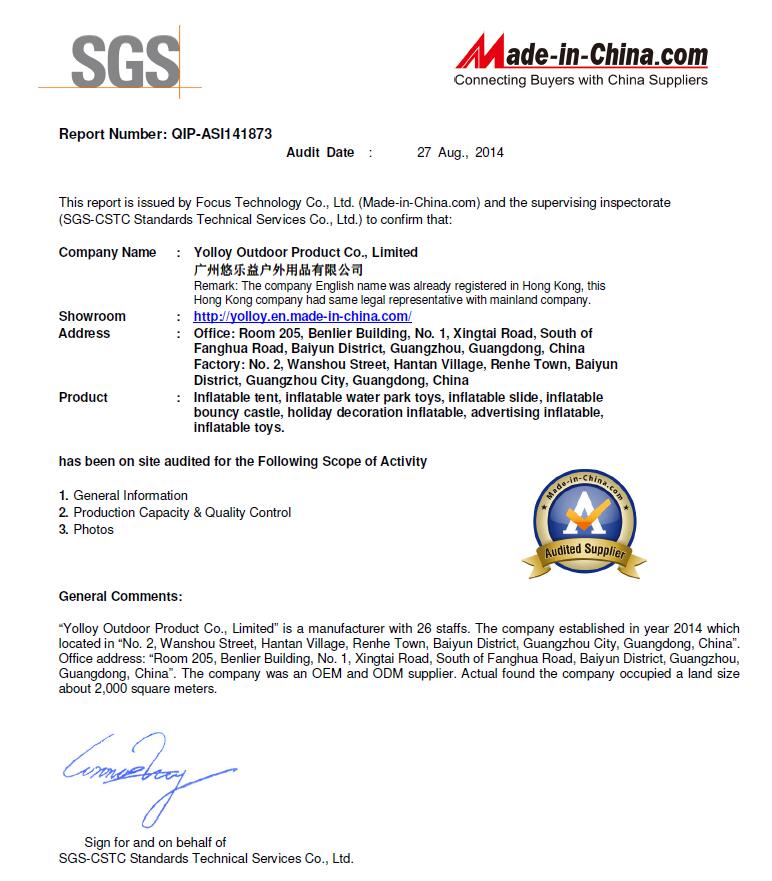
YOLLOY Outdoor Product Co., Limited is a professional inflatable product manufacturer based in Guangzhou, China, offering custom-designed inflatable dome tents, inflatable cube tents, and a wide range of inflatable structures for events, exhibitions, and commercial use. With a minimum order quantity of just one piece, CE/UL-certified blowers, and a typical production time of 6–15 days, YOLLOY delivers high-quality, safety-certified inflatable solutions to clients worldwide. For inquiries, contact us at [email protected] or visit www.yolloy.net.