Floating slides for lakes are inflatable water attractions designed to sit on the surface of a lake, river, or large pond, providing a thrilling sliding experience directly into open water. Unlike traditional water park slides that require concrete foundations and permanent plumbing, these portable inflatable structures float independently and can be installed, relocated, and stored with relative ease. They have become a popular addition for lake resorts, campgrounds, waterfront rental businesses, and even private lakefront property owners looking to add excitement to their shoreline.
Types of Floating Lake Slides
Floating lake slides come in several configurations, each suited to different settings and user needs. Understanding the main types helps you choose the right one for your lakefront or business.
- Standalone Floating Platform Slides: These are self-contained units with an integrated slide, climbing wall, and often a jumping deck. The platform rests on sealed air chambers that provide stable buoyancy. Slide heights typically range from 2.5 meters to over 6 meters for large commercial models. They function as a complete water attraction without requiring any additional equipment beyond anchors.
- Dock-Mounted and Pontoon Slides: These attach to an existing dock, pier, or pontoon boat. They are generally smaller and lighter than standalone platforms, making them ideal for family use on private docks or as add-on entertainment for pontoon boats. Setup is quick, and they can be deflated and stored when not in use.
- Modular Floating Water Parks: For larger operations, multiple floating elements can be linked together to create an entire inflatable water park. These systems can include several slides, climbing towers, trampolines, balance beams, and lounge areas, all interconnected by floating walkways. They are highly customizable and can be expanded as demand grows.
Materials and Construction
The durability and safety of a floating lake slide depend heavily on the materials and manufacturing processes used. High-quality floating slides are made from commercial-grade PVC tarpaulin, typically 0.9 mm thick or heavier, which provides excellent resistance to sun exposure, water absorption, and abrasion. The seams are heat-welded using high-temperature fusion equipment rather than simply sewn, ensuring airtight chambers that hold pressure consistently over extended periods.
Reinforced stress points are critical. The areas around D-ring anchor attachments, climbing steps, and slide surfaces receive additional layers of reinforcement to handle repeated loading and tension. Stainless steel D-rings and marine-grade hardware resist rust and corrosion in freshwater environments. Many inflatable water slide manufacturers also incorporate multiple independent air chambers, so if one chamber loses pressure, the rest of the structure remains buoyant and functional.
Anchoring and Water Depth Requirements
Proper anchoring is the single most important factor in operating a floating lake slide safely. A slide that is not securely anchored will drift, rotate, or even capsize in windy conditions. Most commercial floating slides use a multi-point anchoring system with 3 to 6 anchor lines, depending on the size of the unit and the exposure of the site.
The minimum water depth at the slide exit point should be at least 2.4 meters (8 feet) to prevent impact injuries. Anchor types include mushroom anchors for soft, muddy lake bottoms, concrete block anchors for firmer surfaces, and screw-in auger anchors for the strongest holding power in hard-packed sand. Anchor lines should be 3 to 5 times the water depth in length and set at 30 to 45-degree angles from the attachment points.
Who Uses Floating Lake Slides?
Floating lake slides appeal to a wide range of users and commercial operators:
- Lake Resorts and Hotels: A floating slide turns a passive shoreline into a revenue-generating attraction. Guests pay per session or receive access as part of their stay, increasing both satisfaction and on-site spending.
- Campgrounds and RV Parks: Adding a floating slide to a lakefront campground gives families a reason to stay longer and return year after year. Even a single mid-range slide can significantly boost bookings during peak summer months.
- Waterfront Rental Companies: Operators who rent out kayaks, paddleboards, and pontoon boats can add floating slides as a premium upsell, creating a more complete water recreation package.
- Private Lakefront Homeowners: For those with lakefront property, a smaller floating slide provides endless entertainment for children and guests during the summer season.
- Event Organizers: Floating slides are popular attractions at summer festivals, corporate retreats, and community events held on or near lakes.
Customization and Manufacturing
One of the greatest advantages of working with a professional inflatable water slide factory is the ability to customize every aspect of the product. Customers can specify exact dimensions, slide heights, color schemes, and branding elements such as logos and artwork printed directly on the PVC surface. Whether you need a compact single-lane slide for a small dock or a multi-story commercial system with climbing walls, splash pools, and connecting walkways, custom manufacturing ensures the final product matches your site and business requirements precisely.
The production process starts with design simulations and renderings based on the customer's description, sketches, photographs, or site plans. Once the design is approved, production moves to the factory floor, where skilled technicians cut, weld, and assemble the components. Each product is inspected and tested before packing and shipping. Standard production time for a regular inflatable product is 6 to 15 days, with air and sea shipping options available to reach customers worldwide.
Maintenance and Longevity
With proper care, a well-made floating lake slide can last 5 to 8 seasons in commercial use. Daily maintenance involves visual inspection of seams, anchor lines, and D-ring patches, along with clearing debris from the slide surface. Weekly checks should include verifying inflation pressure and re-tensioning anchor lines as water levels change. At the end of each season, the slide should be fully deflated, rinsed with fresh water, dried completely, and stored in a dry, climate-controlled indoor space.
Most commercial inflatable water slides come with a repair kit for field patches, and manufacturers typically provide a warranty period when products are used and maintained according to guidelines. Using a blower with the correct voltage specification (110V, 220V, or 380V) is also important for maintaining proper inflation and prolonging equipment life.
Key Takeaways: A floating lake slide is a portable, inflatable water attraction that brings the excitement of a water park to any lake, pond, or river setting. With options ranging from compact dock-mounted slides to full-scale modular water parks, and with the ability to customize size, color, and branding, these products offer a flexible and high-return addition to any waterfront operation or private property.
Ready to Bring a Floating Slide to Your Lake?
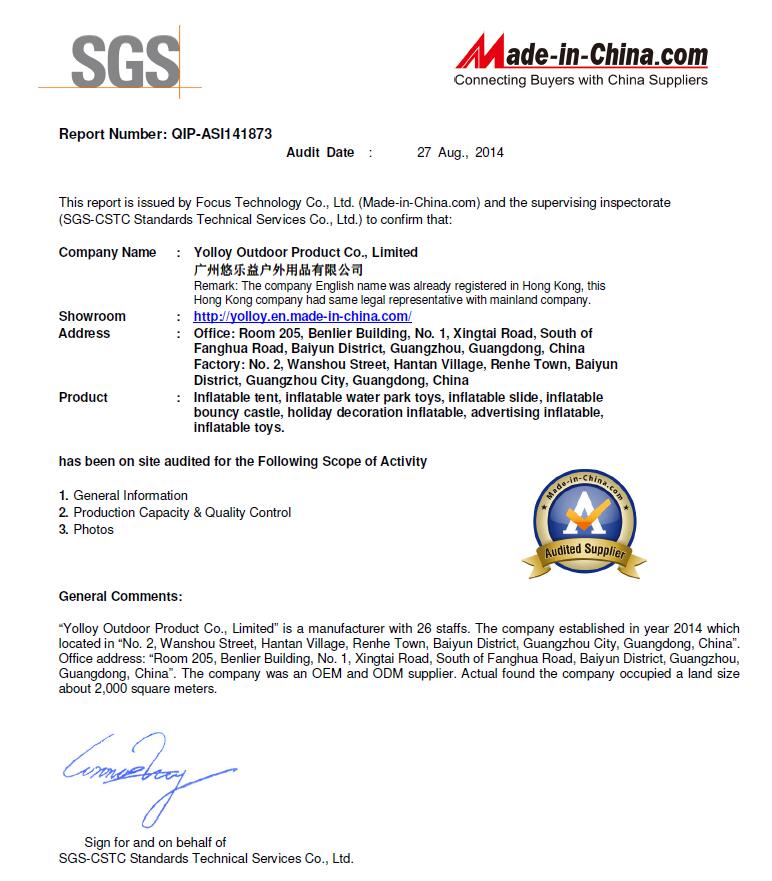
As a professional inflatable water slide manufacturers based in Guangzhou, China, YOLLOY designs and produces custom floating slides and inflatable water attractions for resorts, campgrounds, rental operators, and private owners worldwide. With quality materials, reinforced construction, flexible customization, and responsive service, YOLLOY helps you create the perfect water attraction for your lake. Contact us today to discuss your project and get a custom design rendered for your site.
|