Products Category
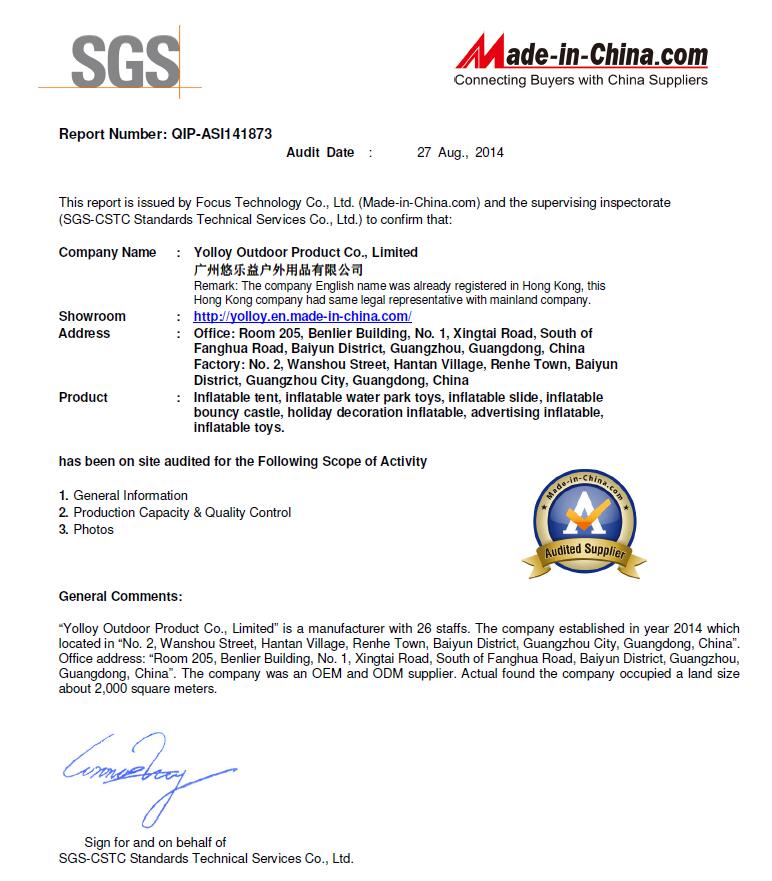
Certification

News

• New Order Successfully Finished for Long-Time Cooperated Japanese Client | YOLLOY Wins Full Client Recognition

• YOLLOY Custom Inflatable Pool Tent for Danish Client: Professional Pool Repair Shelter & Debris Protection

• Trusted Once Again! Greek Captain Re-orders Our Products After 4 Years

• Revolutionize Your Outdoors: The All-Terrain Inflatable Floating Tent for Land & Water

• Elevate Your Summer Fun: The Ultimate Inflatable Water Floating Volleyball Court Trampoline

• Innovative Inflatable Nightclub Tents & Pop-Up Bars: The Ultimate Solution for Portable Party Venues

Contact Us

Name: Sunny Yang
Tel: +86-20-8370 0771
Fax: +86-20-8370 0771
Mobile: 13570587575
E-mail: [email protected]
Add: No 5,Xiong wei Bo Nan Road,ZhongLuoTan Town,Baiyun district,Guangzhou,China
Friend me on Facebook Follow me on Twitter Add me to your circles Follow me on Pinterest Watch my channel on YouTube
News

Is an inflatable tent on water safe for use on a lake?

Author:yolloy Date:2026/8/14 12:55:21

The short answer is yes — an inflatable tent on water can be safe for lake use, provided you choose the right tent, follow proper safety protocols, and understand the limitations of the environment. Lakes, with their generally calm waters and predictable conditions, are among the most suitable settings for waterborne inflatable tent camping. However, safety depends on several key factors that every camper should understand before setting out.

What Makes a Lake Suitable for Inflatable Tent Camping?

Lakes offer a more controlled environment compared to rivers or open seas. The water is typically still or gently moving, which reduces the risk of the tent drifting or capsizing. When selecting a lake for your inflatable tent adventure, look for sheltered coves or areas with minimal boat traffic and wind exposure. Water depth should be manageable — shallow enough to anchor securely but deep enough to avoid underwater obstacles.

Before heading out, check local regulations. Some lakes prohibit overnight camping on the water, while others may require permits. Always research the specific rules for your chosen location to avoid fines or safety violations.

Material Quality and Construction

The safety of an inflatable tent on water begins with the materials used in its construction. High-quality inflatable tents are made from commercial-grade PVC tarpaulin, Oxford fabric, nylon, or TPU — materials that offer excellent water resistance, UV protection, and durability. The seams should be reinforced with waterproof nylon thread and high-temperature fusion welding, especially at high-load areas. These construction techniques ensure the tent remains airtight and structurally sound throughout your trip.

When sourcing an inflatable tent for water use, it is wise to work with experienced inflatable tent manufacturers who understand the demands of aquatic environments. Reputable manufacturers subject their products to rigorous testing — including 100% leak tests before shipping — to ensure every tent stays inflated all day long. A quality repair kit is also typically supplied with each product, allowing you to address minor punctures on the spot.

Stability and Anchoring on the Water

Stability is the single most important safety factor when using an inflatable tent on a lake. A tent that drifts or tips can quickly become dangerous. Inflatable tents designed for water use typically feature wider bases and lower centers of gravity, which improve stability on the surface. Many models also incorporate D-ring or round metal anchor systems that allow you to secure the tent to buoys, floating docks, or shoreline anchors.

Proper anchoring is essential. Use ropes or bungee cords to tether the tent securely at multiple points. In calm lake conditions, distributing anchor points around the tent provides the best stability. Avoid using the tent in windy conditions or when waves exceed a few inches in height. For those seeking a dedicated inflatable floating tent, look for models with built-in anchor rings and reinforced flooring that can handle the unique demands of water camping.

Safety Certifications and Standards

Look for inflatable tents that comply with recognized safety standards. For inflatable products used on water, relevant certifications include EN 14960 (for inflatable play equipment) and EN 15649 (for floating leisure products). The materials should also pass EN71 and RoHS testing to ensure they are free from harmful substances. Blowers supplied with the tent should meet CE or UL requirements for electrical safety, with options available for 110V, 220V, or 380V power systems depending on your location.

These certifications are not just formalities — they indicate that the product has undergone independent testing for structural integrity, material safety, and performance under real-world conditions. Whether you are setting up a private camping spot or a commercial inflatable water park, verified safety credentials are non-negotiable.

Weight Capacity and Load Distribution

Every inflatable tent has a maximum weight capacity. Exceeding this limit compromises buoyancy and stability. Before your trip, calculate the combined weight of all occupants plus gear, and ensure it falls well within the tent's rated capacity. Distribute weight evenly across the floor to prevent tilting or uneven flotation. Pay attention to how gear is stored — heavy items should be placed low and centered, while lighter items can be stored along the sides.

Essential Safety Precautions for Lake Camping

When using an inflatable tent on a lake, several precautions are non-negotiable:

  • Always wear a life jacket or personal flotation device (PFD) while on the water, even inside the tent. This is the single most important safety rule.
  • Bring the repair kit supplied with your inflatable product so you can address minor punctures immediately.
  • Never leave children unattended in the tent while it is on the water.
  • Check weather forecasts before your trip and avoid going out if storms, high winds, or heavy rain are predicted.
  • Carry a communication device, such as a waterproof phone case or a VHF radio, in case of emergencies.
  • Pack all supplies in waterproof containers to keep them dry and secure.

What to Look for When Choosing an Inflatable Tent for Water Use

If you are considering purchasing an inflatable tent for lake camping, here are the features to prioritize:

  • Reinforced PVC or high-density Oxford fabric with waterproof coatings and UV protection.
  • Welded seams rather than stitched-only construction, for superior airtightness and long-term durability.
  • Multiple air chambers — if one chamber is compromised, the others keep the tent afloat, providing a critical safety margin.
  • A low center of gravity and wide base for improved stability on water.
  • Built-in anchor points (D-rings or similar) for secure mooring in various lake conditions.
  • A supplied blower that matches your voltage requirements (110V, 220V, or 380V) and meets CE or UL standards.

Many manufacturers offer custom sizing and design options, allowing you to specify dimensions, colors, and even printed logos. This flexibility is valuable whether you are buying for personal recreation, a rental business, or a commercial water park operation.

Maintenance and Care After Use

Proper maintenance extends the life of your inflatable tent and ensures it remains safe for future trips. After each use on a lake, rinse the tent thoroughly with fresh water to remove lake sediment, algae, and debris. Dry the tent completely before storage to prevent mold and mildew from developing. Inspect all seams, valves, and anchor points for signs of wear or damage. Store the tent deflated in a cool, dry place away from direct sunlight, ideally in a protective bag.

An inflatable tent can be safely used on a lake when the right conditions are met: calm water, proper anchoring, quality materials, and strict adherence to safety precautions. The key is to choose a well-constructed tent from a reliable manufacturer, understand the limitations of your equipment and environment, and never compromise on safety. With the right preparation, camping on water offers a unique and memorable outdoor experience that combines the comfort of a tent with the serenity of life on the lake.


Is an inflatable tent on water safe for use on a lake?

Author:yolloy Date:2026/8/14 12:55:21

The short answer is yes — an inflatable tent on water can be safe for lake use, provided you choose the right tent, follow proper safety protocols, and understand the limitations of the environment. Lakes, with their generally calm waters and predictable conditions, are among the most suitable settings for waterborne inflatable tent camping. However, safety depends on several key factors that every camper should understand before setting out.

What Makes a Lake Suitable for Inflatable Tent Camping?

Lakes offer a more controlled environment compared to rivers or open seas. The water is typically still or gently moving, which reduces the risk of the tent drifting or capsizing. When selecting a lake for your inflatable tent adventure, look for sheltered coves or areas with minimal boat traffic and wind exposure. Water depth should be manageable — shallow enough to anchor securely but deep enough to avoid underwater obstacles.

Before heading out, check local regulations. Some lakes prohibit overnight camping on the water, while others may require permits. Always research the specific rules for your chosen location to avoid fines or safety violations.

Material Quality and Construction

The safety of an inflatable tent on water begins with the materials used in its construction. High-quality inflatable tents are made from commercial-grade PVC tarpaulin, Oxford fabric, nylon, or TPU — materials that offer excellent water resistance, UV protection, and durability. The seams should be reinforced with waterproof nylon thread and high-temperature fusion welding, especially at high-load areas. These construction techniques ensure the tent remains airtight and structurally sound throughout your trip.

When sourcing an inflatable tent for water use, it is wise to work with experienced inflatable tent manufacturers who understand the demands of aquatic environments. Reputable manufacturers subject their products to rigorous testing — including 100% leak tests before shipping — to ensure every tent stays inflated all day long. A quality repair kit is also typically supplied with each product, allowing you to address minor punctures on the spot.

Stability and Anchoring on the Water

Stability is the single most important safety factor when using an inflatable tent on a lake. A tent that drifts or tips can quickly become dangerous. Inflatable tents designed for water use typically feature wider bases and lower centers of gravity, which improve stability on the surface. Many models also incorporate D-ring or round metal anchor systems that allow you to secure the tent to buoys, floating docks, or shoreline anchors.

Proper anchoring is essential. Use ropes or bungee cords to tether the tent securely at multiple points. In calm lake conditions, distributing anchor points around the tent provides the best stability. Avoid using the tent in windy conditions or when waves exceed a few inches in height. For those seeking a dedicated inflatable floating tent, look for models with built-in anchor rings and reinforced flooring that can handle the unique demands of water camping.

Safety Certifications and Standards

Look for inflatable tents that comply with recognized safety standards. For inflatable products used on water, relevant certifications include EN 14960 (for inflatable play equipment) and EN 15649 (for floating leisure products). The materials should also pass EN71 and RoHS testing to ensure they are free from harmful substances. Blowers supplied with the tent should meet CE or UL requirements for electrical safety, with options available for 110V, 220V, or 380V power systems depending on your location.

These certifications are not just formalities — they indicate that the product has undergone independent testing for structural integrity, material safety, and performance under real-world conditions. Whether you are setting up a private camping spot or a commercial inflatable water park, verified safety credentials are non-negotiable.

Weight Capacity and Load Distribution

Every inflatable tent has a maximum weight capacity. Exceeding this limit compromises buoyancy and stability. Before your trip, calculate the combined weight of all occupants plus gear, and ensure it falls well within the tent's rated capacity. Distribute weight evenly across the floor to prevent tilting or uneven flotation. Pay attention to how gear is stored — heavy items should be placed low and centered, while lighter items can be stored along the sides.

Essential Safety Precautions for Lake Camping

When using an inflatable tent on a lake, several precautions are non-negotiable:

  • Always wear a life jacket or personal flotation device (PFD) while on the water, even inside the tent. This is the single most important safety rule.
  • Bring the repair kit supplied with your inflatable product so you can address minor punctures immediately.
  • Never leave children unattended in the tent while it is on the water.
  • Check weather forecasts before your trip and avoid going out if storms, high winds, or heavy rain are predicted.
  • Carry a communication device, such as a waterproof phone case or a VHF radio, in case of emergencies.
  • Pack all supplies in waterproof containers to keep them dry and secure.

What to Look for When Choosing an Inflatable Tent for Water Use

If you are considering purchasing an inflatable tent for lake camping, here are the features to prioritize:

  • Reinforced PVC or high-density Oxford fabric with waterproof coatings and UV protection.
  • Welded seams rather than stitched-only construction, for superior airtightness and long-term durability.
  • Multiple air chambers — if one chamber is compromised, the others keep the tent afloat, providing a critical safety margin.
  • A low center of gravity and wide base for improved stability on water.
  • Built-in anchor points (D-rings or similar) for secure mooring in various lake conditions.
  • A supplied blower that matches your voltage requirements (110V, 220V, or 380V) and meets CE or UL standards.

Many manufacturers offer custom sizing and design options, allowing you to specify dimensions, colors, and even printed logos. This flexibility is valuable whether you are buying for personal recreation, a rental business, or a commercial water park operation.

Maintenance and Care After Use

Proper maintenance extends the life of your inflatable tent and ensures it remains safe for future trips. After each use on a lake, rinse the tent thoroughly with fresh water to remove lake sediment, algae, and debris. Dry the tent completely before storage to prevent mold and mildew from developing. Inspect all seams, valves, and anchor points for signs of wear or damage. Store the tent deflated in a cool, dry place away from direct sunlight, ideally in a protective bag.

An inflatable tent can be safely used on a lake when the right conditions are met: calm water, proper anchoring, quality materials, and strict adherence to safety precautions. The key is to choose a well-constructed tent from a reliable manufacturer, understand the limitations of your equipment and environment, and never compromise on safety. With the right preparation, camping on water offers a unique and memorable outdoor experience that combines the comfort of a tent with the serenity of life on the lake.