Products Category
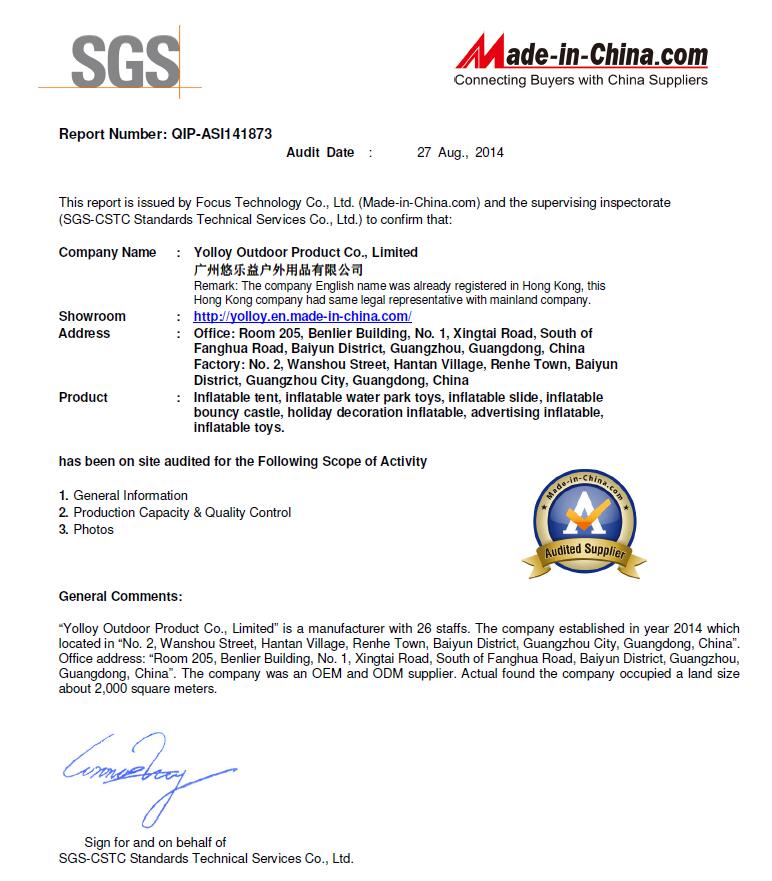
Certification

News

• New Order Successfully Finished for Long-Time Cooperated Japanese Client | YOLLOY Wins Full Client Recognition

• YOLLOY Custom Inflatable Pool Tent for Danish Client: Professional Pool Repair Shelter & Debris Protection

• Trusted Once Again! Greek Captain Re-orders Our Products After 4 Years

• Revolutionize Your Outdoors: The All-Terrain Inflatable Floating Tent for Land & Water

• Elevate Your Summer Fun: The Ultimate Inflatable Water Floating Volleyball Court Trampoline

• Innovative Inflatable Nightclub Tents & Pop-Up Bars: The Ultimate Solution for Portable Party Venues

Contact Us

Name: Sunny Yang
Tel: +86-20-8370 0771
Fax: +86-20-8370 0771
Mobile: 13570587575
E-mail: [email protected]
Add: No 5,Xiong wei Bo Nan Road,ZhongLuoTan Town,Baiyun district,Guangzhou,China
Friend me on Facebook Follow me on Twitter Add me to your circles Follow me on Pinterest Watch my channel on YouTube
News

How does inflatable cube tent compare to inflatable sport tent?

Author:yolloy Date:2026/8/12 17:46:46

When planning an outdoor event, exhibition, sports activity, or commercial gathering, the choice of shelter can make or break the experience. Two popular options from modern inflatable tent manufacturers are the inflatable cube tent and the inflatable sport tent. While both rely on air-filled beams for structural support and share the benefits of rapid setup and portability, they serve different purposes and excel in different environments. This article compares the two tent types across design, features, materials, setup, and ideal use cases, so you can decide which one fits your needs best.

Design and Shape: Cube vs. Curved

The most obvious difference between an inflatable cube tent and an inflatable sport tent lies in their geometry. A cube tent features 90-degree vertical walls and a flat roof, creating a box-like enclosure that maximizes usable interior space. Every square meter of floor area translates directly into functional headroom — there are no sloped walls or low-hanging edges to work around. This makes cube tents ideal for applications where full-volume utilization matters, such as product displays, pop-up retail spaces, branded lounges, or nightclub setups.

In contrast, an inflatable sport tent typically adopts a dome, tunnel, or arched profile. The curved roofline offers better aerodynamic performance, allowing wind to flow over the structure rather than pushing against it. This design is inherently more stable in exposed outdoor conditions, making sport tents the preferred choice for sports courts, training facilities, spectator shelters, and open-field events where wind resistance is a priority.

FeatureInflatable Cube TentInflatable Sport Tent
ShapeBox-like with 90° vertical wallsDome, tunnel, or arched profile
Usable interior spaceMaximum — full floor-to-ceiling volumeGood — slightly reduced at edges due to curvature
AerodynamicsModerate — flat walls face wind directlyExcellent — curved shape deflects wind
Visual impactBold, modern, architecturalClassic, sporty, professional

Key Features and Intended Use

Cube tents are built for versatility across commercial and entertainment settings. Their straight walls make them particularly suitable for housing equipment, setting up display shelves, installing lighting rigs, or creating immersive branded environments. Common uses include trade show booths, VIP lounges, outdoor bars, photo booths, and pop-up retail stores. The uniform interior height also makes cube tents well-suited for projection mapping and LED wall installations on all four sides.

Sport tents, on the other hand, are engineered with athletic and large-scale event applications in mind. Their spacious interiors can accommodate full tennis courts, basketball courts, football training areas, and multi-sport facilities. Many models feature transparent PVC panels that allow natural light in while protecting athletes from rain, wind, and UV exposure. These tents are also frequently used as spectator stands, warm-up zones, and equipment storage areas at tournaments and sports festivals.

Key takeaway: If your priority is a flexible commercial or entertainment space, lean toward a cube tent. If you need a weather-protected sports facility or large event shelter, a sport tent is the better fit.

Material and Durability

Both tent types from reputable inflatable tent manufacturers are constructed using high-grade commercial materials. Cube tents are typically made from PVC tarpaulin or Oxford fabric with reinforced seams, providing excellent waterproofing and tear resistance. For applications requiring transparency, clear PVC panels can be incorporated into the walls or roof. Sport tents often use double-layer PVC/PVDF composite materials for enhanced durability and chemical resistance, with some models achieving 30% greater longevity than single-layer alternatives.

Quality control is critical for both types. Leading manufacturers subject their products to seam-strength testing, inflation pressure checks, and weather-resistance validation before shipment. Materials are commonly certified to meet standards such as EN71, EN14960, and RoHS for safety and environmental compliance. Blowers — the heart of any inflatable structure — should be CE or UL certified and available in 110V, 220V, or 380V configurations to match local power requirements.

Setup and Portability

One of the strongest selling points of inflatable structures is their rapid deployment. Both cube tents and sport tents can typically be fully inflated and operational within 10 to 15 minutes using a continuous-air blower. Setup involves unfolding the tent on a flat surface, connecting the blower to the inflation port, and securing the structure with stakes, D-ring anchors, or sandbags depending on ground conditions. Unlike traditional pole tents, there is no frame assembly, no complex interlocking parts, and no need for specialized tools.

When deflated, both tent types pack down into compact carry bags that can fit in a standard vehicle. This portability makes them excellent choices for event organizers who move between venues, sports clubs that travel for tournaments, and rental businesses that need to transport equipment frequently. The weight difference between cube and sport tents of similar footprint is generally negligible, as both rely on the same air-beam construction principle.

Customization Options

Both cube and sport tents offer extensive customization possibilities. Cube tents can be printed with full-color graphics on all four external walls and the roof, making them powerful branding tools for corporate events and product launches. Interior configurations can include windows, multiple door positions, ventilation panels, LED lighting channels, and detachable partition walls. Sport tents can be customized with team logos, sponsor branding, league colors, and transparent viewing panels. Some models also support modular connections, allowing multiple units to be linked together for larger sports complexes.

Customization goes beyond aesthetics. Dimensions can be tailored to specific site requirements, and features such as reinforced flooring, cable management ports, and climate-control ducting can be integrated during the design phase. Many manufacturers accept customer-supplied artwork, sketches, or even photographs as the starting point for a bespoke design, with 3D simulation renderings provided for approval before production begins.

Which One Should You Choose?

The decision between an inflatable cube tent and an inflatable sport tent ultimately depends on your primary use case. Here is a quick guide:

  • Choose a cube tent if you are hosting indoor or outdoor commercial events, brand activations, trade shows, pop-up shops, nightclub parties, weddings, photo booths, or any scenario where interior layout flexibility and visual branding are the top priorities.
  • Choose a sport tent if you need a covered sports facility, a training court, a spectator shelter, an equipment storage area, or a multi-purpose event space in an exposed outdoor location where wind resistance and weather protection are critical.

Both tent types offer the core advantages of inflatable construction: fast setup, easy transport, and reliable performance when built with quality materials. The key is matching the tent's geometry and features to the specific demands of your event or facility.

In summary, inflatable cube tents deliver maximum interior space utilization and a bold modern aesthetic ideal for commercial and entertainment applications. Inflatable sport tents provide superior aerodynamics and weather protection tailored for athletic and large-scale outdoor events. Whichever you choose, working with experienced inflatable tent manufacturers ensures you get a durable, safe, and fully customized product that meets your exact requirements — from material selection and size specifications to branding and accessory integration.


How does inflatable cube tent compare to inflatable sport tent?

Author:yolloy Date:2026/8/12 17:46:46

When planning an outdoor event, exhibition, sports activity, or commercial gathering, the choice of shelter can make or break the experience. Two popular options from modern inflatable tent manufacturers are the inflatable cube tent and the inflatable sport tent. While both rely on air-filled beams for structural support and share the benefits of rapid setup and portability, they serve different purposes and excel in different environments. This article compares the two tent types across design, features, materials, setup, and ideal use cases, so you can decide which one fits your needs best.

Design and Shape: Cube vs. Curved

The most obvious difference between an inflatable cube tent and an inflatable sport tent lies in their geometry. A cube tent features 90-degree vertical walls and a flat roof, creating a box-like enclosure that maximizes usable interior space. Every square meter of floor area translates directly into functional headroom — there are no sloped walls or low-hanging edges to work around. This makes cube tents ideal for applications where full-volume utilization matters, such as product displays, pop-up retail spaces, branded lounges, or nightclub setups.

In contrast, an inflatable sport tent typically adopts a dome, tunnel, or arched profile. The curved roofline offers better aerodynamic performance, allowing wind to flow over the structure rather than pushing against it. This design is inherently more stable in exposed outdoor conditions, making sport tents the preferred choice for sports courts, training facilities, spectator shelters, and open-field events where wind resistance is a priority.

FeatureInflatable Cube TentInflatable Sport Tent
ShapeBox-like with 90° vertical wallsDome, tunnel, or arched profile
Usable interior spaceMaximum — full floor-to-ceiling volumeGood — slightly reduced at edges due to curvature
AerodynamicsModerate — flat walls face wind directlyExcellent — curved shape deflects wind
Visual impactBold, modern, architecturalClassic, sporty, professional

Key Features and Intended Use

Cube tents are built for versatility across commercial and entertainment settings. Their straight walls make them particularly suitable for housing equipment, setting up display shelves, installing lighting rigs, or creating immersive branded environments. Common uses include trade show booths, VIP lounges, outdoor bars, photo booths, and pop-up retail stores. The uniform interior height also makes cube tents well-suited for projection mapping and LED wall installations on all four sides.

Sport tents, on the other hand, are engineered with athletic and large-scale event applications in mind. Their spacious interiors can accommodate full tennis courts, basketball courts, football training areas, and multi-sport facilities. Many models feature transparent PVC panels that allow natural light in while protecting athletes from rain, wind, and UV exposure. These tents are also frequently used as spectator stands, warm-up zones, and equipment storage areas at tournaments and sports festivals.

Key takeaway: If your priority is a flexible commercial or entertainment space, lean toward a cube tent. If you need a weather-protected sports facility or large event shelter, a sport tent is the better fit.

Material and Durability

Both tent types from reputable inflatable tent manufacturers are constructed using high-grade commercial materials. Cube tents are typically made from PVC tarpaulin or Oxford fabric with reinforced seams, providing excellent waterproofing and tear resistance. For applications requiring transparency, clear PVC panels can be incorporated into the walls or roof. Sport tents often use double-layer PVC/PVDF composite materials for enhanced durability and chemical resistance, with some models achieving 30% greater longevity than single-layer alternatives.

Quality control is critical for both types. Leading manufacturers subject their products to seam-strength testing, inflation pressure checks, and weather-resistance validation before shipment. Materials are commonly certified to meet standards such as EN71, EN14960, and RoHS for safety and environmental compliance. Blowers — the heart of any inflatable structure — should be CE or UL certified and available in 110V, 220V, or 380V configurations to match local power requirements.

Setup and Portability

One of the strongest selling points of inflatable structures is their rapid deployment. Both cube tents and sport tents can typically be fully inflated and operational within 10 to 15 minutes using a continuous-air blower. Setup involves unfolding the tent on a flat surface, connecting the blower to the inflation port, and securing the structure with stakes, D-ring anchors, or sandbags depending on ground conditions. Unlike traditional pole tents, there is no frame assembly, no complex interlocking parts, and no need for specialized tools.

When deflated, both tent types pack down into compact carry bags that can fit in a standard vehicle. This portability makes them excellent choices for event organizers who move between venues, sports clubs that travel for tournaments, and rental businesses that need to transport equipment frequently. The weight difference between cube and sport tents of similar footprint is generally negligible, as both rely on the same air-beam construction principle.

Customization Options

Both cube and sport tents offer extensive customization possibilities. Cube tents can be printed with full-color graphics on all four external walls and the roof, making them powerful branding tools for corporate events and product launches. Interior configurations can include windows, multiple door positions, ventilation panels, LED lighting channels, and detachable partition walls. Sport tents can be customized with team logos, sponsor branding, league colors, and transparent viewing panels. Some models also support modular connections, allowing multiple units to be linked together for larger sports complexes.

Customization goes beyond aesthetics. Dimensions can be tailored to specific site requirements, and features such as reinforced flooring, cable management ports, and climate-control ducting can be integrated during the design phase. Many manufacturers accept customer-supplied artwork, sketches, or even photographs as the starting point for a bespoke design, with 3D simulation renderings provided for approval before production begins.

Which One Should You Choose?

The decision between an inflatable cube tent and an inflatable sport tent ultimately depends on your primary use case. Here is a quick guide:

  • Choose a cube tent if you are hosting indoor or outdoor commercial events, brand activations, trade shows, pop-up shops, nightclub parties, weddings, photo booths, or any scenario where interior layout flexibility and visual branding are the top priorities.
  • Choose a sport tent if you need a covered sports facility, a training court, a spectator shelter, an equipment storage area, or a multi-purpose event space in an exposed outdoor location where wind resistance and weather protection are critical.

Both tent types offer the core advantages of inflatable construction: fast setup, easy transport, and reliable performance when built with quality materials. The key is matching the tent's geometry and features to the specific demands of your event or facility.

In summary, inflatable cube tents deliver maximum interior space utilization and a bold modern aesthetic ideal for commercial and entertainment applications. Inflatable sport tents provide superior aerodynamics and weather protection tailored for athletic and large-scale outdoor events. Whichever you choose, working with experienced inflatable tent manufacturers ensures you get a durable, safe, and fully customized product that meets your exact requirements — from material selection and size specifications to branding and accessory integration.