Products Category
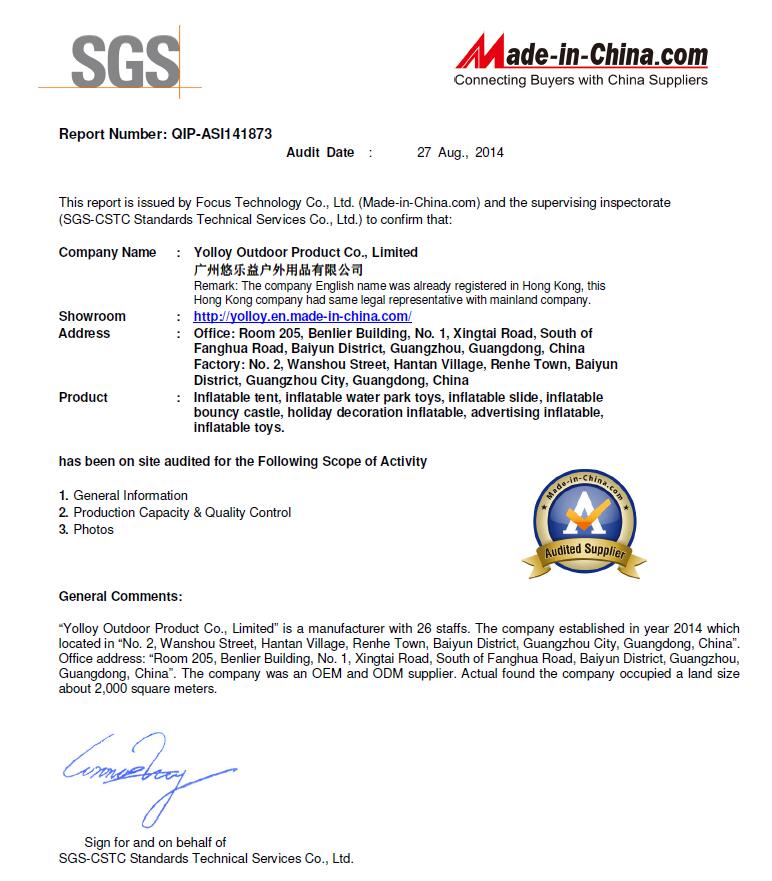
Certification

News

• New Order Successfully Finished for Long-Time Cooperated Japanese Client | YOLLOY Wins Full Client Recognition

• YOLLOY Custom Inflatable Pool Tent for Danish Client: Professional Pool Repair Shelter & Debris Protection

• Trusted Once Again! Greek Captain Re-orders Our Products After 4 Years

• Revolutionize Your Outdoors: The All-Terrain Inflatable Floating Tent for Land & Water

• Elevate Your Summer Fun: The Ultimate Inflatable Water Floating Volleyball Court Trampoline

• Innovative Inflatable Nightclub Tents & Pop-Up Bars: The Ultimate Solution for Portable Party Venues

Contact Us

Name: Sunny Yang
Tel: +86-20-8370 0771
Fax: +86-20-8370 0771
Mobile: 13570587575
E-mail: [email protected]
Add: No 5,Xiong wei Bo Nan Road,ZhongLuoTan Town,Baiyun district,Guangzhou,China
Friend me on Facebook Follow me on Twitter Add me to your circles Follow me on Pinterest Watch my channel on YouTube
News

What are the best blow up tents for festivals?

Author:yolloy Date:2026/8/12 16:17:58

Festival season means one thing: you need a shelter that sets up fast, stands up to unpredictable weather, and gives you a comfortable place to recharge between sets. While traditional pole tents have been the go-to for years, blow up tents — also known as inflatable tents — are rapidly becoming the preferred choice for festival-goers, event organizers, and rental businesses alike. They eliminate the hassle of poles, reduce setup time to minutes, and offer a level of structural stability that surprises many first-time users.

So what exactly makes a blow up tent the right pick for a festival? Let's dive into the types, features, and practical considerations that separate a great inflatable festival tent from a disappointing one.

Why Blow Up Tents Are Ideal for Festivals

The appeal of an inflatable party tent at a festival goes beyond novelty. These tents use air beams instead of traditional metal or fiberglass poles. The entire structure is inflated with an electric pump in as little as three to five minutes, and once up, the air beams create a rigid, wind-resistant frame that actually flexes with gusts rather than fighting against them. When the festival ends, you simply deflate, roll, and pack — no wrestling with tangled poles in the dark.

For event organizers renting out tents or managing festival grounds, the math is compelling: fewer setup crews, faster turnover between events, and less risk of broken poles or lost components. Many of the best inflatable tent models on the market today are manufactured with commercial-grade materials that can withstand hundreds of inflation cycles, making them a practical long-term investment.

Types of Inflatable Tents for Festival Use

Not all blow up tents are created equal. Different festival scenarios call for different designs. Here is a breakdown of the most popular types:

Tent Type Best For Key Advantage
Inflatable Dome Tent Music festivals, camping villages Excellent wind resistance, spacious interior
Inflatable Cube Tent VIP lounges, vendor booths Vertical walls maximize usable floor space
Clear Inflatable Bubble Tent Glamping experiences, stargazing events 360-degree panoramic views, weatherproof
Inflatable Tunnel Tent Entrance arches, covered walkways Long, continuous covered space
Inflatable Party Tent Weddings, corporate events, DJ stages Large open layout, customizable branding
Inflatable Shelter Tent First aid stations, staff areas Quick deployment, highly portable

Key Features to Look for in a Festival Blow Up Tent

When comparing options, focus on these critical factors rather than just the price tag:

Material Quality

The fabric is the foundation of durability. Commercial-grade PVC tarpaulin is the standard for high-use inflatable tents, offering excellent tear resistance and waterproofing. For lighter applications, Oxford fabric with PU coating provides a good balance of weight and weather protection. Top-tier inflatable tent manufacturers also use TPU (thermoplastic polyurethane) for air beams, which offers superior flexibility and puncture resistance compared to basic PVC bladders.

Look for materials that meet recognized safety standards such as EN71, EN14960, or RoHS compliance. These certifications indicate the fabric has been tested for harmful substances and structural integrity.

Setup Speed and Portability

A quality inflatable tent should go from packed to fully standing in under five minutes with a single electric pump. The best designs include pressure-relief valves that prevent over-inflation, so you can switch on the blower and walk away without worrying about bursting seams. When packed, the tent should fit into a manageable carry bag with reinforced handles. For festival operators, the packed size directly affects transport logistics — a tent that fits in a standard vehicle trunk is far more practical than one requiring a van.

Weather Resistance

Festivals rarely enjoy perfect weather. A well-built inflatable tent should handle rain, wind, and direct sun without compromise. Waterproof ratings of PU2000mm to PU3000mm are standard for festival-grade tents, meaning the fabric can withstand sustained rain without leaking. Wind resistance is where air beam tents truly shine: unlike pole tents that can snap under sudden gusts, inflatable structures flex and absorb wind energy. The key is a robust anchoring system — D-ring or round metal anchor points should be reinforced and positioned at multiple ground-contact locations.

Customization Options

For businesses and event professionals, a plain white tent is a missed branding opportunity. The right manufacturer should offer custom printing of logos, artwork, and color schemes directly onto the tent fabric. Custom sizes are also important — festival sites vary widely, and a tent that is 10 centimeters too wide for a designated plot is as useless as one that is too small. Some manufacturers even offer design-from-scratch services, where you provide a sketch, photograph, or site plan and receive a tent tailored to your exact specifications.

Renting vs. Buying: What Makes Sense for Festivals?

If you attend one festival per year, renting a tent locally might be the easiest path. But for frequent festival-goers, event rental companies, or businesses running a festival circuit, purchasing directly from a manufacturer offers clear advantages: lower cost per use, the ability to customize the tent with your branding, and consistent availability when you need it. Most reputable suppliers offer a minimum order quantity of just one piece, so you are not forced to buy in bulk.

When you buy from a factory-direct source, you also gain access to after-sales support that rental companies rarely provide. Each tent should come with a repair kit for on-site fixes, and the manufacturer should be able to supply replacement blowers and spare parts. A typical production time ranges from 6 to 15 days for a standard inflatable product, with air or sea shipping options depending on your timeline.

Common Mistakes to Avoid

  • Skipping the groundsheet check: Always inspect the festival pitch for sharp objects, broken glass, or thorns before laying down your tent. A groundsheet or tarp adds an extra layer of protection.
  • Ignoring blower compatibility: Confirm that the blower matches your power source. Reputable manufacturers supply blowers rated for 110V, 220V, or 380V depending on your region.
  • Underestimating wind anchoring: Even a stable inflatable tent needs proper anchoring. Use all provided anchor points, especially in open fields where wind can be unpredictable.
  • Choosing the wrong size: A 4-person tent means four people sleeping shoulder-to-shoulder with no room for gear. For comfort at a multi-day festival, consider sizing up by at least one capacity tier.
  • Neglecting ventilation: Inflatable tents can trap heat. Look for models with mesh windows, vents, or clear panels that can be opened for airflow during hot daytime hours.

What to Expect from a Quality Manufacturer

When sourcing inflatable tents for festivals, the manufacturer you choose matters as much as the tent itself. A reliable partner should offer custom design services — not just picking from a catalog, but working from your description, drawing, or even a rough sketch to produce a tent that matches your vision. Production should use precision sewing equipment with reinforced seams, waterproof nylon thread, and extra reinforcement at high-load areas. For airtight structures, high-temperature fusion welding is the gold standard.

Quality control is non-negotiable. Every tent should be inspected and tested before shipment, and the manufacturer should be transparent about material certifications. A supplier who can provide documentation for EN71, EN14960, or EN15649 compliance gives you confidence that the product meets internationally recognized safety benchmarks.

Blow up tents have transformed the festival experience by combining quick setup, reliable weather protection, and eye-catching designs. Whether you are organizing a music festival, running a glamping site, or simply looking for a hassle-free camping shelter, an inflatable tent from a factory-direct manufacturer offers the best balance of performance, customization, and long-term value. Focus on material quality, weather resistance, and the manufacturer's track record, and you will find a tent that serves you well through many festival seasons to come.


What are the best blow up tents for festivals?

Author:yolloy Date:2026/8/12 16:17:58

Festival season means one thing: you need a shelter that sets up fast, stands up to unpredictable weather, and gives you a comfortable place to recharge between sets. While traditional pole tents have been the go-to for years, blow up tents — also known as inflatable tents — are rapidly becoming the preferred choice for festival-goers, event organizers, and rental businesses alike. They eliminate the hassle of poles, reduce setup time to minutes, and offer a level of structural stability that surprises many first-time users.

So what exactly makes a blow up tent the right pick for a festival? Let's dive into the types, features, and practical considerations that separate a great inflatable festival tent from a disappointing one.

Why Blow Up Tents Are Ideal for Festivals

The appeal of an inflatable party tent at a festival goes beyond novelty. These tents use air beams instead of traditional metal or fiberglass poles. The entire structure is inflated with an electric pump in as little as three to five minutes, and once up, the air beams create a rigid, wind-resistant frame that actually flexes with gusts rather than fighting against them. When the festival ends, you simply deflate, roll, and pack — no wrestling with tangled poles in the dark.

For event organizers renting out tents or managing festival grounds, the math is compelling: fewer setup crews, faster turnover between events, and less risk of broken poles or lost components. Many of the best inflatable tent models on the market today are manufactured with commercial-grade materials that can withstand hundreds of inflation cycles, making them a practical long-term investment.

Types of Inflatable Tents for Festival Use

Not all blow up tents are created equal. Different festival scenarios call for different designs. Here is a breakdown of the most popular types:

Tent Type Best For Key Advantage
Inflatable Dome Tent Music festivals, camping villages Excellent wind resistance, spacious interior
Inflatable Cube Tent VIP lounges, vendor booths Vertical walls maximize usable floor space
Clear Inflatable Bubble Tent Glamping experiences, stargazing events 360-degree panoramic views, weatherproof
Inflatable Tunnel Tent Entrance arches, covered walkways Long, continuous covered space
Inflatable Party Tent Weddings, corporate events, DJ stages Large open layout, customizable branding
Inflatable Shelter Tent First aid stations, staff areas Quick deployment, highly portable

Key Features to Look for in a Festival Blow Up Tent

When comparing options, focus on these critical factors rather than just the price tag:

Material Quality

The fabric is the foundation of durability. Commercial-grade PVC tarpaulin is the standard for high-use inflatable tents, offering excellent tear resistance and waterproofing. For lighter applications, Oxford fabric with PU coating provides a good balance of weight and weather protection. Top-tier inflatable tent manufacturers also use TPU (thermoplastic polyurethane) for air beams, which offers superior flexibility and puncture resistance compared to basic PVC bladders.

Look for materials that meet recognized safety standards such as EN71, EN14960, or RoHS compliance. These certifications indicate the fabric has been tested for harmful substances and structural integrity.

Setup Speed and Portability

A quality inflatable tent should go from packed to fully standing in under five minutes with a single electric pump. The best designs include pressure-relief valves that prevent over-inflation, so you can switch on the blower and walk away without worrying about bursting seams. When packed, the tent should fit into a manageable carry bag with reinforced handles. For festival operators, the packed size directly affects transport logistics — a tent that fits in a standard vehicle trunk is far more practical than one requiring a van.

Weather Resistance

Festivals rarely enjoy perfect weather. A well-built inflatable tent should handle rain, wind, and direct sun without compromise. Waterproof ratings of PU2000mm to PU3000mm are standard for festival-grade tents, meaning the fabric can withstand sustained rain without leaking. Wind resistance is where air beam tents truly shine: unlike pole tents that can snap under sudden gusts, inflatable structures flex and absorb wind energy. The key is a robust anchoring system — D-ring or round metal anchor points should be reinforced and positioned at multiple ground-contact locations.

Customization Options

For businesses and event professionals, a plain white tent is a missed branding opportunity. The right manufacturer should offer custom printing of logos, artwork, and color schemes directly onto the tent fabric. Custom sizes are also important — festival sites vary widely, and a tent that is 10 centimeters too wide for a designated plot is as useless as one that is too small. Some manufacturers even offer design-from-scratch services, where you provide a sketch, photograph, or site plan and receive a tent tailored to your exact specifications.

Renting vs. Buying: What Makes Sense for Festivals?

If you attend one festival per year, renting a tent locally might be the easiest path. But for frequent festival-goers, event rental companies, or businesses running a festival circuit, purchasing directly from a manufacturer offers clear advantages: lower cost per use, the ability to customize the tent with your branding, and consistent availability when you need it. Most reputable suppliers offer a minimum order quantity of just one piece, so you are not forced to buy in bulk.

When you buy from a factory-direct source, you also gain access to after-sales support that rental companies rarely provide. Each tent should come with a repair kit for on-site fixes, and the manufacturer should be able to supply replacement blowers and spare parts. A typical production time ranges from 6 to 15 days for a standard inflatable product, with air or sea shipping options depending on your timeline.

Common Mistakes to Avoid

  • Skipping the groundsheet check: Always inspect the festival pitch for sharp objects, broken glass, or thorns before laying down your tent. A groundsheet or tarp adds an extra layer of protection.
  • Ignoring blower compatibility: Confirm that the blower matches your power source. Reputable manufacturers supply blowers rated for 110V, 220V, or 380V depending on your region.
  • Underestimating wind anchoring: Even a stable inflatable tent needs proper anchoring. Use all provided anchor points, especially in open fields where wind can be unpredictable.
  • Choosing the wrong size: A 4-person tent means four people sleeping shoulder-to-shoulder with no room for gear. For comfort at a multi-day festival, consider sizing up by at least one capacity tier.
  • Neglecting ventilation: Inflatable tents can trap heat. Look for models with mesh windows, vents, or clear panels that can be opened for airflow during hot daytime hours.

What to Expect from a Quality Manufacturer

When sourcing inflatable tents for festivals, the manufacturer you choose matters as much as the tent itself. A reliable partner should offer custom design services — not just picking from a catalog, but working from your description, drawing, or even a rough sketch to produce a tent that matches your vision. Production should use precision sewing equipment with reinforced seams, waterproof nylon thread, and extra reinforcement at high-load areas. For airtight structures, high-temperature fusion welding is the gold standard.

Quality control is non-negotiable. Every tent should be inspected and tested before shipment, and the manufacturer should be transparent about material certifications. A supplier who can provide documentation for EN71, EN14960, or EN15649 compliance gives you confidence that the product meets internationally recognized safety benchmarks.

Blow up tents have transformed the festival experience by combining quick setup, reliable weather protection, and eye-catching designs. Whether you are organizing a music festival, running a glamping site, or simply looking for a hassle-free camping shelter, an inflatable tent from a factory-direct manufacturer offers the best balance of performance, customization, and long-term value. Focus on material quality, weather resistance, and the manufacturer's track record, and you will find a tent that serves you well through many festival seasons to come.