Products Category
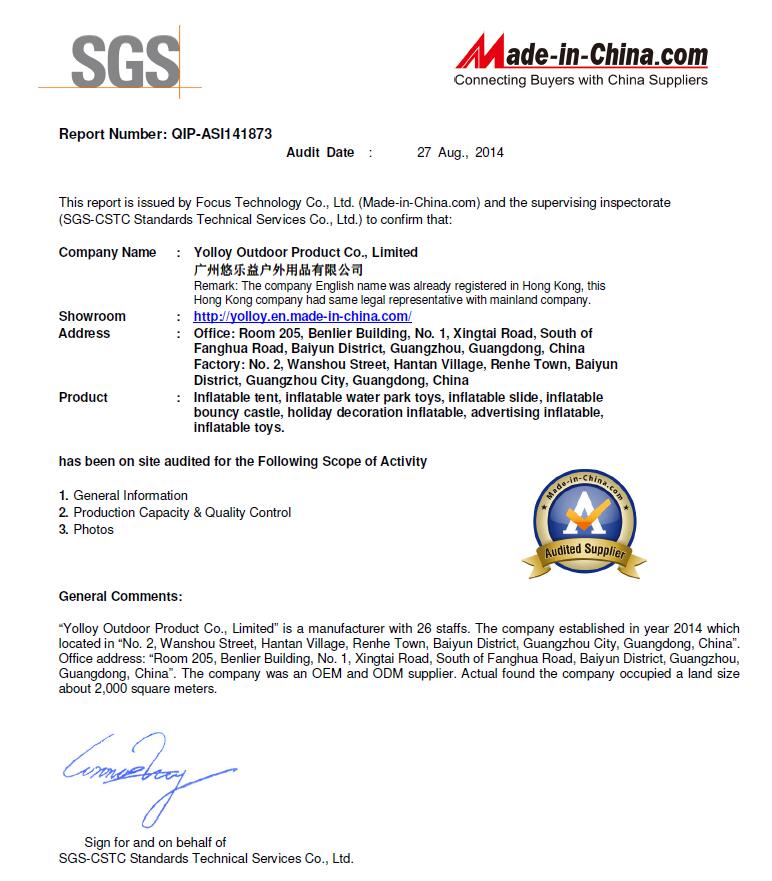
Certification

News

• New Order Successfully Finished for Long-Time Cooperated Japanese Client | YOLLOY Wins Full Client Recognition

• YOLLOY Custom Inflatable Pool Tent for Danish Client: Professional Pool Repair Shelter & Debris Protection

• Trusted Once Again! Greek Captain Re-orders Our Products After 4 Years

• Revolutionize Your Outdoors: The All-Terrain Inflatable Floating Tent for Land & Water

• Elevate Your Summer Fun: The Ultimate Inflatable Water Floating Volleyball Court Trampoline

• Innovative Inflatable Nightclub Tents & Pop-Up Bars: The Ultimate Solution for Portable Party Venues

Contact Us

Name: Sunny Yang
Tel: +86-20-8370 0771
Fax: +86-20-8370 0771
Mobile: 13570587575
E-mail: [email protected]
Add: No 5,Xiong wei Bo Nan Road,ZhongLuoTan Town,Baiyun district,Guangzhou,China
Friend me on Facebook Follow me on Twitter Add me to your circles Follow me on Pinterest Watch my channel on YouTube
News

How does portable planetarium dome manufacturer compare to portable planetarium dome factory?

Author:yolloy Date:2026/8/12 16:46:33

When you begin searching for a portable planetarium dome, you will quickly encounter two common supplier labels: portable planetarium dome manufacturer and portable planetarium dome factory. At first glance, these terms may seem interchangeable. In reality, they describe two very different types of operations, and understanding the distinction can be the difference between a smooth purchasing experience and a series of costly surprises.

What Is a Portable Planetarium Dome Manufacturer?

A portable planetarium dome manufacturer is a company that handles every stage of the product lifecycle in-house. This includes initial concept development, material research and selection, engineering design, production, quality inspection, and after-sales service. A genuine manufacturer typically maintains an in-house R&D team capable of creating custom solutions from a simple sketch or description. Because they control the entire production chain, they can offer meaningful customization—adjusting dome size, color, printed graphics, ventilation configuration, and accessory compatibility to match specific institutional requirements.

A true manufacturer also takes responsibility for material sourcing. For portable planetarium domes, this means selecting commercial-grade PVC tarpaulin or TPU that meets safety standards such as EN71 and fire-retardant certifications. They perform pre-shipment inflation tests and quality inspections—often running a dome continuously inflated for 48 hours before packaging—to ensure structural integrity and air retention. After the sale, a manufacturer provides repair kits, technical guidance, and replacement parts, maintaining the relationship well beyond the initial transaction.

What Is a Portable Planetarium Dome Factory?

A portable planetarium dome factory is primarily a production facility. While a factory may possess the sewing machines, welding equipment, and workforce needed to assemble inflatable domes, it often lacks the upstream capabilities that define a full-service manufacturer. Factories typically produce based on designs and specifications provided by external clients or trading companies. Their focus is on production efficiency and volume rather than design innovation or customer-specific engineering.

It is also worth noting that some trading companies present themselves as "factories" to appear more competitive on price, even though they do not own production lines. This creates a layer of separation between the buyer and the actual production floor, which can lead to miscommunication, quality inconsistencies, and difficulty resolving issues after delivery.

Key Differences at a Glance

FactorManufacturerFactory
Design & R&DIn-house team; custom designs from scratchFollows provided specifications; limited design input
CustomizationFull customization (size, color, logo, ventilation, features)Limited to standard configurations
Quality ControlMulti-stage QC with pre-shipment inflation testingBasic QC; may skip pre-shipment testing
Material SourcingDirect control over material quality and supplier relationshipsMay use lowest-cost materials available at the time
CertificationsProducts tested to EN71, fire-retardant, and other relevant standardsCertifications may be limited or unverified
After-Sales SupportOngoing: repair kits, replacement parts, 24-hour responseMinimal or none after delivery
CommunicationDirect contact with both design and production teamsMay rely on intermediaries or agents
Minimum OrderOften flexible; MOQ as low as 1 pieceMay require larger minimum orders

Why the Distinction Matters for Planetarium Domes

Portable planetarium domes are not simple commodity items. They need to be safe for children, durable enough for frequent setup and takedown across different venues, and capable of delivering a high-quality projection experience. When you choose a portable planetarium dome company that is a true manufacturer, you gain advantages that go far beyond the initial purchase price.

Safety and Compliance

A reputable manufacturer ensures that materials meet recognized safety standards. For inflatable products used in educational settings—schools, science museums, community centers—certifications such as EN71 (European toy safety standard) and fire-retardant certificates are essential. These are not just paperwork; they represent independent verification that the dome material is non-toxic, free of harmful phthalates, and resistant to ignition. A factory without a structured certification protocol may cut corners on material safety to reduce costs, putting end users at risk.

Customization for Real-World Use

Every institution has different needs. A large science museum might require a 12-meter dome with built-in projection equipment storage and a dedicated ventilation system. A mobile education program might need a compact 6-meter dome that fits in a standard van and inflates in under 10 minutes. A manufacturer with in-house design capability can accommodate these requests—adjusting dimensions, adding custom printed graphics, configuring inflation ports, and integrating accessories. A factory typically offers only what is already in its production queue.

Durability and Material Quality

The materials used in a portable planetarium dome directly determine its lifespan and projection performance. High-quality PVC tarpaulin or TPU resists tearing, UV degradation, and hydrolysis—meaning the dome will not deteriorate after repeated use in varying humidity and temperature conditions. A manufacturer that controls its material sourcing can guarantee consistent quality across every order. A factory that switches suppliers based on short-term pricing may produce domes that look identical on the surface but perform very differently over time.

After-Sales Support and Long-Term Partnership

Purchasing a dome is the beginning of a relationship, not a one-time transaction. Blowers may need replacement. Seams may require repair after years of heavy use. You may need technical advice on setup, storage, or maintenance. A manufacturer supplies a repair kit with every order, responds to inquiries within 24 hours, and can ship replacement parts quickly. A factory may consider the transaction complete the moment the product leaves its warehouse.

How to Verify a Supplier's True Identity

Not every supplier who uses the word "manufacturer" actually operates as one. Here are practical steps to verify what you are dealing with before placing an order.

  1. Request factory photos or a live video tour. A genuine manufacturer can show you their production floor, sewing stations, welding equipment, and testing areas in real time.
  2. Ask about pre-shipment testing. Manufacturers that perform test assemblies and extended inflation tests before shipping demonstrate a genuine commitment to quality.
  3. Examine the product catalog. A true manufacturer of inflatable products typically offers a diverse range—outdoor inflatable tents, clear dome tents, water park products, interactive sports games, and more—not just a single product category.
  4. Test their customization capability. If they cannot accommodate requests beyond standard sizes and colors, they are likely a trading company or a factory with no design team.
  5. Request safety certificates. Ask for copies of EN71, fire-retardant, or other relevant certifications. Verify they are current and apply to the specific product you are buying.
  6. Evaluate the quality of communication. Direct, knowledgeable answers about materials, production timelines, and technical specifications indicate a manufacturer who understands their product. Vague or evasive responses suggest a middleman.

Conclusion

When comparing a portable planetarium dome manufacturer to a portable planetarium dome factory, the differences center on control, capability, and long-term commitment. A manufacturer provides end-to-end service—from custom design and quality-controlled production to ongoing technical support. A factory may offer a lower sticker price, but the hidden costs of inconsistent quality, limited customization, and absent after-sales service can easily outweigh any initial savings.

For schools, museums, and educational organizations investing in tools that need to be safe, durable, and reliable, partnering with an experienced manufacturer is the smarter long-term choice. Before you place an order, take the time to verify who you are really dealing with—because when it comes to bringing the wonders of the universe to your audience, the quality of your dome makes all the difference.


How does portable planetarium dome manufacturer compare to portable planetarium dome factory?

Author:yolloy Date:2026/8/12 16:46:33

When you begin searching for a portable planetarium dome, you will quickly encounter two common supplier labels: portable planetarium dome manufacturer and portable planetarium dome factory. At first glance, these terms may seem interchangeable. In reality, they describe two very different types of operations, and understanding the distinction can be the difference between a smooth purchasing experience and a series of costly surprises.

What Is a Portable Planetarium Dome Manufacturer?

A portable planetarium dome manufacturer is a company that handles every stage of the product lifecycle in-house. This includes initial concept development, material research and selection, engineering design, production, quality inspection, and after-sales service. A genuine manufacturer typically maintains an in-house R&D team capable of creating custom solutions from a simple sketch or description. Because they control the entire production chain, they can offer meaningful customization—adjusting dome size, color, printed graphics, ventilation configuration, and accessory compatibility to match specific institutional requirements.

A true manufacturer also takes responsibility for material sourcing. For portable planetarium domes, this means selecting commercial-grade PVC tarpaulin or TPU that meets safety standards such as EN71 and fire-retardant certifications. They perform pre-shipment inflation tests and quality inspections—often running a dome continuously inflated for 48 hours before packaging—to ensure structural integrity and air retention. After the sale, a manufacturer provides repair kits, technical guidance, and replacement parts, maintaining the relationship well beyond the initial transaction.

What Is a Portable Planetarium Dome Factory?

A portable planetarium dome factory is primarily a production facility. While a factory may possess the sewing machines, welding equipment, and workforce needed to assemble inflatable domes, it often lacks the upstream capabilities that define a full-service manufacturer. Factories typically produce based on designs and specifications provided by external clients or trading companies. Their focus is on production efficiency and volume rather than design innovation or customer-specific engineering.

It is also worth noting that some trading companies present themselves as "factories" to appear more competitive on price, even though they do not own production lines. This creates a layer of separation between the buyer and the actual production floor, which can lead to miscommunication, quality inconsistencies, and difficulty resolving issues after delivery.

Key Differences at a Glance

FactorManufacturerFactory
Design & R&DIn-house team; custom designs from scratchFollows provided specifications; limited design input
CustomizationFull customization (size, color, logo, ventilation, features)Limited to standard configurations
Quality ControlMulti-stage QC with pre-shipment inflation testingBasic QC; may skip pre-shipment testing
Material SourcingDirect control over material quality and supplier relationshipsMay use lowest-cost materials available at the time
CertificationsProducts tested to EN71, fire-retardant, and other relevant standardsCertifications may be limited or unverified
After-Sales SupportOngoing: repair kits, replacement parts, 24-hour responseMinimal or none after delivery
CommunicationDirect contact with both design and production teamsMay rely on intermediaries or agents
Minimum OrderOften flexible; MOQ as low as 1 pieceMay require larger minimum orders

Why the Distinction Matters for Planetarium Domes

Portable planetarium domes are not simple commodity items. They need to be safe for children, durable enough for frequent setup and takedown across different venues, and capable of delivering a high-quality projection experience. When you choose a portable planetarium dome company that is a true manufacturer, you gain advantages that go far beyond the initial purchase price.

Safety and Compliance

A reputable manufacturer ensures that materials meet recognized safety standards. For inflatable products used in educational settings—schools, science museums, community centers—certifications such as EN71 (European toy safety standard) and fire-retardant certificates are essential. These are not just paperwork; they represent independent verification that the dome material is non-toxic, free of harmful phthalates, and resistant to ignition. A factory without a structured certification protocol may cut corners on material safety to reduce costs, putting end users at risk.

Customization for Real-World Use

Every institution has different needs. A large science museum might require a 12-meter dome with built-in projection equipment storage and a dedicated ventilation system. A mobile education program might need a compact 6-meter dome that fits in a standard van and inflates in under 10 minutes. A manufacturer with in-house design capability can accommodate these requests—adjusting dimensions, adding custom printed graphics, configuring inflation ports, and integrating accessories. A factory typically offers only what is already in its production queue.

Durability and Material Quality

The materials used in a portable planetarium dome directly determine its lifespan and projection performance. High-quality PVC tarpaulin or TPU resists tearing, UV degradation, and hydrolysis—meaning the dome will not deteriorate after repeated use in varying humidity and temperature conditions. A manufacturer that controls its material sourcing can guarantee consistent quality across every order. A factory that switches suppliers based on short-term pricing may produce domes that look identical on the surface but perform very differently over time.

After-Sales Support and Long-Term Partnership

Purchasing a dome is the beginning of a relationship, not a one-time transaction. Blowers may need replacement. Seams may require repair after years of heavy use. You may need technical advice on setup, storage, or maintenance. A manufacturer supplies a repair kit with every order, responds to inquiries within 24 hours, and can ship replacement parts quickly. A factory may consider the transaction complete the moment the product leaves its warehouse.

How to Verify a Supplier's True Identity

Not every supplier who uses the word "manufacturer" actually operates as one. Here are practical steps to verify what you are dealing with before placing an order.

  1. Request factory photos or a live video tour. A genuine manufacturer can show you their production floor, sewing stations, welding equipment, and testing areas in real time.
  2. Ask about pre-shipment testing. Manufacturers that perform test assemblies and extended inflation tests before shipping demonstrate a genuine commitment to quality.
  3. Examine the product catalog. A true manufacturer of inflatable products typically offers a diverse range—outdoor inflatable tents, clear dome tents, water park products, interactive sports games, and more—not just a single product category.
  4. Test their customization capability. If they cannot accommodate requests beyond standard sizes and colors, they are likely a trading company or a factory with no design team.
  5. Request safety certificates. Ask for copies of EN71, fire-retardant, or other relevant certifications. Verify they are current and apply to the specific product you are buying.
  6. Evaluate the quality of communication. Direct, knowledgeable answers about materials, production timelines, and technical specifications indicate a manufacturer who understands their product. Vague or evasive responses suggest a middleman.

Conclusion

When comparing a portable planetarium dome manufacturer to a portable planetarium dome factory, the differences center on control, capability, and long-term commitment. A manufacturer provides end-to-end service—from custom design and quality-controlled production to ongoing technical support. A factory may offer a lower sticker price, but the hidden costs of inconsistent quality, limited customization, and absent after-sales service can easily outweigh any initial savings.

For schools, museums, and educational organizations investing in tools that need to be safe, durable, and reliable, partnering with an experienced manufacturer is the smarter long-term choice. Before you place an order, take the time to verify who you are really dealing with—because when it comes to bringing the wonders of the universe to your audience, the quality of your dome makes all the difference.