An inflatable planetarium dome tent is a portable, cold-air inflatable structure designed to create an immersive 360-degree projection environment. Unlike traditional brick-and-mortar planetariums that require a dedicated building, an inflatable planetarium dome tent can be transported in a few bags, set up in under 15 minutes, and turn any large indoor space — a school gym, a library, or a community hall — into a blackout dome filled with stars, planets, and galaxies.
The Continuous Airflow Principle
The core operating principle is continuous airflow. An electric blower pushes a steady stream of air into the dome through an inlet sleeve. The air pressure inside keeps the structure firm and upright, while a small amount of air escapes naturally through the seams, the entry tunnel, and the fabric itself. This is not a sealed balloon; it is a constantly refreshed air chamber. The blower runs the entire time the dome is in use, which serves two purposes at once: maintaining the dome's shape and driving ventilation.
With a group of 20 to 30 people sitting inside for 30 minutes or more, the continuous airflow replaces warm, stale air with fresh air from outside, keeping the interior comfortable for the audience. A pinhole leak does not cause the dome to collapse because the blower simply keeps up with the air loss. This forgiving design is why continuous-airflow structures are trusted for occupied spaces where people sit inside for extended periods.
The Airlock Entry Tunnel
Every well-designed portable planetarium dome includes an airlock entry tunnel — a short, zippered passage that allows people to enter and exit without collapsing the dome or flooding the interior with light. Guests step into the tunnel, zip the outer door behind them, and then open the inner door. This design preserves the dark-adapted environment inside and prevents the dome from losing pressure during a session. The tunnel also serves as a light-lock, ensuring that every visitor experiences the full immersion of the projection display from the moment they step inside.
The Projection Surface
Inside the dome, the projection surface is engineered for contrast. The fabric is typically a double-layer or dark-coated material that blocks ambient room light from penetrating through the walls. In a single-layer white dome, fluorescent ceiling lights would glow straight through the fabric, washing out every projected star to a pale grey. The interior surface uses a matte, neutral dark tone that absorbs stray light while still reflecting the projected image with enough brightness to show sharp detail. The balance between "dark enough for contrast" and "reflective enough for image clarity" is what separates a real immersive dome from a low-quality tent.
The Projection System
The projection system is the second half of the equation. Most portable planetarium domes use a single fisheye projector placed at the center or edge of the dome. The projector is paired with a hemispherical mirror or a fisheye lens that spreads the image across the entire inner surface, covering a full 180-degree hemisphere. The audience sits on the floor and looks up at a sky that wraps around them in every direction. Some larger domes use multi-projector edge-blending for higher brightness and resolution, but the single-projector fisheye setup remains the most practical and popular choice for touring education programs. An inflatable projection screen of this type needs to be matched to the dome's geometry and the projector's throw specifications to ensure the image fills the entire hemisphere without dead zones or hotspots.
Materials and Manufacturing
From a manufacturing perspective, the dome's performance depends on the quality of materials and construction. Commercial-grade PVC tarpaulin or Oxford fabric is commonly used for the outer shell, with precision heat-sealed or high-frequency welded seams to maintain airtightness. The inner projection surface requires a specialized coating that is both dark and reflective. Reinforced D-ring anchor points around the base allow the dome to be secured to the floor for stability. The blower unit, which is an integral part of the system, must be matched to the dome's volume — too small a blower and the dome sags; too large and it over-pressurizes. Blowers can be supplied for 110V, 220V, or 380V requirements to suit different regional power standards.
Setup and Portability
Setup is straightforward. The dome is unpacked from its bag, spread out on a clean flat floor, and connected to the blower. Within 10 to 15 minutes, the structure is fully inflated and ready for projection. Pack-down is even faster: switch off the blower, let the dome deflate, fold it, and pack it into its transport bags. The entire system — dome, blower, projector, and cables — fits into a hatchback or small van, making it practical for a single operator to transport and manage. A 6-meter dome, for example, typically packs into one or two wheeled bags and weighs well under 50 kilograms.
Key advantages of an inflatable planetarium dome tent:
- Portable — packs into bags and fits in a standard vehicle
- Quick setup — from bag to blackout in 10 to 15 minutes
- Continuous airflow — self-ventilating and forgiving of small leaks
- Immersive environment — 360-degree projection with true blackout interior
- Versatile — serves schools, museums, events, and STEM programs
Applications and Benefits
Inflatable planetarium projection dome tents are used worldwide by schools, science museums, STEM education providers, and event companies. They bring astronomy education directly to students who might never visit a fixed planetarium. They also serve as mobile cinemas, immersive art installations, and branded experience spaces at trade shows and festivals. The versatility of the format, combined with low setup cost and high portability, makes the inflatable projection dome one of the most effective tools for immersive education and entertainment available today.
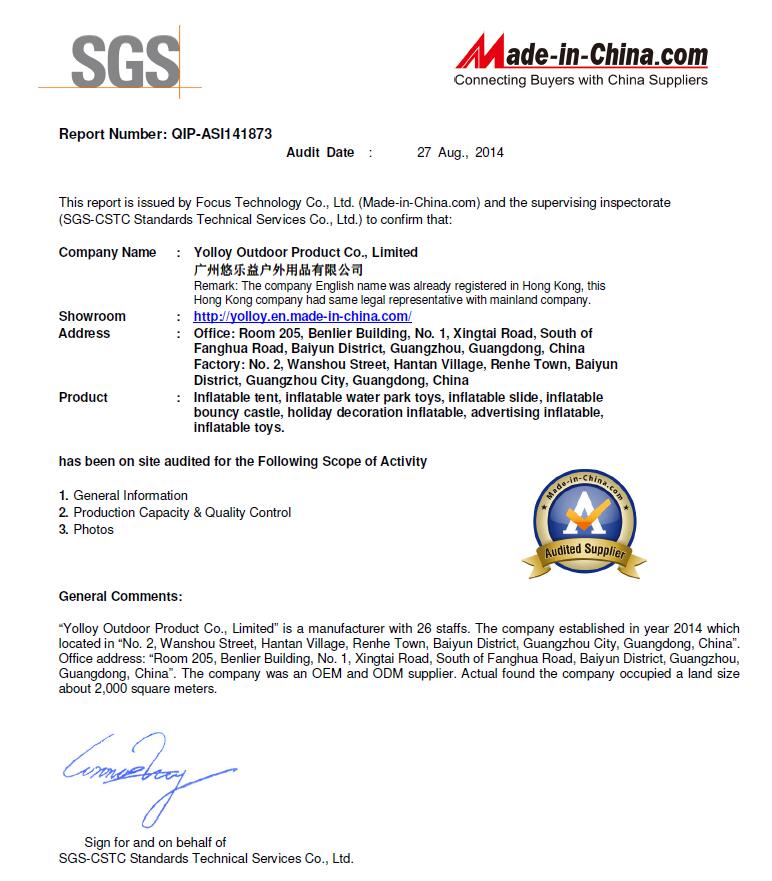
For businesses and organizations looking to source a high-quality inflatable planetarium dome tent, working with an experienced manufacturer is essential. Yolloy Outdoor Product Co., Limited is a China-based inflatable product manufacturer that designs and produces custom inflatable planetarium domes, portable projection domes, and inflatable projection screens for clients worldwide. With a full in-house design-to-production workflow, Yolloy can customize dome size, fabric type, coating, and blower specification to match the exact requirements of the end user. From small 4-meter classroom domes to large 10-meter event-scale structures, every dome is built with reinforced seams, tested materials, and a commitment to durability and safety. Contact Yolloy today to discuss your inflatable planetarium dome tent project.