When waterfront property owners and commercial operators look to add a slide to their lake, they often encounter a fundamental question: what exactly is the difference between a water slide designed specifically for a lake and what people commonly refer to as a "regular lake slide"? The two terms may sound similar, but they describe very different products in terms of design, installation, materials, and long-term value. Understanding these differences is essential before making a purchasing decision.
Defining the Two Types of Slides
Before comparing the two, it is important to clarify what each term typically means in the recreation industry.
A water slide for a lake generally refers to a floating, inflatable structure that sits on the water surface. These are commercial-grade inflatable water slide units built with reinforced PVC tarpaulin, heat-welded seams, and integrated anchoring systems. They are designed to be deployed seasonally, deflated for storage, and moved as needed. The slide surface is kept wet with a continuous water flow pumped from the lake itself, and users slide directly into the open water at the exit point.
A regular lake slide, by contrast, typically refers to a permanent or semi-permanent hard structure installed on the shoreline or into the lakebed. These slides are often constructed from fiberglass, metal, or concrete, and function much like the slides found in traditional land-based water parks. They require significant construction work, including excavation, concrete footings, and sometimes shoreline modification. Once installed, they are fixed in place and cannot be moved without major demolition.
Key Differences at a Glance
| Comparison Factor | Water Slide for a Lake (Inflatable) | Regular Lake Slide (Permanent) |
|---|
| Structure Type | Floating inflatable platform with integrated slide | Fixed hard structure on shore or lakebed |
| Installation | Deployed in hours with a small crew and a boat; no construction required | Requires months of planning, permits, excavation, and heavy machinery |
| Environmental Impact | Minimal; floats on the surface without disturbing the lakebed or shoreline | High; may require concrete pilings, shoreline alteration, and habitat disruption |
| Seasonality | Deflatable and storable during off-season, protecting the investment from winter damage | Sits in place year-round, exposed to ice, weathering, and UV degradation |
| Flexibility | Modular and relocatable; can be moved to different areas of the lake or added to over time | Permanent; changing the layout requires another major construction project |
| Cost | Significantly lower upfront investment; no construction, permitting, or heavy equipment costs | Very high initial capital outlay for construction, materials, and labor |
| Maintenance | Routine inspection of seams, anchor lines, and air pressure; minor patch repairs as needed | Ongoing structural maintenance; corrosion, cracking, and surface wear over time |
Design and Engineering Differences
The engineering behind each type of slide reflects its intended use environment. A floating inflatable slide is built around buoyancy and stability on water. The platform base uses sealed air chambers or advanced drop-stitch technology that creates a rigid, stable surface when fully inflated. This prevents the kind of soft, sinking feeling that would make climbing up to the slide difficult. The slide channel itself is a continuous, smooth surface made from commercial-grade PVC tarpaulin, with water sprayed continuously to reduce friction and ensure a fast, exciting ride.
A permanent hard slide, on the other hand, relies on structural support from the ground or lakebed. Its design must account for soil stability, water level fluctuations, and long-term erosion. The slide surface is typically fiberglass or coated metal, which requires a dedicated water pumping system to keep it lubricated. These systems are complex and expensive to install and maintain.
Installation and Site Preparation
The installation process is perhaps the most dramatic difference between the two options. For a floating inflatable lake slide, the process is straightforward: inflate the unit on shore, tow it to the desired location with a small boat, and deploy the anchor system. A crew of three to four people can typically complete the installation in a single day. The main site requirement is adequate water depth — generally at least 2.4 to 3 meters beneath the slide exit point to ensure safe entry into the water.
For a permanent lake slide, the preparation is considerably more involved. Site surveys, soil testing, environmental impact assessments, and building permits are all typically required. Construction involves excavation equipment, concrete pouring, and often weeks or months of disruption to the waterfront. This process is not only time-consuming but also significantly more expensive, and the noise and mess can disrupt guest experience if the property is already operational.
Material Durability and Safety
Modern commercial inflatable water slides are constructed from heavy-duty PVC tarpaulin that is engineered to withstand continuous commercial use, intense UV exposure, and the physical demands of enthusiastic users. The material is formulated to be waterproof, fire-resistant, and tested to meet international safety standards such as EN71 and EN14960. Heat-welded seams provide superior strength compared to stitched alternatives, and anti-UV coatings preserve both the structural integrity and vibrant colors over multiple seasons.
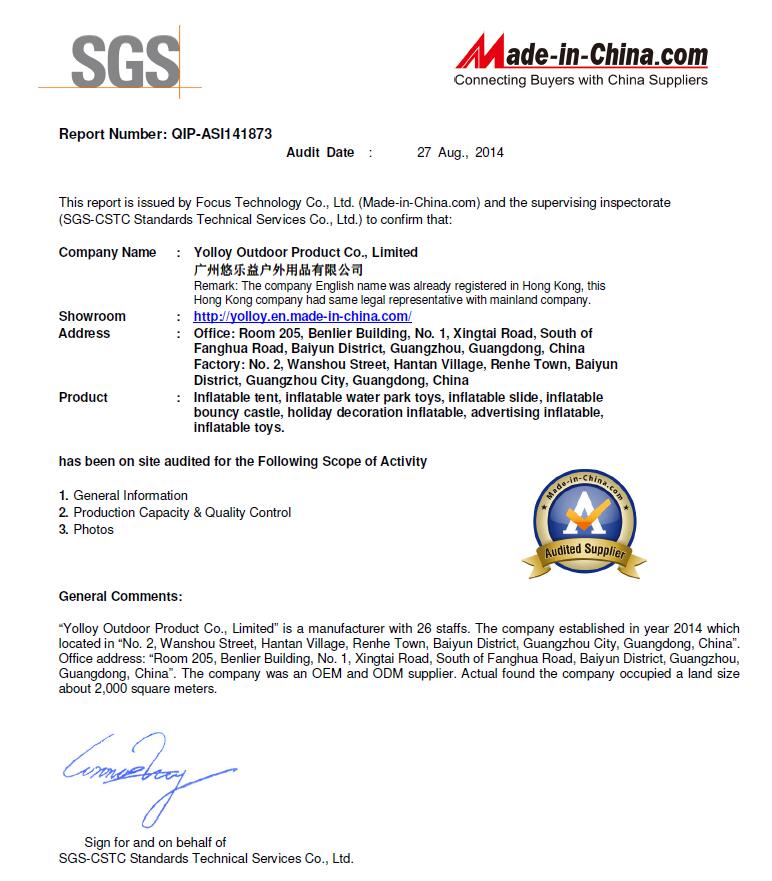
Manufacturers like YOLLOY, based in Guangzhou, China, also perform mandatory 100% leak detection testing on every product before shipment. This means each chamber is fully inflated and inspected to ensure zero pressure loss. A repair kit is supplied with every unit, enabling quick field repairs if needed.
Permanent slides, while durable in their own right, face different challenges. Fiberglass surfaces can crack under repeated stress and temperature fluctuations. Metal components are susceptible to corrosion, especially in freshwater environments. Repairs to hard structures often require specialized contractors and can be costly and time-consuming.
Anchoring and Stability on Water
One of the most common concerns with a floating water slide is whether it will stay in place. A properly designed inflatable slide uses a multi-point anchoring system — typically three to six anchor lines connected to reinforced D-ring patches welded directly into the PVC hull. The anchors themselves are chosen based on the lake bottom composition: mushroom anchors for soft, muddy bottoms; concrete blocks for firm sand or gravel; and screw-in auger anchors for maximum holding power in hard-packed conditions. Anchor lines are set at 30 to 45 degree angles and are typically three to five times the water depth in length. This configuration keeps the platform stable even in moderate wind and wave conditions.
Permanent slides, by contrast, are anchored into the ground or lakebed through concrete footings and structural supports. While this provides excellent stability, it also means the slide cannot be adjusted or relocated without major construction work.
Cost and Return on Investment
From a financial perspective, the difference between these two options is substantial. The initial capital investment for a permanent hard slide can easily run into six figures when factoring in design, permits, construction, and equipment. A floating inflatable slide, by comparison, represents a fraction of that cost. Many operators recover their investment within the first season of operation through access fees, increased guest bookings, and ancillary revenue from food, beverage, and equipment rentals generated by the increased foot traffic around the lake.
Furthermore, inflatable slides offer operational flexibility that permanent structures cannot match. If a resort wants to change the layout of its waterfront attractions, the inflatable can simply be deflated and repositioned. If a new attraction is added in a future season, the modular nature of inflatable products allows for seamless integration. This adaptability protects the investment over the long term and allows operators to respond to changing guest preferences.
Key Takeaway: The core difference between a water slide for a lake and a regular lake slide comes down to mobility versus permanence. A floating inflatable slide offers flexibility, lower cost, minimal environmental impact, and seasonal storage. A permanent hard slide offers structural permanence at the cost of high upfront investment, environmental disruption, and long-term inflexibility. For most lakeside resorts, campgrounds, and commercial waterfront operators, the inflatable option provides the best balance of excitement, safety, and financial sense.
Choosing the Right Option for Your Waterfront
The decision ultimately depends on your specific circumstances. If your property is a seasonal operation with a natural lake setting, an inflatable floating slide is almost certainly the more practical choice. It allows you to offer a thrilling attraction during peak season while preserving the lake's natural beauty during the off-season. If your site has challenging lakebed conditions — such as very soft silt or protected wildlife habitats — the inflatable option is also preferable because it avoids disturbing the bottom altogether.
Permanent slides may be appropriate for year-round facilities in warm climates where the waterfront is a dedicated amusement area with existing infrastructure. However, even in these cases, the high cost and environmental impact make them a less common choice for natural lake environments.
For operators exploring the inflatable route, working with an experienced manufacturer is critical. YOLLOY, with over a decade of experience in designing and manufacturing commercial inflatable products, offers fully customizable solutions that can be tailored to a property's specific dimensions, color scheme, and branding requirements. From concept to delivery, the process includes 3D design renderings, client approval, precision manufacturing, and rigorous quality testing before the product is shipped to destinations across Europe, Asia, the Americas, and beyond.
In summary: A water slide for a lake is a floating, inflatable attraction designed for seasonal deployment, easy relocation, and minimal environmental footprint. A regular lake slide is a permanent hard structure that requires major construction and offers no flexibility once installed. For most commercial waterfront operators, the inflatable lake slide represents the smarter, more cost-effective, and more versatile investment.