When planning outdoor events, sports training sessions, or commercial operations, many buyers face a common dilemma: should you invest in an inflatable sport tent or an inflatable shelter? Both are air-supported structures that deploy quickly without rigid frames, but they are built for different purposes. Understanding the key differences can save you money, improve the user experience, and help you pick the right product for your specific needs.
What Is an Inflatable Sport Tent?
An inflatable sport tent is designed primarily for athletic activities. Think of tennis courts, badminton matches, football practice, golf simulators, or multi-sport training housed inside a weatherproof air structure. These tents typically feature higher ceilings, larger open floor plans, and transparent or semi-transparent panels that allow natural light in while keeping wind and rain out. They are engineered to give athletes enough headroom and lateral space to move freely without obstruction.
For example, a tennis club might use a sport tent to cover an outdoor court during the rainy season, turning a seasonal facility into a year-round venue. A golf academy might set up a simulator enclosure that lets players practice full swings regardless of the weather. The defining characteristic is the open, unobstructed interior — nothing should interfere with the sport being played.
What Is an Inflatable Shelter?
An inflatable shelter is a more general-purpose enclosed structure. It can serve as a temporary workshop, an emergency relief station, a storage hub, a vehicle cover, a spray painting booth, or a base camp for outdoor expeditions. Shelters tend to be more compact, with a focus on enclosure integrity, weather sealing, and rapid deployment. The emphasis is on creating a protected, enclosed space — not necessarily one optimized for athletic movement.
A mobile car detailing business, for instance, might use an inflatable shelter as a portable spray booth that can be set up at a client's location in minutes. An event organizer might deploy several shelters as registration booths or first-aid stations at a marathon. The versatility of shelters makes them suitable for a wide range of commercial and emergency applications.
Key Differences at a Glance
| Feature | Inflatable Sport Tent | Inflatable Shelter |
|---|
| Size & Space | Large open interiors, high ceilings | Compact to medium, enclosed layout |
| Primary Use | Sports training, tournaments, events | Workshops, storage, emergency, camping |
| Material Focus | TPU, Oxford fabric, PVC — transparency and durability | Heavy-duty PVC, Oxford — weather sealing and insulation |
| Anchoring | Multiple D-rings and ground stakes for wind resistance | Reinforced anchor points, weighted hemlines |
| Setup Time | 5-15 minutes with blower | 3-10 minutes with blower |
| Customization | Branding, colors, logos, court markings | Enclosure options, ventilation, compartments |
When to Choose an Inflatable Sport Tent
If you run a sports academy, organize outdoor tournaments, or offer commercial recreation services, an inflatable sport tent is the better choice. The extra height and open layout allow for uninterrupted gameplay. Whether you need to cover a tennis court, protect a football pitch, or create an indoor golf driving range, the sport tent's design ensures that the structure itself does not become an obstacle.
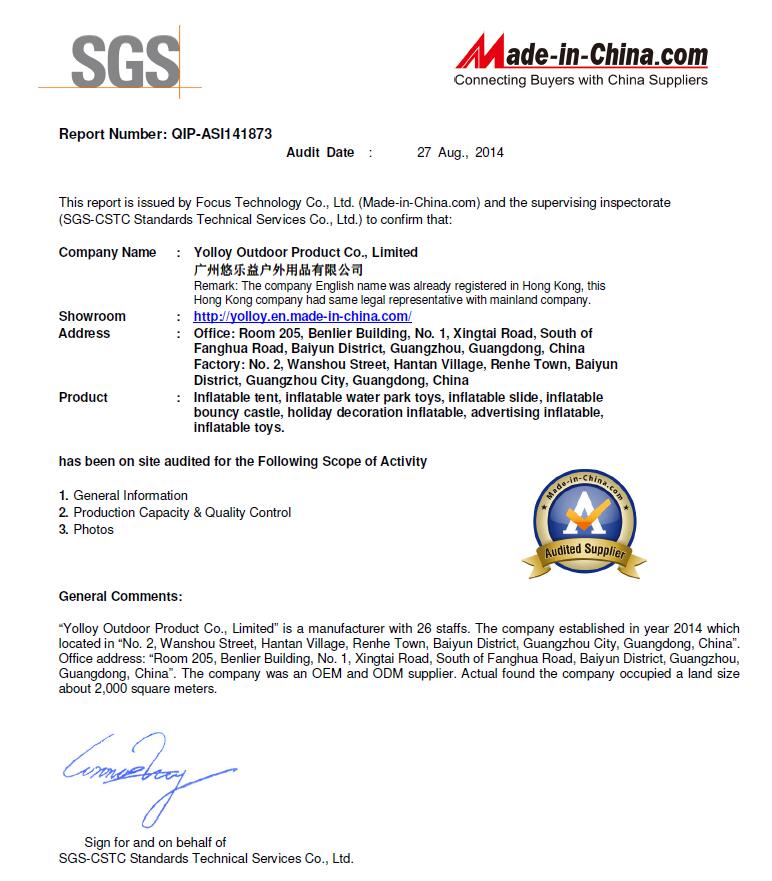
Many models from YOLLOY, a professional inflatable product manufacturer based in Guangzhou, China, come with custom sizing options — you can specify the exact dimensions, color scheme, and logo printing to match your brand identity. YOLLOY's inflatable sport tent lineup covers tennis, football, golf simulators, and multi-sport configurations. Every product is built with reinforced seams, waterproof nylon thread, and high-temperature fusion welding for airtight integrity. The company also supplies appropriately powered blowers in 110V, 220V, or 380V to meet regional electrical requirements.
When to Choose an Inflatable Shelter
If your priority is a versatile enclosed space that can adapt to multiple scenarios — from a pop-up car detailing booth to a field hospital, a temporary storage unit, or a field kitchen — an inflatable shelter is the right call. Shelters are generally more compact and easier to deploy solo, making them ideal for rapid-response situations or small teams that need to set up and tear down frequently.
YOLLOY's inflatable shelters are manufactured with commercial-grade PVC tarpaulin that has passed EN71, EN14960, and RoHS testing. They come with D-ring or round metal anchor systems for reliable ground fixation, and a repair kit is included with every purchase. The minimum order quantity is just one piece, making these shelters accessible for businesses testing a new concept or needing a single custom unit. Production typically takes 6-15 days for a regular product, with air and sea shipping options available.
Factors to Consider Before Buying
- Intended use: Be clear about your primary activity. A shelter will not give you the ceiling height for badminton; a sport tent will not give you the compact, fully enclosed space needed for a spray booth.
- Material quality: Look for commercial-grade PVC or high-density Oxford fabric. YOLLOY uses precision sewing equipment and reinforces all high-load areas. Materials used in their products have passed relevant safety and quality testing.
- Wind resistance: Both structures need proper anchoring, but sport tents — with their larger profiles — demand more robust anchoring systems. YOLLOY's built-in D-ring and metal anchor systems are designed to handle outdoor wind conditions when installed correctly.
- Portability: Both types pack down into transportable sizes, but sport tents are generally heavier and bulkier due to their larger dimensions. Consider how often you will move the structure.
- Customization: Whether you need a specific color scheme, company logo, or unique dimensions, working with a manufacturer that offers a custom design-to-production service gives you a tailored product. YOLLOY's designers prepare simulation renderings from customer proposals and revise the design until approval before production begins.
- After-sales support: Check that the manufacturer provides repair kits, answers inquiries promptly, and offers clear warranty terms. YOLLOY states a 95% on-time delivery rate and responds to emails and faxes within 24 hours. A repair kit is supplied with every inflatable product.
Neither an inflatable sport tent nor an inflatable shelter is universally "better" — the right choice depends entirely on what you plan to do with it. For sports and events, the sport tent's open layout and height make it the clear winner. For multi-purpose enclosure needs, the shelter's compact, weatherproof design takes the lead. Whichever direction you go, finding the best inflatable tents from a reliable manufacturer that offers customization, quality materials, and responsive support will make all the difference in your long-term satisfaction.