An inflatable slide is a large-scale recreational structure built from heavy-duty PVC-coated fabric and supported by a continuous electric blower. It typically includes a climbing area, one or more slide lanes, and a landing zone — with a splash pool at the bottom when designed for wet use. These attractions are widely used by rental businesses, amusement parks, resorts, community event organizers, and private homeowners looking for high-impact entertainment.
How Does an Inflatable Slide Work?
Unlike a balloon that you inflate once and seal, an inflatable slide operates on a continuous airflow system. An electric blower constantly pushes air into the structure, maintaining internal pressure slightly higher than the outside atmosphere. Air naturally escapes through seams, stitching, and built-in pressure relief valves — and the blower continuously replaces it. This is why the slide stays firm throughout use, and why unplugging the blower causes it to soften within minutes.
Inside the slide, the structure is not just an empty cavity. Internal fabric walls called baffles connect the top and bottom surfaces, distributing air pressure and mechanical stress evenly across the unit. These baffles prevent bulging, maintain the slide's shape under load, and reduce the risk of seam failure at high-stress points.
For water slides, a standard garden hose connects to a built-in sprinkler line that runs to the top of the slide. Spray nozzles mist the sliding surface with a thin layer of water, reducing friction and creating a fast, smooth ride. Drain ports at the base of the splash pool allow quick water removal before deflation and packing.
Main Components of an Inflatable Slide
A well-designed inflatable slide consists of several interconnected structural elements, each serving a specific purpose:
- Base chamber — Provides a wide, stable footprint that keeps the unit grounded during active use.
- Climbing wall or steps — Reinforced with handholds or textured surfaces for safe ascent.
- Slide lane — A smooth, often reinforced surface designed for speed and durability. Multi-lane models are available for higher throughput.
- Top platform — The launch area at the top of the slide, built to support the weight of multiple users waiting their turn.
- Side rails — Inflated guard walls that keep sliders centered and prevent falls.
- Landing zone / splash pool — Cushions the finish. Water slides include a shallow pool; dry slides use an air-cushioned landing pad.
- Anchor points — D-rings or metal rings sewn into the base for securing the unit with stakes or sandbags.
- Blower tube — A reinforced fabric sleeve that connects the blower to the main air chamber.
Types of Inflatable Slides
Inflatable slides come in a range of configurations to suit different venues, age groups, and business models. Understanding the categories helps buyers match the right product to their target audience:
| Type | Best For | Key Features |
|---|
| Dry slides | Indoor playgrounds, shopping malls, dry events | No water system needed; fast setup; suitable for year-round use |
| Water slides | Backyard parties, water parks, summer camps | Built-in spray system and splash pool; high demand in warm seasons |
| Combo units | Rental businesses, family entertainment centers | Combines slide with bounce house; maximizes play value in one unit |
| Multi-lane slides | Large events, competitions, high-traffic venues | Two or more parallel lanes; higher rider throughput; racing appeal |
| Slip and slide models | Open lawns, sports days, summer events | Long horizontal sliding surface; simple design; lower cost |
For commercial operators, commercial inflatable water slides represent the most popular category. Products such as the Wave Rider Inflatable Slip N Slide, Double Lane Slip Inflatable Water City Slide with Pool, and Backyard Lawn Water Slip Slide are designed for frequent use in rental and venue settings, with reinforced construction at every wear point.
What Are Inflatable Slides Made Of?
The material choice directly determines how long a slide lasts and how safe it is under load. Commercial-grade inflatable slides are manufactured from heavy-duty PVC tarpaulin — typically a polyester fabric core laminated between two layers of PVC. This construction delivers high tensile strength, puncture resistance, and waterproofing. For specialized applications, materials such as Oxford fabric, nylon, or TPU may also be used based on client requirements.
Key construction standards that separate commercial units from lightweight consumer models include:
- Reinforced double-stitched seams using waterproof nylon thread, with additional reinforcement at high-load areas such as the climbing steps, platform edges, and slide lane entry points.
- High-temperature fusion welding for airtight sections, ensuring consistent pressure retention and resistance to delamination.
- Stress patches applied at corners, D-ring attachment points, and blower tube connections to prevent tear propagation.
- UV-resistant treatment to protect the fabric from sun degradation during outdoor use.
Materials used by a reputable inflatable slide manufacturer should meet international safety standards. YOLLOY's products are produced with materials that have passed EN71 (toy safety), EN14960 (inflatable play equipment), and EN15649 (floating leisure articles) testing. Blowers meet CE or UL requirements and are available in 110V, 220V, and 380V configurations to match local power standards.
Safety and Setup Guidelines
Safety on an inflatable slide depends on three factors: manufacturing quality, correct setup, and attentive supervision. Here are the essential practices every operator should follow:
- Anchoring — Use heavy-duty ground stakes driven at a 45-degree angle on grass or soil. On hard surfaces, use sandbags or water barrels weighing at least 20–30 kg per anchor point. Every D-ring should be secured.
- Wind monitoring — Deflate and secure the unit if sustained winds exceed 25 mph (approximately 40 km/h). Wind is the single biggest environmental risk for inflatable structures.
- Weight limits — Always observe the manufacturer's stated maximum load and rider count. Overloading stresses seams and baffles, increasing the risk of structural failure.
- Electrical safety — Connect the blower to a GFCI-protected outlet using a heavy-duty outdoor-rated extension cord. Keep all electrical connections elevated and away from water.
- Ground protection — Place a large tarp under the entire unit to protect the bottom from abrasion, dirt, and moisture. Inspect the setup area for sharp objects before unrolling.
- Supervision — An adult should monitor the slide at all times. Enforce one rider per lane, no diving, no climbing on side walls, and no sharp objects on the unit.
What to Look for When Choosing an Inflatable Slide
Whether you are starting a rental business or expanding an existing amusement facility, the quality of your equipment directly affects your revenue and reputation. Here are the factors that matter most when selecting a supplier:
| Factor | Why It Matters |
|---|
| Material grade | Commercial PVC tarpaulin with proper thickness (0.55mm+) ensures multi-year durability under frequent use. |
| Certifications | EN71, EN14960, and EN15649 compliance confirms the product has passed independent safety testing. |
| Customization | A manufacturer that offers custom sizes, colors, and logo printing lets you differentiate your business and match brand requirements. |
| Minimum order quantity | Some suppliers require bulk orders. A flexible MOQ (as low as one piece) allows smaller businesses to start without overcommitting. |
| Production lead time | Standard production of 6–15 days for regular items keeps your inventory pipeline predictable. Complex custom designs may take longer. |
| Blower compatibility | Ensure the blower matches your local voltage (110V, 220V, or 380V) and is properly sized for the slide's air volume requirements. |
| After-sales support | A repair kit should be included with every unit. Responsive service — replies within 24 hours — is essential when you depend on the equipment for business. |
| Warranty | A reasonable service life expectation (e.g., 3 years with proper use and maintenance) gives you confidence in the investment. |
Conclusion
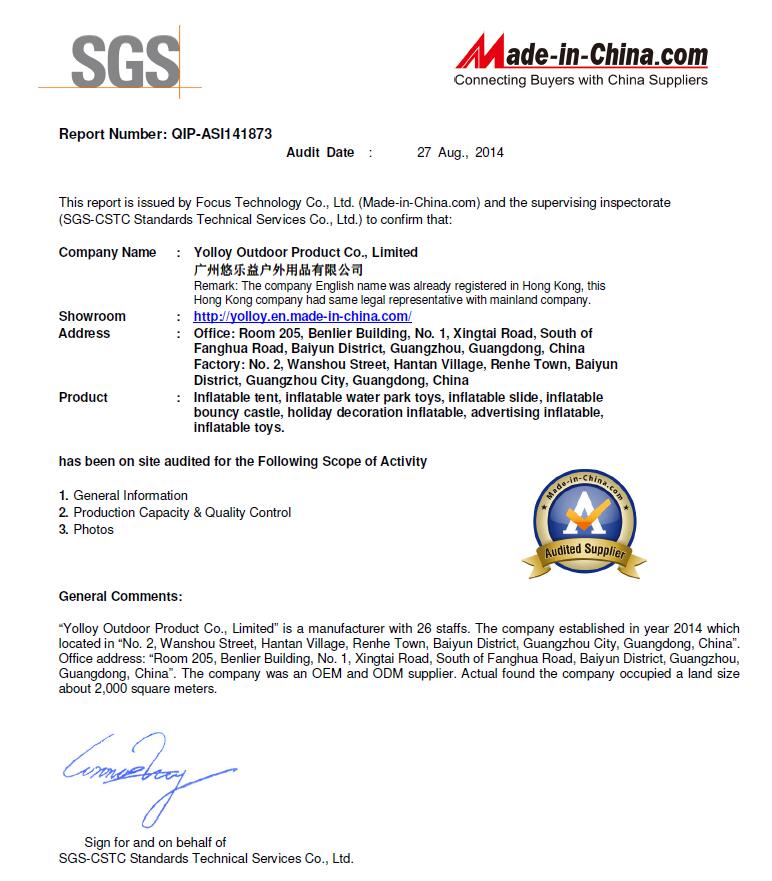
An inflatable slide is more than a party attraction — it is a revenue-generating asset when built to commercial standards. The combination of continuous airflow engineering, quality materials, and proper operational practices determines whether a slide delivers one season of fun or years of reliable service. By choosing a manufacturer that prioritizes material integrity, safety certifications, and customization flexibility, buyers can invest with confidence. YOLLOY Outdoor Product Co., Limited, based in Guangzhou, China, designs and manufactures inflatable slides that meet these criteria — serving clients across Europe, Asia, South America, Africa, the Middle East, and Latin America — with a commitment to safety, durability, and responsive service.