Products Category
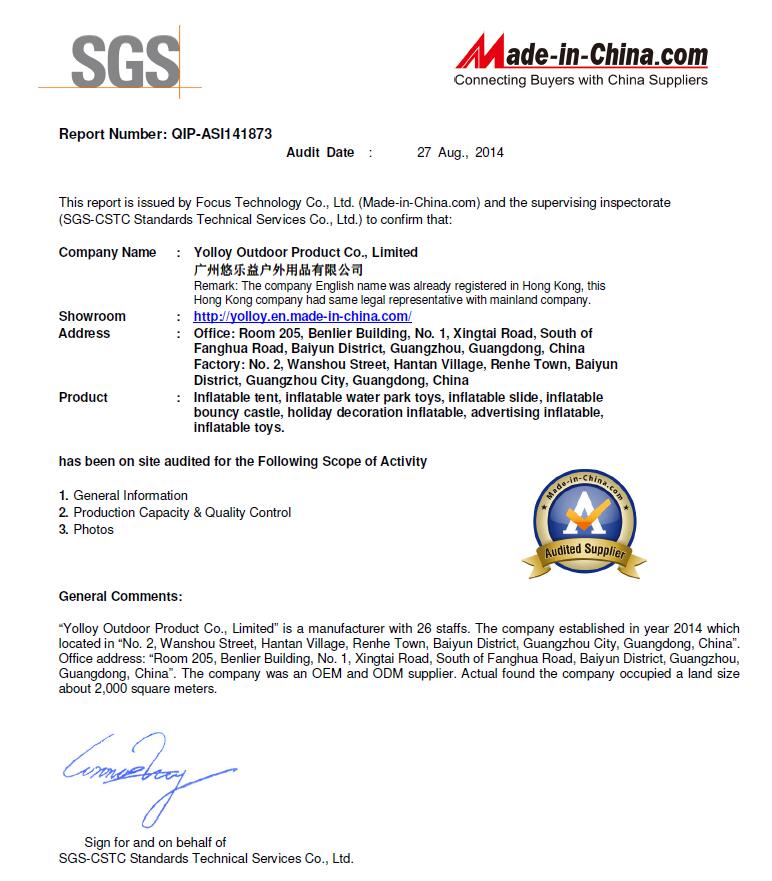
Certification

News

• New Order Successfully Finished for Long-Time Cooperated Japanese Client | YOLLOY Wins Full Client Recognition

• YOLLOY Custom Inflatable Pool Tent for Danish Client: Professional Pool Repair Shelter & Debris Protection

• Trusted Once Again! Greek Captain Re-orders Our Products After 4 Years

• Revolutionize Your Outdoors: The All-Terrain Inflatable Floating Tent for Land & Water

• Elevate Your Summer Fun: The Ultimate Inflatable Water Floating Volleyball Court Trampoline

• Innovative Inflatable Nightclub Tents & Pop-Up Bars: The Ultimate Solution for Portable Party Venues

Contact Us

Name: Sunny Yang
Tel: +86-20-8370 0771
Fax: +86-20-8370 0771
Mobile: 13570587575
E-mail: [email protected]
Add: No 5,Xiong wei Bo Nan Road,ZhongLuoTan Town,Baiyun district,Guangzhou,China
Friend me on Facebook Follow me on Twitter Add me to your circles Follow me on Pinterest Watch my channel on YouTube
News

What is a raft with tent?

Author:yolloy Date:2026/8/18 17:43:32
A raft with tent is an inflatable floating platform that carries a tent shelter on top, letting you camp, fish, or simply relax on the surface of calm water. Instead of pitching a tent on the shore, you inflate the raft, launch it onto a lake or a calm river, and the tent rises above the water to give you a dry, shaded place to sleep, cook, or rest. In short, it is a floating campsite that combines the buoyancy of a raft with the comfort of a tent.
This type of product has become increasingly popular with outdoor enthusiasts, anglers, and even commercial operators. Whether you call it a floating tent, a boat tent, or a raft camper, the idea is the same: turn open water into usable living space. For anyone looking for a portable way to spend a night on the lake, an inflatable boat tent is worth understanding before you buy.
How a raft with tent works
The design is simple but effective. The base is a large inflatable raft or floating platform made from airtight fabric, usually commercial-grade PVC tarpaulin. Once inflated, it displaces enough water to stay afloat under the combined weight of people and gear. The tent is attached to the platform, either sewn in or connected with zippers and straps, and its frame is often made from inflatable air beams rather than metal poles. This means the whole structure, raft and tent together, can be packed flat, inflated on site, and launched without tools.
Most raft tents are inflated with a blower or an air pump. Larger models use a continuous low-pressure blower to keep the air beams firm, while smaller units can be inflated with a hand or foot pump. Once the platform is stable on the water, anchor lines and D-rings keep it in position so it does not drift with the wind or current. Because the entire unit deflates, it packs into a carrying bag that fits easily in a car, making it far more portable than a rigid boat.
Common types of raft tents
Raft tents come in several forms depending on how they are used:
- Fishing raft tents: a compact platform with a small shelter for shade and gear storage, popular with anglers who want to stay on the water all day.
- Family floating tents: larger platforms with room for several people, often with a wide sleeping area or multiple rooms.
- Boat tents: shelters designed to fit on inflatable boats, giving overnight campers a protected sleeping compartment.
- Floating island tents: big, stable platforms used for events, parties, or resort water activities.
If you are planning to buy one, an inflatable floating tent can be made in custom sizes and colors, and it can be printed with your own logo or artwork for commercial use.
Materials and build quality
Because a raft with tent lives on the water, material quality matters more than with a normal tent. Commercial-grade PVC tarpaulin is the most common material for the raft base because it is airtight, waterproof, and resistant to abrasion and UV damage. Some tent sections use Oxford fabric, nylon, or TPU depending on the project and budget. Reinforced seams, waterproof thread, and extra layers at high-load areas help the structure handle wind and repeated use.
Safety testing is another point to check. Reputable manufacturers test their products against standards such as EN71, EN14960, and RoHS, and blowers are built to meet CE or UL requirements. For larger or commercial units, D-ring or round metal anchor systems are incorporated where needed for installation and wind resistance. A good supplier will also inspect and test every product before shipment.
Why people use raft tents
A raft with tent turns open water into a usable campsite. Fishermen can cast from a sheltered platform all day and sleep on the water overnight. Campers can enjoy a lake view without giving up the comfort of a tent. Resorts and water parks use floating platforms to add new attractions, and event organizers use them for floating stages, lounges, and photo spots. Because the whole unit deflates and packs small, it is easy to transport and store between trips.
Safety and maintenance tips
- Only use a raft with tent on calm water. Avoid strong winds, currents, and open seas.
- Anchor the platform properly and check the weight limit before loading.
- Inflate to the recommended pressure and check valves and seams for leaks before launching.
- Rinse the fabric with fresh water after use, especially in salt or chlorinated water.
- Dry the unit completely before storing it deflated to prevent mold.
- Inspect seams and high-wear areas after each trip, and use the supplied repair kit for small punctures.
How to choose a raft with tent
Start with the number of people and the total weight capacity you need. Then consider the water conditions you will use it in, the quality of the fabric and seams, and how quickly it inflates and deflates. Ventilation inside the tent is important in warm weather, and anchor points matter for stability. If you plan to use it commercially or for many seasons, choose a model built with commercial-grade materials rather than a budget consumer unit.
Frequently asked questions
- Do I need a pump? Most raft tents include a blower or air pump; some smaller models use a hand or foot pump.
- Can I sleep on a raft with tent? Yes, most are designed for overnight use on calm water.
- Is a raft with tent safe in wind? Stability depends on anchoring and design; avoid rough conditions.
- How do I store it? Deflate, dry, and pack it in the carrying bag.
Conclusion
A raft with tent is a practical and enjoyable way to bring camping onto the water. Whether you are a fisherman, a family camper, or a business planning a water attraction, a well-built inflatable raft tent gives you shelter and stability without the weight of a rigid boat. As an inflatable camping tent manufacturer, YOLLOY designs and produces custom inflatable tents, floating platforms, and water park products to your size, color, and logo requirements. Contact YOLLOY to discuss your project.


What is a raft with tent?

Author:yolloy Date:2026/8/18 17:43:32

A raft with tent is an inflatable floating platform that carries a tent shelter on top, letting you camp, fish, or simply relax on the surface of calm water. Instead of pitching a tent on the shore, you inflate the raft, launch it onto a lake or a calm river, and the tent rises above the water to give you a dry, shaded place to sleep, cook, or rest. In short, it is a floating campsite that combines the buoyancy of a raft with the comfort of a tent.
This type of product has become increasingly popular with outdoor enthusiasts, anglers, and even commercial operators. Whether you call it a floating tent, a boat tent, or a raft camper, the idea is the same: turn open water into usable living space. For anyone looking for a portable way to spend a night on the lake, an inflatable boat tent is worth understanding before you buy.
How a raft with tent works
The design is simple but effective. The base is a large inflatable raft or floating platform made from airtight fabric, usually commercial-grade PVC tarpaulin. Once inflated, it displaces enough water to stay afloat under the combined weight of people and gear. The tent is attached to the platform, either sewn in or connected with zippers and straps, and its frame is often made from inflatable air beams rather than metal poles. This means the whole structure, raft and tent together, can be packed flat, inflated on site, and launched without tools.
Most raft tents are inflated with a blower or an air pump. Larger models use a continuous low-pressure blower to keep the air beams firm, while smaller units can be inflated with a hand or foot pump. Once the platform is stable on the water, anchor lines and D-rings keep it in position so it does not drift with the wind or current. Because the entire unit deflates, it packs into a carrying bag that fits easily in a car, making it far more portable than a rigid boat.
Common types of raft tents
Raft tents come in several forms depending on how they are used:
- Fishing raft tents: a compact platform with a small shelter for shade and gear storage, popular with anglers who want to stay on the water all day.
- Family floating tents: larger platforms with room for several people, often with a wide sleeping area or multiple rooms.
- Boat tents: shelters designed to fit on inflatable boats, giving overnight campers a protected sleeping compartment.
- Floating island tents: big, stable platforms used for events, parties, or resort water activities.
If you are planning to buy one, an inflatable floating tent can be made in custom sizes and colors, and it can be printed with your own logo or artwork for commercial use.
Materials and build quality
Because a raft with tent lives on the water, material quality matters more than with a normal tent. Commercial-grade PVC tarpaulin is the most common material for the raft base because it is airtight, waterproof, and resistant to abrasion and UV damage. Some tent sections use Oxford fabric, nylon, or TPU depending on the project and budget. Reinforced seams, waterproof thread, and extra layers at high-load areas help the structure handle wind and repeated use.
Safety testing is another point to check. Reputable manufacturers test their products against standards such as EN71, EN14960, and RoHS, and blowers are built to meet CE or UL requirements. For larger or commercial units, D-ring or round metal anchor systems are incorporated where needed for installation and wind resistance. A good supplier will also inspect and test every product before shipment.
Why people use raft tents
A raft with tent turns open water into a usable campsite. Fishermen can cast from a sheltered platform all day and sleep on the water overnight. Campers can enjoy a lake view without giving up the comfort of a tent. Resorts and water parks use floating platforms to add new attractions, and event organizers use them for floating stages, lounges, and photo spots. Because the whole unit deflates and packs small, it is easy to transport and store between trips.
Safety and maintenance tips
- Only use a raft with tent on calm water. Avoid strong winds, currents, and open seas.
- Anchor the platform properly and check the weight limit before loading.
- Inflate to the recommended pressure and check valves and seams for leaks before launching.
- Rinse the fabric with fresh water after use, especially in salt or chlorinated water.
- Dry the unit completely before storing it deflated to prevent mold.
- Inspect seams and high-wear areas after each trip, and use the supplied repair kit for small punctures.
How to choose a raft with tent
Start with the number of people and the total weight capacity you need. Then consider the water conditions you will use it in, the quality of the fabric and seams, and how quickly it inflates and deflates. Ventilation inside the tent is important in warm weather, and anchor points matter for stability. If you plan to use it commercially or for many seasons, choose a model built with commercial-grade materials rather than a budget consumer unit.
Frequently asked questions
- Do I need a pump? Most raft tents include a blower or air pump; some smaller models use a hand or foot pump.
- Can I sleep on a raft with tent? Yes, most are designed for overnight use on calm water.
- Is a raft with tent safe in wind? Stability depends on anchoring and design; avoid rough conditions.
- How do I store it? Deflate, dry, and pack it in the carrying bag.
Conclusion
A raft with tent is a practical and enjoyable way to bring camping onto the water. Whether you are a fisherman, a family camper, or a business planning a water attraction, a well-built inflatable raft tent gives you shelter and stability without the weight of a rigid boat. As an inflatable camping tent manufacturer, YOLLOY designs and produces custom inflatable tents, floating platforms, and water park products to your size, color, and logo requirements. Contact YOLLOY to discuss your project.