Air dancers, also known as tube men, sky dancers, or inflatable tube men, are one of the fastest ways to pull eyes toward a storefront, a car lot, a grand opening, or a festival booth. They wave, twist, and dance in the wind all day long, and they do it for a fraction of the cost of a billboard. But here is the catch: not every supplier can build one that keeps dancing. The difference between a tube man that performs all season and one that slumps by noon comes down to materials, blowers, and the way the fabric is put together. If you are sourcing for a business, this guide walks through exactly what to check before you commit to an inflatable air dancer manufacturer.
Start with a real manufacturer, not a middleman
The first question to ask is who actually builds the product. A genuine manufacturer controls the fabric, the seams, the blower, and the quality checks from start to finish. Resellers and trading companies may offer friendly service, but they do not control the build, which means you have no direct line to the people who can fix a problem or adjust a design. When you compare inflatable air dancer manufacturers, look for a factory that can show you its own production line, its own materials, and its own quality process. Working directly with the factory also usually means better pricing, because you are not paying for an extra layer in the middle.
Check the fabric and the seams first
An air dancer is basically a long fabric tube kept upright by air pressure, so the fabric is everything. Commercial-grade PVC tarpaulin is the standard for products that live outdoors in sun and wind. Ask the supplier what material they use, how heavy it is, and whether it holds up to UV exposure. Just as important is the seam work. A tube man is stitched and welded along long seams, and any weak point can turn into a tear under pressure. Look for precision sewing equipment, reinforced seams, and waterproof nylon thread, with extra reinforcement at the high-load areas where the tube attaches to the base and the blower. Airtight sections should be joined with high-temperature fusion or welding, not just stitching, so the tube holds its shape all day.
The blower is half the product
An air dancer only works when the blower keeps pushing air. That makes the blower as important as the fabric. A good supplier matches the blower to the size and height of the tube, so the dancer stands tall and moves naturally instead of sagging. Check whether the blower meets CE or UL requirements, how much power it draws, and whether it is built for continuous operation through a full business day. Also confirm that the supplier can provide blowers for your local voltage, whether that is 110V, 220V, or 380V. Ask about spare blowers and spare parts, because a spare on the shelf is cheaper than a day of lost advertising.
Customization is where the value shows up
Most buyers do not want a generic tube man. They want their brand colors, their logo, and often a custom shape or size that fits the space in front of their store. A strong manufacturer runs a design-to-production workflow: you send a description, a drawing, a sketch, a photograph, or even just a budget, and the designer prepares simulation renderings for your approval before anything goes into production. Revisions are part of the process, so the final product matches what you imagined. The best part is that customization does not have to mean large volume. Many factories accept an order of a single piece, which is ideal if you want to test one inflatable air dancer before scaling up.
Safety and certifications matter more than you think
An air dancer is a tall, wind-catching structure, so safety should be part of the conversation from day one. Ask whether the materials have passed relevant testing such as EN71, EN14960, and RoHS, and whether the blower is CE or UL certified. A responsible manufacturer also builds in anchoring. Look for D-ring or round metal anchor systems that keep the tube stable in windy conditions, and ask for realistic wind guidance so your team knows when to take it down. These details are easy to overlook when you are comparing prices, but they are exactly what keeps a promotion safe and trouble-free.
Quality control separates good factories from the rest
You cannot see a weak seam or a bad weld from a product photo, so ask about the quality control process. A reliable manufacturer inspects and tests products before shipment, including pressure testing, seam inspection, and a final check of the print and colors under good lighting. Some factories will even share pre-shipment photos or videos so you can confirm the finished air dancer looks right before it leaves the workshop. If a supplier cannot describe its QC process, that is a red flag worth taking seriously.
Lead times, delivery, and after-sales support
Timing matters when you are planning an event or a seasonal promotion. A typical production window for one regular inflatable product is around 6 to 15 days, with more complex or larger custom builds taking longer. Ask about on-time delivery rates and shipping options before you order. Air freight can take roughly 5 to 7 days, while sea freight is more economical but can take 15 to 30 days or more, so plan accordingly. After-sales support is just as important. Look for a supplier that includes a repair kit with each product, answers emails within 24 hours, and stands behind a reasonable service life and warranty when the product is used and maintained correctly. That kind of support turns a one-time purchase into a long-term partnership.
Red flags to avoid when comparing suppliers
A few warning signs should send you looking elsewhere. Be cautious of suppliers that cannot show real examples of similar builds, that are vague about the exact material and seam method they use, that have no quality control process to describe, or that quote prices far below everyone else without explaining why. Also avoid anyone who cannot confirm certifications or who has no clear answer about what happens if the product arrives damaged or fails early. The cheapest quote is rarely the cheapest outcome once you factor in repairs, reprints, and lost advertising days.
Questions to ask before you place an order
Before you commit, put these questions to the supplier: What fabric do you use and how heavy is it? How are the seams reinforced? What blower do you recommend for my size and voltage, and is a spare available? Can you create a simulation rendering of my custom design before production? What certifications do your materials and blowers carry? How do you anchor the tube for windy conditions? What is your typical production time and on-time delivery record? What does your warranty cover, and do you supply a repair kit? A supplier that answers these clearly and honestly is worth working with.
Why YOLLOY is a solid choice for your air dancer
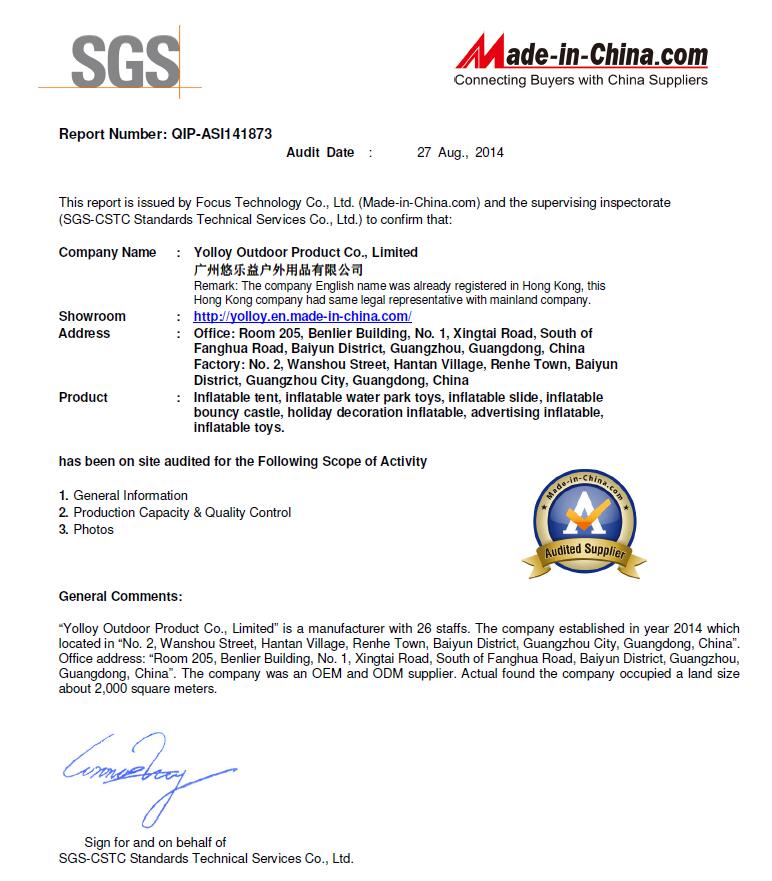
YOLLOY is an inflatable-product manufacturer and solution provider based in Guangzhou, China, and it checks the boxes above. The company builds custom advertising inflatables, including inflatable air sky dancers, arches, and advertising models, using commercial-grade PVC tarpaulin with precision sewing and reinforced seams. Its blowers meet CE or UL requirements and can be supplied for 110V, 220V, or 380V. Materials have passed EN71, EN14960, and RoHS-related testing, and products are inspected before shipment. YOLLOY accepts custom designs from a description, drawing, sketch, or photograph, works from a minimum order of one piece, reports a 95% on-time delivery rate, includes a repair kit with each product, and answers inquiries within 24 hours. If you are ready to order a custom air dancer inflatable for your next promotion, contact the YOLLOY team to get a quote and a design rendering for your own tube man.