A blow up slide for lake — also known as an inflatable lake slide — is a floating or shore-based inflatable structure designed specifically for use on lakes and other open bodies of water. Unlike standard backyard inflatable water slides, lake slides are built to handle the unique challenges of a natural water environment: deeper water landings, anchoring on shorelines or floating platforms, and exposure to wind and waves.
At its core, a blow up slide for lake works the same way as any commercial inflatable water slide: a continuous-flow electric blower pumps air into the structure, keeping it firm and stable throughout use. The slide surface is wetted by a connected hose or by the lake water itself, creating a slick lane for fast, smooth sliding. The key difference is in how the slide is positioned and anchored — lake slides typically launch from a dock, a floating platform, or the shoreline, with the landing zone being the lake water itself rather than a splash pool.
How Does an Inflatable Lake Slide Work?
An inflatable lake slide relies on a constant air pressure system. A blower fan pushes air into the slide continuously while it is in use. The internal pressure stays slightly higher than the outside air, which keeps the structure rigid. Small amounts of air escape through seams and stitching — this is normal, and the blower constantly replaces it. If the blower is unplugged, the slide will begin to soften within minutes.
The slide lane is kept slippery by water. A standard garden hose connects to a spray line at the top of the slide, misting the sliding surface. On a lake, the slide is often positioned so that riders land directly in the water, eliminating the need for a splash pool at the bottom. This makes lake slides an especially exciting attraction — the natural water body serves as both the landing zone and the water source.
What Makes a Lake Slide Different from a Backyard Slide?
Lake slides are built with features that address the demands of open-water environments. They are typically larger and more robust than backyard units. The materials used are commercial-grade — heavy-duty PVC tarpaulin with reinforced stitching at high-stress areas such as the climbing steps, the top platform, and the slide lane seams.
The anchor system is also more rigorous. In addition to ground stakes for shoreline use, lake slides may use D-ring or round metal anchor points that can be secured to docks, floating platforms, or weighted anchors in the water. This dual anchoring approach keeps the slide stable even when waves or wind are present.
Another important consideration is water resistance and UV protection. A lake slide is exposed to direct sunlight and water for extended periods, so the materials must resist fading, mildew, and material degradation. Commercial-grade PVC tarpaulin — the same material used in professional inflatable water parks — provides excellent durability in these conditions.
Materials and Construction Quality
The quality of a blow up slide for lake depends heavily on the materials and manufacturing process. Commercial-grade slides use PVC tarpaulin with a thickness of 0.55mm to 0.9mm, which provides puncture resistance and structural integrity. The seams are double or quadruple-stitched with waterproof nylon thread, and additional reinforcement patches are applied at high-load areas such as climbing footholds, top platform edges, and the base of the slide lane.
Quality manufacturers use precision sewing equipment and high-temperature fusion welding for airtight sections. Relevant materials are tested to meet safety standards including EN71, EN14960, and EN15649. Blowers are supplied to meet CE or UL requirements and can be configured for 110V, 220V, or 380V power systems depending on the destination country. A well-constructed commercial slide can serve reliably for multiple seasons when properly maintained.
Setting Up an Inflatable Slide on a Lake
Setting up a lake slide requires careful planning. The first step is selecting a suitable location — the shoreline should be reasonably level, and the water entry area should be deep enough for safe landing but not so deep that supervision becomes difficult. Clear the area of sharp rocks, branches, and debris that could puncture the inflatable.
The setup process follows a clear sequence:
- Unroll and position: Lay down a protective tarp and unroll the slide on top of it. Position the slide with enough clearance around all sides for safe entry and exit.
- Connect the blower: Attach the blower to the inflation tube and power it on. Allow the slide to reach full firmness before proceeding.
- Anchor securely: On the shore side, drive heavy-duty ground stakes at a 45-degree angle. For the water-facing side, secure the slide to dock cleats, floating platform anchors, or use weighted sandbags of at least 20–30 kg per anchor point.
- Connect water: Attach a garden hose to the spray line at the top of the slide and adjust the water flow for even coverage across the sliding surface.
- Safety check: Verify that the structure is fully firm, all anchor points are tight, the landing zone is clear of obstacles, and the blower is connected to a GFCI-protected outlet with a properly rated outdoor extension cord.
Safety Tips for Lake Slide Operation
Operating a blow up slide on a lake comes with specific safety considerations that go beyond standard inflatable slide rules:
- Adult supervision is essential at all times. Never leave the slide unattended while it is inflated and in use.
- Follow the manufacturer's weight and capacity limits. Overloading is one of the most common causes of accidents and material stress. One rider per lane is the standard rule unless the slide is specifically designed for simultaneous use.
- Monitor wind conditions. If sustained winds reach 25–30 mph, deflate the unit immediately. Lake environments can experience sudden gusts, so stay alert to changing weather.
- Ensure swimming ability. All participants should be comfortable swimming in lake water, since the landing zone is open water rather than a contained splash pool.
- Keep electricity away from water. The blower and all electrical connections must be positioned on dry ground, away from the water's edge. Use only outdoor-rated, GFCI-protected power sources and heavy-duty extension cords.
- Inspect before each use. Check the slide for any signs of wear, loose seams, or damage to the anchor points. Repair any small tears immediately with a vinyl patch kit to prevent them from growing larger.
Maintenance and Storage
Proper maintenance directly affects how long a lake slide will last. After each use, drain any water from the slide through the dedicated drain ports. Allow the slide to dry completely before rolling it up — storing it while damp will cause mold and mildew, which can rot the seams and fabric over time.
When not in use, store the slide in a cool, dry place away from direct sunlight. UV rays are the biggest long-term enemy of PVC fabric, so indoor storage is strongly recommended. Most quality inflatable slides come with a heavy-duty PVC carry bag for convenient transport and storage. A repair kit is typically included, and small punctures should be addressed promptly to keep the slide in top condition.
Choosing a Reliable Inflatable Lake Slide Supplier
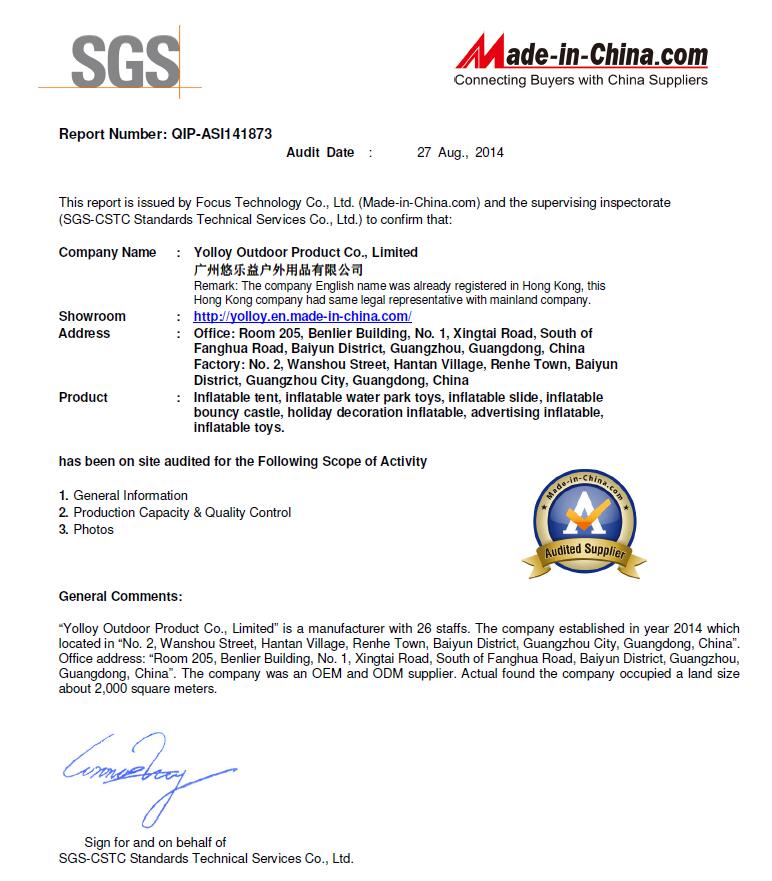
When purchasing an inflatable water slide for lake use, working with an experienced manufacturer makes a significant difference in product quality and after-sales support. YOLLOY Outdoor Product Co., Limited, based in Guangzhou, China, is a specialized commercial inflatable water slide manufacturer that designs and produces custom inflatable products for lakes, pools, water parks, and resorts worldwide.
As a factory-direct supplier, YOLLOY offers a complete design-to-production service. Customers can provide a concept description, sketch, or photograph, and the YOLLOY design team will create simulation renderings for approval before moving to production. Custom sizes, colors, and branding are available, and the minimum order quantity is one piece — making it accessible for businesses of all sizes.
Each inflatable product is supplied with a repair kit and appropriately powered blowers configured for local voltage requirements (110V, 220V, or 380V). The company states a 95% on-time delivery rate, and products are shipped worldwide by air or sea. YOLLOY's products are exported to Europe, Asia, South America, Africa, the Middle East, and Latin America, serving rental businesses, resorts, camps, and event organizers across the globe.
For businesses looking to add a lake slide to their rental inventory, or for resorts and summer camps seeking a durable water attraction, choosing a commercial-grade inflatable lake slide from a dedicated manufacturer ensures long-term performance, safety, and reliable customer support.