Paintball is a fast-paced sport that demands agility, strategy, and reliable cover. At the heart of any well-designed field lies one essential element: inflatable paintball bunkers. These air-filled obstacles provide players with safe, portable, and highly customizable cover, replacing traditional wooden barricades and concrete structures with a more practical solution. Whether you operate a professional paintball arena, an airsoft field, or a backyard setup, understanding what inflatable paintball bunkers are and how they work is the first step toward building a better playing experience.
What Are Paintball Inflatable Bunkers?
A paintball inflatable bunker is a hollow, air-filled structure made from heavy-duty PVC tarpaulin or reinforced fabric, designed to serve as cover during paintball matches. These bunkers come in various shapes — cylinders, wedges, rectangles, towers, and angled barriers — and are inflated using an electric blower. Once inflated, they become firm, impact-resistant obstacles that players can hide behind, shoot around, and use to advance strategically across the field.
Unlike permanent wooden or concrete barricades, paintball inflatable bunkers are portable and can be set up in minutes. They are widely used in speedball tournaments, recreational paintball fields, airsoft competitions, laser tag arenas, and even team-building events. Their lightweight nature and rapid deployment make them the go-to choice for field operators who need to reconfigure layouts between games or transport equipment between venues.
Materials and Construction
The durability of an inflatable bunker depends on the quality of materials and manufacturing techniques. High-quality bunkers are made from commercial-grade PVC tarpaulin, a material known for its tear resistance, weatherproofing, and UV stability. This fabric is composed of a polyester mesh base coated with PVC on both sides, creating a strong yet flexible surface that can absorb repeated impacts from paintballs traveling at high velocities.
Key construction features that separate reliable bunkers from cheap alternatives include:
- Reinforced seams: Double-stitched or high-frequency welded seams prevent air leakage at stress points. Precision sewing equipment and waterproof nylon thread ensure long-lasting airtightness.
- Multi-chamber air cells: Internal baffles divide the bunker into interconnected chambers. If one chamber is punctured, adjacent cells maintain structural integrity, keeping the bunker functional during a match.
- Anchor systems: D-ring or round metal anchor points allow the bunker to be securely staked into the ground, preventing movement during windy conditions or aggressive play.
- High-temperature fusion welding: For airtight products, heat-welding creates seamless bonds that are stronger than glued or stitched alternatives.
Common Types of Inflatable Paintball Bunkers
A well-designed paintball field uses a mix of bunker shapes to create dynamic gameplay. Here are the most common types found on tournament and recreational fields:
| Bunker Type | Typical Dimensions | Best Use |
|---|
| Cylinder / Can | 5–7 ft tall, 3–5 ft diameter | Vertical cover, ideal for standing players and long sightlines |
| Wedge / Dorito | 4–6 ft wide, 3–5 ft tall | Angled cover for crouching and snap-shooting from the sides |
| Rectangular Slab / Brick | 6–8 ft long, 3–4 ft tall | Low-profile cover for prone or kneeling positions |
| Tower / Temple | 6–8 ft tall, 4–6 ft wide | Large central obstacles for midfield control points |
| Snake Beam | 8–12 ft long, 2–3 ft tall | Low crawl cover for advancing along the tape line |
| Barrel Obstacle | 3–5 ft tall, 3–4 ft diameter | Compact cover for tight spaces and corner positions |
By combining different shapes and sizes, field designers can create balanced layouts that reward both aggressive and defensive play styles. The modular nature of these bunkers means layouts can be rearranged between games to keep the experience fresh for returning players.
Key Benefits of Inflatable Bunkers
Rapid Setup and Portability
A single inflatable bunker can be fully deployed in under ten minutes using an electric blower. Deflation is just as quick — simply disconnect the blower, open the valve, and the bunker collapses for compact storage. This portability allows field operators to transport entire sets of bunkers in a standard vehicle and set up a tournament-grade field at any outdoor location within an hour.
Player Safety
Inflatable bunkers offer a significant safety advantage over rigid alternatives. Their soft, air-filled surfaces absorb impact, reducing the risk of injury when players dive, slide, or collide with obstacles during intense gameplay. The rounded edges and flexible walls eliminate the sharp corners and hard surfaces associated with wooden or metal barricades.
Weather Resistance
Commercial-grade PVC tarpaulin resists UV degradation, rain, and temperature fluctuations. Bunkers can remain inflated outdoors for extended periods without significant wear, making them suitable for permanent outdoor fields as well as temporary events. Materials that pass EN71, EN14960, and RoHS testing standards provide additional assurance of safety and environmental compliance.
Cost-Effectiveness
Compared to constructing permanent concrete or wooden structures, inflatable bunkers represent a fraction of the cost with far greater flexibility. They require no construction permits, no specialized labor for installation, and minimal ongoing maintenance. A complete set of bunkers can outfit an entire field for the price of a few permanent barricades.
Setup and Maintenance
Proper setup and care extend the service life of inflatable bunkers considerably. Follow these practices for best results:
- Inflation: Use a blower matched to the required voltage (110V, 220V, or 380V). Inflate to the manufacturer's recommended pressure — firm but not overfilled. Under-inflation causes excessive flexing, while over-inflation strains seams.
- Ground preparation: Clear the area of sharp objects, rocks, and debris before placing bunkers. A ground tarp underneath adds an extra layer of protection against abrasion.
- Anchoring: Secure all anchor points using stakes or sandbags. Never rely on the bunker's weight alone, especially in windy conditions.
- Cleaning: Wipe down surfaces with a mild soap solution after each use. Avoid harsh chemicals that can degrade the PVC coating.
- Storage: Deflate completely, ensure the bunker is dry, and store in a cool, dry place away from direct sunlight. Most manufacturers include a repair kit for minor punctures.
Customization Options
One of the biggest advantages of ordering from a dedicated manufacturer is the ability to customize. Custom sizes and colors are available to match brand identity or field aesthetics. Customer logos and artwork can be printed directly onto the bunker surface, turning each obstacle into a branding opportunity for paintball parks, event companies, and sports facilities. Bunkers can also be designed from a sketch, photograph, site plan, or specific budget — making it possible to create unique field layouts that stand out from competitors using off-the-shelf products.
Choosing the Right Supplier
When sourcing inflatable paintball bunkers, several factors distinguish a reliable supplier from the rest. Look for manufacturers that use commercial-grade PVC tarpaulin with reinforced seams, offer customization options, and provide clear information about materials, testing standards, and warranty terms. A supplier that includes a repair kit with each product and offers responsive after-sales support adds significant long-term value.
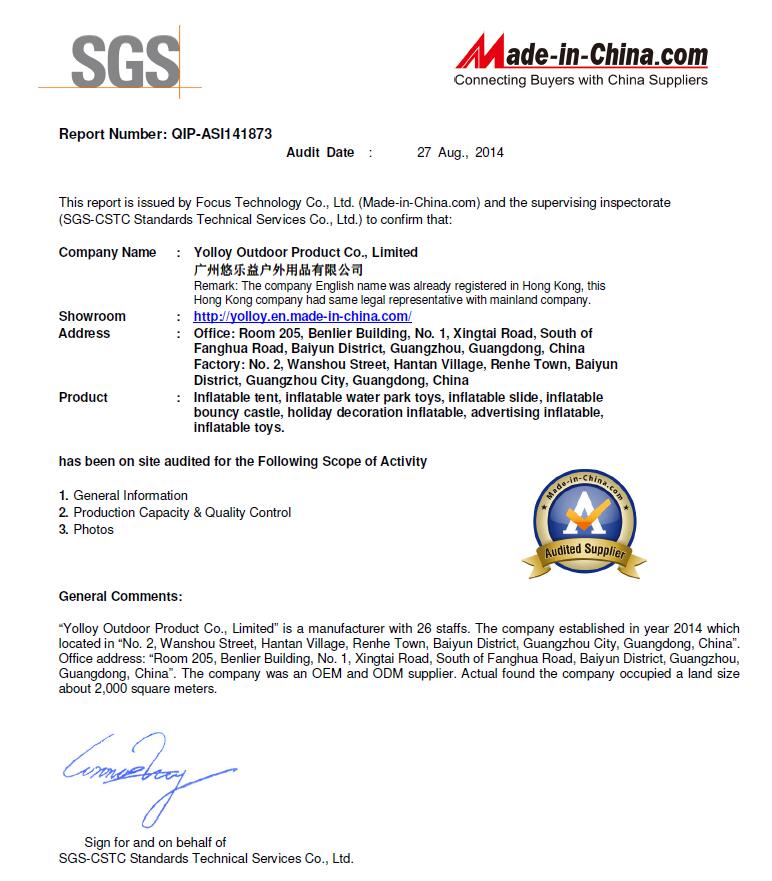
YOLLOY Outdoor Product Co., Limited, based in Guangzhou, China, is a specialized inflatable product manufacturer that designs and produces custom paintball inflatable bunkers for clients worldwide. With a complete design-to-production workflow, YOLLOY creates bunkers in various shapes — including barrel obstacles, speedball air bunkers, and full air frame arenas — using precision sewing equipment, reinforced seams, and high-temperature fusion welding. Every product is inspected and tested before shipment, and materials meet EN71, EN14960, and RoHS-related testing standards.
YOLLOY at a glance: Custom sizes and colors available | Customer logos and artwork supported | Minimum order quantity of one piece | Typical production time of 6–15 days | Repair kit included with each product | Blowers available for 110V, 220V, and 380V requirements | Export to Europe, Asia, South America, Africa, the Middle East, and Latin America | Contact: [email protected]
Conclusion
Inflatable paintball bunkers have become an essential component of modern paintball, airsoft, and tactical gaming fields. Their combination of rapid deployment, player safety, weather resistance, and customization flexibility makes them superior to traditional fixed obstacles in nearly every scenario. Whether you are building a new field, upgrading existing equipment, or organizing a one-time event, investing in high-quality inflatable bunkers from an experienced manufacturer ensures reliable performance and long-term value. For more information about custom inflatable paintball bunkers, visit YOLLOY's paintball bunker collection or contact the team directly to discuss your specific requirements.
|