Products Category
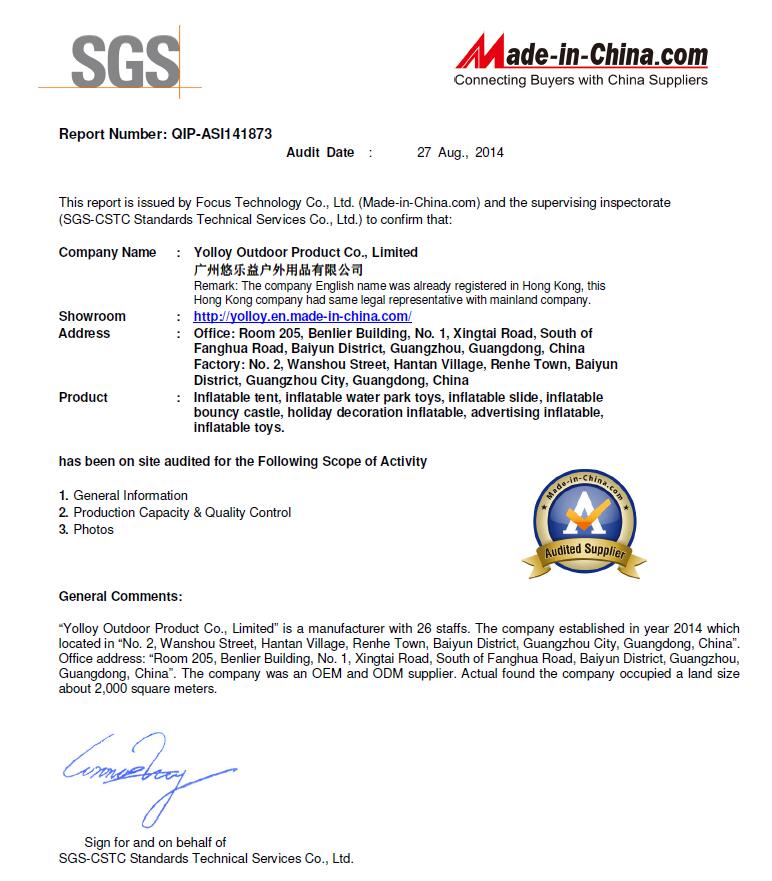
Certification

News

• New Order Successfully Finished for Long-Time Cooperated Japanese Client | YOLLOY Wins Full Client Recognition

• YOLLOY Custom Inflatable Pool Tent for Danish Client: Professional Pool Repair Shelter & Debris Protection

• Trusted Once Again! Greek Captain Re-orders Our Products After 4 Years

• Revolutionize Your Outdoors: The All-Terrain Inflatable Floating Tent for Land & Water

• Elevate Your Summer Fun: The Ultimate Inflatable Water Floating Volleyball Court Trampoline

• Innovative Inflatable Nightclub Tents & Pop-Up Bars: The Ultimate Solution for Portable Party Venues

Contact Us

Name: Sunny Yang
Tel: +86-20-8370 0771
Fax: +86-20-8370 0771
Mobile: 13570587575
E-mail: [email protected]
Add: No 5,Xiong wei Bo Nan Road,ZhongLuoTan Town,Baiyun district,Guangzhou,China
Friend me on Facebook Follow me on Twitter Add me to your circles Follow me on Pinterest Watch my channel on YouTube
News

What is the best inflatable tent for winter camping?

Author:yolloy Date:2026/8/15 8:08:19

Winter camping is an entirely different challenge from fair-weather outings. Freezing temperatures, gusting winds, and heavy snowfall demand a shelter that can withstand the elements while keeping you warm and comfortable. Among the many options available, the best inflatable tent designed for winter use has emerged as a game-changer for campers who value quick setup, reliable insulation, and structural integrity in harsh conditions. But what exactly makes an inflatable tent suitable for winter, and how do you choose the right one?

Why Choose an Inflatable Tent for Winter Camping?

Traditional pole tents can be cumbersome to pitch in cold weather. Frozen ground makes staking difficult, and cold-stiffened fingers struggle with complex pole systems. An inflatable camping tent solves these problems with air beam technology that replaces metal poles with reinforced TPU or PVC tubes. You simply lay out the tent, connect the pump, and within minutes the structure stands on its own. This is especially valuable when daylight is short and temperatures are dropping fast.

Beyond ease of setup, inflatable tents offer superior wind resistance. The flexible air beams absorb and dissipate gust energy rather than resisting it rigidly like aluminum poles. This means less risk of snapped poles during a winter storm. Many models also feature multi-point anchor systems with D-rings and reinforced guy lines, ensuring the tent stays put even in blizzard conditions.

Key Features of the Best Inflatable Tent for Winter Camping

1. Material Quality and Fabric Selection

The material of an inflatable winter tent is the single most important factor in its cold-weather performance. High-quality commercial-grade PVC tarpaulin is widely used for its waterproofing and tear resistance. For tents that need to be lighter or more breathable, Oxford fabric, nylon, and TPU are excellent alternatives. TPU air beams are particularly noteworthy because they remain flexible at temperatures as low as -40°C, whereas PVC can become brittle in extreme cold.

When evaluating a winter tent, look for fabrics with a waterproof rating of at least PU2000mm, though PU3000mm is recommended for snow-heavy regions. The fabric should also be treated with UV-resistant coatings to prevent degradation from winter sun reflecting off snow. Manufacturers like YOLLOY use precision sewing equipment with waterproof nylon thread and reinforce all seams at high-stress areas, ensuring long-term durability even in demanding environments.

2. Insulation and Weather Resistance

A winter tent must do more than block wind: it needs to retain heat. Double-layer construction is a key feature to look for. The outer layer handles wind, rain, and snow, while the inner layer traps warm air. Some designs incorporate snow skirts around the base perimeter, which can be buried under snow to seal out drafts and create an insulated barrier.

The tent's shape also affects its winter performance. Dome and tunnel structures shed snow naturally, preventing dangerous accumulation on the roof. Cube tents with steep walls and reinforced corners can handle significant snow load. When selecting a tent, consider the typical weather conditions you will face and choose a design that matches.

Quick Tip: Always check that the tent's anchor points are reinforced with metal D-rings and that the guy-line system is rated for high-wind conditions. In winter, a tent that fails at its anchor points is a serious safety hazard.

3. Quick Setup and Portability

In winter, the less time you spend exposed to the elements during setup, the better. Inflatable tents excel here: most models can be fully pitched in under 10 minutes with a single operator. The process involves unfolding the tent, connecting the electric or manual pump, and inflating the air beams. Once inflated, the structure is immediately stable and ready for staking.

Portability matters too. While winter camping often involves car access rather than backpacking, the packed size and weight of the tent still affect transportation and storage. Look for tents that come with durable carry bags and repair kits. A repair kit is essential for winter trips, as it allows you to fix minor punctures on the spot without ending your trip early.

4. Ventilation and Condensation Control

One of the biggest challenges of winter camping is managing condensation. When warm, moist air from your breath and body meets the cold tent fabric, water droplets form. Without proper ventilation, this moisture can soak sleeping bags, freeze on interior surfaces, and make the tent uncomfortably damp.

The best inflatable winter tents incorporate multiple mesh windows, adjustable vents, and sometimes skylight openings with interior privacy covers. These features allow you to control airflow based on conditions. In windy weather, partially open the leeward vents to exhaust moisture without letting in too much cold air. In calm but cold conditions, use the skylight or top vents to let warm, moist air rise and escape naturally.

5. Stove Compatibility

For serious winter camping, a tent with a stove jack is a major advantage. A stove jack is a heat-resistant port built into the tent wall or roof that allows a chimney pipe to pass through safely. This enables you to use a portable wood-burning stove inside the tent, providing reliable warmth without the risks of propane heaters or electric sources.

When choosing a stove-compatible inflatable tent, verify that the stove jack is made from silicone-coated fiberglass or similar high-temperature material and is rated for continuous use. The chimney port should be positioned with adequate clearance from the tent walls, and the tent fabric around the port should be treated with fire-retardant finishes. Always follow the manufacturer's minimum clearance guidelines for safe operation.

Material Comparison for Winter Inflatable Tents

Material Best For Cold-Weather Performance Durability
PVC Tarpaulin Heavy-duty commercial use Good down to -20°C; may stiffen at lower temps Excellent tear and abrasion resistance
TPU (Thermoplastic Polyurethane) Extreme cold conditions Excellent; remains flexible to -40°C Very good; eco-friendly option
Oxford Fabric (420D/600D) Lightweight camping Good with PU coating; needs inner layer Good tensile strength; moderate abrasion resistance
Nylon Ultra-light backpacking Moderate; requires additional insulation Lightweight but less tear-resistant

Custom Solutions from YOLLOY

Not every winter camping scenario fits an off-the-shelf tent. That is where custom manufacturing becomes valuable. YOLLOY Outdoor Product Co., Limited, based in Guangzhou, China, specializes in designing and producing custom inflatable tents for a wide range of applications. Whether you need a cube tent for a winter expedition, a dome tent for a mountain base camp, or a tunnel tent for a commercial event in cold weather, YOLLOY can create a solution tailored to your exact requirements.

YOLLOY's design process starts with simulation renderings based on your description, sketch, or site plan. The design is revised until you approve it, and then it moves to factory production. The company uses commercial-grade PVC tarpaulin, Oxford fabric, nylon, and TPU, all of which have passed EN71, EN14960, and RoHS testing. Every product is inspected and tested before shipment, and a repair kit is included with each order.

Key advantages of working with YOLLOY include custom sizes and colors, logo printing, blowers configured for 110V, 220V, or 380V, and a minimum order quantity of just one piece. Typical production time is 6 to 15 days for a regular inflatable product, and the company reports a 95% on-time delivery rate with air and sea shipping options available.

What to Consider Before Buying

Before purchasing an inflatable winter tent, ask yourself these questions:

  • What is your primary use case? Casual weekend camping, expedition mountaineering, commercial glamping, and emergency response all require different tent specifications.
  • How many occupants? Winter tents need extra space for bulky gear, so size up accordingly. A 4-person tent is often more comfortable for 2 people in winter.
  • What climate conditions do you expect? Snow-heavy regions need steeper roof angles; windy areas need reinforced anchor systems; wet climates demand higher waterproof ratings.
  • Do you need a stove? If you plan to camp in sub-zero temperatures, a stove-compatible tent with a properly rated stove jack is a worthwhile investment.
  • What is your budget? Custom inflatable tents from manufacturers like YOLLOY offer factory-direct pricing, which can be significantly more affordable than retail brands for equivalent or better quality.
Conclusion: The best inflatable tent for winter camping is one that balances material quality, weather resistance, quick setup, and proper ventilation. Whether you choose a standard design or a custom solution, investing in a tent built with commercial-grade materials and thoughtful engineering will make your winter camping experience safer, warmer, and more enjoyable. For those seeking a tailored approach, YOLLOY offers the expertise and manufacturing capability to deliver an inflatable tent that meets your exact winter camping needs, from material selection to final production.


What is the best inflatable tent for winter camping?

Author:yolloy Date:2026/8/15 8:08:19

Winter camping is an entirely different challenge from fair-weather outings. Freezing temperatures, gusting winds, and heavy snowfall demand a shelter that can withstand the elements while keeping you warm and comfortable. Among the many options available, the best inflatable tent designed for winter use has emerged as a game-changer for campers who value quick setup, reliable insulation, and structural integrity in harsh conditions. But what exactly makes an inflatable tent suitable for winter, and how do you choose the right one?

Why Choose an Inflatable Tent for Winter Camping?

Traditional pole tents can be cumbersome to pitch in cold weather. Frozen ground makes staking difficult, and cold-stiffened fingers struggle with complex pole systems. An inflatable camping tent solves these problems with air beam technology that replaces metal poles with reinforced TPU or PVC tubes. You simply lay out the tent, connect the pump, and within minutes the structure stands on its own. This is especially valuable when daylight is short and temperatures are dropping fast.

Beyond ease of setup, inflatable tents offer superior wind resistance. The flexible air beams absorb and dissipate gust energy rather than resisting it rigidly like aluminum poles. This means less risk of snapped poles during a winter storm. Many models also feature multi-point anchor systems with D-rings and reinforced guy lines, ensuring the tent stays put even in blizzard conditions.

Key Features of the Best Inflatable Tent for Winter Camping

1. Material Quality and Fabric Selection

The material of an inflatable winter tent is the single most important factor in its cold-weather performance. High-quality commercial-grade PVC tarpaulin is widely used for its waterproofing and tear resistance. For tents that need to be lighter or more breathable, Oxford fabric, nylon, and TPU are excellent alternatives. TPU air beams are particularly noteworthy because they remain flexible at temperatures as low as -40°C, whereas PVC can become brittle in extreme cold.

When evaluating a winter tent, look for fabrics with a waterproof rating of at least PU2000mm, though PU3000mm is recommended for snow-heavy regions. The fabric should also be treated with UV-resistant coatings to prevent degradation from winter sun reflecting off snow. Manufacturers like YOLLOY use precision sewing equipment with waterproof nylon thread and reinforce all seams at high-stress areas, ensuring long-term durability even in demanding environments.

2. Insulation and Weather Resistance

A winter tent must do more than block wind: it needs to retain heat. Double-layer construction is a key feature to look for. The outer layer handles wind, rain, and snow, while the inner layer traps warm air. Some designs incorporate snow skirts around the base perimeter, which can be buried under snow to seal out drafts and create an insulated barrier.

The tent's shape also affects its winter performance. Dome and tunnel structures shed snow naturally, preventing dangerous accumulation on the roof. Cube tents with steep walls and reinforced corners can handle significant snow load. When selecting a tent, consider the typical weather conditions you will face and choose a design that matches.

Quick Tip: Always check that the tent's anchor points are reinforced with metal D-rings and that the guy-line system is rated for high-wind conditions. In winter, a tent that fails at its anchor points is a serious safety hazard.

3. Quick Setup and Portability

In winter, the less time you spend exposed to the elements during setup, the better. Inflatable tents excel here: most models can be fully pitched in under 10 minutes with a single operator. The process involves unfolding the tent, connecting the electric or manual pump, and inflating the air beams. Once inflated, the structure is immediately stable and ready for staking.

Portability matters too. While winter camping often involves car access rather than backpacking, the packed size and weight of the tent still affect transportation and storage. Look for tents that come with durable carry bags and repair kits. A repair kit is essential for winter trips, as it allows you to fix minor punctures on the spot without ending your trip early.

4. Ventilation and Condensation Control

One of the biggest challenges of winter camping is managing condensation. When warm, moist air from your breath and body meets the cold tent fabric, water droplets form. Without proper ventilation, this moisture can soak sleeping bags, freeze on interior surfaces, and make the tent uncomfortably damp.

The best inflatable winter tents incorporate multiple mesh windows, adjustable vents, and sometimes skylight openings with interior privacy covers. These features allow you to control airflow based on conditions. In windy weather, partially open the leeward vents to exhaust moisture without letting in too much cold air. In calm but cold conditions, use the skylight or top vents to let warm, moist air rise and escape naturally.

5. Stove Compatibility

For serious winter camping, a tent with a stove jack is a major advantage. A stove jack is a heat-resistant port built into the tent wall or roof that allows a chimney pipe to pass through safely. This enables you to use a portable wood-burning stove inside the tent, providing reliable warmth without the risks of propane heaters or electric sources.

When choosing a stove-compatible inflatable tent, verify that the stove jack is made from silicone-coated fiberglass or similar high-temperature material and is rated for continuous use. The chimney port should be positioned with adequate clearance from the tent walls, and the tent fabric around the port should be treated with fire-retardant finishes. Always follow the manufacturer's minimum clearance guidelines for safe operation.

Material Comparison for Winter Inflatable Tents

Material Best For Cold-Weather Performance Durability
PVC Tarpaulin Heavy-duty commercial use Good down to -20°C; may stiffen at lower temps Excellent tear and abrasion resistance
TPU (Thermoplastic Polyurethane) Extreme cold conditions Excellent; remains flexible to -40°C Very good; eco-friendly option
Oxford Fabric (420D/600D) Lightweight camping Good with PU coating; needs inner layer Good tensile strength; moderate abrasion resistance
Nylon Ultra-light backpacking Moderate; requires additional insulation Lightweight but less tear-resistant

Custom Solutions from YOLLOY

Not every winter camping scenario fits an off-the-shelf tent. That is where custom manufacturing becomes valuable. YOLLOY Outdoor Product Co., Limited, based in Guangzhou, China, specializes in designing and producing custom inflatable tents for a wide range of applications. Whether you need a cube tent for a winter expedition, a dome tent for a mountain base camp, or a tunnel tent for a commercial event in cold weather, YOLLOY can create a solution tailored to your exact requirements.

YOLLOY's design process starts with simulation renderings based on your description, sketch, or site plan. The design is revised until you approve it, and then it moves to factory production. The company uses commercial-grade PVC tarpaulin, Oxford fabric, nylon, and TPU, all of which have passed EN71, EN14960, and RoHS testing. Every product is inspected and tested before shipment, and a repair kit is included with each order.

Key advantages of working with YOLLOY include custom sizes and colors, logo printing, blowers configured for 110V, 220V, or 380V, and a minimum order quantity of just one piece. Typical production time is 6 to 15 days for a regular inflatable product, and the company reports a 95% on-time delivery rate with air and sea shipping options available.

What to Consider Before Buying

Before purchasing an inflatable winter tent, ask yourself these questions:

  • What is your primary use case? Casual weekend camping, expedition mountaineering, commercial glamping, and emergency response all require different tent specifications.
  • How many occupants? Winter tents need extra space for bulky gear, so size up accordingly. A 4-person tent is often more comfortable for 2 people in winter.
  • What climate conditions do you expect? Snow-heavy regions need steeper roof angles; windy areas need reinforced anchor systems; wet climates demand higher waterproof ratings.
  • Do you need a stove? If you plan to camp in sub-zero temperatures, a stove-compatible tent with a properly rated stove jack is a worthwhile investment.
  • What is your budget? Custom inflatable tents from manufacturers like YOLLOY offer factory-direct pricing, which can be significantly more affordable than retail brands for equivalent or better quality.
Conclusion: The best inflatable tent for winter camping is one that balances material quality, weather resistance, quick setup, and proper ventilation. Whether you choose a standard design or a custom solution, investing in a tent built with commercial-grade materials and thoughtful engineering will make your winter camping experience safer, warmer, and more enjoyable. For those seeking a tailored approach, YOLLOY offers the expertise and manufacturing capability to deliver an inflatable tent that meets your exact winter camping needs, from material selection to final production.