Products Category
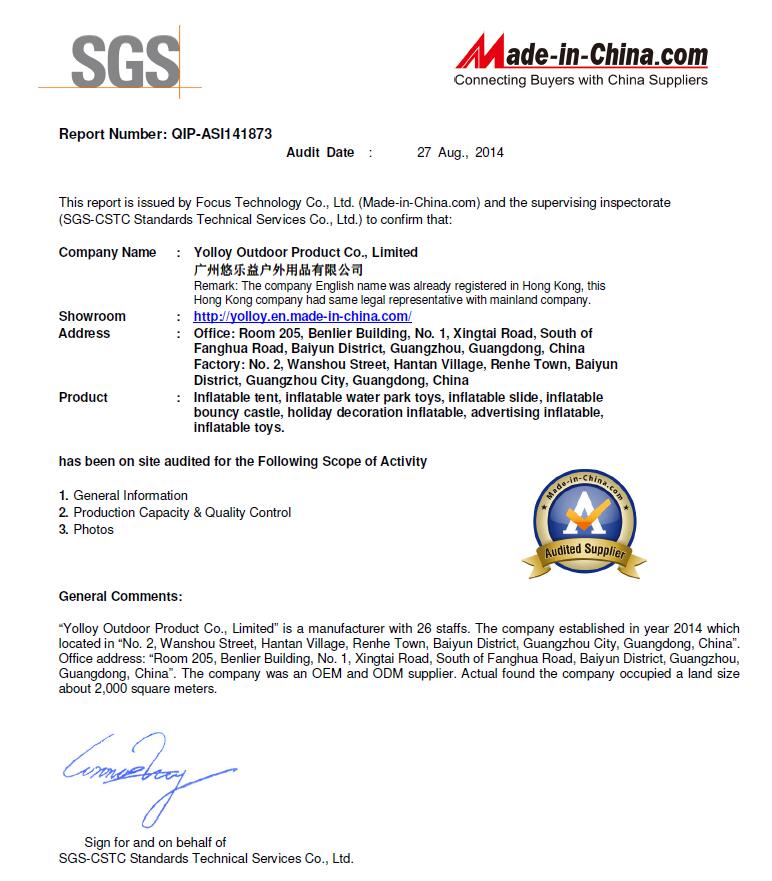
Certification

News

• New Order Successfully Finished for Long-Time Cooperated Japanese Client | YOLLOY Wins Full Client Recognition

• YOLLOY Custom Inflatable Pool Tent for Danish Client: Professional Pool Repair Shelter & Debris Protection

• Trusted Once Again! Greek Captain Re-orders Our Products After 4 Years

• Revolutionize Your Outdoors: The All-Terrain Inflatable Floating Tent for Land & Water

• Elevate Your Summer Fun: The Ultimate Inflatable Water Floating Volleyball Court Trampoline

• Innovative Inflatable Nightclub Tents & Pop-Up Bars: The Ultimate Solution for Portable Party Venues

Contact Us

Name: Sunny Yang
Tel: +86-20-8370 0771
Fax: +86-20-8370 0771
Mobile: 13570587575
E-mail: [email protected]
Add: No 5,Xiong wei Bo Nan Road,ZhongLuoTan Town,Baiyun district,Guangzhou,China
Friend me on Facebook Follow me on Twitter Add me to your circles Follow me on Pinterest Watch my channel on YouTube
News

What are the features of an outdoor inflatable projection screen for movies?

Author:yolloy Date:2026/8/13 6:44:26

Watching movies under the stars has become one of the most popular outdoor entertainment trends in recent years. At the heart of this experience is the inflatable projection screen — a portable, easy-to-set-up solution that turns any backyard, park, or campsite into a cinema. But what exactly makes a great outdoor inflatable projection screen? Let's explore the key features that define a high-quality product.

Screen Material and Image Quality

The most important feature of any projection screen is the material it is made from. A quality outdoor inflatable projection screen typically uses durable Oxford polyester fabric or PVC tarpaulin with a matte white or light grey surface. This type of material provides excellent light reflection, ensuring that the projected image appears bright and clear even when ambient light is present. The screen surface should be seamless and wrinkle-free — a smooth surface prevents distortion and maintains image sharpness across the entire viewing area.

Many screens also support both front and rear projection, giving users the flexibility to place the projector behind or in front of the screen depending on the venue setup. Rear projection is especially useful for events where the projector needs to be hidden from the audience, creating a cleaner and more professional appearance.

Quick Inflation and Setup

One of the standout advantages of an inflatable screen is how fast it can be set up. A powerful continuous-duty blower can inflate the entire frame within a few minutes, making the screen ready for use almost immediately. The blower runs throughout the movie to maintain consistent air pressure, which keeps the screen surface taut and stable. When the event is over, deflation is equally quick — simply turn off the blower, fold the fabric, and pack everything into the included carry bag.

This portability makes inflatable screens ideal for mobile cinema operators, event rental companies, and families who want to host movie nights without permanent installations. Unlike traditional fixed-frame screens, an inflatable screen can be transported in a standard vehicle and set up on grass, sand, or even concrete with the right anchoring system.

Size and Viewing Area

Inflatable projection screens come in a wide range of sizes to suit different audiences. Smaller screens around 12 to 14 feet work well for intimate backyard gatherings of 15 to 20 people. Medium-sized screens in the 16 to 20-foot range can comfortably serve audiences of 40 to 60 viewers, making them suitable for community events, church gatherings, and school functions. For large-scale public screenings, giant inflatable projection screen models exceeding 20 feet can accommodate hundreds of spectators.

When choosing the right size, consider the viewing distance — a good rule of thumb is that the audience should sit at a distance of at least 1.5 times the screen width for optimal viewing comfort. The aspect ratio also matters; most modern screens use a 16:9 widescreen format to match the majority of movies and video content.

Weather Resistance and Stability

Outdoor use means exposure to the elements, so a well-designed inflatable screen must handle wind, light rain, and varying temperatures. The frame should be constructed with airtight seams and reinforced stitching to maintain structural integrity even in breezy conditions. The included anchoring system — typically consisting of ground stakes, tie-down ropes, and sometimes sandbag attachment points — plays a critical role in keeping the screen upright and stable.

The screen fabric itself should be water-resistant to prevent moisture absorption, which can cause sagging or image distortion. UV resistance is also important for screens that will be used frequently in direct sunlight, as prolonged exposure can cause fading or material degradation over time.

Customization Options

For businesses and event organizers, the ability to customize the screen adds significant value. Leading manufacturers like YOLLOY offer custom sizes, colors, and logo printing on the screen frame or lower skirt. This branding opportunity turns the screen into a marketing tool — a company logo displayed prominently during a community movie night creates lasting brand impressions. Custom designs can be produced from a simple sketch, description, or photograph, and manufactured to exact specifications.

Build Quality and Durability

The longevity of an inflatable projection screen depends heavily on manufacturing quality. High-quality screens use precision sewing equipment with reinforced seams and waterproof nylon thread. Extra reinforcement at high-stress points — such as blower connection points, anchor rings, and stake loops — prevents premature wear and tear. The best products also come with a repair kit, allowing users to quickly fix minor punctures or seam issues on site.

When sourcing from a manufacturer, look for certifications that validate material safety and quality standards. Products that have passed relevant safety testing provide peace of mind for commercial operators who need to meet regulatory requirements.

Applications Beyond Movies

While movie screenings are the most common use case, inflatable projection screens serve many other purposes. Schools and museums use them with portable planetarium domes for educational astronomy presentations. Churches and religious organizations project song lyrics, sermon notes, and video content during outdoor services. Corporate events use them for product launches, presentations, and team-building activities. Sports fans gather around large screens to watch live games together, creating a stadium-like atmosphere in any outdoor setting.

Choosing the Right Manufacturer

When investing in an inflatable projection screen, working with an experienced manufacturer makes a significant difference. YOLLOY Outdoor Product Co., Limited, based in Guangzhou, China, specializes in custom inflatable products including projection screens, portable planetarium domes, inflatable tents, water park products, and interactive sports games. With a design-to-production workflow that starts from customer proposals and ends with fully tested finished products, YOLLOY provides tailored solutions for commercial entertainment, event rental, education, and advertising industries worldwide.

The company uses commercial-grade PVC tarpaulin and Oxford fabric, with materials that have passed EN71, EN14960, and RoHS testing. Blowers are available in 110V, 220V, or 380V configurations to match different regional power requirements. Every product is inspected and tested before shipment, and a repair kit is included with each inflatable screen. For more information about custom inflatable projection screens and other outdoor entertainment products, visit www.yolloy.net.


What are the features of an outdoor inflatable projection screen for movies?

Author:yolloy Date:2026/8/13 6:44:26

Watching movies under the stars has become one of the most popular outdoor entertainment trends in recent years. At the heart of this experience is the inflatable projection screen — a portable, easy-to-set-up solution that turns any backyard, park, or campsite into a cinema. But what exactly makes a great outdoor inflatable projection screen? Let's explore the key features that define a high-quality product.

Screen Material and Image Quality

The most important feature of any projection screen is the material it is made from. A quality outdoor inflatable projection screen typically uses durable Oxford polyester fabric or PVC tarpaulin with a matte white or light grey surface. This type of material provides excellent light reflection, ensuring that the projected image appears bright and clear even when ambient light is present. The screen surface should be seamless and wrinkle-free — a smooth surface prevents distortion and maintains image sharpness across the entire viewing area.

Many screens also support both front and rear projection, giving users the flexibility to place the projector behind or in front of the screen depending on the venue setup. Rear projection is especially useful for events where the projector needs to be hidden from the audience, creating a cleaner and more professional appearance.

Quick Inflation and Setup

One of the standout advantages of an inflatable screen is how fast it can be set up. A powerful continuous-duty blower can inflate the entire frame within a few minutes, making the screen ready for use almost immediately. The blower runs throughout the movie to maintain consistent air pressure, which keeps the screen surface taut and stable. When the event is over, deflation is equally quick — simply turn off the blower, fold the fabric, and pack everything into the included carry bag.

This portability makes inflatable screens ideal for mobile cinema operators, event rental companies, and families who want to host movie nights without permanent installations. Unlike traditional fixed-frame screens, an inflatable screen can be transported in a standard vehicle and set up on grass, sand, or even concrete with the right anchoring system.

Size and Viewing Area

Inflatable projection screens come in a wide range of sizes to suit different audiences. Smaller screens around 12 to 14 feet work well for intimate backyard gatherings of 15 to 20 people. Medium-sized screens in the 16 to 20-foot range can comfortably serve audiences of 40 to 60 viewers, making them suitable for community events, church gatherings, and school functions. For large-scale public screenings, giant inflatable projection screen models exceeding 20 feet can accommodate hundreds of spectators.

When choosing the right size, consider the viewing distance — a good rule of thumb is that the audience should sit at a distance of at least 1.5 times the screen width for optimal viewing comfort. The aspect ratio also matters; most modern screens use a 16:9 widescreen format to match the majority of movies and video content.

Weather Resistance and Stability

Outdoor use means exposure to the elements, so a well-designed inflatable screen must handle wind, light rain, and varying temperatures. The frame should be constructed with airtight seams and reinforced stitching to maintain structural integrity even in breezy conditions. The included anchoring system — typically consisting of ground stakes, tie-down ropes, and sometimes sandbag attachment points — plays a critical role in keeping the screen upright and stable.

The screen fabric itself should be water-resistant to prevent moisture absorption, which can cause sagging or image distortion. UV resistance is also important for screens that will be used frequently in direct sunlight, as prolonged exposure can cause fading or material degradation over time.

Customization Options

For businesses and event organizers, the ability to customize the screen adds significant value. Leading manufacturers like YOLLOY offer custom sizes, colors, and logo printing on the screen frame or lower skirt. This branding opportunity turns the screen into a marketing tool — a company logo displayed prominently during a community movie night creates lasting brand impressions. Custom designs can be produced from a simple sketch, description, or photograph, and manufactured to exact specifications.

Build Quality and Durability

The longevity of an inflatable projection screen depends heavily on manufacturing quality. High-quality screens use precision sewing equipment with reinforced seams and waterproof nylon thread. Extra reinforcement at high-stress points — such as blower connection points, anchor rings, and stake loops — prevents premature wear and tear. The best products also come with a repair kit, allowing users to quickly fix minor punctures or seam issues on site.

When sourcing from a manufacturer, look for certifications that validate material safety and quality standards. Products that have passed relevant safety testing provide peace of mind for commercial operators who need to meet regulatory requirements.

Applications Beyond Movies

While movie screenings are the most common use case, inflatable projection screens serve many other purposes. Schools and museums use them with portable planetarium domes for educational astronomy presentations. Churches and religious organizations project song lyrics, sermon notes, and video content during outdoor services. Corporate events use them for product launches, presentations, and team-building activities. Sports fans gather around large screens to watch live games together, creating a stadium-like atmosphere in any outdoor setting.

Choosing the Right Manufacturer

When investing in an inflatable projection screen, working with an experienced manufacturer makes a significant difference. YOLLOY Outdoor Product Co., Limited, based in Guangzhou, China, specializes in custom inflatable products including projection screens, portable planetarium domes, inflatable tents, water park products, and interactive sports games. With a design-to-production workflow that starts from customer proposals and ends with fully tested finished products, YOLLOY provides tailored solutions for commercial entertainment, event rental, education, and advertising industries worldwide.

The company uses commercial-grade PVC tarpaulin and Oxford fabric, with materials that have passed EN71, EN14960, and RoHS testing. Blowers are available in 110V, 220V, or 380V configurations to match different regional power requirements. Every product is inspected and tested before shipment, and a repair kit is included with each inflatable screen. For more information about custom inflatable projection screens and other outdoor entertainment products, visit www.yolloy.net.