When military units, emergency response teams, or security contractors need rapidly deployable shelter in the field, traditional pole tents simply cannot keep up. The best inflatable tent for military use combines three non-negotiable qualities: speed of deployment, structural resilience under extreme conditions, and long-term durability across repeated mission cycles. After examining the full range of options on the market, one conclusion stands out — a tent purpose-built by an experienced inflatable tent manufacturer with deep customization capability and proven material engineering delivers the most reliable solution for military applications.
What Defines a Military-Grade Inflatable Tent
A military-grade inflatable tent is fundamentally different from a recreational camping tent. It is engineered for operational readiness — not weekend comfort. The frame relies on high-pressure air beams instead of rigid metal poles, allowing one or two personnel to deploy a full shelter in under 10 minutes. The fabric must withstand wind speeds exceeding 70 km/h, heavy rain, UV exposure, and abrasive field conditions without compromising structural integrity.
Key technical specifications that separate military-grade from consumer-grade inflatable tents include:
- Fabric density: Military-grade tents use 600D or higher polyester with multi-layer PU coating, compared to 190D in consumer models. This translates to roughly three times the tear and abrasion resistance.
- Waterproof rating: A minimum of 3000 mm H₂O hydrostatic head rating ensures the tent remains dry through sustained heavy rainfall. Consumer tents typically offer 1500–2000 mm.
- Air beam construction: High-frequency welded TPU or PVC air beams provide superior airtightness, with pressure retention that far exceeds seamed alternatives. Drop-stitch technology, used in premium models, creates a rigid structure competitive with metal-framed tents.
- Wind resistance: Aerodynamic dome or tunnel profiles, combined with reinforced anchor points, allow military inflatable tents to stay stable in 70–80 km/h winds.
Military Inflatable Tent vs. Traditional Pole Tent
The operational advantage of an inflatable system becomes clear when comparing deployment metrics side by side:
| Feature | Military Inflatable Tent | Traditional Pole Tent |
|---|
| Setup time | 5–10 minutes | 20–45 minutes |
| Personnel required | 1–2 people | 2–4 people |
| Maximum wind resistance | 70–80 km/h | 50 km/h |
| Waterproof rating | 3000+ mm H₂O | 1500–2000 mm H₂O |
| Fabric density | 600D polyester with PU coating | 190T–210D polyester |
| Reusability | 50+ deployment cycles | 10–20 cycles |
| Transport weight (typical 4-person) | 12–16 kg | 10–12 kg |
In a real-world scenario, the difference between 5 minutes and 45 minutes can determine whether a forward operating base is operational before nightfall or whether a medical triage unit can begin receiving casualties. Speed is not a convenience — it is a tactical requirement.
Material Engineering: The Foundation of Reliability
The best military inflatable tents are built by manufacturers who control the entire production chain — from fabric selection to final inspection. A professional inflatable tent factory uses commercial-grade PVC tarpaulin, Oxford fabric, nylon, or TPU depending on the specific operational requirements. High-temperature fusion welding equipment creates airtight seams that outperform stitched alternatives, especially in high-load areas where stress concentrates during repeated inflation and deflation cycles.
Critical material and construction features to look for:
- Reinforced seams: Double-stitched with waterproof nylon thread, with additional reinforcement at corners, anchor points, and air beam junctions.
- Anchor systems: D-ring or round metal anchors integrated into the structure for secure ground fixing in windy conditions.
- Blower compatibility: CE or UL-certified blowers available for 110V, 220V, or 380V power requirements, ensuring the tent can be deployed using local power sources or portable generators.
- Base protection: Anti-puncture ground sheets and integrated drainage channels prevent water ingress from below.
Key certification standards: Military procurement teams should verify that inflatable tents and their materials meet relevant safety standards. Look for EN71 (toy safety — applicable to inflatable structures), EN14960 (inflatable play equipment), EN15649 (floating leisure articles), and RoHS compliance. These certifications indicate that the manufacturer follows rigorous quality control protocols.
Customization: One Size Does Not Fit All
Military operations span diverse environments — from desert heat to arctic cold, from jungle humidity to urban terrain. The best inflatable tent solution is one that can be fully customized to mission-specific requirements. A capable china inflatable tent manufacturer should offer:
- Custom sizes and dimensions to accommodate personnel counts from 4 to 16+ soldiers
- Multiple material options (PVC, Oxford, nylon, TPU) selected for the target climate
- Camouflage patterns, unit insignia, and national flag printing
- Modular designs that connect multiple units into a larger compound
- Specialized variants: command posts, medical stations, equipment storage, communications shelters
- Ventilation systems for hot climates and thermal insulation for cold environments
- Blackout linings for light discipline in tactical settings
The minimum order quantity should be flexible. Some manufacturers require bulk orders, but a factory that accepts single-piece orders for prototype development and testing offers a significant advantage during the procurement evaluation phase.
Maintenance and Lifecycle Considerations
Military equipment must withstand repeated deployment cycles with minimal degradation. A well-constructed inflatable tent should maintain its pressure integrity and structural performance across 50 or more cycles. Key maintenance practices that extend service life include:
- Complete drying before storage — moisture trapped in air beams can cause internal mold and material deterioration
- Inspection of air beams using soap-water solution to detect micro-leaks, with immediate patch repair using the included kit
- Quarterly inflation checks even during storage periods to maintain material elasticity
- Storage in a cool, dry environment away from direct UV exposure
A quality manufacturer includes a repair kit with every unit and provides a reasonable warranty period. For military-grade inflatable products, a three-year service life expectation is typical when proper maintenance protocols are followed. Production lead times of 6–15 days for standard configurations and rapid global shipping options (5–7 days by air, 15–30 days by sea) ensure operational timelines are respected.
Selecting the Right Manufacturer
When sourcing military inflatable tents, the manufacturer's experience and production capability matter as much as the product specifications themselves. Evaluate potential suppliers on the following criteria:
- Design capability: Can the manufacturer produce a tent from a description, sketch, photograph, or site plan? A full-service design-to-production workflow — from 3D simulation renderings through client approval to factory production — ensures the final product matches the operational requirement exactly.
- Quality control: Look for documented pre-shipment inspection and testing procedures. Every unit should be inflated, inspected, and tested before leaving the factory floor.
- Certification: Verify that materials and blowers carry relevant certifications (CE, UL, EN standards, RoHS).
- Packaging: Military logistics demand robust packaging. Soft carpet protection, waterproof PVC bags, and outer PE film with steel pallet options for large orders protect the investment during transit.
- Communication and reliability: A manufacturer that responds to inquiries within 24 hours and maintains a documented on-time delivery rate (ideally 95% or above) is a partner you can rely on for mission-critical procurement.
Conclusion
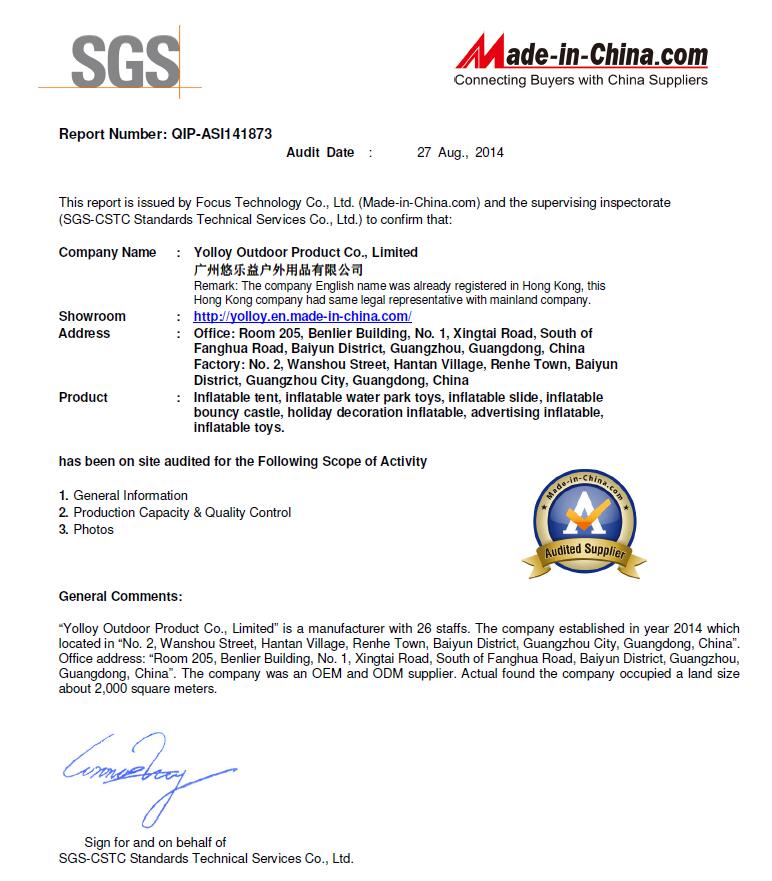
The best inflatable tent for military use is not defined by a single model or brand — it is defined by the combination of rapid deployment speed, extreme weather resistance, certified material quality, full customization capability, and a reliable manufacturing partner. Military procurement teams should prioritize manufacturers with deep inflatable engineering expertise, a proven track record of exporting to global markets, and the flexibility to adapt designs to specific operational needs. Whether for forward operating bases, disaster relief missions, field hospitals, or tactical command posts, the right inflatable tent delivers shelter that soldiers can trust — every time, in any environment.