If you are shopping for an inflatable slide for your children, you have probably come across dozens of options made in China and asked yourself the same question: is a China inflatable slide safe for children? The honest answer is yes, but with an important condition. A china inflatable slide is as safe as the factory that builds it, the materials it is made from, and the way it is set up and supervised. When you choose a manufacturer with proper certifications and follow a few simple safety rules, an inflatable slide can give children hours of active, supervised fun with very low risk.
What Actually Makes an Inflatable Slide Safe
Safety in an inflatable slide is not a single feature. It is a combination of material quality, construction, design, and daily use. The fabric must be strong enough to hold air pressure without stretching, the seams must resist the constant pulling of children climbing and sliding, and the design must include features that prevent falls, tipping, and collisions. A slide that looks bright and fun on the outside can still be unsafe if it is made from thin material or stitched carelessly.
This is why the reputation of the manufacturer matters more than the price tag. Reputable Chinese factories build commercial-grade products that are exported to parks, schools, and rental companies around the world, and they follow international safety standards to do so. When you buy from a factory that tests its materials and inspects every unit before shipping, the question of safety changes from "is it safe" to "how is it made safe."
What to Look for in Materials and Certification
The first thing to check is the material. Commercial inflatable slides should be made from heavy-duty PVC tarpaulin, not the thin plastic used in cheap backyard toys. Good PVC is waterproof, fire-retardant, tear-resistant, and treated against UV damage so it does not become brittle in the sun. It should also be free of harmful substances, which is exactly what safety certifications verify.
Look for products that meet recognized toy and amusement standards. In the inflatable industry, the most relevant ones are EN71, which covers toy safety and harmful substances, and EN14960, which is the European standard specifically for inflatable play equipment. Materials that pass these tests are confirmed safe for children to touch and play on. A factory that openly states which standards its products meet is far more trustworthy than one that only talks about "high quality" without naming any certification.
How a Responsible Chinese Factory Builds a Safe Slide
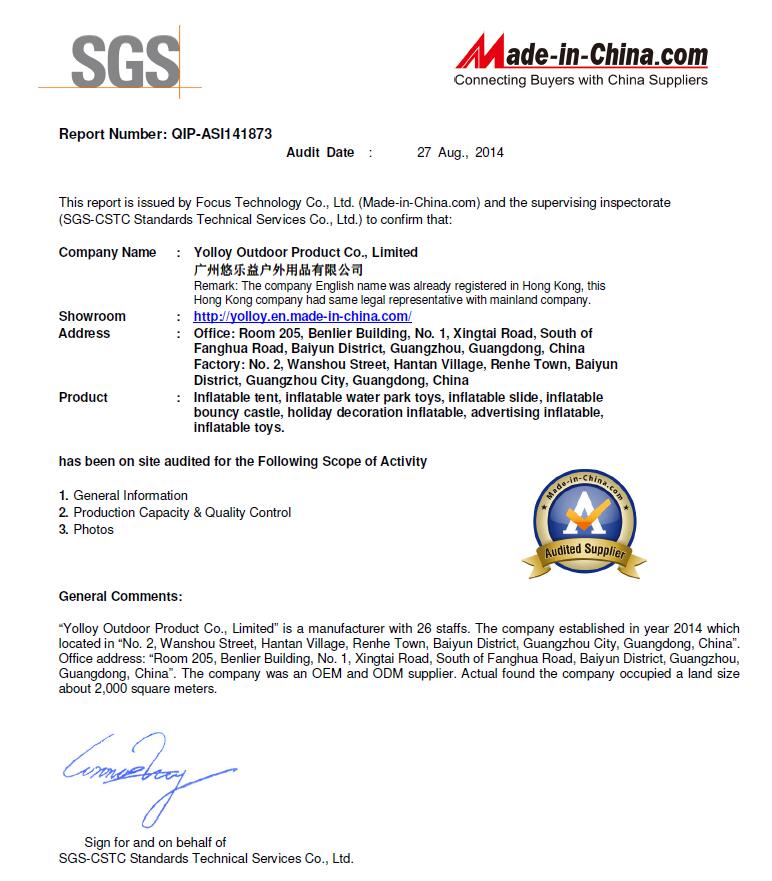
YOLLOY, an inflatable manufacturer in Guangzhou, China, is a good example of what responsible production looks like. The company builds commercial inflatable water slides, bounce houses, and water park products for customers in Europe, Asia, South America, Africa, and the Middle East. Its materials have passed EN71, EN14960, and RoHS-related testing, and its blowers meet CE or UL requirements.
Construction quality is where many cheap inflatables fail. YOLLOY uses precision sewing equipment, waterproof nylon thread, and extra reinforcement at high-load areas where children climb, jump, and land. Airtight products are joined with high-temperature fusion and welding equipment, which creates seals that are stronger than the material itself and prevents slow leaks. Every unit is inspected and tested before shipment, and a repair kit is supplied with each inflatable so small damage can be fixed quickly.
Design also plays a safety role. High inflatable walls on slide lanes and upper platforms prevent falls, non-slip surfaces reduce slips on climbing areas, and a wide, stable base keeps the structure from tipping. D-ring or round metal anchor systems are incorporated where needed so the slide can be secured firmly to the ground for wind resistance. These are the details that separate a commercial-grade product from a toy that is only meant for occasional backyard use.
Safe Setup: Anchoring, Blowers, and Location
Even the best-built slide becomes dangerous if it is set up incorrectly. The most common cause of serious inflatable accidents is weak anchoring, not a product defect. Every tie-down point on the slide must be used. On grass, heavy-duty stakes should be driven fully into firm soil; on concrete or asphalt, sandbags or counterweights must match the size of the unit. A slide that is only partially anchored offers false confidence.
The blower is equally important because it keeps the structure rigid. Under-inflated slides fold and trap riders, while over-inflated slides stretch the seams. The blower should match the slide's power requirement, and YOLLOY supplies blowers for 110V, 220V, or 380V so the right unit is always available. Place the slide on a flat, level surface with at least a few feet of clearance on all sides, and keep it away from overhead branches and power lines.
Rules That Keep Children Safe While Playing
Supervision is the strongest safety barrier of all. At a home party, one adult should focus only on the slide area, watching the entry, the slide lane, and the landing zone. At commercial events, trained attendants should control rider flow and enforce the rules. Most injuries happen when children are left to manage themselves.
Simple rules prevent most accidents. Only one child should slide per lane at a time so the first rider has cleared the bottom before the next one starts. Children should slide feet first, seated, never headfirst, because headfirst sliding dramatically increases the risk of neck and face injuries. Group children by size so smaller ones are not overwhelmed, and respect the age and weight limits recommended for the slide. In windy weather, stop using the slide, since wind can lift even a properly anchored inflatable.
Maintenance Keeps a Slide Safe for Years
A well-made inflatable slide lasts a long time with basic care. Rinse the surface after use, let it dry fully before storage, and keep it out of direct sunlight when not in use. Before each event, check the fabric for cuts, check the seams for loose stitching, and confirm the anchors and blower are working. If the slide loses air pressure quickly or shows visible damage, take it out of service until it is repaired.
A factory that stands behind its products makes maintenance easier. YOLLOY describes a three-year service life expectation when products are used and maintained correctly, and its team answers inquiries within 24 hours. This kind of support matters because it means you are not left alone with a damaged slide and no way to fix it.
The Bottom Line
So, is a China inflatable slide safe for children? Yes, when you buy from a certified manufacturer, set the slide up properly, and supervise children while they play. The risk is not in the country of origin; it is in the quality of the product and the care of the people using it. If you are comparing options, look for a factory that names its certifications, explains its materials, and tests every unit before shipping. That combination, together with sensible play rules, is what makes an inflatable water slide a safe and joyful addition to any party or park.