A bounce house inflatable can turn any backyard or event into hours of non-stop fun, but the same soft walls that make jumping so much fun also hide the most common accident risks. Most bounce house injuries are not caused by the product itself, but by the way it is set up, anchored, loaded, and supervised. Understanding the safety rules before the first child climbs in is what separates a great party from a trip to the emergency room. Below is a practical breakdown of the bounce house safety rules every owner and operator should follow.
1. Assign a responsible adult to supervise at all times
A bouncy unit should never run unattended, not even for a minute. One adult should be in charge, stay next to the unit the whole time it is inflated, and act as the rule enforcer rather than a passive observer. The supervisor needs to watch the jumpers, not the grill or the conversation across the yard. Teenagers are rarely a good choice for this job, because enforcing rules under pressure usually needs an adult who can stay calm and firm.
2. Anchor the unit properly before anyone enters
Anchoring is not optional and it is not a "we will do it if the wind picks up" step. It has to happen before the blower is switched on, every single time. On grass or dirt, drive steel stakes at least 18 inches into the ground at a 45-degree angle, angled away from the unit, and use every D-ring anchor point on the unit rather than just a couple of corners. On hard surfaces such as concrete or asphalt where stakes cannot be driven, water bags or sandbags rated for the unit's size must be used. A well-made commercial unit includes reinforced D-ring or round metal anchor systems for exactly this reason, so use them all.
3. Respect the wind limits
Wind is the number one reason inflatables lift off the ground. As a general rule, a bounce house should be deflated and shut down when wind speeds reach about 15 to 25 mph, and many operators set their own lower limit for larger units. If there is no anemometer handy, use a visible signal, such as tree branches swaying heavily, as a warning sign. Blowing sand, storm clouds, and sudden gusts are good reasons to stop jumping even if the reading seems borderline.
4. Keep jumpers close in age and size, and respect the capacity
Mixing a small toddler with much bigger children is one of the quickest ways to cause injury, because the heavier jumper takes the bounce and throws the lighter one off balance. Group children by age and size, and never exceed the maximum occupancy printed on the unit. A small unit rated for four or five small children should not suddenly hold eight older kids just because they all want to squeeze in. Overloading stresses the seams and increases the chance of collisions.
5. Set clear play rules about shoes, flips, and climbing
The standard rules exist for a reason: no shoes, no flips, no somersaults, no pushing, and absolutely no climbing or hanging on the walls. Ask jumpers to empty pockets and remove glasses, jewelry, and anything sharp before entering. Keep smaller children at the front or lower area of the unit and older children toward the back, so the ratio of weight stays more balanced across the floor. Repeating the rules calmly at the start of the session helps a lot more than trying to shout over noise later.
6. Choose a safe and flat location
Set the unit on level ground and well away from tree branches, power lines, fences, swimming pools, and sprinkler systems. Make sure the blower is placed where it will not pull in water, leaves, or exhaust fumes, and keep the power cord and airflow inlet clear so the unit stays fully inflated. Do not block the entry and exit area, and keep spectators clear of the jumping zone.
7. Keep an eye on the weather
Rain, lightning, high heat, and sudden storms are all reasons to end a session. Water on a vinyl floor becomes slippery the moment shoes come off, and lightning around a large inflatable surface is never worth the risk. If the weather changes mid-event, get everyone out, deflate the unit, and wait until conditions are safe again.
8. Inspect and maintain the unit regularly
Check the seams, walls, floor, and anchor-point webbing before every use for tears, pinholes, or loose stitching. Keep the blower intake screen clear, check the power cord for damage, and never run a damaged unit. After use, dry the unit before folding so mold does not build up, and store it clean and dry. A repair kit that comes with the product is meant to fix small punctures quickly, but anything structural should be professionally repaired.
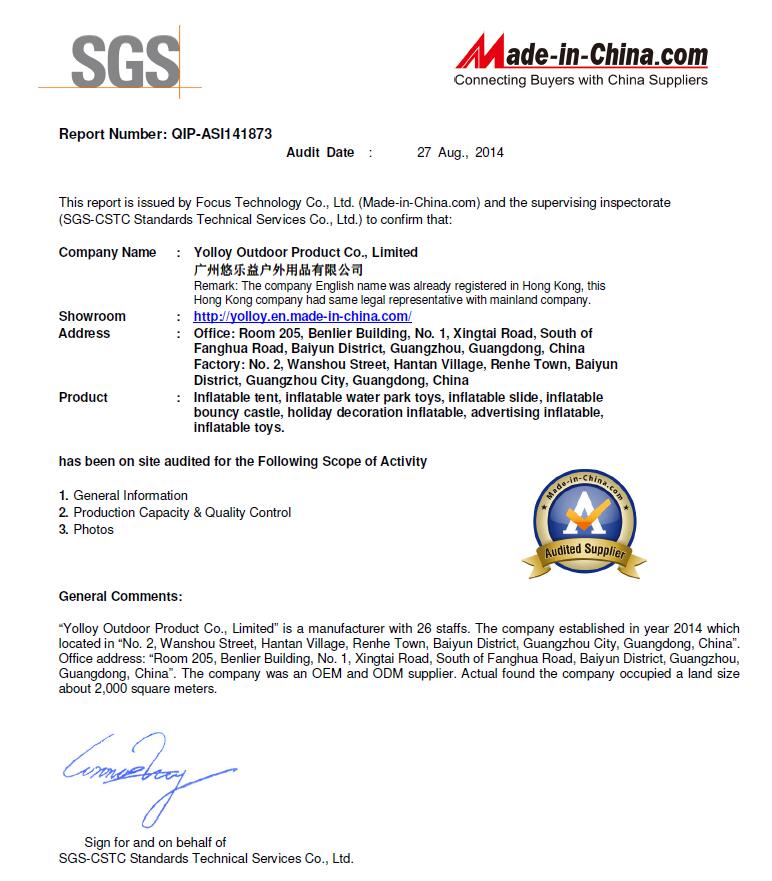
Where do safe rules meet safe equipment? The quality of the unit itself matters as much as the rules that govern it. A commercial inflatable bounce house built from commercial-grade PVC tarpaulin, with reinforced seams, waterproof nylon thread, extra reinforcement at high-load areas, and proper anchor points, is far easier to keep safe. YOLLOY manufactures commercial inflatable bounce houses and slides whose materials are associated with safety testing such as EN 14960, and supplies blowers in 110V, 220V, or 380V to suit your market. When you combine these safety rules with a properly built and properly anchored unit, check the weather, supervise closely, and respect the loading limits, a bounce house stays exactly what it should be, a place for safe, joyful play.