Products Category
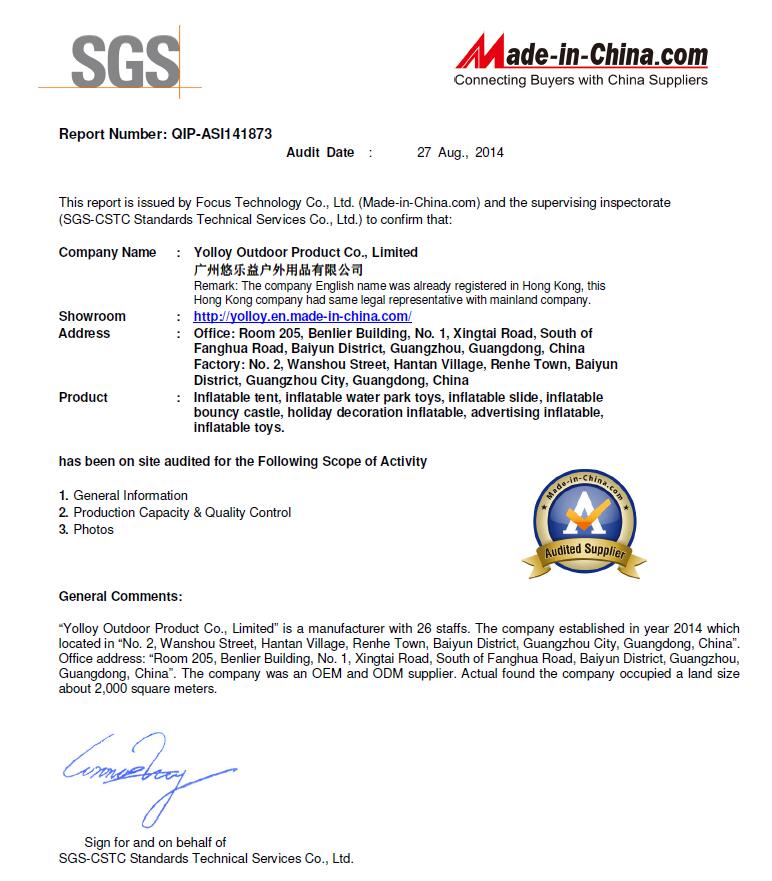
Certification

News

• New Order Successfully Finished for Long-Time Cooperated Japanese Client | YOLLOY Wins Full Client Recognition

• YOLLOY Custom Inflatable Pool Tent for Danish Client: Professional Pool Repair Shelter & Debris Protection

• Trusted Once Again! Greek Captain Re-orders Our Products After 4 Years

• Revolutionize Your Outdoors: The All-Terrain Inflatable Floating Tent for Land & Water

• Elevate Your Summer Fun: The Ultimate Inflatable Water Floating Volleyball Court Trampoline

• Innovative Inflatable Nightclub Tents & Pop-Up Bars: The Ultimate Solution for Portable Party Venues

Contact Us

Name: Sunny Yang
Tel: +86-20-8370 0771
Fax: +86-20-8370 0771
Mobile: 13570587575
E-mail: [email protected]
Add: No 5,Xiong wei Bo Nan Road,ZhongLuoTan Town,Baiyun district,Guangzhou,China
Friend me on Facebook Follow me on Twitter Add me to your circles Follow me on Pinterest Watch my channel on YouTube
News

What is the best superyacht inflatable dock?

Author:yolloy Date:2026/8/18 20:23:35

A superyacht inflatable dock, sometimes called a floating platform, is one of the fastest-growing accessories in modern yachting. Instead of anchoring guests to the deck of the mothership or dealing with rigid construction, owners simply inflate a stable platform beside the boat and use it for swimming, sunbathing, jet ski mooring, tender transfers, or a private beach club at anchor. If you are deciding whether one is right for you, the short answer is that the best superyacht inflatable dock is a custom-built, commercial-grade platform engineered for your yacht's size, your local sea conditions, and the activities you plan to enjoy on the water.

That single sentence hides a lot of detail. What makes one platform genuinely great while another is little more than a beach toy? The answer comes down to construction technology, materials, anchoring, and honest sizing. This guide walks through each of those points so you can judge any offer with confidence and understand why a purpose-built product consistently outperforms a generic one.

What Good Construction Actually Means

The first thing to check is how the platform holds its shape. Cheap inflatables bulge under weight because they are essentially large air-filled bladders. A superior dock uses high-tensile internal threading that connects the top and bottom layers, so when the panels are inflated to pressure the surface locks into a flat, rigid deck instead of sagging. This is the difference between a platform that lets you walk, place a lounge chair, or set down a cooler without sinking, and one that feels like a waterbed. For a superyacht, where safety and comfort matter, that rigidity is non-negotiable.

Seam quality is every bit as important. The most reliable platforms use heat-welded, fused seams rather than simple glued joints, because glued seams can soften and weaken under strong sunlight and rising internal pressure. Combined with a pressure relief mechanism that vents excess air on very hot days, this protects the structure from sudden failure and extends the platform's working life. A well-made unit also carries reinforcement at every high-load point, which is where most weaker products fail first.

Materials Built for Saltwater

A superyacht inflatable platform spends its life in saltwater under intense sunlight, so material choice decides how long it lasts. The body should be made of tough, commercial-grade PVC tarpaulin that withstands abrasion and UV exposure without degrading quickly. The deck surface matters equally: thick, anti-skid padding keeps the platform safe when wet and protects against scratches from fins, bags, and the occasional dropped item. Pay attention to the hardware too. D-rings and anchor fittings that rust are a red flag; marine-grade stainless fittings are the standard you want.

Do not assume that every product marketed as a floating platform meets these standards. Some are designed for calm lakes and gentle weekend use, while others are engineered for the rigours of open-water anchoring. For a yacht, choose a platform rated for the environment you actually operate in, and confirm the materials and seams have been tested accordingly.

Sizing: Match the Platform to Your Use

The "best" size depends on how the platform will be used. A compact dock is enough for two or three people coming alongside for a swim or a tender transfer. If you expect larger groups, want space for lounge chairs and a cool table, or plan to moor a jet ski or ribbon, you will need a bigger footprint. A frequent mistake is underestimating how much of the surface is consumed by people and gear once everyone is actually on board. Plan for the busiest day of the year, not the quietest, and leave generous walking room around the edges.

Custom sizes are a major advantage here. Because no two yachts and no two usage patterns are the same, many owners prefer to specify the exact length, width, shape, and layout rather than accept a fixed off-the-shelf size. This is exactly the kind of requirement that a custom manufacturer handles well, tailoring the platform to the transom profile, the deck layout, and the accessories you want to mount.

Anchoring and Stability on the Water

Stability is what separates a usable platform from a frustrating one. The platform needs to sit level in the water and hold its position against waves, wind, and current. This is achieved through a combination of proper internal structure, adjustable air pressure, and a sound anchor system. Look for platforms fitted with robust anchor fittings and consider how you will hold it to the yacht and to the seabed. In exposed anchorages, securing the outer corners as well as the edge nearest the boat keeps the platform from drifting or twisting under load.

Ease of handling matters on a crewed or owner-operated yacht. Platforms that inflate quickly and pack down into a compact bag are much simpler to bring in and out for daily use, or to stow for a passage. Blowers can usually be matched to your onboard power, whether that is 110V, 220V, or 380V, so confirm the platform ships with a blower suitable for your supply.

Look After It and It Will Last

A well-maintained inflatable platform can serve for years, but only if it is looked after. Rinse salt off after use, dry it thoroughly before storing, keep it below the recommended pressure when not in use to avoid overstrain in hot sun, and store it out of direct UV light when it is packed away. Minor punctures are quickly repaired with the repair kit that normally ships with a quality inflatable, so a small hole does not mean the end of the product.

Why Custom Matters

Generic platforms from overseas retailers are convenient, but they rarely account for your specific yacht, itinerary, or tastes. A custom manufacturer designs from your description, drawings, photographs, or a site plan, prepares a simulation rendering for approval, and then produces a platform to your exact size, colours, and printed artwork. This approach delivers a dock that fits properly, matches the yacht's aesthetics, and includes only the features you actually need. It also allows thoughtful engineering details like extra reinforcement at high-load areas and a deck finish that echoes the yacht's existing styling.

YOLLOY is a custom inflatable manufacturer based in Guangzhou, China, with a broad range that includes superyacht-relevant products such as floating leisure platforms, jet ski mooring docks, floating swim platforms, and teak-style air deck docks. Because they build to order, they can sit down with a buyer and turn a concept into a production-ready design rather than forcing you into a standard catalogue size.

Final Verdict

So, what is the best superyacht inflatable dock? It is not a single branded product that suits every yacht. The best dock is the one that combines a rigid, high-quality internal structure, heat-welded saltwater-resistant construction, marine-grade fittings, the right size for your real usage, a reliable anchoring plan, and a finish that matches your vessel. For most serious owners, that combination points to a custom-built commercial-grade platform rather than an off-the-shelf beach toy.

If you are weighing options, contact a reputable custom inflatable manufacturer, describe your yacht and how you plan to use the dock, and ask for a tailored proposal. A good supplier will be happy to walk you through materials, sizing, anchoring, and pricing, and will deliver a platform designed around your needs rather than the other way around. The right dock turns your superyacht into a proper floating retreat, and choosing it well is simply a matter of knowing what to look for.


What is the best superyacht inflatable dock?

Author:yolloy Date:2026/8/18 20:23:35

A superyacht inflatable dock, sometimes called a floating platform, is one of the fastest-growing accessories in modern yachting. Instead of anchoring guests to the deck of the mothership or dealing with rigid construction, owners simply inflate a stable platform beside the boat and use it for swimming, sunbathing, jet ski mooring, tender transfers, or a private beach club at anchor. If you are deciding whether one is right for you, the short answer is that the best superyacht inflatable dock is a custom-built, commercial-grade platform engineered for your yacht's size, your local sea conditions, and the activities you plan to enjoy on the water.

That single sentence hides a lot of detail. What makes one platform genuinely great while another is little more than a beach toy? The answer comes down to construction technology, materials, anchoring, and honest sizing. This guide walks through each of those points so you can judge any offer with confidence and understand why a purpose-built product consistently outperforms a generic one.

What Good Construction Actually Means

The first thing to check is how the platform holds its shape. Cheap inflatables bulge under weight because they are essentially large air-filled bladders. A superior dock uses high-tensile internal threading that connects the top and bottom layers, so when the panels are inflated to pressure the surface locks into a flat, rigid deck instead of sagging. This is the difference between a platform that lets you walk, place a lounge chair, or set down a cooler without sinking, and one that feels like a waterbed. For a superyacht, where safety and comfort matter, that rigidity is non-negotiable.

Seam quality is every bit as important. The most reliable platforms use heat-welded, fused seams rather than simple glued joints, because glued seams can soften and weaken under strong sunlight and rising internal pressure. Combined with a pressure relief mechanism that vents excess air on very hot days, this protects the structure from sudden failure and extends the platform's working life. A well-made unit also carries reinforcement at every high-load point, which is where most weaker products fail first.

Materials Built for Saltwater

A superyacht inflatable platform spends its life in saltwater under intense sunlight, so material choice decides how long it lasts. The body should be made of tough, commercial-grade PVC tarpaulin that withstands abrasion and UV exposure without degrading quickly. The deck surface matters equally: thick, anti-skid padding keeps the platform safe when wet and protects against scratches from fins, bags, and the occasional dropped item. Pay attention to the hardware too. D-rings and anchor fittings that rust are a red flag; marine-grade stainless fittings are the standard you want.

Do not assume that every product marketed as a floating platform meets these standards. Some are designed for calm lakes and gentle weekend use, while others are engineered for the rigours of open-water anchoring. For a yacht, choose a platform rated for the environment you actually operate in, and confirm the materials and seams have been tested accordingly.

Sizing: Match the Platform to Your Use

The "best" size depends on how the platform will be used. A compact dock is enough for two or three people coming alongside for a swim or a tender transfer. If you expect larger groups, want space for lounge chairs and a cool table, or plan to moor a jet ski or ribbon, you will need a bigger footprint. A frequent mistake is underestimating how much of the surface is consumed by people and gear once everyone is actually on board. Plan for the busiest day of the year, not the quietest, and leave generous walking room around the edges.

Custom sizes are a major advantage here. Because no two yachts and no two usage patterns are the same, many owners prefer to specify the exact length, width, shape, and layout rather than accept a fixed off-the-shelf size. This is exactly the kind of requirement that a custom manufacturer handles well, tailoring the platform to the transom profile, the deck layout, and the accessories you want to mount.

Anchoring and Stability on the Water

Stability is what separates a usable platform from a frustrating one. The platform needs to sit level in the water and hold its position against waves, wind, and current. This is achieved through a combination of proper internal structure, adjustable air pressure, and a sound anchor system. Look for platforms fitted with robust anchor fittings and consider how you will hold it to the yacht and to the seabed. In exposed anchorages, securing the outer corners as well as the edge nearest the boat keeps the platform from drifting or twisting under load.

Ease of handling matters on a crewed or owner-operated yacht. Platforms that inflate quickly and pack down into a compact bag are much simpler to bring in and out for daily use, or to stow for a passage. Blowers can usually be matched to your onboard power, whether that is 110V, 220V, or 380V, so confirm the platform ships with a blower suitable for your supply.

Look After It and It Will Last

A well-maintained inflatable platform can serve for years, but only if it is looked after. Rinse salt off after use, dry it thoroughly before storing, keep it below the recommended pressure when not in use to avoid overstrain in hot sun, and store it out of direct UV light when it is packed away. Minor punctures are quickly repaired with the repair kit that normally ships with a quality inflatable, so a small hole does not mean the end of the product.

Why Custom Matters

Generic platforms from overseas retailers are convenient, but they rarely account for your specific yacht, itinerary, or tastes. A custom manufacturer designs from your description, drawings, photographs, or a site plan, prepares a simulation rendering for approval, and then produces a platform to your exact size, colours, and printed artwork. This approach delivers a dock that fits properly, matches the yacht's aesthetics, and includes only the features you actually need. It also allows thoughtful engineering details like extra reinforcement at high-load areas and a deck finish that echoes the yacht's existing styling.

YOLLOY is a custom inflatable manufacturer based in Guangzhou, China, with a broad range that includes superyacht-relevant products such as floating leisure platforms, jet ski mooring docks, floating swim platforms, and teak-style air deck docks. Because they build to order, they can sit down with a buyer and turn a concept into a production-ready design rather than forcing you into a standard catalogue size.

Final Verdict

So, what is the best superyacht inflatable dock? It is not a single branded product that suits every yacht. The best dock is the one that combines a rigid, high-quality internal structure, heat-welded saltwater-resistant construction, marine-grade fittings, the right size for your real usage, a reliable anchoring plan, and a finish that matches your vessel. For most serious owners, that combination points to a custom-built commercial-grade platform rather than an off-the-shelf beach toy.

If you are weighing options, contact a reputable custom inflatable manufacturer, describe your yacht and how you plan to use the dock, and ask for a tailored proposal. A good supplier will be happy to walk you through materials, sizing, anchoring, and pricing, and will deliver a platform designed around your needs rather than the other way around. The right dock turns your superyacht into a proper floating retreat, and choosing it well is simply a matter of knowing what to look for.