Laser tag has grown from a niche indoor pastime into a global entertainment phenomenon enjoyed at birthday parties, corporate events, festivals, and competitive tournaments. When planning a laser tag business or event, one of the most important decisions is choosing between a traditional fixed arena and an inflatable laser tag arena. While both deliver exciting gameplay, they differ fundamentally in portability, cost, setup time, safety, and customization options. Understanding these differences can help operators, event planners, and venue owners make the right investment.
1. Portability and Setup Speed
The most striking difference between an inflatable laser tag arena and a regular arena is portability. A traditional laser tag arena is a permanent or semi-permanent installation — it typically occupies a dedicated indoor space with built walls, mounted sensors, themed lighting rigs, and fixed obstacle structures. Moving such an arena to a new location is nearly impossible without demolishing and rebuilding it from scratch.
An inflatable laser tag arena, by contrast, is designed for rapid deployment and mobility. The entire arena — including all walls, barriers, bunkers, and archways — can be deflated, rolled up, and transported in a standard vehicle or trailer. Setup takes as little as 5 to 30 minutes with a standard electric blower. This makes inflatable arenas the go-to choice for mobile operators who serve multiple locations, such as schools, parks, community centers, and private residences.
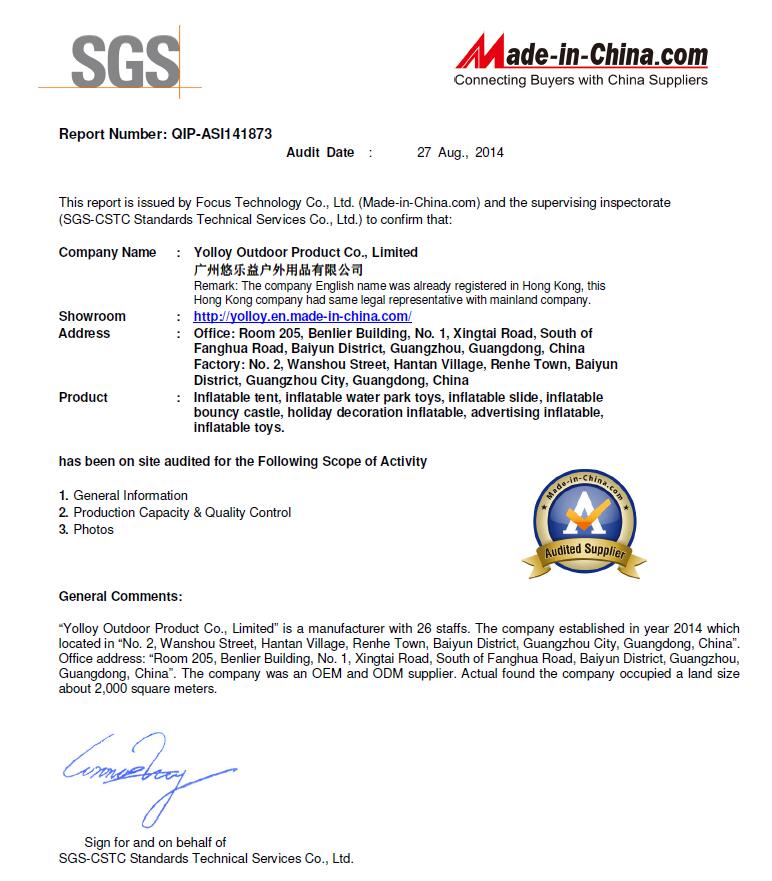
YOLLOY, a China-based inflatable product manufacturer, specializes in custom-designed inflatable arenas that can be packed into compact carrying bags and shipped worldwide. Their interactive sport games lineup includes inflatable laser tag arenas built with commercial-grade PVC tarpaulin for durability across hundreds of events.
2. Safety and Player Accessibility
Safety is a defining advantage of inflatable arenas. Traditional laser tag facilities often use hard materials like wood, metal, and drywall for their obstacle structures. Players running at full speed can collide with these surfaces, leading to bruises, cuts, or more serious injuries — especially among younger participants.
Inflatable arenas are constructed from soft, air-filled PVC or Oxford fabric that absorbs impact. Every wall, bunker, and barrier is a cushioned surface. This dramatically reduces injury risk and makes the arena suitable for players of all ages, from children to adults participating in competitive tournaments. The soft surfaces also mean that operators face fewer liability concerns and can confidently host events for families, schools, and corporate groups.
3. Cost and Investment Comparison
The financial commitment for each type of arena differs significantly:
| Aspect | Traditional Fixed Arena | Inflatable Laser Tag Arena |
|---|
| Initial Setup Cost | High — construction, electrical, lighting, HVAC | Moderate — one-time product purchase |
| Ongoing Rent/Lease | Monthly commercial lease required | None — operate from home or storage unit |
| Maintenance | Building repairs, cleaning staff, utilities | Blower replacement, occasional patch repairs |
| Scalability | Limited to fixed floor space | Modular — add more bunkers as business grows |
| Revenue Flexibility | Tied to one location | Multi-venue — festivals, parties, corporate events |
For entrepreneurs entering the laser tag business, an inflatable arena represents a lower-risk entry point. There is no need for a long-term commercial lease, and the equipment can generate revenue across multiple locations and event types. YOLLOY offers custom inflatable arenas with a minimum order quantity of just one piece, making it accessible for startups and established event businesses alike.
4. Design Flexibility and Customization
A traditional arena's layout is largely fixed once constructed. While operators can rearrange lightweight props, the walls, corridors, and structural elements remain in place. Changing the arena's theme or layout requires renovation.
Inflatable arenas offer unmatched design flexibility. Bunker pieces — barriers, cylinders, archways, and maze walls — can be rearranged into countless configurations between games. This keeps the experience fresh for repeat customers and allows operators to adapt the arena size to different venues. A small backyard birthday party setup can use a compact arrangement, while a festival booking can deploy the full arena with all available pieces.
Additionally, inflatable arenas can be fully customized with branded colors, logos, and themed graphics. YOLLOY's design team creates simulation renderings from customer proposals, allowing buyers to approve the visual concept before production begins. This level of customization helps mobile operators build a recognizable brand identity across events.
5. Material Durability and Weather Resistance
Traditional indoor arenas are protected from the elements by design — they exist inside climate-controlled buildings. However, this also means they cannot take advantage of outdoor venues and fair-weather events.
High-quality inflatable arenas are built with commercial-grade PVC tarpaulin that offers UV protection, water resistance, and puncture resistance. Materials used by reputable manufacturers like YOLLOY have passed EN71, EN14960, and RoHS-related testing, ensuring they meet international safety standards. Reinforced seams with waterproof nylon thread and additional reinforcement at high-stress areas extend the product's service life through repeated outdoor use. The blowers supplied with the arena meet CE or UL requirements for electrical safety.
It is worth noting that inflatable arenas are not designed for permanent outdoor installation. They should be deflated and stored during severe weather conditions such as heavy rain, strong winds, or snow. With proper care, manufacturers typically estimate a service life of around three years under normal commercial use.
6. Venue Versatility
One of the strongest arguments for inflatable arenas is their ability to work in almost any space. A traditional arena is restricted to its own four walls — if business is slow at that location, the operator has limited options. An inflatable arena can be set up in:
- Indoor venues: Gyms, community halls, event rooms, warehouses, shopping malls
- Outdoor venues: Parks, sports fields, parking lots, beaches, backyards, festival grounds
- Special events: School fairs, corporate team-building retreats, birthday parties, wedding receptions
This venue versatility translates directly into more booking opportunities and higher equipment utilization. A mobile operator can run a school event in the morning, a corporate team-building session in the afternoon, and a birthday party in the evening — all with the same arena.
7. Player Experience and Gameplay Dynamics
The gameplay experience itself differs between the two arena types. Traditional fixed arenas often feature multi-level designs, fog machines, integrated sound systems, and elaborate lighting effects that create a cinematic, immersive atmosphere. These production values are difficult to replicate with an inflatable setup.
However, inflatable arenas compensate with tactical freshness and variety. Because the layout can be changed between every session, players face a new strategic challenge each time they visit. Inflatable bunkers, such as those in YOLLOY's inflatable paintball bunkers collection, come in diverse shapes — barrel obstacles, speedball air bunkers, and air frame arenas — that create dynamic cover-and-move gameplay. The soft surfaces also encourage more aggressive, athletic play since players are less afraid of injury.
8. Storage and Maintenance Requirements
A traditional arena demands ongoing facility management: cleaning, electrical maintenance, HVAC upkeep, insurance for the premises, and staffing for daily operations. The building itself is a continuous expense.
An inflatable arena requires minimal storage space when deflated — a closet or small storage unit is sufficient for most setups. Maintenance is straightforward: inspect for punctures or seam wear after each use, clean surfaces with mild soap and water, and ensure blowers are functioning correctly. YOLLOY includes a repair kit with each inflatable product, allowing operators to handle minor repairs on-site without professional assistance. The company also reports a 95% on-time delivery rate and supplies blowers compatible with 110V, 220V, or 380V requirements depending on the destination country.
Which One Should You Choose?
The decision between an inflatable and a traditional laser tag arena ultimately depends on your business model and goals:
- Choose a traditional fixed arena if you have committed capital, a prime retail location, and a vision for a high-production-value entertainment destination with repeat local customers.
- Choose an inflatable laser tag arena if you want mobility, lower startup costs, the ability to serve multiple locations, and the flexibility to scale your business gradually. Inflatable arenas are ideal for event rental companies, mobile entertainment businesses, summer camp operators, and entrepreneurs testing the market before committing to a permanent facility.
In summary, an inflatable laser tag arena differs from a regular arena in nearly every operational dimension — it is portable where a traditional arena is fixed, affordable where a traditional arena is capital-intensive, and flexible where a traditional arena is permanent. While it may not match the cinematic production values of a high-end fixed facility, it offers unmatched versatility, lower risk, and faster return on investment. For mobile event businesses and startups, it is often the smarter choice.