From glamping retreats to corporate activations, see how custom inflatable dome tents are reshaping outdoor experiences worldwide.
A hotel owner in the Alps wanted to add outdoor dining pods with panoramic mountain views. A wedding planner in Dubai needed a temporary venue that could be assembled in a day and removed just as quickly. A resort operator in Southeast Asia was searching for weatherproof guest accommodations that would not require permanent construction permits. All three found the same answer: an
inflatable bubble tent.
Across the hospitality, events, and outdoor recreation industries, inflatable dome structures are moving from novelty to necessity. The reasons are practical: they go up in minutes, pack down for transport, and offer a level of flexibility that traditional brick-and-mortar or pole-canvas structures cannot match. But not all inflatable tents are built the same way. Understanding what separates a well-engineered commercial-grade product from a short-lived consumer tent is the difference between a smart investment and a costly mistake.
What Makes an Inflatable Dome Tent Different from a Traditional Tent
A traditional frame tent relies on rigid poles and tensioned fabric. Setting it up takes a crew, tools, and time. An
inflatable dome tent, by contrast, uses air beams as its structural skeleton. A continuous blower keeps the air pressure inside the tubes high enough to maintain the dome's shape, and the tent stands firm without any metal framework.
This design shift brings several advantages. First, setup is dramatically faster. A single person can inflate a medium-sized dome in minutes with the included blower. Second, the absence of rigid poles means the tent can be packed into a compact carry bag and transported in a standard vehicle. Third, without metal components rubbing against fabric, there is less wear on the canopy material over time.
For commercial users, the real value lies in versatility. The same dome can serve as a pop-up dining room on Friday, a product showcase on Saturday, and a yoga studio on Sunday. Event rental companies, glamping operators, and hospitality venues all benefit from the ability to reconfigure spaces on demand.
Custom Inflatable Tents: Built to Your Specifications, Not the Other Way Around
One of the most persistent misconceptions about inflatable structures is that they come in limited sizes and shapes. In reality, a
custom inflatable tent can be designed from a simple description, a rough sketch, a photograph, or even a site plan. Manufacturers with in-house design teams can produce simulation renderings based on a client's proposal, revise the design until it matches the vision, and only then release it for production.
Customization extends beyond dimensions. Colors, logos, and artwork can be printed directly onto the fabric. Windows, doors, ventilation panels, and cable entry points can be positioned exactly where a specific installation requires them. Blowers can be supplied for 110V, 220V, or 380V electrical systems, making the product ready for use in any region without additional adapters.
This level of customization matters for businesses that are building a brand. A glamping site with custom-printed domes carrying its logo creates a stronger visual identity than one using generic white tents. A corporate event with branded inflatable structures communicates attention to detail that standard rental inventory cannot match.
Material Quality and Safety: What Commercial Buyers Should Verify
The fabric is the tent. A commercial-grade
outdoor inflatable tent should be constructed from heavy-duty PVC tarpaulin or, for specific applications, Oxford fabric, nylon, or TPU. The material must be waterproof, fire-resistant, and capable of withstanding repeated inflation-deflation cycles without delaminating or tearing.
Manufacturing technique matters just as much as raw material. Precision sewing equipment with reinforced seams and waterproof nylon thread is standard for stitched products. For airtight inflatables, high-temperature fusion welding creates bonds that are stronger than the surrounding fabric. Additional reinforcement at high-load areas, such as blower connection points and anchor attachment zones, prevents stress failures during use.
Key quality indicators to look for:
- Materials tested to EN71, EN14960, and RoHS standards
- CE-certified or UL-listed blowers
- D-ring or round metal anchor systems for wind resistance
- Pre-shipment inspection and testing of each product
- Repair kit included with every inflatable
From Design to Delivery: What to Expect When Ordering Custom Inflatables
The production cycle for a standard inflatable product typically runs 6 to 15 days, excluding transit time. Complex or oversized custom projects may take longer. The minimum order quantity is one piece, which makes the category accessible for small businesses testing a new concept as well as large operators placing bulk orders.
Shipping is available by air and sea. Air freight takes approximately 5 to 7 days, while sea freight ranges from 15 to 30 days or more depending on the destination. Products are packed with soft carpet protection, waterproof PVC bags, and outer PE film. Large units may ship on steel pallets for additional protection.
A manufacturer that maintains a 95% on-time delivery rate and responds to inquiries within 24 hours provides the reliability that commercial buyers depend on. When a glamping season opening or a major event date is on the line, supply chain predictability is not a nice-to-have; it is a requirement.
Real-World Applications: Where Inflatable Tents Deliver the Most Value
The versatility of inflatable structures opens up revenue opportunities across multiple industries. Hospitality operators use clear bubble domes as outdoor dining rooms, cocktail lounges, and guest suites. Event planners deploy them as temporary exhibition halls, wedding venues, and VIP lounges. Sports facilities use inflatable sport tents for indoor training areas, golf simulator enclosures, and covered spectator zones.
Beyond hospitality and events, inflatable tents serve practical roles in car detailing (as portable spray booths), emergency response (as mobile shelters), and industrial applications (as ventilated work enclosures). The same air-beam technology that creates a luxury glamping dome can also create a climate-controlled workspace on a construction site.
The common thread is the need for a structure that is temporary but substantial, portable but durable, and quick to deploy but capable of withstanding real-world conditions. Traditional tents rarely satisfy all of these requirements simultaneously. Well-engineered inflatable domes do.
Ready to Explore Custom Inflatable Tents for Your Business?
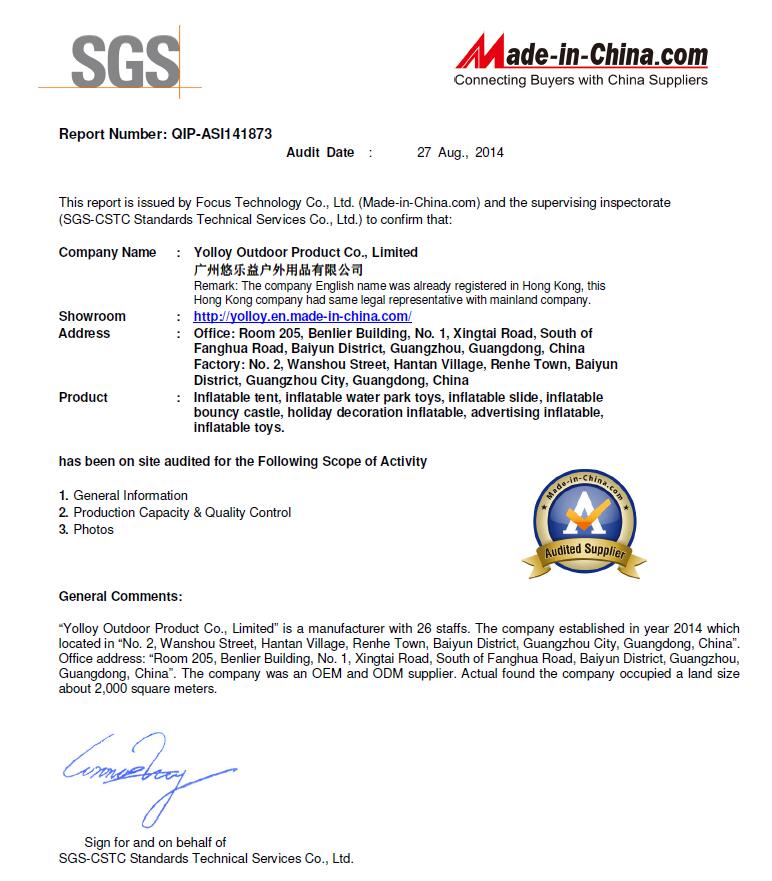
YOLLOY Outdoor Product Co., Limited designs and manufactures custom inflatable tents, clear domes, bubble tents, and commercial inflatable products from its facility in Guangzhou, China. With a product range spanning outdoor inflatable tents, planetarium domes, water park products, interactive sports games, commercial slides, bounce houses, paintball bunkers, and advertising inflatables, YOLLOY serves clients across Europe, Asia, South America, Africa, the Middle East, and Latin America.
Every product begins with your idea. Send a description, sketch, or site plan to
[email protected] and receive a custom design proposal. Whether you need one piece or a full fleet, YOLLOY delivers with safety, durability, and on-time reliability built into every order.