If you have spent any time around lakes, you have probably seen one—a bright inflatable platform moored just offshore where swimmers cluster, kids leap into the water, and friends gather to soak up the sun. The idea is tempting, but once you start shopping you quickly notice that "floating platform" covers everything from a compact sun lounger to a full-blown commercial dock. So which inflatable floating platform is best for a lake? The honest answer is that there is no single winner. The right choice depends on how many people will use it, what activities you plan, the conditions of your lake, and whether a ready-made float fits the space you actually have. This guide walks you through each factor so you can compare options with confidence.
A good starting point is to separate inflatable platforms by job. A leisure lounger, a diving base, and an inflatable water park rig are built for very different days on the water, and the right answer for your lake almost always lands clearly in one bucket. The sections below help you sort them out.
Start with how you will actually use it
Before comparing sizes or prices, decide what the platform has to do for you. Most lake users fall into one of three patterns.
Leisure and party platforms are built for relaxing. People stretch out on them, tie up boats nearby, and use them as a base for food and drinks. These tend to be lower and wider, with a soft deck surface, and they suit family lakes, cottage docks, and small events. If sunbathing, picnicking, and socialising are the main goal, this is the style to look at.
Swim and diving platforms are more functional. They sit firm in the water, give swimmers a solid edge to climb onto, and can double as a diving base. These favour a firmer deck and a sharper ramp or ladder profile, and they are common at permanent lakefront properties and swim schools.
Multi-activity and water park platforms combine a floating base with built-in slides, climbing walls, and splash elements. They are what you see at rental operations, resorts, and large private waterfronts where the point is active play rather than quiet floating. YOLLOY builds these as part of a broader line of inflatable water park products, so if play value matters more than lounging, this is the category worth investigating.
Match size and capacity to your group and your lake
Size is the first practical filter. The table below gives a rough sense of what different footprint ranges can comfortably carry, based on a general guideline of allowing roughly 200 to 250 pounds per person including gear. Keep in mind that the weight capacity of a commercial-grade float can exceed typical consumer models, so treat these figures as planning aids rather than hard limits.
| Platform footprint |
Comfortable group |
Typical use |
| Small (roughly 6 x 6 ft) |
Up to 3 people |
Couples, sunbathing, short swim breaks |
| Medium (roughly 8 x 8 to 10 x 10 ft) |
4 to 7 people |
Family groups, small dock setups, socialising |
| Large (roughly 12 x 12 ft and up) |
8 or more people |
Events, rentals, multi-activity water parks |
Beyond capacity, think about the lake itself. A sheltered bay on a small private lake behaves very differently from a large, open body of water where wind and boat wake are constant. Platforms intended for exposed water need a stronger anchoring system and a firmer deck that will not flex too much when waves roll under it. A cheap, lightly built float that feels fine on a calm swimming pool can become frustrating and even unsafe on a choppy lake.
Look closely at materials and build quality
The single biggest predictor of whether an inflatable platform lasts is the material and how it is joined together. For lake use, commercial-grade PVC tarpaulin is the standard you should look for. It shrugs off the constant UV exposure, abrasion, and water contact that a summer on the lake throws at it, and it can be repaired effectively if a seam ever gives way.
Construction details matter just as much as the raw material. Reinforced, double-stitched seams and waterproof nylon thread hold up under load, while extra reinforcement at the corners and other high-stress points prevents the tears that usually end a float's life. YOLLOY manufactures airtight products by high-temperature fusion and welding, and the sewn range uses precision sewing equipment with reinforced seams, so the joining method—not just the fabric—is engineered for years of hard use.
For lake platforms specifically, check how the float attaches to the bottom. D-ring or round metal anchor systems are incorporated where needed so the platform can be tethered firmly and resist wind. If you are planning a commercial inflatable water slide or a water park arrangement on the lake, the anchoring and frame design become even more important, because active users add heavy dynamic load that a static lounger never experiences.
Anchor it properly, and keep safety gear nearby
Where you place the platform and how you secure it is where many owners go wrong. An unanchored or loosely anchored platform can drift toward swimmers, docks, or boat traffic, which is exactly the situation you want to avoid. A sensible rule is to set the platform over at least a few feet of water and keep it clear of swimming areas and shore structures, then use multiple anchor points rather than a single corner weight. On larger platforms, anchor each corner and use a proper chain-and-weight system instead of thin rope, which can chafe and snap.
Safety equipment should never be an afterthought. Keep life jackets within reach for every person who goes out, attach a whistle or other signalling device to the platform, and store a small first-aid kit in a waterproof container on or near the float. If the platform carries children, decide in advance who is responsible for supervising them in the water—a floating deck can create a false sense of security, because the swim around it is still real open water.
Why a purpose-built platform can beat a stock model
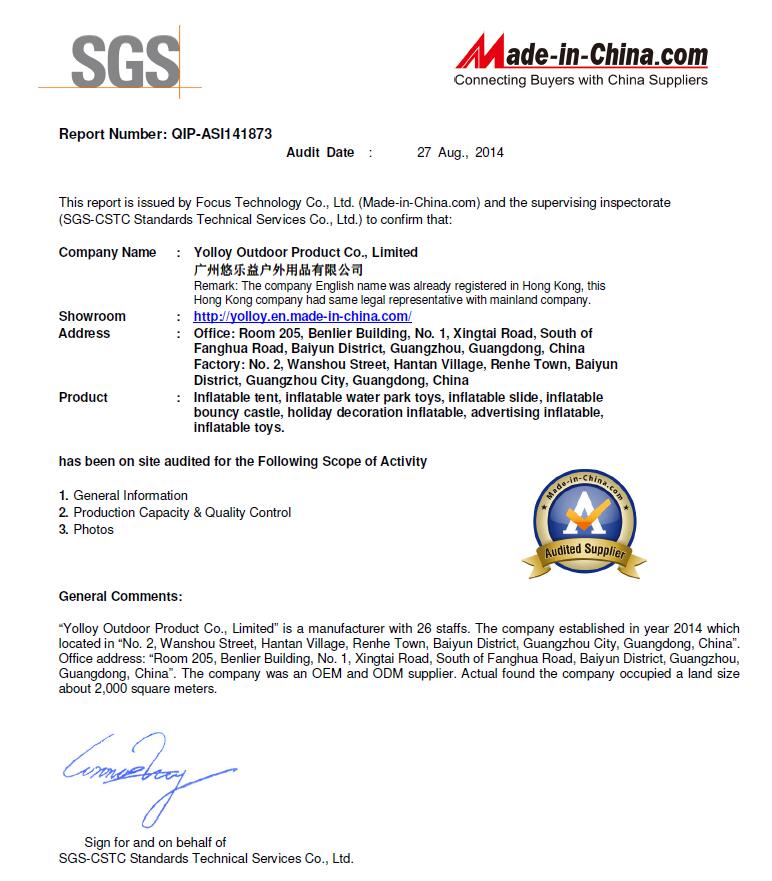
Off-the-shelf platforms are convenient, but they come with compromises. They may be marginally too small for your group, shaped awkwardly for your shoreline, or missing the anchor points your lake conditions demand. That is where buying directly from a manufacturer changes the conversation. Because YOLLOY designs and builds inflatable platforms in-house, it can adjust the size, shape, colour, and even print your logo or artwork onto the deck. A platform can be developed from a simple sketch, description, or photograph, and the minimum order starts at a single piece, so you are not forced to buy a container of floats just to get one that fits.
For a lake backdrop, a tailored design is genuinely useful. You can size the deck to fit between two natural anchor points, reinforce it for the specific wind exposure you face, or outfit it as a dedicated inflatable water park float with the exact slides and climbing elements your family or guests want. Being able to spec the platform to your site rather than adapting your site to a stock product is the main practical reason people choose custom manufacturing.
Quality and turnaround also deserve scrutiny. YOLLOY states that relevant materials have passed testing against standards such as EN71, EN14960, and RoHS, while inflatable water parks reference EN 15649, and blowers can be supplied for 110V, 220V, or 380V so they match your local power. A typical regular inflatable product takes roughly 6 to 15 days to produce before shipping, and air or sea freight both work depending on how quickly you need it.
Keep it clean and store it right
A few minutes of care after each outing extends a platform's life dramatically. Rinse off mud, algae, and bird droppings with fresh water before the surface dries in the sun. Check the seams and valves from time to time, and keep the supplied repair kit handy so a small puncture is fixed before it becomes a tear. At the end of the season, deflate the platform completely, dry it thoroughly, and store it somewhere it will not be exposed to mice, direct sunlight, or freezing temperatures. Platforms that are folded while still damp, or left half-inflated in the sun, are the ones that develop mildew and weak seams by spring.
Frequently asked questions
How much does a quality inflatable lake platform cost?
Consumer leisure floats range widely depending on size and brand, while commercial-grade platforms built for heavy lake use cost considerably more because of the stronger PVC and reinforced construction. Because YOLLOY is a manufacturer, it can supply commercial-grade platforms at factory prices, and custom work does not necessarily cost dramatically more than a premium stock float.
Can I leave an inflatable platform on the lake overnight?
Yes, with the right setup. A properly anchored commercial PVC platform is designed for extended seasonal use, so leaving it out overnight is normal for many owners. What shortens its life is poor anchoring, high wind exposure, and leaving it uncleaned. Detach removable accessories and check the anchor lines regularly if it stays out all season.
Do I need a blower to keep it inflated?
Most large platforms use a continuous-air design with a blower that maintains pressure while the platform is in use, rather than a sealed tube you inflate once. YOLLOY supplies blowers matched to the product, in 110V, 220V, or 380V, so you can run it from your shore power or a suitable source. Always confirm blower voltage with the supplier before ordering.
Final thoughts
The best inflatable floating platform for your lake is the one that matches your group size, your activities, and the conditions of your water—carried by commercial-grade material, reinforced construction, and a proper anchoring system. If you are comparing different types, YOLLOY's inflatable water park range and commercial water slide offerings show how much variety is possible once you move beyond a generic leisure float. Tell a manufacturer how you plan to use the platform, and you can often get one sized and reinforced specifically for your lake instead of forcing a stock product to fit.