Running a car wash or detailing business means working outdoors in every kind of weather. A car washing tent turns an exposed parking lot into a professional, covered workspace where customers stay comfortable and your equipment stays protected. Among the options on the market, inflatable models have become a favorite for business owners because they go up in minutes without heavy frames and can be built to match your exact space and branding. This guide walks through everything you need to weigh before you buy.
Why choose an inflatable car washing tent?
Traditional car wash shelters rely on steel or aluminum frames that have to be bolted together, which costs time and labor every time you set up or move. An inflatable car washing tent works differently: a blower keeps the structure under constant air pressure, so the whole shelter stands firm without poles or joints. That single difference changes the economics of your operation.
- Setup takes minutes instead of hours. One or two people can have the tent inflated and anchored before your first customer arrives.
- The tent packs down into a compact bundle, so you can relocate between sites, events, or seasonal locations without a truckload of frame parts.
- Because there is no rigid frame, the interior is completely open. You get unobstructed space to move around the vehicle, swing hoses, and position equipment.
- Inflatable structures are typically more affordable than permanent buildings and far easier to expand or replace as your business grows.
If you are comparing shelters for a detailing or car wash operation, an inflatable car tent is worth serious consideration for these reasons alone.
Size and clearance: measure before you buy
The most common mistake is buying a tent that fits the car but not the work. Start by measuring the largest vehicle you plan to service, including mirrors and open doors. Then add working space on all sides so your team can move freely, and leave room for a workbench, water tank, vacuum, and chemical storage.
Headroom matters just as much as floor area. A technician needs to stand upright and swing a hose without hitting the ceiling, so look for a tent with generous interior height. When you order from a manufacturer that offers custom sizes, you can specify the exact length, width, and height rather than squeezing your operation into a standard footprint.
Material and build quality
A car washing tent lives a hard life. It is exposed to water, soap, wax, chemicals, and strong sunlight day after day, so the fabric is the single most important component. Commercial-grade PVC tarpaulin is the industry standard for this kind of work because it is waterproof, abrasion-resistant, and easy to wipe clean. For lighter applications, Oxford fabric or other coated materials can be a good match, depending on your climate and how often the tent is used.
Pay attention to how the tent is sewn and sealed. Reinforced seams, waterproof nylon thread, and extra reinforcement at high-load areas prevent leaks and tears where the fabric is stressed most. Airtight sections should be joined with high-temperature welding rather than simple stitching, which keeps the structure holding pressure reliably. Reputable suppliers also test their materials against recognized safety standards, so ask about certifications before you commit.
Blower and inflation system
The blower is the heart of any inflatable structure. It continuously feeds air into the tent to keep the walls rigid, and the right blower for your site depends on your power supply. A good supplier will ask whether you run 110V, 220V, or 380V and match the blower accordingly, so confirm this before ordering. Also check that the blower is quiet enough for a customer-facing environment and that spare parts are easy to source.
Anchoring and wind resistance
A tent that is not secured is a liability. Inflatable car wash tents should come with anchor points built into the structure, typically D-rings or round metal anchor systems, so you can stake them down firmly on asphalt, concrete, or grass. If your site is exposed to strong wind, plan to use additional guy lines and weights. A well-anchored inflatable tent handles weather far better than a lightweight pop-up canopy, but no tent is safe in extreme storms, so always follow the manufacturer's wind guidelines.
Ventilation and airflow
Detailing work involves chemicals, spray, and drying, all of which create moisture and fumes inside an enclosed space. Good ventilation keeps the air moving so interiors dry faster and staff breathe easier. Look for tents with vented panels or openings you can control, and think about whether you need a fully enclosed unit for winter work or a more open design for summer. Some operators add a small exhaust fan to speed up drying after washing.
Customization and branding
One of the biggest advantages of buying from a manufacturer rather than off the shelf is customization. You can choose the size, color, and layout that fit your site, and print your logo, business name, and contact details directly on the fabric. A branded tent turns your work area into a rolling advertisement that builds trust with customers. Most inflatable tent factories will design from a description, sketch, photograph, or site plan, so you can describe what you need and get a rendering before production starts.
Portability and lead time
If your business moves between locations, check how the tent packs and how heavy the bundle is. Inflatable tents are designed to deflate and fold into a compact storage bag, which makes transport and storage straightforward. On the ordering side, understand the production timeline before you commit. A typical regular inflatable product takes roughly 6 to 15 days to produce, excluding transit, and complex or large custom builds take longer, so plan your launch date accordingly.
Common mistakes to avoid
- Buying too small. A tent that barely fits the car leaves no room for people, equipment, or movement.
- Choosing thin fabric to save money. It will leak, fade, and tear quickly under daily use.
- Ignoring the power supply. Ordering a blower that does not match your site's voltage causes delays and extra cost.
- Skipping anchoring. An unsecured tent is a safety risk to staff, customers, and vehicles.
- Not checking certifications. For commercial use, verify that materials meet relevant safety and quality standards.
Maintenance and care
A well-maintained inflatable tent lasts for years. Wipe down the fabric regularly with mild soap and water to remove soap residue and chemicals, and always let the tent dry completely before packing it away to prevent mold. Inspect seams, anchor points, and the blower periodically, and patch small punctures as soon as you notice them. Most suppliers include a repair kit with each product, so keep it on hand. With correct use and care, a quality inflatable structure can serve your business for several seasons.
Why the manufacturer matters
The quality of your tent depends heavily on who builds it. A reliable inflatable tent manufacturer will walk you through material choices, confirm your power requirements, provide design renderings before production, and stand behind the product with responsive support. Look for a supplier that answers inquiries quickly, offers a sensible minimum order quantity, and has experience exporting to your region.
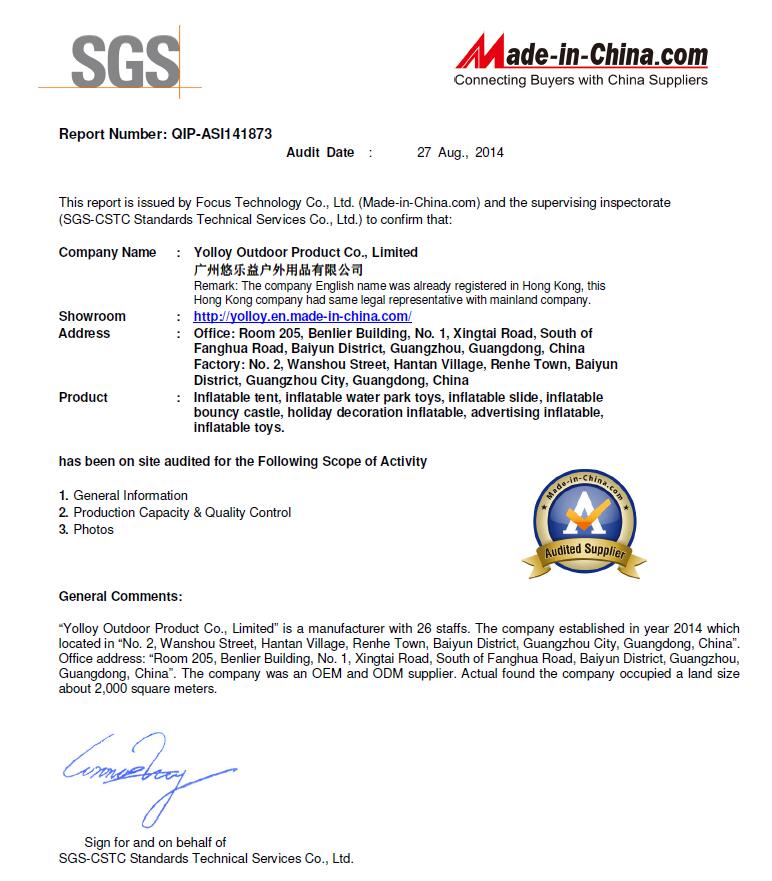
YOLLOY, an inflatable product manufacturer based in Guangzhou, China, is one example of this kind of partner. The company designs and produces custom inflatable tents, including car washing and detailing tents, and supports orders from a single piece upward. Its team supplies blowers matched to 110V, 220V, or 380V, incorporates D-ring or metal anchor systems where needed, and reports a 95% on-time delivery rate with email responses within 24 hours. If you are considering an inflatable garage tent or detailing shelter, it is worth sending your requirements to a manufacturer like this for a quote and design proposal.
Frequently asked questions
What size car washing tent do I need?
Measure your largest vehicle, then add working space on every side and enough headroom for staff to stand and swing hoses. If your site allows, order a custom size so you are not forced into a standard footprint.
How long does an inflatable car washing tent take to set up?
With a blower running, most inflatable tents inflate in a few minutes. Add anchoring time and you can typically be operational within half an hour with two people.
Can I put my logo on the tent?
Yes. Manufacturers print custom logos and artwork directly on the fabric, and many will produce a design rendering for approval before production.
What voltage blower do I need?
It depends on your site's power supply. Tell the supplier whether you run 110V, 220V, or 380V so they can match the blower correctly.
How do I keep the tent clean?
Wipe the fabric with mild soap and water, rinse thoroughly, and dry completely before storage. Patch small tears early and inspect seams and anchor points regularly.
Final thoughts
Choosing a car washing tent for your business comes down to matching the structure to how you actually work. Decide on the size and headroom you need, insist on commercial-grade materials and solid construction, confirm the blower and anchoring setup, and buy from a manufacturer that can customize the tent and support you after the sale. Get those decisions right, and a quality inflatable car washing tent will pay for itself many times over in comfort, professionalism, and repeat customers.