Products Category
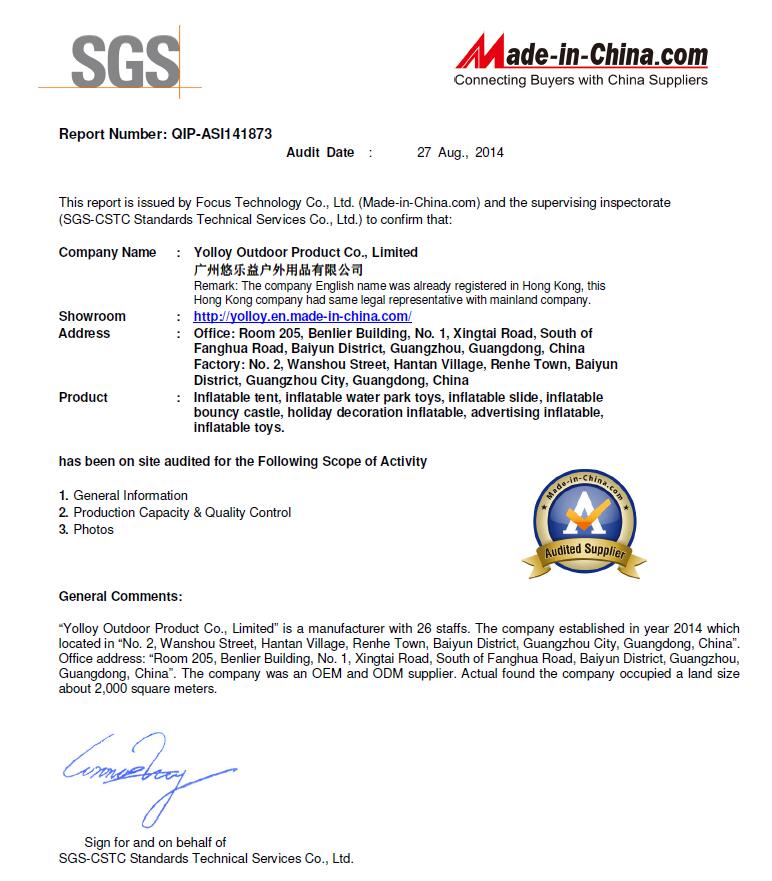
Certification

News

• New Order Successfully Finished for Long-Time Cooperated Japanese Client | YOLLOY Wins Full Client Recognition

• YOLLOY Custom Inflatable Pool Tent for Danish Client: Professional Pool Repair Shelter & Debris Protection

• Trusted Once Again! Greek Captain Re-orders Our Products After 4 Years

• Revolutionize Your Outdoors: The All-Terrain Inflatable Floating Tent for Land & Water

• Elevate Your Summer Fun: The Ultimate Inflatable Water Floating Volleyball Court Trampoline

• Innovative Inflatable Nightclub Tents & Pop-Up Bars: The Ultimate Solution for Portable Party Venues

Contact Us

Name: Sunny Yang
Tel: +86-20-8370 0771
Fax: +86-20-8370 0771
Mobile: 13570587575
E-mail: [email protected]
Add: No 5,Xiong wei Bo Nan Road,ZhongLuoTan Town,Baiyun district,Guangzhou,China
Friend me on Facebook Follow me on Twitter Add me to your circles Follow me on Pinterest Watch my channel on YouTube
News

What is the best inflatable tent for large inflatable tent?

Author:yolloy Date:2026/8/19 13:15:25

If you have been comparing options for a big event, a camping site, or a commercial project, you have probably asked yourself what the best inflatable tent really is. The honest answer is that there is no single model that suits everyone. A tent that works well for a weekend family trip will not hold up when it needs to cover a trade show booth or shelter dozens of guests. What matters is matching the tent to the job, and for anyone who needs serious floor space, the choice usually comes down to a large inflatable tent built with commercial-grade materials and a blower strong enough to keep it rigid.

This guide explains what makes a large inflatable tent worth buying, the different styles available, the specifications you should check before ordering, and how to work with inflatable tent manufacturers when you need a custom size, color, or logo.

What Is a Large Inflatable Tent?

A large inflatable tent is a shelter supported by air-filled beams instead of metal or fiberglass poles. A blower pushes air into the beams until they become rigid, and the whole structure stands on its own. Because there are no poles to assemble, a big tent can be inflated in minutes by a small crew. Large versions commonly cover from a few dozen to several hundred square meters, which makes them a practical alternative to heavy frame tents or permanent buildings for temporary use.

These tents are used for outdoor exhibitions, weddings and parties, camping and glamping, sports training, emergency shelters, spray booths, and even golf simulator enclosures. The same air-beam principle applies whether the tent is a small camping shelter or a multi-room event structure; the difference is in the material thickness, the number and size of the beams, and the blower capacity.

Why Large Inflatable Tents Are Worth the Investment

The main reason event organizers, rental companies, and campers choose inflatable structures is speed. A large frame tent can take a full day and several workers to assemble, while an inflatable tent of similar size can be standing within an hour. That saving in labor and time matters when you run events on a tight schedule.

Portability is the second reason. Deflated, a large inflatable tent packs into a compact bundle that fits in a van or a shipping crate. You can move it between venues, store it between seasons, and set it up again without buying new hardware. Because the frame is air rather than metal, there are no bent poles to replace and no heavy trusses to transport.

Customization is the third. Inflatable tents can be produced in custom sizes and colors, and logos and artwork can be printed directly on the fabric. For businesses, that turns a simple shelter into a branding tool that stands out at a fair or a festival.

Common Types of Large Inflatable Tents

Before you order, it helps to know which shape fits your use case. The most common styles are:

Inflatable dome tent. A rounded, fully enclosed structure that is stable in wind and easy to heat or cool. Dome tents are a good choice for exhibitions, VIP lounges, planetarium shows, and glamping, because the curved shape sheds wind and the interior is open with no poles in the way.

Inflatable tunnel tent. An elongated structure with air beams running along its length. Tunnel tents work well as entrances, walkways, and multi-room layouts, and they can be extended by adding more sections.

Inflatable cube tent. A box-shaped design with flat walls that give you maximum surface for branding and product displays. Cube tents are popular for trade fairs, retail pop-ups, and spray booths where straight walls are easier to work with.

Clear inflatable dome and bubble tents. Made with transparent panels, these are used for winter events, snow globes, and premium camping. They let natural light in and give guests a view of the surroundings while keeping them protected from the weather.

Custom-shaped inflatable tents. Party tents, car tents, sports tents, and advertising structures can be built to a specific design. If you have a sketch, a drawing, or even just a description and a budget, a manufacturer can turn it into a production-ready design.

What to Check Before You Buy a Large Inflatable Tent

A large tent is a bigger investment than a weekend camping shelter, so it pays to check a few specifications before committing.

Fabric. Commercial-grade PVC tarpaulin is the most common choice for large tents because it is tough, waterproof, and easy to print on. Depending on the project, manufacturers may also use Oxford fabric, nylon, or TPU. Ask which material is used and how thick it is, because that directly affects how long the tent lasts and how well it resists tearing.

Seams and construction. Airtight products should be made with high-temperature fusion or welding equipment rather than simple stitching, and high-load areas should be reinforced. Check that the seams are uniform and that the valves operate smoothly before you accept delivery.

Blower. The blower is what keeps the tent standing, so it must be matched to the size of the structure. Confirm the voltage you need, because blowers are commonly supplied for 110V, 220V, or 380V depending on your market. A spare blower is worth having for long events.

Anchoring. In open outdoor spaces, a large inflatable tent needs to be secured. Look for D-ring or round metal anchor systems built into the structure, and plan to use the stakes and guy lines that come with it.

Certifications. If the tent will be used commercially or with children, ask about safety testing. Relevant materials on quality products have passed EN71, EN14960, and RoHS-related testing, and blowers should meet CE or UL requirements. Confirm the certificates for the specific product you are buying.

Customization. If you need a specific size, color, or printed logo, make sure the manufacturer offers it before you order. Custom sizes and colors are standard for most inflatable tent factories, and the minimum order quantity is often as low as one piece.

How to Choose the Right Large Inflatable Tent, Step by Step

Follow these steps to narrow down your options without getting lost in specifications:

1. Define the use case. A tent for a wedding reception, a tent for a spray booth, and a tent for a golf simulator all have different requirements. Write down exactly what will happen inside and how often the tent will be used.

2. Work out the size. Count the people or equipment the tent must hold, then add a little extra space for movement. It is better to order slightly larger than to discover the tent is too small on the day of the event.

3. Match the material to the environment. If the tent will face strong sun, rain, or heavy use, choose a heavier commercial-grade fabric and check the waterproofing. If it is for occasional indoor use, a lighter material may be enough.

4. Confirm the blower and anchoring plan. Ask the supplier which blower is included, what voltage it uses, and how the tent is anchored. A large tent without a proper anchoring plan is a safety risk in windy weather.

5. Check production time and delivery. A regular inflatable product typically takes 6 to 15 days to produce, excluding transit. Complex or large custom products can take longer, so plan your order around your event date. Air and sea shipping are both available, with air taking about 5 to 7 days and sea taking 15 to 30 days or more.

6. Review the after-sales terms. Ask about the warranty, whether a repair kit is included, and how the supplier handles questions. A manufacturer that answers within 24 hours and stands behind its products is worth more than a slightly cheaper quote from a supplier you cannot reach.

Why Buy Directly from a Manufacturer

For large tents, buying directly from a factory usually gives you better pricing, more customization options, and clearer communication than going through a reseller. A manufacturer can take your proposal, prepare simulation renderings of the design, revise them until you approve, and then release the design for production. That design-to-production workflow is exactly what you want when the tent must match a specific space or brand.

YOLLOY is one such manufacturer. Based in Guangzhou, China, the company designs and produces custom inflatable tents, clear domes, planetarium domes, water-park products, slides, bounce houses, and advertising inflatables, and it exports to Europe, Asia, South America, Africa, the Middle East, and Latin America. Products are made with precision sewing equipment, reinforced seams, and waterproof nylon thread, and each inflatable is supplied with a repair kit. The company reports a 95% on-time delivery rate and answers emails within 24 hours, which matters when you are coordinating an event on a deadline.

Common Mistakes to Avoid

Most problems with large inflatable tents come down to a few avoidable errors:

Ordering the wrong size. Underestimating capacity is the most common mistake. Always allow extra floor space for furniture, equipment, and movement.

Ignoring the anchoring requirement. A large tent in an open field will not stay put without stakes and guy lines. Plan the anchoring before the event, not during it.

Choosing material on price alone. The cheapest fabric may save money up front but fail after a season of use. Check the material grade and the seam construction before comparing prices.

Forgetting the blower. The blower is not an accessory; it is part of the structure. Confirm the voltage, the power, and whether a spare is available before you finalize the order.

Skipping the certification check. If the tent is used commercially or around children, safety certifications are not optional. Ask for the relevant test reports before you pay.

Frequently Asked Questions

How long does it take to set up a large inflatable tent? With a properly matched blower, a large inflatable tent can be inflated in well under an hour by a small team. The exact time depends on the size of the structure and how familiar the crew is with the setup.

Are large inflatable tents safe in wind and rain? Yes, when they are properly anchored and the material is rated for outdoor use. Use the D-ring or metal anchor system, follow the manufacturer's guidelines, and take the tent down if conditions become extreme.

Can I get a custom size, color, or logo? Yes. Custom sizes and colors are standard, and logos and artwork can be printed on the fabric. If you can describe the design or provide a sketch, a manufacturer can produce a rendering for your approval before production starts.

What is the minimum order quantity? For most custom inflatable tents, the minimum order quantity is one piece, which makes it practical to order a single large tent for a specific event.

How long will a large inflatable tent last? With correct use and maintenance, a commercial-grade inflatable tent can be expected to last about three years or more, depending on the product type, the frequency of use, and the conditions it is exposed to. A repair kit is supplied with each product, and prompt repairs extend the life of the tent.

Conclusion

The best inflatable tent for a large space is the one that matches your use case, your site, and your budget. Start with the type of tent you need, check the fabric, seams, blower, anchoring, and certifications, and order from a manufacturer that can customize the design and support you after the sale. If you are planning a large event or a commercial project, compare a few suppliers, ask for renderings of your design, and confirm the production time before you commit. With the right tent and the right supplier, a large inflatable structure is one of the fastest, most flexible shelters you can deploy.


What is the best inflatable tent for large inflatable tent?

Author:yolloy Date:2026/8/19 13:15:25

If you have been comparing options for a big event, a camping site, or a commercial project, you have probably asked yourself what the best inflatable tent really is. The honest answer is that there is no single model that suits everyone. A tent that works well for a weekend family trip will not hold up when it needs to cover a trade show booth or shelter dozens of guests. What matters is matching the tent to the job, and for anyone who needs serious floor space, the choice usually comes down to a large inflatable tent built with commercial-grade materials and a blower strong enough to keep it rigid.

This guide explains what makes a large inflatable tent worth buying, the different styles available, the specifications you should check before ordering, and how to work with inflatable tent manufacturers when you need a custom size, color, or logo.

What Is a Large Inflatable Tent?

A large inflatable tent is a shelter supported by air-filled beams instead of metal or fiberglass poles. A blower pushes air into the beams until they become rigid, and the whole structure stands on its own. Because there are no poles to assemble, a big tent can be inflated in minutes by a small crew. Large versions commonly cover from a few dozen to several hundred square meters, which makes them a practical alternative to heavy frame tents or permanent buildings for temporary use.

These tents are used for outdoor exhibitions, weddings and parties, camping and glamping, sports training, emergency shelters, spray booths, and even golf simulator enclosures. The same air-beam principle applies whether the tent is a small camping shelter or a multi-room event structure; the difference is in the material thickness, the number and size of the beams, and the blower capacity.

Why Large Inflatable Tents Are Worth the Investment

The main reason event organizers, rental companies, and campers choose inflatable structures is speed. A large frame tent can take a full day and several workers to assemble, while an inflatable tent of similar size can be standing within an hour. That saving in labor and time matters when you run events on a tight schedule.

Portability is the second reason. Deflated, a large inflatable tent packs into a compact bundle that fits in a van or a shipping crate. You can move it between venues, store it between seasons, and set it up again without buying new hardware. Because the frame is air rather than metal, there are no bent poles to replace and no heavy trusses to transport.

Customization is the third. Inflatable tents can be produced in custom sizes and colors, and logos and artwork can be printed directly on the fabric. For businesses, that turns a simple shelter into a branding tool that stands out at a fair or a festival.

Common Types of Large Inflatable Tents

Before you order, it helps to know which shape fits your use case. The most common styles are:

Inflatable dome tent. A rounded, fully enclosed structure that is stable in wind and easy to heat or cool. Dome tents are a good choice for exhibitions, VIP lounges, planetarium shows, and glamping, because the curved shape sheds wind and the interior is open with no poles in the way.

Inflatable tunnel tent. An elongated structure with air beams running along its length. Tunnel tents work well as entrances, walkways, and multi-room layouts, and they can be extended by adding more sections.

Inflatable cube tent. A box-shaped design with flat walls that give you maximum surface for branding and product displays. Cube tents are popular for trade fairs, retail pop-ups, and spray booths where straight walls are easier to work with.

Clear inflatable dome and bubble tents. Made with transparent panels, these are used for winter events, snow globes, and premium camping. They let natural light in and give guests a view of the surroundings while keeping them protected from the weather.

Custom-shaped inflatable tents. Party tents, car tents, sports tents, and advertising structures can be built to a specific design. If you have a sketch, a drawing, or even just a description and a budget, a manufacturer can turn it into a production-ready design.

What to Check Before You Buy a Large Inflatable Tent

A large tent is a bigger investment than a weekend camping shelter, so it pays to check a few specifications before committing.

Fabric. Commercial-grade PVC tarpaulin is the most common choice for large tents because it is tough, waterproof, and easy to print on. Depending on the project, manufacturers may also use Oxford fabric, nylon, or TPU. Ask which material is used and how thick it is, because that directly affects how long the tent lasts and how well it resists tearing.

Seams and construction. Airtight products should be made with high-temperature fusion or welding equipment rather than simple stitching, and high-load areas should be reinforced. Check that the seams are uniform and that the valves operate smoothly before you accept delivery.

Blower. The blower is what keeps the tent standing, so it must be matched to the size of the structure. Confirm the voltage you need, because blowers are commonly supplied for 110V, 220V, or 380V depending on your market. A spare blower is worth having for long events.

Anchoring. In open outdoor spaces, a large inflatable tent needs to be secured. Look for D-ring or round metal anchor systems built into the structure, and plan to use the stakes and guy lines that come with it.

Certifications. If the tent will be used commercially or with children, ask about safety testing. Relevant materials on quality products have passed EN71, EN14960, and RoHS-related testing, and blowers should meet CE or UL requirements. Confirm the certificates for the specific product you are buying.

Customization. If you need a specific size, color, or printed logo, make sure the manufacturer offers it before you order. Custom sizes and colors are standard for most inflatable tent factories, and the minimum order quantity is often as low as one piece.

How to Choose the Right Large Inflatable Tent, Step by Step

Follow these steps to narrow down your options without getting lost in specifications:

1. Define the use case. A tent for a wedding reception, a tent for a spray booth, and a tent for a golf simulator all have different requirements. Write down exactly what will happen inside and how often the tent will be used.

2. Work out the size. Count the people or equipment the tent must hold, then add a little extra space for movement. It is better to order slightly larger than to discover the tent is too small on the day of the event.

3. Match the material to the environment. If the tent will face strong sun, rain, or heavy use, choose a heavier commercial-grade fabric and check the waterproofing. If it is for occasional indoor use, a lighter material may be enough.

4. Confirm the blower and anchoring plan. Ask the supplier which blower is included, what voltage it uses, and how the tent is anchored. A large tent without a proper anchoring plan is a safety risk in windy weather.

5. Check production time and delivery. A regular inflatable product typically takes 6 to 15 days to produce, excluding transit. Complex or large custom products can take longer, so plan your order around your event date. Air and sea shipping are both available, with air taking about 5 to 7 days and sea taking 15 to 30 days or more.

6. Review the after-sales terms. Ask about the warranty, whether a repair kit is included, and how the supplier handles questions. A manufacturer that answers within 24 hours and stands behind its products is worth more than a slightly cheaper quote from a supplier you cannot reach.

Why Buy Directly from a Manufacturer

For large tents, buying directly from a factory usually gives you better pricing, more customization options, and clearer communication than going through a reseller. A manufacturer can take your proposal, prepare simulation renderings of the design, revise them until you approve, and then release the design for production. That design-to-production workflow is exactly what you want when the tent must match a specific space or brand.

YOLLOY is one such manufacturer. Based in Guangzhou, China, the company designs and produces custom inflatable tents, clear domes, planetarium domes, water-park products, slides, bounce houses, and advertising inflatables, and it exports to Europe, Asia, South America, Africa, the Middle East, and Latin America. Products are made with precision sewing equipment, reinforced seams, and waterproof nylon thread, and each inflatable is supplied with a repair kit. The company reports a 95% on-time delivery rate and answers emails within 24 hours, which matters when you are coordinating an event on a deadline.

Common Mistakes to Avoid

Most problems with large inflatable tents come down to a few avoidable errors:

Ordering the wrong size. Underestimating capacity is the most common mistake. Always allow extra floor space for furniture, equipment, and movement.

Ignoring the anchoring requirement. A large tent in an open field will not stay put without stakes and guy lines. Plan the anchoring before the event, not during it.

Choosing material on price alone. The cheapest fabric may save money up front but fail after a season of use. Check the material grade and the seam construction before comparing prices.

Forgetting the blower. The blower is not an accessory; it is part of the structure. Confirm the voltage, the power, and whether a spare is available before you finalize the order.

Skipping the certification check. If the tent is used commercially or around children, safety certifications are not optional. Ask for the relevant test reports before you pay.

Frequently Asked Questions

How long does it take to set up a large inflatable tent? With a properly matched blower, a large inflatable tent can be inflated in well under an hour by a small team. The exact time depends on the size of the structure and how familiar the crew is with the setup.

Are large inflatable tents safe in wind and rain? Yes, when they are properly anchored and the material is rated for outdoor use. Use the D-ring or metal anchor system, follow the manufacturer's guidelines, and take the tent down if conditions become extreme.

Can I get a custom size, color, or logo? Yes. Custom sizes and colors are standard, and logos and artwork can be printed on the fabric. If you can describe the design or provide a sketch, a manufacturer can produce a rendering for your approval before production starts.

What is the minimum order quantity? For most custom inflatable tents, the minimum order quantity is one piece, which makes it practical to order a single large tent for a specific event.

How long will a large inflatable tent last? With correct use and maintenance, a commercial-grade inflatable tent can be expected to last about three years or more, depending on the product type, the frequency of use, and the conditions it is exposed to. A repair kit is supplied with each product, and prompt repairs extend the life of the tent.

Conclusion

The best inflatable tent for a large space is the one that matches your use case, your site, and your budget. Start with the type of tent you need, check the fabric, seams, blower, anchoring, and certifications, and order from a manufacturer that can customize the design and support you after the sale. If you are planning a large event or a commercial project, compare a few suppliers, ask for renderings of your design, and confirm the production time before you commit. With the right tent and the right supplier, a large inflatable structure is one of the fastest, most flexible shelters you can deploy.