Products Category
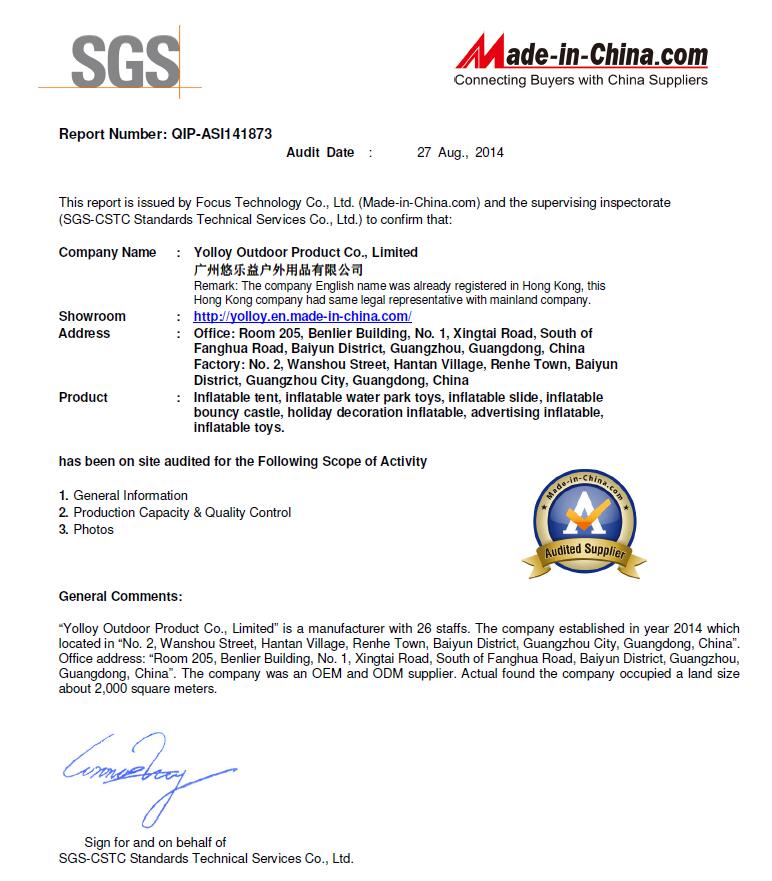
Certification

News

• New Order Successfully Finished for Long-Time Cooperated Japanese Client | YOLLOY Wins Full Client Recognition

• YOLLOY Custom Inflatable Pool Tent for Danish Client: Professional Pool Repair Shelter & Debris Protection

• Trusted Once Again! Greek Captain Re-orders Our Products After 4 Years

• Revolutionize Your Outdoors: The All-Terrain Inflatable Floating Tent for Land & Water

• Elevate Your Summer Fun: The Ultimate Inflatable Water Floating Volleyball Court Trampoline

• Innovative Inflatable Nightclub Tents & Pop-Up Bars: The Ultimate Solution for Portable Party Venues

Contact Us

Name: Sunny Yang
Tel: +86-20-8370 0771
Fax: +86-20-8370 0771
Mobile: 13570587575
E-mail: [email protected]
Add: No 5,Xiong wei Bo Nan Road,ZhongLuoTan Town,Baiyun district,Guangzhou,China
Friend me on Facebook Follow me on Twitter Add me to your circles Follow me on Pinterest Watch my channel on YouTube
News

What is the best portable planetarium dome for museums?

Author:yolloy Date:2026/8/13 0:24:31

For museums, science centers, and educational institutions, a portable planetarium dome is one of the most effective tools for bringing astronomy to life. Unlike fixed planetariums that require permanent construction and multi-million-dollar budgets, a portable planetarium dome can be set up in a gymnasium, exhibition hall, or even outdoors — and packed away when not in use. But with multiple options on the market, what actually makes one dome better than another for museum use? This article breaks down the key factors to consider.

Projection Quality Comes First

A museum-grade planetarium dome must deliver crisp, immersive projections. The interior surface should be light-tight and treated with a matte finish to minimize glare and internal reflections. Materials matter here: high-quality domes use specialized fabrics such as TPU (thermoplastic polyurethane) or multi-layer projection fabric that block external light while providing a smooth canvas for digital projectors. Cheaper PVC alternatives often fail to achieve true blackout conditions, resulting in washed-out images that break the illusion of a starry sky.

When evaluating a dome, ask the manufacturer about the fabric's light transmission rate and whether it is optimized for digital fulldome projection. The best domes for museums combine a dark exterior layer with a matte gray interior projection surface, ensuring that stars, planets, and galaxies appear sharp and vivid even when some ambient light is present in the room.

Setup Speed and Portability

Museums often have limited staff and tight event schedules, so a dome that takes hours to inflate or requires a team of technicians is impractical. A well-designed portable planetarium dome should inflate within 10 to 15 minutes using a standard electric blower, and takedown should be equally fast. Look for models that include a carrying bag, repair kit, and clear setup instructions — these accessories save time and reduce the learning curve for new staff.

Weight and packed dimensions also matter. A 6-meter dome, for example, typically weighs between 40 and 60 kilograms and packs into one or two cases that fit in a standard van. If your museum plans to run outreach programs at schools or community centers, confirm that the packed dome can be transported with your existing vehicles.

Size and Capacity: Matching the Dome to Your Audience

Portable planetarium domes come in a range of diameters, and the right size depends on how many visitors you want to accommodate per session. A 4-meter dome comfortably seats about 10 to 15 adults or 20 children, making it suitable for small classrooms or intimate exhibits. A 6-meter dome can hold 30 to 45 adults, which works well for medium-sized museum galleries. For larger institutions, domes of 8 meters or more can seat 60 to 80 people at once.

Beyond raw capacity, pay attention to the dome's internal height. A higher zenith (the peak of the dome) creates a better viewing angle and a more immersive experience. Some domes include a spring-line ring structure that raises the horizon line, keeping projected content above eye level — a feature that museums with seated audiences should prioritize.

Safety and Material Certifications

Since museum domes are used by visitors of all ages, including children, safety is non-negotiable. The materials used in the dome's construction should be certified to international standards. Reputable portable planetarium dome manufacturer companies provide documentation showing compliance with EN71 (toy safety), REACH, and RoHS standards. These certifications confirm that the fabric contains no harmful phthalates, heavy metals, or volatile organic compounds.

Fire retardancy is another critical requirement. A dome intended for indoor public use must be made from flame-retardant materials tested to recognized standards. Before purchasing, request the manufacturer's fire safety certificates and verify that they apply to the specific fabric used in your dome — not just to a general product line.

Customization and Branding Options

Museums often want their planetarium dome to reflect their institution's identity. Many manufacturers offer customization, including printing the museum's logo on the dome exterior, choosing specific colors for the entrance tunnel, or adding custom-shaped entrance flaps (such as a star-shaped door for children's museums). Some manufacturers can also integrate ventilation ports, cable management openings for projection equipment, and even built-in storage pockets for remotes and accessories.

Customization should not compromise the dome's structural integrity. Ask how the manufacturer reinforces printed areas and whether custom features affect the dome's airtightness or warranty coverage.

Durability and Long-Term Value

A museum dome is a long-term investment. The outer fabric should resist abrasion from frequent setup and takedown, and the seams should be reinforced at high-stress points such as the base ring and inflation valve connections. Check whether the manufacturer uses double-stitched or heat-welded seams — welded seams generally provide better airtightness and durability for inflatable structures.

When comparing options, consider the total cost of ownership. A dome with a higher upfront price but better materials, longer warranty, and responsive after-sales support often costs less over five years than a cheaper dome that requires frequent repairs. Look for manufacturers that offer at least a one-year warranty on materials and workmanship, and confirm that replacement parts — such as blower units, valves, and repair patches — are readily available.

Making the Right Choice for Your Museum

Choosing the best portable planetarium dome for a museum comes down to balancing projection quality, size, safety, and durability with your budget and program goals. Start by defining your primary use case: will the dome remain in a fixed gallery, or does it need to travel for outreach? How many visitors do you expect per session? What type of projection system will you use?

Once these questions are answered, engage with manufacturers directly. Request material samples, ask for references from other museums, and if possible, visit a facility where a similar dome is already in use. A manufacturer that responds promptly, shares technical documentation openly, and offers design consultation is a partner worth working with — not just a vendor. The right dome will serve your museum for years, turning every show into an unforgettable journey through the cosmos.


What is the best portable planetarium dome for museums?

Author:yolloy Date:2026/8/13 0:24:31

For museums, science centers, and educational institutions, a portable planetarium dome is one of the most effective tools for bringing astronomy to life. Unlike fixed planetariums that require permanent construction and multi-million-dollar budgets, a portable planetarium dome can be set up in a gymnasium, exhibition hall, or even outdoors — and packed away when not in use. But with multiple options on the market, what actually makes one dome better than another for museum use? This article breaks down the key factors to consider.

Projection Quality Comes First

A museum-grade planetarium dome must deliver crisp, immersive projections. The interior surface should be light-tight and treated with a matte finish to minimize glare and internal reflections. Materials matter here: high-quality domes use specialized fabrics such as TPU (thermoplastic polyurethane) or multi-layer projection fabric that block external light while providing a smooth canvas for digital projectors. Cheaper PVC alternatives often fail to achieve true blackout conditions, resulting in washed-out images that break the illusion of a starry sky.

When evaluating a dome, ask the manufacturer about the fabric's light transmission rate and whether it is optimized for digital fulldome projection. The best domes for museums combine a dark exterior layer with a matte gray interior projection surface, ensuring that stars, planets, and galaxies appear sharp and vivid even when some ambient light is present in the room.

Setup Speed and Portability

Museums often have limited staff and tight event schedules, so a dome that takes hours to inflate or requires a team of technicians is impractical. A well-designed portable planetarium dome should inflate within 10 to 15 minutes using a standard electric blower, and takedown should be equally fast. Look for models that include a carrying bag, repair kit, and clear setup instructions — these accessories save time and reduce the learning curve for new staff.

Weight and packed dimensions also matter. A 6-meter dome, for example, typically weighs between 40 and 60 kilograms and packs into one or two cases that fit in a standard van. If your museum plans to run outreach programs at schools or community centers, confirm that the packed dome can be transported with your existing vehicles.

Size and Capacity: Matching the Dome to Your Audience

Portable planetarium domes come in a range of diameters, and the right size depends on how many visitors you want to accommodate per session. A 4-meter dome comfortably seats about 10 to 15 adults or 20 children, making it suitable for small classrooms or intimate exhibits. A 6-meter dome can hold 30 to 45 adults, which works well for medium-sized museum galleries. For larger institutions, domes of 8 meters or more can seat 60 to 80 people at once.

Beyond raw capacity, pay attention to the dome's internal height. A higher zenith (the peak of the dome) creates a better viewing angle and a more immersive experience. Some domes include a spring-line ring structure that raises the horizon line, keeping projected content above eye level — a feature that museums with seated audiences should prioritize.

Safety and Material Certifications

Since museum domes are used by visitors of all ages, including children, safety is non-negotiable. The materials used in the dome's construction should be certified to international standards. Reputable portable planetarium dome manufacturer companies provide documentation showing compliance with EN71 (toy safety), REACH, and RoHS standards. These certifications confirm that the fabric contains no harmful phthalates, heavy metals, or volatile organic compounds.

Fire retardancy is another critical requirement. A dome intended for indoor public use must be made from flame-retardant materials tested to recognized standards. Before purchasing, request the manufacturer's fire safety certificates and verify that they apply to the specific fabric used in your dome — not just to a general product line.

Customization and Branding Options

Museums often want their planetarium dome to reflect their institution's identity. Many manufacturers offer customization, including printing the museum's logo on the dome exterior, choosing specific colors for the entrance tunnel, or adding custom-shaped entrance flaps (such as a star-shaped door for children's museums). Some manufacturers can also integrate ventilation ports, cable management openings for projection equipment, and even built-in storage pockets for remotes and accessories.

Customization should not compromise the dome's structural integrity. Ask how the manufacturer reinforces printed areas and whether custom features affect the dome's airtightness or warranty coverage.

Durability and Long-Term Value

A museum dome is a long-term investment. The outer fabric should resist abrasion from frequent setup and takedown, and the seams should be reinforced at high-stress points such as the base ring and inflation valve connections. Check whether the manufacturer uses double-stitched or heat-welded seams — welded seams generally provide better airtightness and durability for inflatable structures.

When comparing options, consider the total cost of ownership. A dome with a higher upfront price but better materials, longer warranty, and responsive after-sales support often costs less over five years than a cheaper dome that requires frequent repairs. Look for manufacturers that offer at least a one-year warranty on materials and workmanship, and confirm that replacement parts — such as blower units, valves, and repair patches — are readily available.

Making the Right Choice for Your Museum

Choosing the best portable planetarium dome for a museum comes down to balancing projection quality, size, safety, and durability with your budget and program goals. Start by defining your primary use case: will the dome remain in a fixed gallery, or does it need to travel for outreach? How many visitors do you expect per session? What type of projection system will you use?

Once these questions are answered, engage with manufacturers directly. Request material samples, ask for references from other museums, and if possible, visit a facility where a similar dome is already in use. A manufacturer that responds promptly, shares technical documentation openly, and offers design consultation is a partner worth working with — not just a vendor. The right dome will serve your museum for years, turning every show into an unforgettable journey through the cosmos.