Products Category
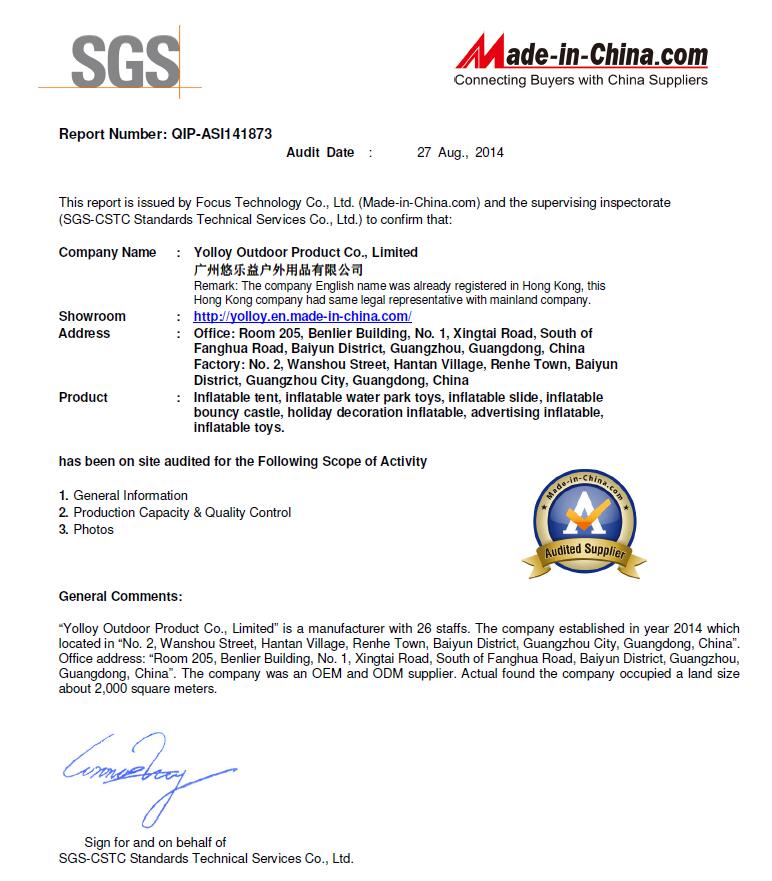
Certification

News

• New Order Successfully Finished for Long-Time Cooperated Japanese Client | YOLLOY Wins Full Client Recognition

• YOLLOY Custom Inflatable Pool Tent for Danish Client: Professional Pool Repair Shelter & Debris Protection

• Trusted Once Again! Greek Captain Re-orders Our Products After 4 Years

• Revolutionize Your Outdoors: The All-Terrain Inflatable Floating Tent for Land & Water

• Elevate Your Summer Fun: The Ultimate Inflatable Water Floating Volleyball Court Trampoline

• Innovative Inflatable Nightclub Tents & Pop-Up Bars: The Ultimate Solution for Portable Party Venues

Contact Us

Name: Sunny Yang
Tel: +86-20-8370 0771
Fax: +86-20-8370 0771
Mobile: 13570587575
E-mail: [email protected]
Add: No 5,Xiong wei Bo Nan Road,ZhongLuoTan Town,Baiyun district,Guangzhou,China
Friend me on Facebook Follow me on Twitter Add me to your circles Follow me on Pinterest Watch my channel on YouTube
News

How does an inflatable screen work for outdoor movies?

Author:yolloy Date:2026/8/12 23:40:11

Watching a movie under the stars has become one of the most popular ways to enjoy cinema, and at the heart of this experience is the inflatable projection screen. But how exactly does an inflatable screen work, and what makes it such a reliable choice for outdoor movie events? Let's break down the technology, components, and setup process that turn a simple backyard into a full-scale outdoor theater.

What Is an Inflatable Projection Screen?

An inflatable projection screen is a portable outdoor movie solution consisting of an inflatable frame — typically made of durable PVC tarpaulin or Oxford fabric — with a tightly stretched projection surface attached to it. The frame is inflated using a continuous-flow air blower that keeps the structure rigid and upright throughout the event. These screens are designed for quick setup and takedown, making them ideal for backyard movie nights, community film festivals, drive-in theaters, and corporate events.

Unlike traditional rigid-frame screens that require heavy scaffolding or truss systems, an outdoor inflatable projection screen can be transported in a compact carrying bag, set up by one or two people in under 30 minutes, and deflated just as quickly when the show is over.

How the Inflation Mechanism Works

The core principle behind an inflatable screen is simple: a high-pressure electric blower continuously pumps air into the frame structure, creating enough internal pressure to keep the entire screen standing upright and taut. Here is how the process unfolds step by step:

1. The Air Blower

The blower is the engine of the entire system. It is an electric fan unit that draws in ambient air and forces it into the inflatable frame through a dedicated intake port. Most inflatable screens use a continuous-flow blower, meaning the fan runs throughout the entire event to maintain consistent pressure. This is important because even small leaks at seams or zipper openings are compensated for by the constant air supply. Blowers are typically available in 110V, 220V, or 380V configurations to match local power standards, and many models are CE or UL certified for safety.

2. The Inflatable Frame

The frame is the backbone of the screen. It is typically constructed from heavy-duty PVC tarpaulin with high-frequency welded seams, ensuring airtightness and structural integrity. Some premium models use Oxford fabric or TPU-coated materials for enhanced flexibility and weather resistance. The frame is usually designed as a series of interconnected air chambers or tubes that form a rectangular or arched shape when inflated. Once the blower is turned on, the frame rises from the ground and takes shape within 60 to 180 seconds, depending on the screen size.

3. The Projection Surface

Attached to the inflated frame is the projection surface itself. This is usually a white or light gray matte fabric — often polyester or silk-cloth — that has been treated to minimize light reflection and reduce distortion. The surface is stretched tightly across the frame by the tension created during inflation, providing a flat, wrinkle-free canvas for the projected image. High-quality projection surfaces are designed to deliver accurate color reproduction and wide viewing angles, ensuring that everyone in the audience gets a clear, bright picture even in twilight or ambient light conditions.

The Setup Process: From Bag to Big Screen

Setting up an inflatable screen is straightforward and does not require specialized tools or technical expertise. Here is a typical setup workflow:

  1. Choose a level location — Find a flat, open area with enough space for both the screen and the audience. Check that the wind speed is below the screen's rated limit (typically 15–24 mph).
  2. Lay out the screen — Unroll the deflated screen flat on the ground with the projection surface facing up and the blower intake port accessible.
  3. Connect the blower — Attach the blower to the intake port, secure the connection with the provided strap or zipper, and plug the blower into a power source.
  4. Inflate the frame — Turn on the blower. The frame will begin to rise and take shape. Guide the screen gently as it lifts to ensure it stands upright and evenly.
  5. Anchor the screen — Use the built-in D-rings or anchor points along the base and sides to secure the screen with stakes, sandbags, or water bags. Tensioning tethers and ratchet straps help keep the screen stable in light wind.
  6. Position the projector — Place the projector at the correct throw distance and angle, then adjust focus and keystone correction for a sharp, rectangular image.

The entire setup typically takes 30 to 60 minutes for a single person, and teardown is even faster — simply turn off the blower, let the frame deflate, fold the screen, and pack it back into its carrying bag.

Why Choose an Inflatable Screen for Outdoor Movies?

Portability and Compact Storage

When deflated, an inflatable screen folds down into a remarkably compact package. This makes it easy to transport in a standard vehicle and store in a closet or garage when not in use. Event organizers, rental businesses, and community groups particularly value this portability because it allows them to serve multiple locations without investing in a dedicated transport vehicle.

Quick Assembly and Disassembly

Time is a critical factor for event planning. An inflatable screen can be fully operational in under an hour, whereas traditional truss-based screens may require several hours and a crew of technicians. The rapid deflation capability also means that if weather conditions suddenly deteriorate, the screen can be safely packed away in minutes, minimizing the risk of damage.

Wind and Weather Tolerance

Modern inflatable screens are built to handle real outdoor conditions. The continuous blower maintains structural integrity even in moderate wind, while heavy-duty anchor systems — including D-rings, ground stakes, and tensioning tethers — keep the screen stable. The materials used are typically UV-resistant and waterproof, ensuring the screen performs reliably across multiple seasons.

Cost-Effective Solution

Compared to permanent outdoor cinema installations or truss-mounted screens, inflatable screens offer a significantly lower upfront investment. They also reduce labor costs associated with setup and teardown, and their compact storage eliminates the need for dedicated warehouse space. For businesses looking to enter the outdoor movie rental market, inflatable screens provide an accessible entry point with a fast return on investment.

Choosing the Best Inflatable Projection Screen

When selecting an inflatable screen for outdoor movies, consider the following factors:

  • Screen size — Match the screen dimensions to your expected audience size. Screens range from compact 9-foot models for backyard gatherings to 40-foot giants for large public events.
  • Material quality — Look for commercial-grade PVC tarpaulin or Oxford fabric with high-frequency welded seams. The projection surface should be matte white with good color accuracy and minimal hotspotting.
  • Blower specifications — Ensure the blower matches your local voltage (110V, 220V, or 380V) and is CE or UL certified. A blower with a noise-dampening design enhances the viewing experience.
  • Anchor system — Check that the screen includes sufficient D-rings, ground stakes, and tensioning tethers for secure outdoor installation.
  • Customization options — If you plan to use the screen for branded events, look for a manufacturer that offers custom printing of logos and artwork on the frame or screen border.
  • Warranty and support — A reputable manufacturer will provide a warranty period, repair kits, and responsive after-sales support.

YOLLOY: Your Partner for Inflatable Projection Solutions

At YOLLOY Outdoor Product Co., Limited, we specialize in designing and manufacturing high-quality inflatable products for commercial entertainment, events, and outdoor projection. Our inflatable projection screens and portable planetarium domes are built with commercial-grade PVC tarpaulin, precision sewing, and high-temperature fusion welding to deliver reliable performance at every event.

Every product we ship comes with a repair kit, CE/UL-compliant blower options, and a three-year service life expectation when properly maintained. We offer full customization — from size and color to printed logos and artwork — and our minimum order quantity is just one piece. With a 95% on-time delivery rate and responsive 24-hour customer service, YOLLOY is the trusted choice for inflatable screen solutions worldwide.

To learn more about our inflatable projection screens and portable planetarium domes, visit our website at www.yolloy.net or contact our sales team at [email protected].

How does an inflatable screen work for outdoor movies?

Author:yolloy Date:2026/8/12 23:40:11

Watching a movie under the stars has become one of the most popular ways to enjoy cinema, and at the heart of this experience is the inflatable projection screen. But how exactly does an inflatable screen work, and what makes it such a reliable choice for outdoor movie events? Let's break down the technology, components, and setup process that turn a simple backyard into a full-scale outdoor theater.

What Is an Inflatable Projection Screen?

An inflatable projection screen is a portable outdoor movie solution consisting of an inflatable frame — typically made of durable PVC tarpaulin or Oxford fabric — with a tightly stretched projection surface attached to it. The frame is inflated using a continuous-flow air blower that keeps the structure rigid and upright throughout the event. These screens are designed for quick setup and takedown, making them ideal for backyard movie nights, community film festivals, drive-in theaters, and corporate events.

Unlike traditional rigid-frame screens that require heavy scaffolding or truss systems, an outdoor inflatable projection screen can be transported in a compact carrying bag, set up by one or two people in under 30 minutes, and deflated just as quickly when the show is over.

How the Inflation Mechanism Works

The core principle behind an inflatable screen is simple: a high-pressure electric blower continuously pumps air into the frame structure, creating enough internal pressure to keep the entire screen standing upright and taut. Here is how the process unfolds step by step:

1. The Air Blower

The blower is the engine of the entire system. It is an electric fan unit that draws in ambient air and forces it into the inflatable frame through a dedicated intake port. Most inflatable screens use a continuous-flow blower, meaning the fan runs throughout the entire event to maintain consistent pressure. This is important because even small leaks at seams or zipper openings are compensated for by the constant air supply. Blowers are typically available in 110V, 220V, or 380V configurations to match local power standards, and many models are CE or UL certified for safety.

2. The Inflatable Frame

The frame is the backbone of the screen. It is typically constructed from heavy-duty PVC tarpaulin with high-frequency welded seams, ensuring airtightness and structural integrity. Some premium models use Oxford fabric or TPU-coated materials for enhanced flexibility and weather resistance. The frame is usually designed as a series of interconnected air chambers or tubes that form a rectangular or arched shape when inflated. Once the blower is turned on, the frame rises from the ground and takes shape within 60 to 180 seconds, depending on the screen size.

3. The Projection Surface

Attached to the inflated frame is the projection surface itself. This is usually a white or light gray matte fabric — often polyester or silk-cloth — that has been treated to minimize light reflection and reduce distortion. The surface is stretched tightly across the frame by the tension created during inflation, providing a flat, wrinkle-free canvas for the projected image. High-quality projection surfaces are designed to deliver accurate color reproduction and wide viewing angles, ensuring that everyone in the audience gets a clear, bright picture even in twilight or ambient light conditions.

The Setup Process: From Bag to Big Screen

Setting up an inflatable screen is straightforward and does not require specialized tools or technical expertise. Here is a typical setup workflow:

  1. Choose a level location — Find a flat, open area with enough space for both the screen and the audience. Check that the wind speed is below the screen's rated limit (typically 15–24 mph).
  2. Lay out the screen — Unroll the deflated screen flat on the ground with the projection surface facing up and the blower intake port accessible.
  3. Connect the blower — Attach the blower to the intake port, secure the connection with the provided strap or zipper, and plug the blower into a power source.
  4. Inflate the frame — Turn on the blower. The frame will begin to rise and take shape. Guide the screen gently as it lifts to ensure it stands upright and evenly.
  5. Anchor the screen — Use the built-in D-rings or anchor points along the base and sides to secure the screen with stakes, sandbags, or water bags. Tensioning tethers and ratchet straps help keep the screen stable in light wind.
  6. Position the projector — Place the projector at the correct throw distance and angle, then adjust focus and keystone correction for a sharp, rectangular image.

The entire setup typically takes 30 to 60 minutes for a single person, and teardown is even faster — simply turn off the blower, let the frame deflate, fold the screen, and pack it back into its carrying bag.

Why Choose an Inflatable Screen for Outdoor Movies?

Portability and Compact Storage

When deflated, an inflatable screen folds down into a remarkably compact package. This makes it easy to transport in a standard vehicle and store in a closet or garage when not in use. Event organizers, rental businesses, and community groups particularly value this portability because it allows them to serve multiple locations without investing in a dedicated transport vehicle.

Quick Assembly and Disassembly

Time is a critical factor for event planning. An inflatable screen can be fully operational in under an hour, whereas traditional truss-based screens may require several hours and a crew of technicians. The rapid deflation capability also means that if weather conditions suddenly deteriorate, the screen can be safely packed away in minutes, minimizing the risk of damage.

Wind and Weather Tolerance

Modern inflatable screens are built to handle real outdoor conditions. The continuous blower maintains structural integrity even in moderate wind, while heavy-duty anchor systems — including D-rings, ground stakes, and tensioning tethers — keep the screen stable. The materials used are typically UV-resistant and waterproof, ensuring the screen performs reliably across multiple seasons.

Cost-Effective Solution

Compared to permanent outdoor cinema installations or truss-mounted screens, inflatable screens offer a significantly lower upfront investment. They also reduce labor costs associated with setup and teardown, and their compact storage eliminates the need for dedicated warehouse space. For businesses looking to enter the outdoor movie rental market, inflatable screens provide an accessible entry point with a fast return on investment.

Choosing the Best Inflatable Projection Screen

When selecting an inflatable screen for outdoor movies, consider the following factors:

  • Screen size — Match the screen dimensions to your expected audience size. Screens range from compact 9-foot models for backyard gatherings to 40-foot giants for large public events.
  • Material quality — Look for commercial-grade PVC tarpaulin or Oxford fabric with high-frequency welded seams. The projection surface should be matte white with good color accuracy and minimal hotspotting.
  • Blower specifications — Ensure the blower matches your local voltage (110V, 220V, or 380V) and is CE or UL certified. A blower with a noise-dampening design enhances the viewing experience.
  • Anchor system — Check that the screen includes sufficient D-rings, ground stakes, and tensioning tethers for secure outdoor installation.
  • Customization options — If you plan to use the screen for branded events, look for a manufacturer that offers custom printing of logos and artwork on the frame or screen border.
  • Warranty and support — A reputable manufacturer will provide a warranty period, repair kits, and responsive after-sales support.

YOLLOY: Your Partner for Inflatable Projection Solutions

At YOLLOY Outdoor Product Co., Limited, we specialize in designing and manufacturing high-quality inflatable products for commercial entertainment, events, and outdoor projection. Our inflatable projection screens and portable planetarium domes are built with commercial-grade PVC tarpaulin, precision sewing, and high-temperature fusion welding to deliver reliable performance at every event.

Every product we ship comes with a repair kit, CE/UL-compliant blower options, and a three-year service life expectation when properly maintained. We offer full customization — from size and color to printed logos and artwork — and our minimum order quantity is just one piece. With a 95% on-time delivery rate and responsive 24-hour customer service, YOLLOY is the trusted choice for inflatable screen solutions worldwide.

To learn more about our inflatable projection screens and portable planetarium domes, visit our website at www.yolloy.net or contact our sales team at [email protected].