Products Category
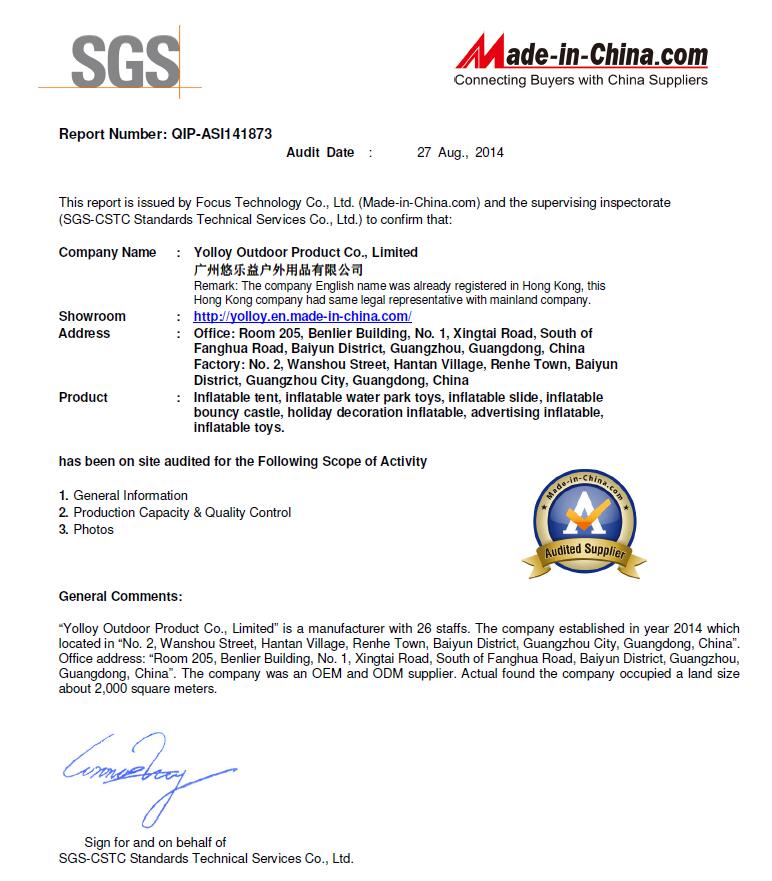
Certification

News

• New Order Successfully Finished for Long-Time Cooperated Japanese Client | YOLLOY Wins Full Client Recognition

• YOLLOY Custom Inflatable Pool Tent for Danish Client: Professional Pool Repair Shelter & Debris Protection

• Trusted Once Again! Greek Captain Re-orders Our Products After 4 Years

• Revolutionize Your Outdoors: The All-Terrain Inflatable Floating Tent for Land & Water

• Elevate Your Summer Fun: The Ultimate Inflatable Water Floating Volleyball Court Trampoline

• Innovative Inflatable Nightclub Tents & Pop-Up Bars: The Ultimate Solution for Portable Party Venues

Contact Us

Name: Sunny Yang
Tel: +86-20-8370 0771
Fax: +86-20-8370 0771
Mobile: 13570587575
E-mail: [email protected]
Add: No 5,Xiong wei Bo Nan Road,ZhongLuoTan Town,Baiyun district,Guangzhou,China
Friend me on Facebook Follow me on Twitter Add me to your circles Follow me on Pinterest Watch my channel on YouTube
News

What is the best inflatable water slide for pool for a family?

Author:yolloy Date:2026/8/12 19:07:24

When summer arrives and the temperature soars, nothing beats the excitement of having a water slide right in your backyard. For families, an inflatable water slide for pool can turn an ordinary weekend into a mini water park adventure. But with so many options on the market, how do you pick the right one? This guide walks you through what to look for so you can make a confident choice that keeps everyone safe and entertained.

Size Matters: Match the Slide to Your Space

Before you fall in love with a giant multi-lane slide, take a realistic look at your yard or pool area. A large inflatable water slide needs more room than just its listed dimensions. Beyond the footprint, you need clearance around all sides — at least 3 to 5 feet of open space — for safe entry and exit. Also check overhead: slides that stand 8 to 12 feet tall need to be clear of tree branches, power lines, and roof overhangs.

For smaller backyards, a single-lane poolside slide that attaches to your deck or pool edge may be the better fit. Families with larger outdoor spaces can consider full playground-style units that include climbing walls, bounce areas, and splash pools alongside the slide.

Types of Inflatable Water Slides

Inflatable water slides come in a few distinct categories, and understanding the differences helps narrow down your search:

  • Poolside slides: These attach directly to the edge of an in-ground or above-ground pool. They are compact, easy to set up, and ideal for families who already have a pool. Most include built-in sprayers to keep the sliding surface slick.
  • Standalone water slides: These are larger, self-contained units that sit on the lawn. They typically include a blower for continuous inflation, a climbing structure, and a splash landing zone at the bottom. Many models also feature water cannons or sprinklers.
  • Water park combos: The most feature-rich option, these combine slides with bounce houses, basketball hoops, climbing walls, and sometimes obstacle courses. They are essentially a portable inflatable water park in your backyard.

Material and Build Quality: What to Look For

The difference between a slide that lasts one summer and one that serves your family for years comes down to materials and construction. Here are the key indicators of quality:

  • Commercial-grade PVC tarpaulin: This is the most durable material used in higher-end inflatables. It resists punctures, UV damage, and general wear far better than standard nylon or lightweight vinyl.
  • Reinforced seams: Look for double or triple stitching at stress points — slide surfaces, climbing areas, and anchor attachment points. Quality manufacturers use waterproof nylon thread and add extra reinforcement at high-load zones.
  • Multiple air chambers: A well-designed slide has several independent air chambers. If one develops a leak, the others keep the structure stable, which is a critical safety feature.
  • Anchor systems: D-ring or round metal anchors help secure the slide to the ground, preventing it from shifting or tipping during active play.
Tip: When buying directly from a manufacturer, ask about material certifications. Reputable factories test their materials to standards like EN71 and EN14960, which cover safety requirements for inflatable play equipment. This gives you confidence that the product has been independently verified for safety.

Why Choosing the Right Manufacturer Matters

Many families buy inflatable water slides from big-box retailers or online marketplaces without knowing where the product actually comes from. Going directly to a manufacturer offers several advantages. For one, you can often request custom sizes, colors, or even have your family's logo printed on the slide. You also get factory-direct pricing without the retail markup, and you are dealing with the people who actually designed and built the product.

Manufacturers that specialize in commercial inflatable water slides typically use higher-grade materials and more rigorous production standards than consumer-grade alternatives. Their products are built to handle repeated use in commercial settings like water parks and rental businesses, which means they hold up exceptionally well for family use. A manufacturer that offers a repair kit with every product and stands behind a multi-year service expectation is a sign of confidence in their workmanship.

Safety Features Every Family Should Check

Safety is non-negotiable when kids and water are involved. Here are the features that responsible manufacturers include:

  • Soft landing zones: The splash pool or landing area at the bottom of the slide should be generously sized and well-padded. Avoid slides where the chute ends abruptly at ground level.
  • Non-slip climbing surfaces: Steps or climbing walls should have textured surfaces or handholds that stay grippy even when wet.
  • Safety netting: Mesh panels on elevated platforms and around bouncing areas prevent accidental falls.
  • Clear weight and age guidelines: The manufacturer should clearly state the recommended age range and maximum weight capacity. A slide designed for toddlers should not be used by teenagers, and vice versa.
  • Proper blower specifications: The blower should be appropriately powered for the slide's size and meet CE or UL electrical safety requirements. Blowers should be available in voltage options that match your region (110V, 220V, or 380V).

Setup and Maintenance Tips

Getting the most out of your inflatable water slide requires a bit of care. Here are some practical tips:

  • Ground preparation: Always set up on a level, soft surface. If you are placing the slide on concrete or asphalt, use heavy-duty ground tarps or padding mats underneath to protect both the slide and the users.
  • Anchoring: Use every stake and anchor point provided. Even on calm days, a fully inflated slide catches wind like a sail. Proper anchoring prevents shifting and tipping.
  • Water management: If your slide has a splash pool, empty and refill it regularly — standing water in warm weather can become unhygienic quickly. The CDC recommends daily water changes for small inflatable pools.
  • Cleaning: After each use, rinse off dirt and grass with a garden hose. Wipe down surfaces with a mild detergent and soft sponge, then let the slide dry completely before deflating and storing. Never store a damp inflatable — mold and mildew can damage the material.
  • Storage: When the season ends, fold the slide loosely rather than tightly creasing it. Store in a cool, dry place away from direct sunlight and rodents.
Quick repair tip: Most quality inflatable water slides come with a repair kit. Small punctures are easy to fix with a vinyl patch and adhesive. Keep the kit handy — a quick patch can save your weekend plans.

Making the Right Investment for Your Family

A good inflatable water slide is more than a toy — it is an investment in summers filled with laughter, exercise, and family memories. When evaluating options, think beyond the price tag. Consider how many children will use it, how often, and for how many years. A slide that costs more upfront but lasts four summers is a better value than a budget option that needs replacing after a few months.

Also think about versatility. Some slides can be used dry as a bounce house and climbing structure during cooler months, extending their usefulness beyond the summer season. Others can be set up at different locations — a grandparent's house, a vacation rental, or a community event — making them a flexible entertainment option.

Choosing the best inflatable water slide for your family comes down to matching the right size, material quality, and safety features to your needs. Whether you go for a compact poolside slide or a full water park combo, the key is to buy from a manufacturer that prioritizes durable construction and user safety. With proper setup and care, your inflatable water slide can deliver years of summer fun for the whole family.


What is the best inflatable water slide for pool for a family?

Author:yolloy Date:2026/8/12 19:07:24

When summer arrives and the temperature soars, nothing beats the excitement of having a water slide right in your backyard. For families, an inflatable water slide for pool can turn an ordinary weekend into a mini water park adventure. But with so many options on the market, how do you pick the right one? This guide walks you through what to look for so you can make a confident choice that keeps everyone safe and entertained.

Size Matters: Match the Slide to Your Space

Before you fall in love with a giant multi-lane slide, take a realistic look at your yard or pool area. A large inflatable water slide needs more room than just its listed dimensions. Beyond the footprint, you need clearance around all sides — at least 3 to 5 feet of open space — for safe entry and exit. Also check overhead: slides that stand 8 to 12 feet tall need to be clear of tree branches, power lines, and roof overhangs.

For smaller backyards, a single-lane poolside slide that attaches to your deck or pool edge may be the better fit. Families with larger outdoor spaces can consider full playground-style units that include climbing walls, bounce areas, and splash pools alongside the slide.

Types of Inflatable Water Slides

Inflatable water slides come in a few distinct categories, and understanding the differences helps narrow down your search:

  • Poolside slides: These attach directly to the edge of an in-ground or above-ground pool. They are compact, easy to set up, and ideal for families who already have a pool. Most include built-in sprayers to keep the sliding surface slick.
  • Standalone water slides: These are larger, self-contained units that sit on the lawn. They typically include a blower for continuous inflation, a climbing structure, and a splash landing zone at the bottom. Many models also feature water cannons or sprinklers.
  • Water park combos: The most feature-rich option, these combine slides with bounce houses, basketball hoops, climbing walls, and sometimes obstacle courses. They are essentially a portable inflatable water park in your backyard.

Material and Build Quality: What to Look For

The difference between a slide that lasts one summer and one that serves your family for years comes down to materials and construction. Here are the key indicators of quality:

  • Commercial-grade PVC tarpaulin: This is the most durable material used in higher-end inflatables. It resists punctures, UV damage, and general wear far better than standard nylon or lightweight vinyl.
  • Reinforced seams: Look for double or triple stitching at stress points — slide surfaces, climbing areas, and anchor attachment points. Quality manufacturers use waterproof nylon thread and add extra reinforcement at high-load zones.
  • Multiple air chambers: A well-designed slide has several independent air chambers. If one develops a leak, the others keep the structure stable, which is a critical safety feature.
  • Anchor systems: D-ring or round metal anchors help secure the slide to the ground, preventing it from shifting or tipping during active play.
Tip: When buying directly from a manufacturer, ask about material certifications. Reputable factories test their materials to standards like EN71 and EN14960, which cover safety requirements for inflatable play equipment. This gives you confidence that the product has been independently verified for safety.

Why Choosing the Right Manufacturer Matters

Many families buy inflatable water slides from big-box retailers or online marketplaces without knowing where the product actually comes from. Going directly to a manufacturer offers several advantages. For one, you can often request custom sizes, colors, or even have your family's logo printed on the slide. You also get factory-direct pricing without the retail markup, and you are dealing with the people who actually designed and built the product.

Manufacturers that specialize in commercial inflatable water slides typically use higher-grade materials and more rigorous production standards than consumer-grade alternatives. Their products are built to handle repeated use in commercial settings like water parks and rental businesses, which means they hold up exceptionally well for family use. A manufacturer that offers a repair kit with every product and stands behind a multi-year service expectation is a sign of confidence in their workmanship.

Safety Features Every Family Should Check

Safety is non-negotiable when kids and water are involved. Here are the features that responsible manufacturers include:

  • Soft landing zones: The splash pool or landing area at the bottom of the slide should be generously sized and well-padded. Avoid slides where the chute ends abruptly at ground level.
  • Non-slip climbing surfaces: Steps or climbing walls should have textured surfaces or handholds that stay grippy even when wet.
  • Safety netting: Mesh panels on elevated platforms and around bouncing areas prevent accidental falls.
  • Clear weight and age guidelines: The manufacturer should clearly state the recommended age range and maximum weight capacity. A slide designed for toddlers should not be used by teenagers, and vice versa.
  • Proper blower specifications: The blower should be appropriately powered for the slide's size and meet CE or UL electrical safety requirements. Blowers should be available in voltage options that match your region (110V, 220V, or 380V).

Setup and Maintenance Tips

Getting the most out of your inflatable water slide requires a bit of care. Here are some practical tips:

  • Ground preparation: Always set up on a level, soft surface. If you are placing the slide on concrete or asphalt, use heavy-duty ground tarps or padding mats underneath to protect both the slide and the users.
  • Anchoring: Use every stake and anchor point provided. Even on calm days, a fully inflated slide catches wind like a sail. Proper anchoring prevents shifting and tipping.
  • Water management: If your slide has a splash pool, empty and refill it regularly — standing water in warm weather can become unhygienic quickly. The CDC recommends daily water changes for small inflatable pools.
  • Cleaning: After each use, rinse off dirt and grass with a garden hose. Wipe down surfaces with a mild detergent and soft sponge, then let the slide dry completely before deflating and storing. Never store a damp inflatable — mold and mildew can damage the material.
  • Storage: When the season ends, fold the slide loosely rather than tightly creasing it. Store in a cool, dry place away from direct sunlight and rodents.
Quick repair tip: Most quality inflatable water slides come with a repair kit. Small punctures are easy to fix with a vinyl patch and adhesive. Keep the kit handy — a quick patch can save your weekend plans.

Making the Right Investment for Your Family

A good inflatable water slide is more than a toy — it is an investment in summers filled with laughter, exercise, and family memories. When evaluating options, think beyond the price tag. Consider how many children will use it, how often, and for how many years. A slide that costs more upfront but lasts four summers is a better value than a budget option that needs replacing after a few months.

Also think about versatility. Some slides can be used dry as a bounce house and climbing structure during cooler months, extending their usefulness beyond the summer season. Others can be set up at different locations — a grandparent's house, a vacation rental, or a community event — making them a flexible entertainment option.

Choosing the best inflatable water slide for your family comes down to matching the right size, material quality, and safety features to your needs. Whether you go for a compact poolside slide or a full water park combo, the key is to buy from a manufacturer that prioritizes durable construction and user safety. With proper setup and care, your inflatable water slide can deliver years of summer fun for the whole family.