When you shop for inflatables, you may notice that some products are labeled as "yacht toys" while others are simply called "pool toys." At first glance, they look similar — both are inflatable, both float on water, and both are designed for fun. But the differences run deeper than the label. Choosing the wrong type for your intended use can lead to safety issues, premature wear, and a disappointing experience. Understanding these differences helps you make a smarter purchase, whether you are outfitting a luxury yacht, stocking a commercial inflatable water park, or simply looking for backyard entertainment.
Material Quality: Marine-Grade vs. Standard Vinyl
The most fundamental difference lies in the materials used. Inflatable yacht toys are constructed from marine-grade PVC tarpaulin — a heavy-duty, UV-resistant material that can withstand prolonged exposure to saltwater, direct sunlight, and constant wave motion. This material is thicker, typically ranging from 0.8mm to 1.2mm in gauge, and undergoes rigorous testing for tear resistance and tensile strength.
Regular pool toys, on the other hand, are usually made from standard vinyl or lightweight PVC. These materials are adequate for calm, chlorinated water in a backyard setting, but they degrade quickly when exposed to the harsh marine environment. UV rays cause the material to become brittle and crack, while saltwater accelerates corrosion of seams and valves.
| Feature |
Inflatable Yacht Toys |
Regular Pool Toys |
| Material |
Marine-grade PVC tarpaulin (0.8mm–1.2mm) |
Standard vinyl / lightweight PVC |
| UV Resistance |
High; built-in UV inhibitors |
Low; prone to sun damage |
| Saltwater Tolerance |
Excellent; corrosion-resistant |
Poor; seams degrade quickly |
| Expected Lifespan |
2–3 years with proper maintenance |
1–2 seasons under normal use |
Structural Design and Safety Features
Yacht inflatables are engineered with safety and stability as top priorities. They incorporate multiple air chambers so that even if one chamber is punctured, the product remains buoyant. Reinforced seams, welded rather than simply glued, provide superior strength at high-stress points. Many yacht toys also feature built-in D-ring anchor systems, non-slip surface textures, and heavy-duty grab handles that make boarding from the water easier and safer.
Regular pool toys typically have simpler construction: single air chambers, glued seams, and minimal reinforcement. While they are lighter and easier to carry, they lack the structural integrity needed for open-water conditions. A sudden gust of wind can flip a standard pool float, whereas a well-designed inflatable boat built for marine use stays stable even in moderate chop.
Key Safety Features to Look For: Multiple independent air chambers, welded (not glued) seams, reinforced D-ring anchor points, non-slip deck surfaces, and high-visibility color schemes. These features are standard on yacht-grade inflatables but often absent on budget pool toys.
Certifications and Compliance Standards
Certifications provide a reliable benchmark for quality. Yacht-grade inflatables from reputable manufacturers are tested against international standards. For example, inflatable water toys should comply with EN 14960, which covers safety requirements and test methods for inflatable play equipment. Inflatable water park products are often tested to EN 15649, which addresses floating leisure articles for use on and in the water. Materials may also pass EN71 (toy safety) and RoHS (hazardous substance restriction) testing.
Regular pool toys sold at mass-market retailers may not carry any of these certifications. They are often categorized as "novelty items" rather than safety-tested recreational equipment. For commercial operators — such as water park managers, yacht charter companies, or resort owners — using certified products is not just a quality choice; it is often a legal and insurance requirement.
Portability and Storage
Both types of inflatables are portable when deflated, but yacht toys are specifically designed with compact storage in mind. A marine-grade inflatable yacht slide or floating platform can be deflated, folded flat, and stored in a compact carry bag that fits easily into a yacht's storage compartment or cabin locker. Despite their heavy-duty construction, they are engineered to be lightweight enough for two people to handle during deployment and retrieval.
Regular pool toys, while lighter, are often bulkier when deflated because they lack the precision folding design of premium products. They also tend to retain moisture more easily, which can lead to mold and mildew during storage — a problem that marine-grade materials are specifically treated to resist.
Customization: Tailoring to Your Needs
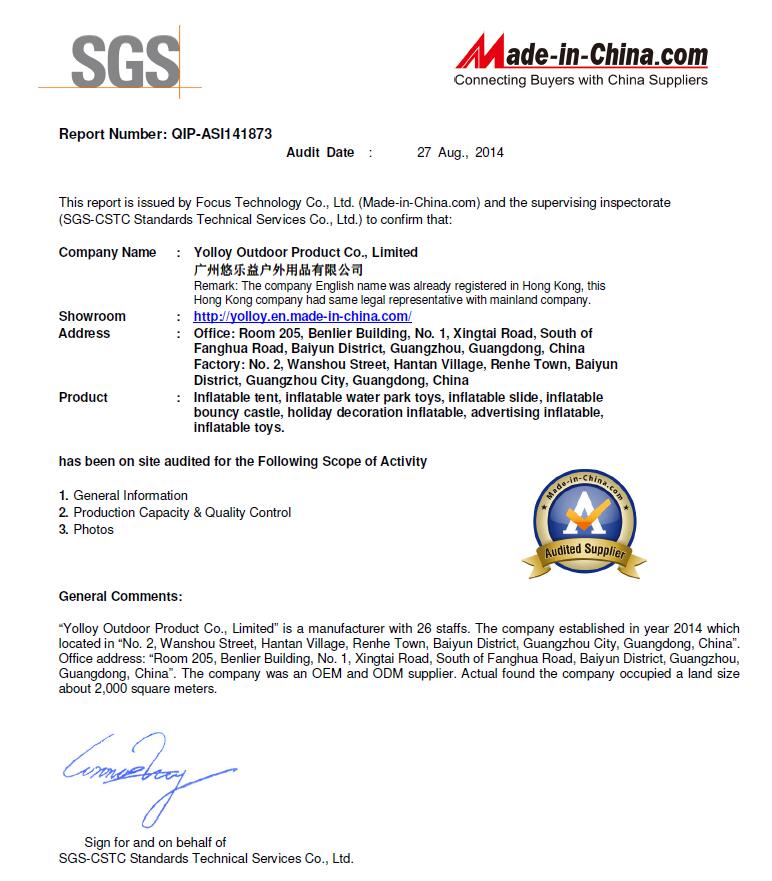
One significant advantage of yacht-grade inflatables is the level of customization available. Professional manufacturers — such as inflatable yacht slide supplier Yolloy Outdoor Product Co., Limited — offer custom sizing, color matching, logo printing, and even shape modifications to fit specific deck layouts. Whether you need a floating platform sized precisely for your vessel's swim deck, or a branded inflatable slide with your company logo, customization turns a standard product into a unique asset.
Regular pool toys are mass-produced in fixed sizes and a limited color palette. You buy what is available off the shelf, which may or may not fit your space or match your aesthetic. For businesses, this lack of branding opportunity is a missed marketing touchpoint.
Cost Comparison: Upfront Price vs. Long-Term Value
At first glance, regular pool toys appear to be the budget-friendly choice. A standard inflatable pool float may cost a fraction of a marine-grade equivalent. However, when you factor in replacement frequency, the value equation shifts. A quality yacht inflatable that lasts 2–3 years of frequent use offers better long-term value than a pool toy that needs replacing every season.
| Cost Factor |
Inflatable Yacht Toys |
Regular Pool Toys |
| Upfront Cost |
Higher |
Lower |
| Replacement Frequency |
Every 2–3 years |
Every 1–2 seasons |
| Repair Kits |
Included with purchase |
Rarely included |
| Warranty |
Manufacturer warranty available |
Limited or none |
| Long-Term Value |
Better for frequent/commercial use |
Sufficient for occasional home use |
Use Cases: Which One Is Right for You?
The choice between inflatable yacht toys and regular pool toys ultimately comes down to where and how you plan to use them.
Choose inflatable yacht toys if:
- You plan to use them in saltwater, open water, or on a yacht or boat.
- You run a commercial operation such as a water park, resort, or yacht charter.
- You need custom sizing, branding, or specific color matching.
- Safety certifications and liability protection are important to your business.
- You want a product that lasts multiple seasons with minimal maintenance.
Regular pool toys are suitable if:
- You only use them in a backyard swimming pool with calm, chlorinated water.
- You need a budget-friendly option for occasional, light use.
- You are comfortable replacing the product every season or two.
- Customization and professional-grade durability are not priorities.
Conclusion
The difference between inflatable yacht toys and regular pool toys is not just about the label — it is about material quality, structural safety, certification standards, and long-term value. Yacht-grade inflatables are purpose-built for demanding marine environments, offering superior durability, enhanced safety features, and extensive customization options. Regular pool toys serve their purpose for casual backyard use but fall short in open-water conditions. Whether you are a commercial operator seeking reliable equipment or a yacht owner looking to enhance your onboard experience, investing in purpose-built inflatables from a trusted inflatable yacht slide supplier ensures you get the right product for the right environment.