Products Category
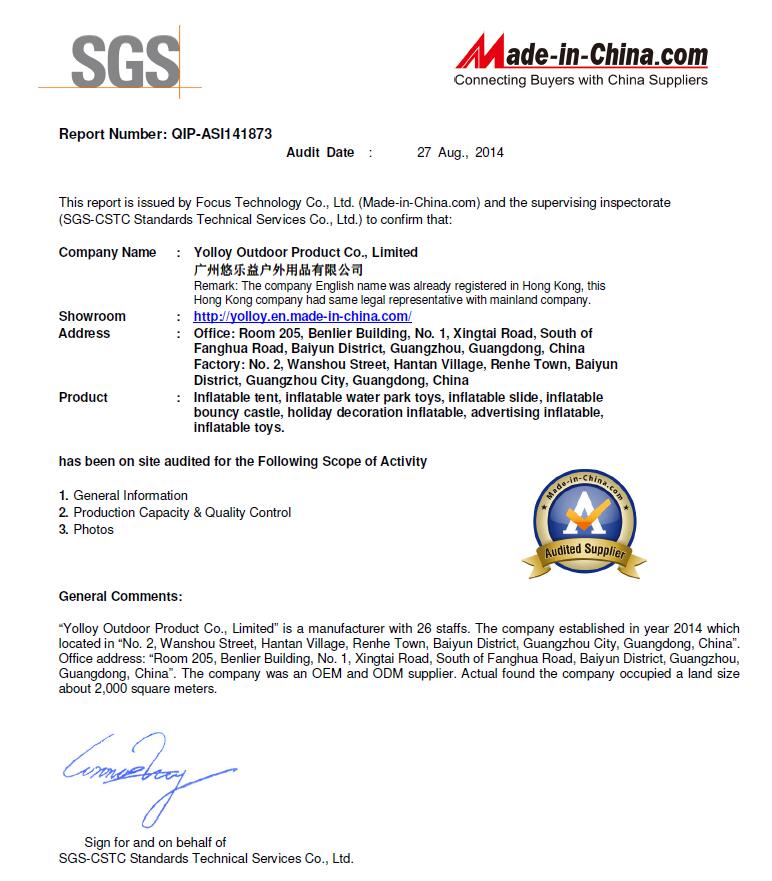
Certification

News

• New Order Successfully Finished for Long-Time Cooperated Japanese Client | YOLLOY Wins Full Client Recognition

• YOLLOY Custom Inflatable Pool Tent for Danish Client: Professional Pool Repair Shelter & Debris Protection

• Trusted Once Again! Greek Captain Re-orders Our Products After 4 Years

• Revolutionize Your Outdoors: The All-Terrain Inflatable Floating Tent for Land & Water

• Elevate Your Summer Fun: The Ultimate Inflatable Water Floating Volleyball Court Trampoline

• Innovative Inflatable Nightclub Tents & Pop-Up Bars: The Ultimate Solution for Portable Party Venues

Contact Us

Name: Sunny Yang
Tel: +86-20-8370 0771
Fax: +86-20-8370 0771
Mobile: 13570587575
E-mail: [email protected]
Add: No 5,Xiong wei Bo Nan Road,ZhongLuoTan Town,Baiyun district,Guangzhou,China
Friend me on Facebook Follow me on Twitter Add me to your circles Follow me on Pinterest Watch my channel on YouTube
News

How do you choose the right size for an inflatable wedding tent?

Author:yolloy Date:2026/8/13 4:36:04

Choosing the right size for an inflatable wedding tent is one of the most important decisions couples and event planners face. A tent that is too small leaves guests feeling cramped and uncomfortable, while one that is too large can feel empty and waste budget. Inflatable wedding tents offer a unique combination of rapid setup, elegant appearance, and structural flexibility that traditional pole marquees cannot match. This guide walks you through the key factors to consider when selecting the perfect size for your wedding day.

1. Start with Your Guest Count

The single most important factor in sizing an inflatable party tent for a wedding is the number of guests you plan to host. As a general rule, allocate approximately 10 to 12 square feet (about 1 to 1.2 square meters) per person for a seated dinner with standard round tables. For a standing cocktail-style reception, you can reduce this to roughly 6 to 8 square feet per person.

If your wedding includes both a seated dinner and a dance floor, add an additional 2 to 4 square feet per guest for the dance area. For example, a wedding with 100 guests enjoying a seated dinner and a dance floor would require a tent of approximately 1,200 to 1,600 square feet — roughly a 10x15m or 12x12m inflatable tent.

2. Account for Layout Elements Beyond Seating

Guest seating is only part of the equation. A wedding tent typically needs space for several additional elements:

  • Buffet or serving station: approximately 100 to 150 square feet.
  • Bar area: around 80 to 100 square feet including a small queue area.
  • Stage or performance area: 100 to 200 square feet for a DJ or live band setup.
  • Cake table, gift table, and photo booth: an additional 50 to 80 square feet combined.

When you add these elements together, they can easily double the floor space needed beyond just seating. Always sketch out your layout before finalizing the tent dimensions.

3. Consider the Shape of the Tent

Inflatable wedding tents come in various shapes, and the shape affects how usable the interior space is. Dome-shaped tents create a sense of openness and height but may have slightly less usable wall space for decorations. Rectangular or tunnel-style tents offer more linear floor space, ideal for long banquet tables and clear aisle arrangements. Cube-shaped tents provide a balanced, symmetrical layout that works well for both round-table seating and a central dance floor. When comparing sizes, think about how the tent's shape aligns with your wedding layout vision.

4. Factor in the Venue and Site Conditions

The physical location where the tent will be set up can impose size constraints. Measure the available ground area carefully, including overhead clearance for the fully inflated tent height. Inflatable tents require a flat, clear surface free of sharp objects. If the site is on grass, a slightly larger tent may be possible; if it is on a paved plaza or terrace, your footprint may be limited by existing structures.

Also consider access for the blower system. Most inflatable tents in the 5x5m to 10x15m range operate on a single 750W to 1,100W continuous-duty blower, which draws less power than a standard catering hot plate. For larger tents above 10x15m, dual blowers are typically required. Ensure your venue has adequate power supply or generator capacity nearby.

5. Common Size Recommendations for Inflatable Wedding Tents

Based on typical wedding configurations, here is a practical size reference guide:

Wedding SizeGuest CountRecommended Tent SizeFloor Area
Intimate / Micro-Wedding20 – 405m × 5m25 sqm
Small Wedding40 – 606m × 8m48 sqm
Medium Wedding60 – 1008m × 10m80 sqm
Large Wedding100 – 15010m × 15m150 sqm
Grand Wedding150 – 200+10m × 20m or larger200+ sqm

These recommendations assume a mixed layout with seated dining, service areas, and entertainment space. A standing-only cocktail reception can accommodate roughly 40% more guests in the same footprint.

6. Customization: Get the Exact Size You Need

One of the key advantages of working with a professional inflatable tent manufacturer is the ability to customize dimensions. A custom inflatable tent can be produced to your exact specifications. If a standard 8x10m tent is slightly too small for your 90-guest list but a 10x15m is larger than your venue allows, a custom 9x12m tent can bridge the gap. Custom sizing also allows you to match unusual venue footprints, such as long narrow gardens or L-shaped courtyards.

Experienced manufacturers like YOLLOY prepare simulation renderings from your proposal, revise the design until approval, and then release it for factory production. Custom sizes and colors are available, and customer logos and artwork can be printed on the tent. The minimum order quantity is just one piece, making custom sizing accessible even for a single wedding.

7. Weather and Seasonal Considerations

The time of year and expected weather conditions should influence your size choice. In hot summer months, a slightly larger tent allows for better airflow and prevents the interior from feeling stuffy. Look for tents with ventilation windows or mesh panels to improve air circulation. In cooler seasons, a tent that is too large can be difficult to heat efficiently.

If your wedding is outdoors in an area with known wind exposure, choose a tent with a proven wind rating. Quality commercial inflatable tents are typically rated to 38 to 60 km/h wind loads when properly anchored with D-ring or round metal anchor systems. YOLLOY reinforces all high-load areas on its tents and incorporates robust anchoring hardware for installation stability.

8. Practical Tips for Final Decision-Making

Before finalizing your inflatable wedding tent size, walk through this checklist:

  • Confirm the final guest count with your RSVPs before ordering.
  • Draw a rough floor plan on paper to visualize how tables, dance floor, and service areas fit together.
  • Visit the venue and measure the site yourself — do not rely solely on venue-provided dimensions.
  • Discuss your requirements with the manufacturer early. Experienced manufacturers like YOLLOY can advise on the optimal size based on years of producing tents for weddings, parties, and events worldwide.
  • Allow for a small buffer of extra space. It is always better to have slightly more room than to feel squeezed on the day.

Choosing the right size for an inflatable wedding tent is a balance of guest count, layout needs, venue constraints, and personal preference. By starting with your guest list, mapping out your event layout, and consulting with a professional manufacturer, you can arrive at a tent size that creates a comfortable, memorable setting for your big day. Whether you are planning an intimate garden ceremony or a grand ballroom-style reception, an inflatable tent offers a flexible, elegant, and practical solution.

For more information about sizing, customization, or to browse the full range of inflatable tents for weddings and events, visit the YOLLOY outdoor inflatable tents collection.


How do you choose the right size for an inflatable wedding tent?

Author:yolloy Date:2026/8/13 4:36:04

Choosing the right size for an inflatable wedding tent is one of the most important decisions couples and event planners face. A tent that is too small leaves guests feeling cramped and uncomfortable, while one that is too large can feel empty and waste budget. Inflatable wedding tents offer a unique combination of rapid setup, elegant appearance, and structural flexibility that traditional pole marquees cannot match. This guide walks you through the key factors to consider when selecting the perfect size for your wedding day.

1. Start with Your Guest Count

The single most important factor in sizing an inflatable party tent for a wedding is the number of guests you plan to host. As a general rule, allocate approximately 10 to 12 square feet (about 1 to 1.2 square meters) per person for a seated dinner with standard round tables. For a standing cocktail-style reception, you can reduce this to roughly 6 to 8 square feet per person.

If your wedding includes both a seated dinner and a dance floor, add an additional 2 to 4 square feet per guest for the dance area. For example, a wedding with 100 guests enjoying a seated dinner and a dance floor would require a tent of approximately 1,200 to 1,600 square feet — roughly a 10x15m or 12x12m inflatable tent.

2. Account for Layout Elements Beyond Seating

Guest seating is only part of the equation. A wedding tent typically needs space for several additional elements:

  • Buffet or serving station: approximately 100 to 150 square feet.
  • Bar area: around 80 to 100 square feet including a small queue area.
  • Stage or performance area: 100 to 200 square feet for a DJ or live band setup.
  • Cake table, gift table, and photo booth: an additional 50 to 80 square feet combined.

When you add these elements together, they can easily double the floor space needed beyond just seating. Always sketch out your layout before finalizing the tent dimensions.

3. Consider the Shape of the Tent

Inflatable wedding tents come in various shapes, and the shape affects how usable the interior space is. Dome-shaped tents create a sense of openness and height but may have slightly less usable wall space for decorations. Rectangular or tunnel-style tents offer more linear floor space, ideal for long banquet tables and clear aisle arrangements. Cube-shaped tents provide a balanced, symmetrical layout that works well for both round-table seating and a central dance floor. When comparing sizes, think about how the tent's shape aligns with your wedding layout vision.

4. Factor in the Venue and Site Conditions

The physical location where the tent will be set up can impose size constraints. Measure the available ground area carefully, including overhead clearance for the fully inflated tent height. Inflatable tents require a flat, clear surface free of sharp objects. If the site is on grass, a slightly larger tent may be possible; if it is on a paved plaza or terrace, your footprint may be limited by existing structures.

Also consider access for the blower system. Most inflatable tents in the 5x5m to 10x15m range operate on a single 750W to 1,100W continuous-duty blower, which draws less power than a standard catering hot plate. For larger tents above 10x15m, dual blowers are typically required. Ensure your venue has adequate power supply or generator capacity nearby.

5. Common Size Recommendations for Inflatable Wedding Tents

Based on typical wedding configurations, here is a practical size reference guide:

Wedding SizeGuest CountRecommended Tent SizeFloor Area
Intimate / Micro-Wedding20 – 405m × 5m25 sqm
Small Wedding40 – 606m × 8m48 sqm
Medium Wedding60 – 1008m × 10m80 sqm
Large Wedding100 – 15010m × 15m150 sqm
Grand Wedding150 – 200+10m × 20m or larger200+ sqm

These recommendations assume a mixed layout with seated dining, service areas, and entertainment space. A standing-only cocktail reception can accommodate roughly 40% more guests in the same footprint.

6. Customization: Get the Exact Size You Need

One of the key advantages of working with a professional inflatable tent manufacturer is the ability to customize dimensions. A custom inflatable tent can be produced to your exact specifications. If a standard 8x10m tent is slightly too small for your 90-guest list but a 10x15m is larger than your venue allows, a custom 9x12m tent can bridge the gap. Custom sizing also allows you to match unusual venue footprints, such as long narrow gardens or L-shaped courtyards.

Experienced manufacturers like YOLLOY prepare simulation renderings from your proposal, revise the design until approval, and then release it for factory production. Custom sizes and colors are available, and customer logos and artwork can be printed on the tent. The minimum order quantity is just one piece, making custom sizing accessible even for a single wedding.

7. Weather and Seasonal Considerations

The time of year and expected weather conditions should influence your size choice. In hot summer months, a slightly larger tent allows for better airflow and prevents the interior from feeling stuffy. Look for tents with ventilation windows or mesh panels to improve air circulation. In cooler seasons, a tent that is too large can be difficult to heat efficiently.

If your wedding is outdoors in an area with known wind exposure, choose a tent with a proven wind rating. Quality commercial inflatable tents are typically rated to 38 to 60 km/h wind loads when properly anchored with D-ring or round metal anchor systems. YOLLOY reinforces all high-load areas on its tents and incorporates robust anchoring hardware for installation stability.

8. Practical Tips for Final Decision-Making

Before finalizing your inflatable wedding tent size, walk through this checklist:

  • Confirm the final guest count with your RSVPs before ordering.
  • Draw a rough floor plan on paper to visualize how tables, dance floor, and service areas fit together.
  • Visit the venue and measure the site yourself — do not rely solely on venue-provided dimensions.
  • Discuss your requirements with the manufacturer early. Experienced manufacturers like YOLLOY can advise on the optimal size based on years of producing tents for weddings, parties, and events worldwide.
  • Allow for a small buffer of extra space. It is always better to have slightly more room than to feel squeezed on the day.

Choosing the right size for an inflatable wedding tent is a balance of guest count, layout needs, venue constraints, and personal preference. By starting with your guest list, mapping out your event layout, and consulting with a professional manufacturer, you can arrive at a tent size that creates a comfortable, memorable setting for your big day. Whether you are planning an intimate garden ceremony or a grand ballroom-style reception, an inflatable tent offers a flexible, elegant, and practical solution.

For more information about sizing, customization, or to browse the full range of inflatable tents for weddings and events, visit the YOLLOY outdoor inflatable tents collection.