If you have ever pulled into a car dealership, walked past a grand-opening event, or driven along a busy commercial street, you have almost certainly seen one: a tall, colorful figure waving and thrashing in the wind, endlessly drawing the eye. That animated silhouette is an air dancer inflatable, and when it is built to carry a company’s logo, colors, and message, it becomes a custom air dancer inflatable — one of the most cost-effective attention tools used by retailers and event teams around the world.
At YOLLOY, we design and produce advertising inflatables every day, and buyers repeatedly ask what a custom air dancer actually is, what they can change about it, and how to order one that will last. This guide answers those questions in plain terms, based on how these products are really engineered and built rather than how they are simply decorated.
What is a custom air dancer inflatable?
A custom air dancer inflatable, often called an air dancer, tube man, or sky dancer, is an advertising inflatable that relies on a continuous stream of air to stay upright and to move. A blower at the base pushes air upward through a fabric tube with arms and a head. Because the air is always escaping through the open sleeves and the top, the figure constantly collapses, refills, whips, and unfolds, producing the lively flailing motion that pulls attention from a distance.
The word “custom” is the part that matters for marketing. Instead of a plain off-the-shelf column, a custom unit is printed with your logo, chosen in your brand colors, sized to your site, and sometimes shaped into a specific character or mascot. The movement still does the job of stopping eyes, but the branding on the body turns that attention into a message.
How does it work?
Unlike a sealed inflatable that is inflated once and left alone, an air dancer is a constant-air product. A correctly sized blower feeds a steady airflow into the base, and the fabric body creates movement as air escapes and is continuously replaced. There are no gears or motors inside the figure, so the two parts that really decide performance are the fabric and the blower. Get those two right and the unit will run happily for a full trading day; get them wrong and it will sag, fade, or fail within one season.
This simple design is also why an air dancer is dependable. There is very little that can break, setup takes minutes, and the moment you switch power off the figure drops flat for easy storage.
What can you customize?
The value of a custom air dancer inflatable is that nearly every part of it can be matched to your brand and your location. In practice, the main options are:
- Colors and printing — your logo, slogan, or campaign image printed directly onto the body so the motion sells the message.
- Height — from compact units around two metres for forecourts and indoor events up to very tall figures that can be read from a highway.
- Body style — a single-leg column, a two-leg figure that reads more like a character, or a fully sculpted mascot shape.
- Lighting — optional LED integration so the display remains visible after dark.
Because the figure is always moving, printing is more than a cosmetic choice. A printed panel turns every wave of the tube into an impression for your brand, which is why most dealerships, chains, and event operators choose printed units even when a plain one would be cheaper.
What size should you choose?
Height is the single biggest influence on how visible the unit will be, and it should be chosen against your sight lines and viewing distance, not just your budget. A low unit works for foot traffic and indoor or sheltered areas, a medium height clears parked cars and reads well from a typical storefront road, and a tall figure is reserved for open lots and fast main roads where you need maximum reach. If your building sits far back or your road has a high speed limit, go taller; if your site is small or covered, a compact unit is the sensible and safer choice.
Taller units impose two real requirements that you should plan for. First, they need a more powerful blower to keep the top of the column lifted rather than sagging. Second, they need proper anchoring, because a large air dancer catches wind naturally and must be staked, sandbagged, or weighted to stay in place.
Fabric and materials that last
Outdoor conditions do not treat an air dancer gently. Sun, wind, and constant flexing all wear at the fabric, so the material grade matters far more than it first appears. Commercial-grade dancing inflatables are typically made from ripstop nylon or strong woven polyester that resists a small tear spreading into a larger blowout. Look for UV-resistant fabric and fade-resistant inks, because a printed logo that ghosts to a pale outline within a few months defeats the whole purpose of buying a branded unit.
It is also worth checking the stitching at the arms and the base, because that is where flex stress concentrates. A reinforced seam there is the difference between a fixture that survives a windy season and a prop that falls apart by the end of summer.
Choosing the right blower
The blower is the engine of the system, and it has to do two things: lift the column fully and keep working over a long run. A small or medium dancer typically pairs with a compact continuous-duty blower, while a tall unit needs a higher-output model to keep the top inflated and moving. For buyers operating outside the market where the unit will run, it is important to confirm the voltage, because blowers are available for different regional supplies. Once the correct blower is matched to the figure and properly rated for continuous use, the daily cost of keeping the dancer upright is genuinely small, more like a few light bulbs than a real line item.
Why custom ordering beats a generic unit
A marketplace listing and a factory-built custom unit may look identical in a photo, but they are different products entirely. A cheap generic dancer is often built from thin material with an undersized blower and is really intended for occasional party use. A custom air dancer ordered from a manufacturer is engineered around your size, your branding, and your running hours, which is exactly why it lasts and why it pays for itself through impressions.
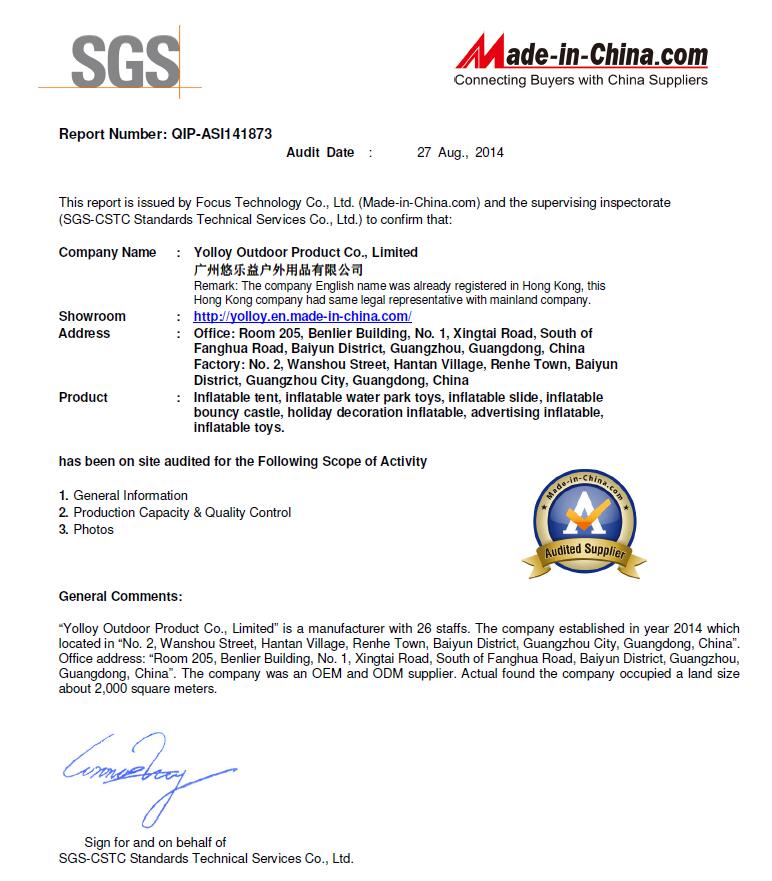
Working with a factory such as YOLLOY also makes the ordering process straightforward. From your description, sketch, photo, or site plan, the design team produces a rendering for your approval, refines it until you are happy, and then releases it for production. Custom sizes and colors are available, customer logos are printed on the product, and every unit is supplied with a correctly powered blower and a repair kit. For most custom inflatables the typical production time is around one to two weeks, with air and sea shipping available to suit your deadline.
A practical buying checklist
- Match height to your sight lines — compact for foot traffic, medium for storefronts, tall for open and high-speed sites.
- Specify a continuous-duty blower sized to the figure, with the correct local voltage and overheat protection.
- Choose UV-resistant fabric with fade-resistant inks and reinforced seams at the arms and base.
- Plan for anchoring — stakes, sandbags, or a weighted base rated for the height and wind.
- Decide how to use the branding — printed panels for branded impressions, or a single color when you only need movement.
A custom air dancer inflatable is one of the few advertising tools that keeps working all day without any staff interaction, and a well-built unit keeps delivering impressions for years on very little power. If you are planning a new storefront display, a product launch, or an event and want an inflatable air dancer that actually represents your brand, YOLLOY can design and produce one to your exact size, colors, and artwork.