Products Category
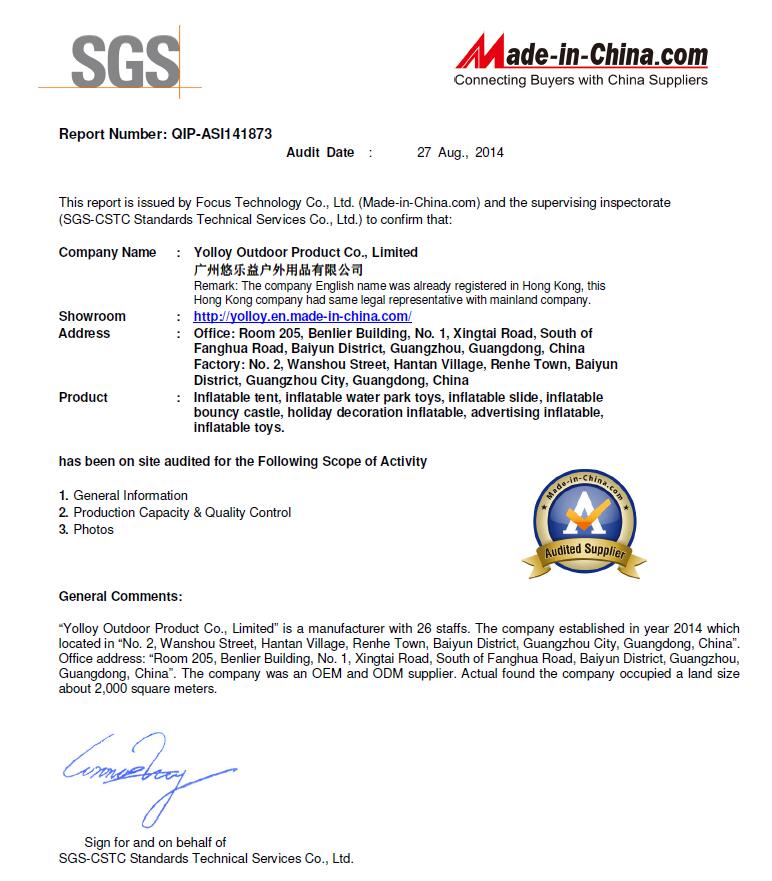
Certification

News

• New Order Successfully Finished for Long-Time Cooperated Japanese Client | YOLLOY Wins Full Client Recognition

• YOLLOY Custom Inflatable Pool Tent for Danish Client: Professional Pool Repair Shelter & Debris Protection

• Trusted Once Again! Greek Captain Re-orders Our Products After 4 Years

• Revolutionize Your Outdoors: The All-Terrain Inflatable Floating Tent for Land & Water

• Elevate Your Summer Fun: The Ultimate Inflatable Water Floating Volleyball Court Trampoline

• Innovative Inflatable Nightclub Tents & Pop-Up Bars: The Ultimate Solution for Portable Party Venues

Contact Us

Name: Sunny Yang
Tel: +86-20-8370 0771
Fax: +86-20-8370 0771
Mobile: 13570587575
E-mail: [email protected]
Add: No 5,Xiong wei Bo Nan Road,ZhongLuoTan Town,Baiyun district,Guangzhou,China
Friend me on Facebook Follow me on Twitter Add me to your circles Follow me on Pinterest Watch my channel on YouTube
News

What is the best buy a water slide inflatable for a family?

Author:yolloy Date:2026/8/13 8:45:51

A backyard inflatable water slide can turn an ordinary summer afternoon into a full-on family adventure. But with so many models on the market, finding the right one for your family takes more than just picking the brightest color or the tallest slide. The best buy is the one that fits your space, matches your kids' ages, and holds up to regular use without breaking the bank. This guide walks you through everything you need to know before you buy a water slide inflatable for your family.

Start With These Three Key Factors

Every smart purchase starts with three questions: how much yard space do you actually have, what ages are your kids, and what is your budget? When these three line up, you get a slide that fits safely and keeps everyone entertained.

1. Measure Your Usable Yard Space

Do not rely on the total square footage of your property. Measure the flat, unobstructed area where the slide will sit. Remove space taken by patios, gardens, playsets, and uneven ground. A slide that technically fits on paper may not fit once you account for hose routing, blower placement, and safe clearance around all sides. Compact single-lane slides work well in smaller yards, while medium and large yards can accommodate dual-lane models with splash pools.

2. Match the Slide to Your Kids' Ages

Younger children need low heights, soft landings, and gentle water spray. Older kids and teens can handle taller slides with steeper angles and climbing walls. If you have a mix of ages, choose a slide that favors the youngest rider. Always check the manufacturer's stated weight limits and never exceed them. Overloading stresses seams and weakens stitching, which can lead to tipping or tearing.

3. Set a Realistic Budget

Residential water slides range from under $200 for basic single-lane models to $1,500 and above for tall, multi-feature units. The mid-range tier of $300 to $800 is often the sweet spot for families, offering dual lanes, splash pools, and decent material quality. If you plan to use the slide frequently or have older kids, investing in a sturdier model saves money on repairs and replacements down the road.

Quick Tip: A family with a medium yard, kids ages 5 and 9, and a $400–$600 budget will get the best experience from a dual-lane slide with a splash pool. It is big enough for both kids, safe for their age range, and fits comfortably in most suburban yards.

Material Matters: Oxford Cloth vs. PVC

The material your slide is made from directly affects its durability, weight, and lifespan. Understanding the difference helps you avoid buying a slide that will not hold up to your family's use.

FeatureOxford ClothCommercial-Grade PVC
WeightLightweight, easy to moveHeavier, more stable
DurabilityGood for occasional useExcellent for frequent use
Setup Time5–10 minutes10–15 minutes
Best ForYounger kids, weekend playTeens, parties, rental use
Tear ResistanceModerateHigh
UV ResistanceModerateHigh
Price Range$150–$500$500–$2,000+

Oxford cloth is lightweight and perfectly fine for families with younger children who use the slide occasionally. PVC is thicker, heavier, and far more durable. It handles higher weight limits and rougher play, making it the better choice for families with teens or anyone planning frequent parties. Many commercial inflatable water slides use PVC tarpaulin with reinforced seams for long-term reliability.

Safety First: Anchoring, Weight Limits, and Water Flow

Most inflatable slide accidents are not caused by poor manufacturing. They happen because the slide was not anchored properly, was overloaded, or had the wrong water pressure. A few simple habits keep everyone safe.

  • Anchor every point before use. Drive stakes into firm ground at all tie-down loops. On hard surfaces, use sandbags. A slide that shifts even a few inches can cause awkward landings or tip the blower.
  • Respect the weight limit and rider count. Manufacturers list these for a reason. Let younger kids ride first, then older kids. Do not allow adults on a slide unless the manufacturer explicitly rates it for adult use.
  • Control the water flow. Too much pressure makes climbing walls slippery and floods the splash pool. Too little water causes friction burns. Adjust the hose until the surface is evenly slick but not pooling.
  • Watch the wind. Deflate the slide when winds reach 15–20 mph. Gusts above 25 mph can create dangerous lifting forces.

Single Lane vs. Dual Lane: Which Is Better for Families?

Single-lane slides are compact, affordable, and easy to set up. They are ideal for families with one or two young children and limited yard space. The downside is obvious: only one person can slide at a time, which leads to waiting and arguing.

Dual-lane slides solve the turn-taking problem. Two kids can race side by side, which doubles the fun and cuts the wait time. They tend to be wider and taller, so they need more yard space, but for families with multiple children, the upgrade is well worth it. Some dual-lane models also include climbing walls, water cannons, and splash pools, turning the slide into a full backyard water park.

Setup and Storage Tips

A good setup routine extends the life of your slide. Always place the slide on grass rather than concrete or gravel. Grass cushions the base and holds stakes securely. Unroll the slide fully, straighten all lanes, and check for sharp objects underneath before inflating. Connect the blower first and let the slide fully inflate, then anchor all points, and only then turn on the water.

After use, deflate the slide completely and let it dry in the sun before folding. Storing a damp slide leads to mold and mildew. Fold it loosely rather than tightly creasing the same spots every time, and keep it in a cool, dry place away from direct sunlight during the off-season.

When to Consider a Commercial-Grade Slide

If your family hosts frequent parties, runs a rental business, or simply wants a slide that lasts for many seasons, a commercial-grade inflatable water slide is worth the investment. These slides use thicker PVC tarpaulin, reinforced double stitching, and stronger blowers. They are built to handle higher traffic, heavier riders, and more aggressive play.

Sourcing directly from an experienced inflatable water slide factory gives you access to custom sizes, colors, and branding. Many manufacturers also offer customization options such as printing your logo, adjusting the layout to fit your yard, and supplying blowers matched to your local voltage requirements. Whether you are buying for personal use or starting a rental business, a factory-direct purchase often delivers better value than off-the-shelf retail models.

What to Look for in a Quality Inflatable Slide

  • Reinforced seams. Look for double or triple stitching at stress points and heat-sealed seams on PVC models. This prevents leaks and extends the life of the slide.
  • Certified materials. Reputable manufacturers use materials that meet safety standards such as EN71 and EN14960. These certifications mean the materials have been tested for harmful substances and structural safety.
  • Adequate blower power. The blower should be matched to the slide's size. A weak blower leads to a soft, unstable structure. Check the CFM rating and make sure it is sufficient for the model you choose.
  • Repair kit included. A repair kit with patches and adhesive should come with every inflatable. Small punctures are common and easy to fix if you have the right supplies on hand.
  • Clear warranty and support. A manufacturer that stands behind its product will offer a reasonable warranty period and responsive customer support. Check what is covered and for how long before you buy.

Bottom Line

The best inflatable water slide for your family is the one that fits your yard, matches your kids' ages, and is built from materials that will last. Measure your space carefully, choose the right material for your usage level, and never skip safety steps like anchoring and weight limits. Whether you go with a compact single-lane model or a full-featured commercial-grade slide, a well-chosen inflatable water slide delivers summers of backyard fun for the whole family.


What is the best buy a water slide inflatable for a family?

Author:yolloy Date:2026/8/13 8:45:51

A backyard inflatable water slide can turn an ordinary summer afternoon into a full-on family adventure. But with so many models on the market, finding the right one for your family takes more than just picking the brightest color or the tallest slide. The best buy is the one that fits your space, matches your kids' ages, and holds up to regular use without breaking the bank. This guide walks you through everything you need to know before you buy a water slide inflatable for your family.

Start With These Three Key Factors

Every smart purchase starts with three questions: how much yard space do you actually have, what ages are your kids, and what is your budget? When these three line up, you get a slide that fits safely and keeps everyone entertained.

1. Measure Your Usable Yard Space

Do not rely on the total square footage of your property. Measure the flat, unobstructed area where the slide will sit. Remove space taken by patios, gardens, playsets, and uneven ground. A slide that technically fits on paper may not fit once you account for hose routing, blower placement, and safe clearance around all sides. Compact single-lane slides work well in smaller yards, while medium and large yards can accommodate dual-lane models with splash pools.

2. Match the Slide to Your Kids' Ages

Younger children need low heights, soft landings, and gentle water spray. Older kids and teens can handle taller slides with steeper angles and climbing walls. If you have a mix of ages, choose a slide that favors the youngest rider. Always check the manufacturer's stated weight limits and never exceed them. Overloading stresses seams and weakens stitching, which can lead to tipping or tearing.

3. Set a Realistic Budget

Residential water slides range from under $200 for basic single-lane models to $1,500 and above for tall, multi-feature units. The mid-range tier of $300 to $800 is often the sweet spot for families, offering dual lanes, splash pools, and decent material quality. If you plan to use the slide frequently or have older kids, investing in a sturdier model saves money on repairs and replacements down the road.

Quick Tip: A family with a medium yard, kids ages 5 and 9, and a $400–$600 budget will get the best experience from a dual-lane slide with a splash pool. It is big enough for both kids, safe for their age range, and fits comfortably in most suburban yards.

Material Matters: Oxford Cloth vs. PVC

The material your slide is made from directly affects its durability, weight, and lifespan. Understanding the difference helps you avoid buying a slide that will not hold up to your family's use.

FeatureOxford ClothCommercial-Grade PVC
WeightLightweight, easy to moveHeavier, more stable
DurabilityGood for occasional useExcellent for frequent use
Setup Time5–10 minutes10–15 minutes
Best ForYounger kids, weekend playTeens, parties, rental use
Tear ResistanceModerateHigh
UV ResistanceModerateHigh
Price Range$150–$500$500–$2,000+

Oxford cloth is lightweight and perfectly fine for families with younger children who use the slide occasionally. PVC is thicker, heavier, and far more durable. It handles higher weight limits and rougher play, making it the better choice for families with teens or anyone planning frequent parties. Many commercial inflatable water slides use PVC tarpaulin with reinforced seams for long-term reliability.

Safety First: Anchoring, Weight Limits, and Water Flow

Most inflatable slide accidents are not caused by poor manufacturing. They happen because the slide was not anchored properly, was overloaded, or had the wrong water pressure. A few simple habits keep everyone safe.

  • Anchor every point before use. Drive stakes into firm ground at all tie-down loops. On hard surfaces, use sandbags. A slide that shifts even a few inches can cause awkward landings or tip the blower.
  • Respect the weight limit and rider count. Manufacturers list these for a reason. Let younger kids ride first, then older kids. Do not allow adults on a slide unless the manufacturer explicitly rates it for adult use.
  • Control the water flow. Too much pressure makes climbing walls slippery and floods the splash pool. Too little water causes friction burns. Adjust the hose until the surface is evenly slick but not pooling.
  • Watch the wind. Deflate the slide when winds reach 15–20 mph. Gusts above 25 mph can create dangerous lifting forces.

Single Lane vs. Dual Lane: Which Is Better for Families?

Single-lane slides are compact, affordable, and easy to set up. They are ideal for families with one or two young children and limited yard space. The downside is obvious: only one person can slide at a time, which leads to waiting and arguing.

Dual-lane slides solve the turn-taking problem. Two kids can race side by side, which doubles the fun and cuts the wait time. They tend to be wider and taller, so they need more yard space, but for families with multiple children, the upgrade is well worth it. Some dual-lane models also include climbing walls, water cannons, and splash pools, turning the slide into a full backyard water park.

Setup and Storage Tips

A good setup routine extends the life of your slide. Always place the slide on grass rather than concrete or gravel. Grass cushions the base and holds stakes securely. Unroll the slide fully, straighten all lanes, and check for sharp objects underneath before inflating. Connect the blower first and let the slide fully inflate, then anchor all points, and only then turn on the water.

After use, deflate the slide completely and let it dry in the sun before folding. Storing a damp slide leads to mold and mildew. Fold it loosely rather than tightly creasing the same spots every time, and keep it in a cool, dry place away from direct sunlight during the off-season.

When to Consider a Commercial-Grade Slide

If your family hosts frequent parties, runs a rental business, or simply wants a slide that lasts for many seasons, a commercial-grade inflatable water slide is worth the investment. These slides use thicker PVC tarpaulin, reinforced double stitching, and stronger blowers. They are built to handle higher traffic, heavier riders, and more aggressive play.

Sourcing directly from an experienced inflatable water slide factory gives you access to custom sizes, colors, and branding. Many manufacturers also offer customization options such as printing your logo, adjusting the layout to fit your yard, and supplying blowers matched to your local voltage requirements. Whether you are buying for personal use or starting a rental business, a factory-direct purchase often delivers better value than off-the-shelf retail models.

What to Look for in a Quality Inflatable Slide

  • Reinforced seams. Look for double or triple stitching at stress points and heat-sealed seams on PVC models. This prevents leaks and extends the life of the slide.
  • Certified materials. Reputable manufacturers use materials that meet safety standards such as EN71 and EN14960. These certifications mean the materials have been tested for harmful substances and structural safety.
  • Adequate blower power. The blower should be matched to the slide's size. A weak blower leads to a soft, unstable structure. Check the CFM rating and make sure it is sufficient for the model you choose.
  • Repair kit included. A repair kit with patches and adhesive should come with every inflatable. Small punctures are common and easy to fix if you have the right supplies on hand.
  • Clear warranty and support. A manufacturer that stands behind its product will offer a reasonable warranty period and responsive customer support. Check what is covered and for how long before you buy.

Bottom Line

The best inflatable water slide for your family is the one that fits your yard, matches your kids' ages, and is built from materials that will last. Measure your space carefully, choose the right material for your usage level, and never skip safety steps like anchoring and weight limits. Whether you go with a compact single-lane model or a full-featured commercial-grade slide, a well-chosen inflatable water slide delivers summers of backyard fun for the whole family.