Products Category
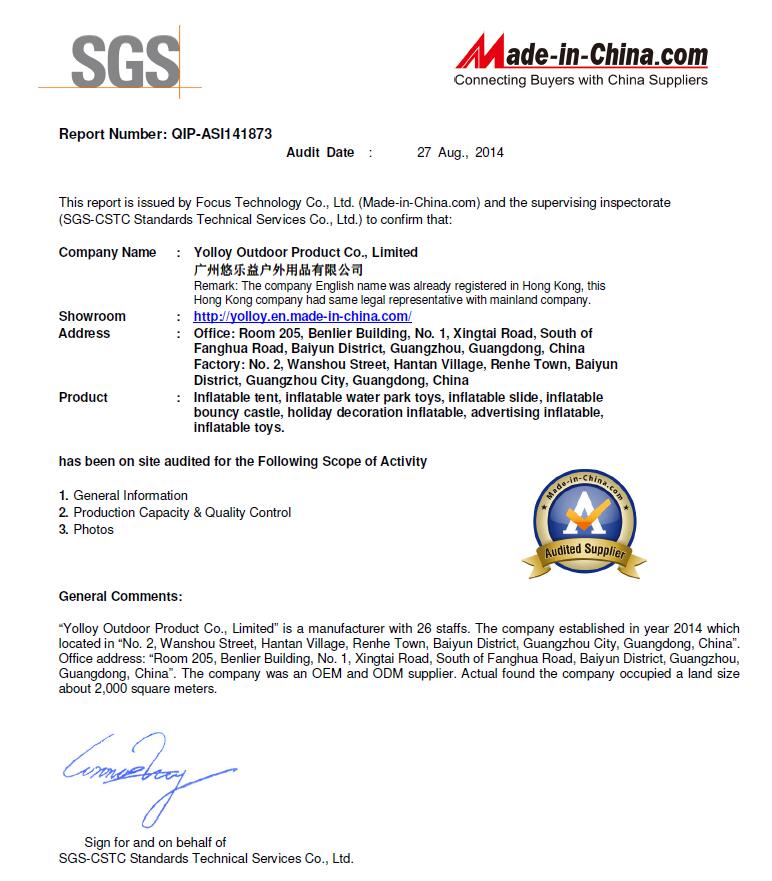
Certification

News

• New Order Successfully Finished for Long-Time Cooperated Japanese Client | YOLLOY Wins Full Client Recognition

• YOLLOY Custom Inflatable Pool Tent for Danish Client: Professional Pool Repair Shelter & Debris Protection

• Trusted Once Again! Greek Captain Re-orders Our Products After 4 Years

• Revolutionize Your Outdoors: The All-Terrain Inflatable Floating Tent for Land & Water

• Elevate Your Summer Fun: The Ultimate Inflatable Water Floating Volleyball Court Trampoline

• Innovative Inflatable Nightclub Tents & Pop-Up Bars: The Ultimate Solution for Portable Party Venues

Contact Us

Name: Sunny Yang
Tel: +86-20-8370 0771
Fax: +86-20-8370 0771
Mobile: 13570587575
E-mail: [email protected]
Add: No 5,Xiong wei Bo Nan Road,ZhongLuoTan Town,Baiyun district,Guangzhou,China
Friend me on Facebook Follow me on Twitter Add me to your circles Follow me on Pinterest Watch my channel on YouTube
News

What is an inflatable water roller ball and how does it work?

Author:yolloy Date:2026/8/13 7:39:18

If you have ever visited a water park or a lakeside resort, you may have seen people running inside giant transparent spheres floating on the water surface. That is an inflatable water roller ball — one of the most exciting and beginner-friendly water activities available today. It combines the thrill of walking on water with the safety and simplicity of an inflatable structure, making it suitable for children, adults, and even competitive group games.

Also known as a water walking ball, water roll ball, or water roller, this inflatable product has gained popularity across water parks, rental businesses, resorts, and private events. In this article, we will break down exactly what an inflatable water roller ball is, how it works, what materials go into making a durable one, and what you should look for when choosing a quality product.

What Is an Inflatable Water Roller Ball?

An inflatable water roller ball is a large, cylindrical or spherical inflatable device made from durable, transparent PVC or TPU material. It is designed to float on calm bodies of water such as swimming pools, lakes, and designated water park areas. The user enters the ball through a sealed opening, and once inside, can walk, run, or spin to make the ball roll across the water surface — much like a hamster wheel.

Unlike a water ball zorb ball, which is typically spherical and used for downhill rolling or body zorbing on land, the water roller ball is specifically engineered for aquatic use. It relies on the buoyancy provided by the sealed air chamber to stay afloat, and the transparent walls allow the user to see outside while enjoying the experience.

Water roller balls come in various sizes. Standard models range from approximately 2.2 meters to 2.8 meters in length and 1.8 meters to 2.2 meters in diameter, accommodating one to three people at a time. Custom sizes and colors are also available from professional manufacturers who can tailor the product to specific business needs.

How Does an Inflatable Water Roller Ball Work?

The working principle of a water roller ball is refreshingly simple, relying on basic physics rather than any complex machinery. Here is a step-by-step breakdown:

1. Inflation and Sealing

The roller is inflated once using an electric air pump. Unlike bounce houses or continuous-air inflatables, the water roller ball is a sealed air chamber — once inflated and closed, it does not require a constant air supply. A high-quality valve system ensures quick inflation and prevents air leakage during use.

2. Placement on Water

Once fully inflated, the ball is placed on a calm body of water. The sealed air inside creates enough buoyancy to support the weight of one or more users without sinking. For safety, the ball is often used in a tethered or designated area to prevent it from drifting too far.

3. User Entry and Movement

The user enters through a zippered opening, which is then sealed from the inside. Once inside, the user begins to walk or run. The forward motion creates a "hamster wheel" effect: the user's center of gravity shifts, causing the ball to rotate and move across the water. By changing direction or speed, the user can control where the ball goes — forward, backward, or even spinning in place.

4. Multi-User Dynamics

Larger models can accommodate two or three people at once. When multiple users are inside, coordination becomes key — synchronized movement produces smooth rolling, while uncoordinated movements can lead to wobbling, spinning, or even tipping, which adds to the fun for competitive play.

Key takeaway: The water roller ball does not require any motor, battery, or external power source to move. All the momentum comes from the user's own body movement, making it an eco-friendly, purely mechanical water toy.

What Materials Are Used in a Quality Water Roller Ball?

The durability and safety of a water roller ball depend heavily on the materials and manufacturing process. Reputable manufacturers use commercial-grade PVC tarpaulin or TPU (thermoplastic polyurethane), both of which offer excellent strength, flexibility, and resistance to water and UV exposure.

Here is a comparison of the two most common materials:

MaterialCharacteristicsBest For
PVC TarpaulinHigh tensile strength, excellent airtightness, cost-effective, widely availableCommercial water parks, rental businesses, high-frequency use
TPUSuperior elasticity, better cold-weather performance, lighter weight, premium feelHigh-end resorts, portable personal use, colder climates

Beyond the base material, quality indicators include reinforced seams stitched with waterproof nylon thread, high-temperature fusion welding for airtight sections, and additional reinforcement at high-stress areas. Products that meet international safety standards such as EN 14960 (for inflatable play equipment) and EN 15649 (for floating leisure products) provide an extra layer of assurance.

Many professional suppliers also include a repair kit with each purchase, so minor punctures or wear can be addressed quickly without replacing the entire product.

Where Can You Use a Water Roller Ball?

Water roller balls are versatile and can be used in a variety of settings:

  • Water parks: As a featured attraction within an inflatable water park, roller balls draw crowds and provide a memorable experience for visitors of all ages.
  • Swimming pools: Both public and private pools with sufficient surface area can accommodate water roller balls for recreational use.
  • Lakes and reservoirs: Calm, open water bodies are ideal for water roller activities, especially at resorts and campsites.
  • Beaches and coastlines: In calm, supervised conditions, water roller balls can be used near the shore.
  • Commercial rental businesses: Many entrepreneurs purchase water roller balls to rent out at events, festivals, and beachfront locations.
  • Fitness and training: The physical effort required to move the ball makes it an unconventional but effective core workout.

Safety Guidelines for Using Water Roller Balls

While water roller balls are designed with safety in mind, following proper guidelines is essential for a risk-free experience:

  • Always use the ball in calm, supervised water — avoid strong currents, waves, or windy conditions.
  • Check the ball for any damage, leaks, or loose seams before each use.
  • Do not bring sharp objects, jewelry, or footwear inside the ball.
  • Children under 10 years old and adults over 55 should exercise caution and ideally be supervised.
  • People with heart conditions, hypertension, or other serious health concerns should avoid this activity.
  • After use, stay inside the ball for a minute or two before exiting to allow your body to readjust.
  • Ensure the ball is tethered or used in a confined area to prevent drifting into unsafe zones.
  • Clean and dry the ball thoroughly before storage, and keep it in a cool, dry place away from direct sunlight.

How to Choose a High-Quality Water Roller Ball

If you are considering purchasing a water roller ball — whether for personal use or as a commercial investment — here are the key factors to evaluate:

Material Quality

Look for products made from commercial-grade PVC tarpaulin or TPU with documented thickness specifications. Thicker material (typically 0.6mm to 1.0mm) provides better durability and puncture resistance.

Certifications

Reputable manufacturers have their products tested to relevant safety standards. Certifications such as EN 14960, EN 15649, and RoHS compliance indicate that the product has passed rigorous safety and material quality checks.

Customization Options

A professional supplier should offer custom sizing, color choices, and logo printing. Some manufacturers even provide design services — you can send a sketch, photo, or description, and they will create a simulation rendering for your approval before production begins.

Production and Delivery

Typical production time for a standard water roller ball is 6 to 15 days, with larger or custom orders taking slightly longer. Air shipping takes about 5 to 7 days, while sea freight typically ranges from 15 to 30 days. A reliable supplier will communicate estimated timelines clearly and provide tracking information.

After-Sales Support

Check whether the supplier includes a repair kit, provides warranty coverage, and offers responsive customer support. A three-year expected service life, with proper maintenance, is a reasonable benchmark for quality products.

Why Water Roller Balls Are a Smart Investment

For water park operators, rental business owners, and resort managers, water roller balls represent a low-maintenance, high-engagement attraction. They require no electricity to operate on the water, take only minutes to inflate, and deflate into a compact size for easy storage and transport. The visual appeal of transparent balls rolling across a pool or lake naturally attracts attention and encourages participation.

From a user's perspective, the experience is unique — there are few activities that let you literally walk on water. It is equally enjoyable as a solo challenge, a family activity, or a competitive team game. The physical effort involved also provides a surprisingly effective core and leg workout, making it a fun alternative to traditional exercise.

Final Thoughts

An inflatable water roller ball is more than just a water toy — it is a unique blend of recreation, fitness, and entertainment that appeals to a wide range of users. Understanding how it works, what materials make it durable, and how to use it safely helps you make an informed decision whether you are buying one for personal enjoyment or adding it to your commercial lineup. With the right product from a trusted manufacturer, a water roller ball can deliver years of reliable fun on the water.


What is an inflatable water roller ball and how does it work?

Author:yolloy Date:2026/8/13 7:39:18

If you have ever visited a water park or a lakeside resort, you may have seen people running inside giant transparent spheres floating on the water surface. That is an inflatable water roller ball — one of the most exciting and beginner-friendly water activities available today. It combines the thrill of walking on water with the safety and simplicity of an inflatable structure, making it suitable for children, adults, and even competitive group games.

Also known as a water walking ball, water roll ball, or water roller, this inflatable product has gained popularity across water parks, rental businesses, resorts, and private events. In this article, we will break down exactly what an inflatable water roller ball is, how it works, what materials go into making a durable one, and what you should look for when choosing a quality product.

What Is an Inflatable Water Roller Ball?

An inflatable water roller ball is a large, cylindrical or spherical inflatable device made from durable, transparent PVC or TPU material. It is designed to float on calm bodies of water such as swimming pools, lakes, and designated water park areas. The user enters the ball through a sealed opening, and once inside, can walk, run, or spin to make the ball roll across the water surface — much like a hamster wheel.

Unlike a water ball zorb ball, which is typically spherical and used for downhill rolling or body zorbing on land, the water roller ball is specifically engineered for aquatic use. It relies on the buoyancy provided by the sealed air chamber to stay afloat, and the transparent walls allow the user to see outside while enjoying the experience.

Water roller balls come in various sizes. Standard models range from approximately 2.2 meters to 2.8 meters in length and 1.8 meters to 2.2 meters in diameter, accommodating one to three people at a time. Custom sizes and colors are also available from professional manufacturers who can tailor the product to specific business needs.

How Does an Inflatable Water Roller Ball Work?

The working principle of a water roller ball is refreshingly simple, relying on basic physics rather than any complex machinery. Here is a step-by-step breakdown:

1. Inflation and Sealing

The roller is inflated once using an electric air pump. Unlike bounce houses or continuous-air inflatables, the water roller ball is a sealed air chamber — once inflated and closed, it does not require a constant air supply. A high-quality valve system ensures quick inflation and prevents air leakage during use.

2. Placement on Water

Once fully inflated, the ball is placed on a calm body of water. The sealed air inside creates enough buoyancy to support the weight of one or more users without sinking. For safety, the ball is often used in a tethered or designated area to prevent it from drifting too far.

3. User Entry and Movement

The user enters through a zippered opening, which is then sealed from the inside. Once inside, the user begins to walk or run. The forward motion creates a "hamster wheel" effect: the user's center of gravity shifts, causing the ball to rotate and move across the water. By changing direction or speed, the user can control where the ball goes — forward, backward, or even spinning in place.

4. Multi-User Dynamics

Larger models can accommodate two or three people at once. When multiple users are inside, coordination becomes key — synchronized movement produces smooth rolling, while uncoordinated movements can lead to wobbling, spinning, or even tipping, which adds to the fun for competitive play.

Key takeaway: The water roller ball does not require any motor, battery, or external power source to move. All the momentum comes from the user's own body movement, making it an eco-friendly, purely mechanical water toy.

What Materials Are Used in a Quality Water Roller Ball?

The durability and safety of a water roller ball depend heavily on the materials and manufacturing process. Reputable manufacturers use commercial-grade PVC tarpaulin or TPU (thermoplastic polyurethane), both of which offer excellent strength, flexibility, and resistance to water and UV exposure.

Here is a comparison of the two most common materials:

MaterialCharacteristicsBest For
PVC TarpaulinHigh tensile strength, excellent airtightness, cost-effective, widely availableCommercial water parks, rental businesses, high-frequency use
TPUSuperior elasticity, better cold-weather performance, lighter weight, premium feelHigh-end resorts, portable personal use, colder climates

Beyond the base material, quality indicators include reinforced seams stitched with waterproof nylon thread, high-temperature fusion welding for airtight sections, and additional reinforcement at high-stress areas. Products that meet international safety standards such as EN 14960 (for inflatable play equipment) and EN 15649 (for floating leisure products) provide an extra layer of assurance.

Many professional suppliers also include a repair kit with each purchase, so minor punctures or wear can be addressed quickly without replacing the entire product.

Where Can You Use a Water Roller Ball?

Water roller balls are versatile and can be used in a variety of settings:

  • Water parks: As a featured attraction within an inflatable water park, roller balls draw crowds and provide a memorable experience for visitors of all ages.
  • Swimming pools: Both public and private pools with sufficient surface area can accommodate water roller balls for recreational use.
  • Lakes and reservoirs: Calm, open water bodies are ideal for water roller activities, especially at resorts and campsites.
  • Beaches and coastlines: In calm, supervised conditions, water roller balls can be used near the shore.
  • Commercial rental businesses: Many entrepreneurs purchase water roller balls to rent out at events, festivals, and beachfront locations.
  • Fitness and training: The physical effort required to move the ball makes it an unconventional but effective core workout.

Safety Guidelines for Using Water Roller Balls

While water roller balls are designed with safety in mind, following proper guidelines is essential for a risk-free experience:

  • Always use the ball in calm, supervised water — avoid strong currents, waves, or windy conditions.
  • Check the ball for any damage, leaks, or loose seams before each use.
  • Do not bring sharp objects, jewelry, or footwear inside the ball.
  • Children under 10 years old and adults over 55 should exercise caution and ideally be supervised.
  • People with heart conditions, hypertension, or other serious health concerns should avoid this activity.
  • After use, stay inside the ball for a minute or two before exiting to allow your body to readjust.
  • Ensure the ball is tethered or used in a confined area to prevent drifting into unsafe zones.
  • Clean and dry the ball thoroughly before storage, and keep it in a cool, dry place away from direct sunlight.

How to Choose a High-Quality Water Roller Ball

If you are considering purchasing a water roller ball — whether for personal use or as a commercial investment — here are the key factors to evaluate:

Material Quality

Look for products made from commercial-grade PVC tarpaulin or TPU with documented thickness specifications. Thicker material (typically 0.6mm to 1.0mm) provides better durability and puncture resistance.

Certifications

Reputable manufacturers have their products tested to relevant safety standards. Certifications such as EN 14960, EN 15649, and RoHS compliance indicate that the product has passed rigorous safety and material quality checks.

Customization Options

A professional supplier should offer custom sizing, color choices, and logo printing. Some manufacturers even provide design services — you can send a sketch, photo, or description, and they will create a simulation rendering for your approval before production begins.

Production and Delivery

Typical production time for a standard water roller ball is 6 to 15 days, with larger or custom orders taking slightly longer. Air shipping takes about 5 to 7 days, while sea freight typically ranges from 15 to 30 days. A reliable supplier will communicate estimated timelines clearly and provide tracking information.

After-Sales Support

Check whether the supplier includes a repair kit, provides warranty coverage, and offers responsive customer support. A three-year expected service life, with proper maintenance, is a reasonable benchmark for quality products.

Why Water Roller Balls Are a Smart Investment

For water park operators, rental business owners, and resort managers, water roller balls represent a low-maintenance, high-engagement attraction. They require no electricity to operate on the water, take only minutes to inflate, and deflate into a compact size for easy storage and transport. The visual appeal of transparent balls rolling across a pool or lake naturally attracts attention and encourages participation.

From a user's perspective, the experience is unique — there are few activities that let you literally walk on water. It is equally enjoyable as a solo challenge, a family activity, or a competitive team game. The physical effort involved also provides a surprisingly effective core and leg workout, making it a fun alternative to traditional exercise.

Final Thoughts

An inflatable water roller ball is more than just a water toy — it is a unique blend of recreation, fitness, and entertainment that appeals to a wide range of users. Understanding how it works, what materials make it durable, and how to use it safely helps you make an informed decision whether you are buying one for personal enjoyment or adding it to your commercial lineup. With the right product from a trusted manufacturer, a water roller ball can deliver years of reliable fun on the water.