When people hear the term "air bag," the first thing that often comes to mind is the vehicle safety device that deploys during a collision. However, in the world of extreme sports, stunt training, rescue operations, and commercial entertainment, the term refers to something entirely different: a large, heavy-duty inflatable structure designed to absorb high-impact landings and protect people from falls. An inflatable air bag is a specialized piece of equipment that has become indispensable across a wide range of industries, from film production to adventure parks and beyond.
What Exactly Is an Inflatable Air Bag?
An inflatable air bag is a large, sealed cushion made from commercial-grade PVC tarpaulin or reinforced fabric that is continuously inflated by one or more electric blowers. Unlike a car airbag that deploys in milliseconds using a chemical reaction, a stunt or landing air bag is a pre-inflated, reusable structure that provides a controlled, cushioned landing surface for people jumping or falling from height.
Most high-quality inflatable air bags feature a dual-chamber design. The bottom chamber is kept at a constant, firm pressure to serve as a safety buffer — ensuring that even during a high-impact landing, the user never makes contact with the ground beneath. The top chamber is softer and equipped with adjustable air release vents. When a person lands on the bag, air is expelled through these vents in a controlled manner, wrapping the body in a cushion of air and dissipating the kinetic energy smoothly.
Key Takeaway: An inflatable air bag is not a single-use emergency device — it is a durable, reusable impact-absorption system engineered for repeated use in professional and recreational settings.
How Are Inflatable Air Bags Used?
The versatility of inflatable air bags makes them suitable for a wide range of applications. Below are some of the most common use cases across different industries.
1. Extreme Sports and Stunt Training
BMX riders, freestyle skiers, snowboarders, mountain bikers, and motocross athletes all rely on inflatable landing air bags to practice new tricks safely. When attempting a backflip or a complex aerial maneuver, the risk of under-rotating or crashing is high. An angled landing air bag mimics the slope of a real landing ramp, allowing athletes to ride away if they land correctly, or to be safely cushioned if they fall. This dual-function design — firm enough to ride on, soft enough to crash into — has made the inflatable air bag a standard training tool at professional facilities worldwide.
2. Film Production and Stunt Performances
In the film industry, stunt professionals often perform high falls from buildings, platforms, or other elevated structures. Flat free-fall air bags are used to catch performers safely after a vertical drop. These bags are typically taller than sports air bags, ranging from 2 to 5 meters in height, and rely on high-volume, low-pressure air escape systems that decelerate the falling body gradually and evenly.
3. Gymnastics, Trampoline Parks, and Cheerleading
Traditional foam pits have long been used in gymnastics and trampoline parks, but they come with significant drawbacks: foam cubes degrade, create dust, harbor bacteria, and require constant maintenance. Inflatable foam pit air bags offer a cleaner, safer, and more hygienic alternative. They are designed to drop into existing foam pit recesses or stand on flat ground, providing a soft, non-intimidating landing surface suitable for athletes of all ages and skill levels.
4. Rescue and Emergency Operations
Inflatable air bags also play a critical role in rescue and firefighting scenarios. When people are trapped in high-rise buildings and traditional rescue methods are not viable, emergency rescue air bags can be rapidly deployed on the ground to catch individuals who must jump to safety. These bags are made from puncture-resistant, flame-retardant materials and can be fully inflated within minutes, making them a reliable last line of defense in life-threatening situations.
5. Adventure Parks and Recreational Attractions
Many adventure parks now feature free-fall attractions where participants jump from elevated platforms onto a giant inflatable air bag. The experience delivers an adrenaline rush while the air bag ensures a safe landing. These air bags are often custom-designed to match the height and layout of the attraction, and they can be branded with park logos or sponsor graphics for added visual impact.
What to Look for in a Quality Inflatable Air Bag
Not all inflatable air bags are created equal. When evaluating options, buyers should pay close attention to the following factors:
| Factor |
What to Look For |
| Material |
Heavy-duty PVC tarpaulin (0.55mm to 1.2mm thickness), UV-resistant coating, flame-retardant properties |
| Chamber Design |
Dual-chamber system with a firm bottom safety layer and a softer top impact layer with adjustable air vents |
| Seams |
Double or quadruple stitching at stress points, reinforced with nylon webbing |
| Blower System |
Continuous-flow electric blowers with CE or UL certification, compatible with local voltage requirements |
| Certifications |
Compliance with standards such as EN 14960, ASTM F2374, and CE/UL blower certifications |
| Customization |
Ability to customize size, color, slope angle, and printed branding |
Choosing a Reliable Inflatable Air Bag Supplier
For businesses looking to invest in inflatable air bags — whether for a sports training facility, adventure park, film production company, or rescue organization — choosing the right manufacturer is just as important as choosing the right product. A reputable inflatable air bag supplier should offer custom design capabilities, transparent material specifications, and a track record of delivering quality products to international markets.
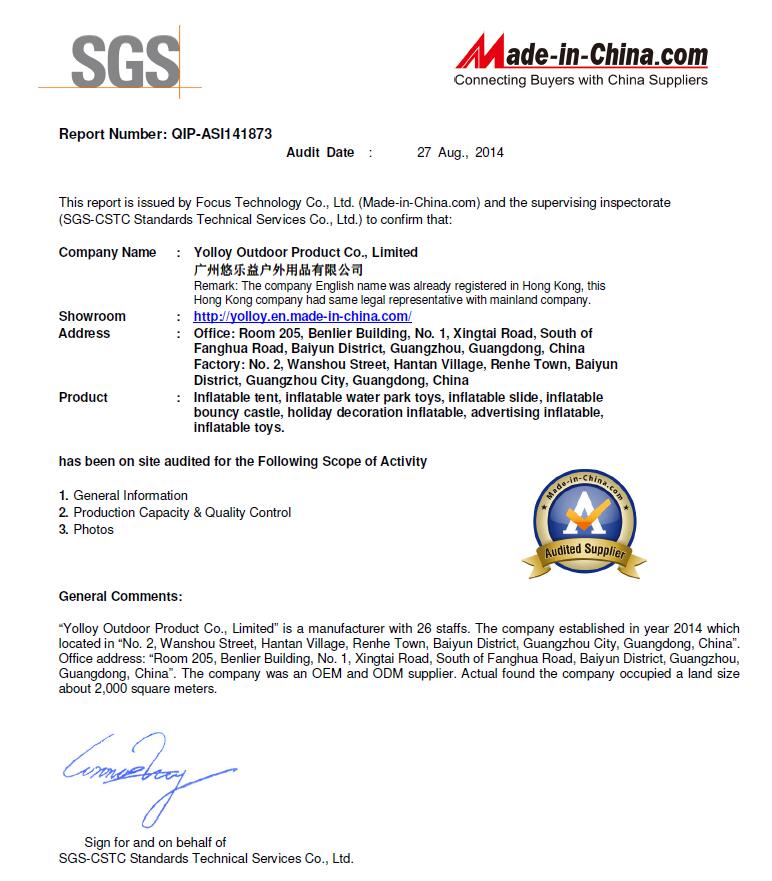
YOLLOY Outdoor Product Co., Limited, based in Guangzhou, China, is one of the experienced inflatable air bag manufacturers serving clients across Europe, Asia, South America, Africa, the Middle East, and beyond. With a product line that includes inflatable air mattresses, stunt landing bags, floating platforms, and interactive sports equipment, YOLLOY provides custom solutions tailored to the specific needs of each client. Products are made from commercial-grade PVC tarpaulin, manufactured with high-temperature fusion welding and precision sewing, and inspected before shipment to ensure safety and reliability.
Maintenance and Care Tips
To maximize the lifespan of an inflatable air bag, proper maintenance is essential. Here are some key practices:
- Daily inspections: Before each use, check air pressure levels, inspect for tears or punctures, and verify that all blowers are functioning correctly.
- Anchoring: Ensure all D-rings or metal anchor points are securely fastened to the ground using appropriate stakes, sandbags, or concrete anchors — especially in windy conditions.
- Temperature adjustments: Air pressure changes with temperature. On hot days, release some air to prevent excessive firmness; on cold days, increase blower output to maintain proper cushioning.
- Cleaning: Wipe down the landing surface regularly with mild detergent and warm water. Avoid harsh chemicals that can degrade the UV-resistant coating.
- Storage: Always dry the air bag completely before deflating and storing it. Keep it in a cool, dry, rodent-proof area to prevent damage from moisture and pests.
Conclusion
An inflatable air bag is far more than a simple cushion — it is a carefully engineered safety system that enables athletes to push boundaries, protects stunt performers during high-risk scenes, saves lives in rescue operations, and creates thrilling experiences at adventure parks. Understanding how these air bags work and what to look for in a quality product is essential for anyone in the market for impact-absorption equipment. By partnering with an experienced manufacturer, businesses can ensure they receive a product that meets international safety standards while delivering long-term value and reliability.