Products Category
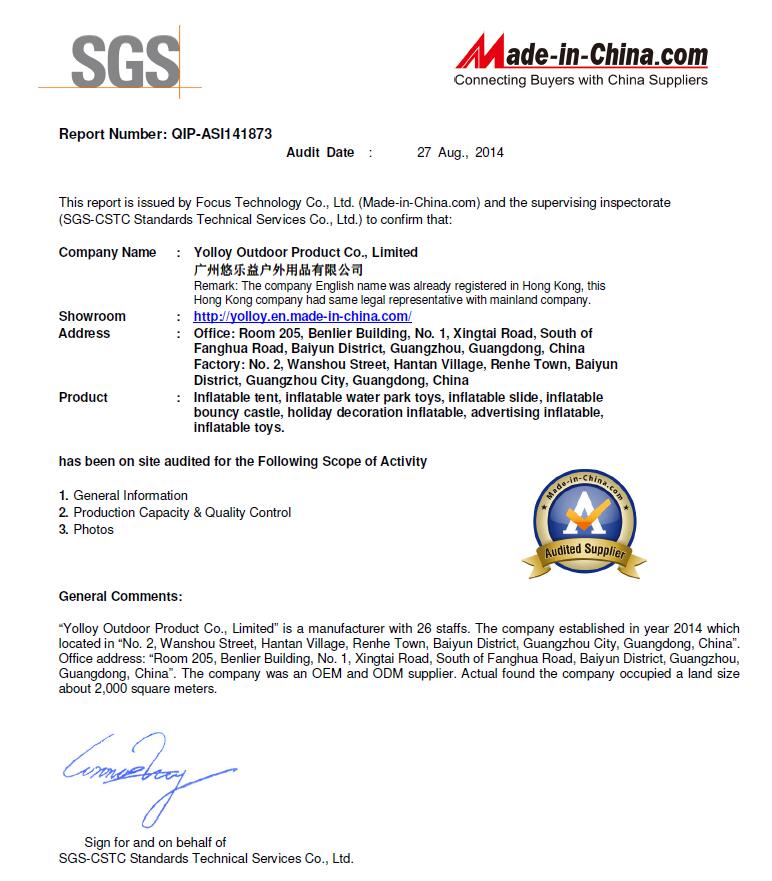
Certification

News

• New Order Successfully Finished for Long-Time Cooperated Japanese Client | YOLLOY Wins Full Client Recognition

• YOLLOY Custom Inflatable Pool Tent for Danish Client: Professional Pool Repair Shelter & Debris Protection

• Trusted Once Again! Greek Captain Re-orders Our Products After 4 Years

• Revolutionize Your Outdoors: The All-Terrain Inflatable Floating Tent for Land & Water

• Elevate Your Summer Fun: The Ultimate Inflatable Water Floating Volleyball Court Trampoline

• Innovative Inflatable Nightclub Tents & Pop-Up Bars: The Ultimate Solution for Portable Party Venues

Contact Us

Name: Sunny Yang
Tel: +86-20-8370 0771
Fax: +86-20-8370 0771
Mobile: 13570587575
E-mail: [email protected]
Add: No 5,Xiong wei Bo Nan Road,ZhongLuoTan Town,Baiyun district,Guangzhou,China
Friend me on Facebook Follow me on Twitter Add me to your circles Follow me on Pinterest Watch my channel on YouTube
News

How does blow up tent compare to blow up event tent?

Author:yolloy Date:2026/8/15 14:23:41

The terms blow up tent and blow up event tent are often used interchangeably, but they refer to different scopes of inflatable structures. While all blow up event tents are blow up tents, not all blow up tents are purpose-built for events. Understanding the key differences helps buyers make informed decisions when sourcing from inflatable tent manufacturers.

What Is a Blow Up Tent?

A blow up tent — also called an air tent or inflatable shelter — is a portable structure supported by air-filled beams instead of metal poles. It uses a continuous air pump to keep the frame rigid. These tents are made from durable materials such as commercial-grade PVC tarpaulin, Oxford fabric, nylon, or TPU, depending on the intended use.

Blow up tents serve a wide range of purposes: camping, emergency shelters, military field operations, vehicle spray booths, golf simulator enclosures, sports dugouts, and more. A custom inflatable tent can be designed in cube, dome, tunnel, car, or shelter shapes, and built to virtually any size — from a compact 2-person camping shelter to a large industrial workshop.

What Is a Blow Up Event Tent?

A blow up event tent is a subcategory of blow up tents designed specifically for public and commercial events. These include trade shows, product launches, music festivals, sports tournaments, weddings, corporate gatherings, and promotional campaigns. The defining feature of an event tent is its emphasis on visual appeal, branding capability, and crowd-facing functionality.

Event tents are typically larger, more open inside, and feature full-surface custom printing for logos, brand colors, and high-resolution graphics. Many inflatable party tent designs come with removable walls, integrated LED lighting, clear windows, and themed shapes that turn the tent itself into a marketing asset.

Key Differences: Blow Up Tent vs. Blow Up Event Tent

FeatureBlow Up Tent (General)Blow Up Event Tent
Primary PurposeShelter, workspace, camping, industrial useBrand promotion, public gathering, hospitality
Design PriorityFunctionality and practicality firstVisual impact and branding first
Shape OptionsCube, dome, tunnel, car, shelterCube, dome, arch, tunnel, igloo, snow globe, custom shapes
CustomizationBasic color and logo printingFull-surface graphics, themed designs, lighting integration
Interior LayoutEnclosed, partitioned, or equipment-focusedOpen-plan, welcoming, crowd-friendly
Wall OptionsSolid walls, zippered doors, ventilation panelsClear PVC walls, removable sidewalls, branded panels
Material FocusHeavy-duty PVC, Oxford, TPU, nylonHigh-quality PVC with UV-resistant and fire-retardant coatings
Setup Speed5 to 15 minutes with air pump5 to 15 minutes with air pump
Typical BuyerCampers, industrial operators, relief agenciesEvent planners, marketing agencies, rental businesses

Material and Build Quality

Both general blow up tents and event tents benefit from the same core manufacturing techniques. Reputable factories use high-temperature fusion welding for airtight seams and reinforced stitching at high-stress points. Commercial-grade PVC tarpaulin is the most common material, offering water resistance, UV stability, and tear strength. For tent projects requiring lighter weight, Oxford fabric or TPU can be substituted according to the client's requirements.

Quality-conscious manufacturers have their materials tested to international standards such as EN71, EN14960, and RoHS. Blowers come with CE or UL certification, and products are individually inspected before shipment. These quality assurance practices apply across the entire product range — whether you are ordering a basic camping shelter or a fully customized event tent with printed graphics.

When to Choose a General Blow Up Tent

  • Camping and outdoor recreation — A lightweight inflatable tent for personal or family camping trips.
  • Industrial applications — Inflatable spray booths, car detailing tents, or ventilated painting enclosures for workshops.
  • Sports practice — Golf simulator enclosures and practice cages that need weather protection without permanent construction.
  • Emergency and relief — Rapid-deployment shelters for disaster response, medical aid stations, or temporary housing.
  • Military and field operations — Durable, quick-setup shelters for command posts or equipment storage.

When to Choose a Blow Up Event Tent

  • Trade shows and exhibitions — Stand out in a crowded hall with a branded inflatable booth that draws visitors from across the floor.
  • Product launches — Create an immersive brand experience with a custom-shaped inflatable dome or cube.
  • Weddings and private parties — A clear inflatable bubble tent or snow globe tent creates a stunning focal point for outdoor celebrations.
  • Sports tournaments — Inflatable arches, sponsor tents, and start/finish line shelters for races and competitions.
  • Music and food festivals — VIP lounges, bar tents, and vendor booths that combine function with festival aesthetics.
  • Corporate retreats — Branded air tent villages for team-building events and outdoor hospitality.

Key takeaway: If your priority is shelter and function, a general blow up tent fits the bill. If your goal is to attract attention, promote a brand, and create a memorable guest experience, a blow up event tent is the right investment. Many manufacturers offer both categories and can guide you toward the right product based on your specific use case.

Customization: What's Possible?

One of the biggest advantages of working directly with experienced inflatable tent manufacturers is the level of customization available. You can start from a description, a drawing, a photograph, or even a site plan and budget. The manufacturer prepares 3D simulation renderings, revises the design until you approve it, and then releases it for production.

Custom sizes, colors, and logo printing are standard. For event tents, full-surface digital printing transforms the structure into a mobile billboard. Additional options include D-ring or round metal anchor systems for wind resistance, removable sidewalls, integrated LED lighting packages, and themed accessories. The minimum order quantity is typically one piece, making custom projects accessible even for small businesses.

Practical Considerations for Buyers

Production and Delivery

A standard inflatable product typically takes 6 to 15 days to produce, excluding transit time. Complex or large custom products may take longer. Air freight delivers in 5 to 7 days, while sea freight takes 15 to 30 days or more. Each product comes with a repair kit, and blowers are supplied to match your voltage requirements — 110V, 220V, or 380V.

Durability and Lifespan

When used and maintained correctly, inflatable tents can serve reliably for three years or more. Proper care includes cleaning with mild soap and water after use, storing fully deflated in a dry and cool place, avoiding sharp objects on the setup surface, and following the manufacturer's air pressure guidelines. Reputable suppliers use reinforced seams, waterproof nylon thread, and extra reinforcement at high-load areas.

Anchoring and Stability

Both general and event tents need proper anchoring. D-ring anchor points and weighted bases are standard. For outdoor events on grass or soft ground, stakes and sandbags provide additional stability. Always check wind conditions and follow the manufacturer's installation recommendations.

Conclusion

The difference between a blow up tent and a blow up event tent comes down to purpose and design intent. General blow up tents prioritize shelter, practicality, and versatility — making them ideal for camping, industrial work, and emergency use. Blow up event tents prioritize visual impact, branding, and guest experience — making them the go-to choice for trade shows, festivals, weddings, and corporate promotions.

Both types share the same core advantages: rapid setup, portability, weather resistance, and customizability. By working with a factory that offers the full range — from basic shelters to fully branded event structures — buyers can get exactly what they need without compromise. Whether you need a single custom tent or a bulk order for a rental fleet, the key is choosing a manufacturer that understands both the technical requirements and the creative possibilities of inflatable design.


How does blow up tent compare to blow up event tent?

Author:yolloy Date:2026/8/15 14:23:41

The terms blow up tent and blow up event tent are often used interchangeably, but they refer to different scopes of inflatable structures. While all blow up event tents are blow up tents, not all blow up tents are purpose-built for events. Understanding the key differences helps buyers make informed decisions when sourcing from inflatable tent manufacturers.

What Is a Blow Up Tent?

A blow up tent — also called an air tent or inflatable shelter — is a portable structure supported by air-filled beams instead of metal poles. It uses a continuous air pump to keep the frame rigid. These tents are made from durable materials such as commercial-grade PVC tarpaulin, Oxford fabric, nylon, or TPU, depending on the intended use.

Blow up tents serve a wide range of purposes: camping, emergency shelters, military field operations, vehicle spray booths, golf simulator enclosures, sports dugouts, and more. A custom inflatable tent can be designed in cube, dome, tunnel, car, or shelter shapes, and built to virtually any size — from a compact 2-person camping shelter to a large industrial workshop.

What Is a Blow Up Event Tent?

A blow up event tent is a subcategory of blow up tents designed specifically for public and commercial events. These include trade shows, product launches, music festivals, sports tournaments, weddings, corporate gatherings, and promotional campaigns. The defining feature of an event tent is its emphasis on visual appeal, branding capability, and crowd-facing functionality.

Event tents are typically larger, more open inside, and feature full-surface custom printing for logos, brand colors, and high-resolution graphics. Many inflatable party tent designs come with removable walls, integrated LED lighting, clear windows, and themed shapes that turn the tent itself into a marketing asset.

Key Differences: Blow Up Tent vs. Blow Up Event Tent

FeatureBlow Up Tent (General)Blow Up Event Tent
Primary PurposeShelter, workspace, camping, industrial useBrand promotion, public gathering, hospitality
Design PriorityFunctionality and practicality firstVisual impact and branding first
Shape OptionsCube, dome, tunnel, car, shelterCube, dome, arch, tunnel, igloo, snow globe, custom shapes
CustomizationBasic color and logo printingFull-surface graphics, themed designs, lighting integration
Interior LayoutEnclosed, partitioned, or equipment-focusedOpen-plan, welcoming, crowd-friendly
Wall OptionsSolid walls, zippered doors, ventilation panelsClear PVC walls, removable sidewalls, branded panels
Material FocusHeavy-duty PVC, Oxford, TPU, nylonHigh-quality PVC with UV-resistant and fire-retardant coatings
Setup Speed5 to 15 minutes with air pump5 to 15 minutes with air pump
Typical BuyerCampers, industrial operators, relief agenciesEvent planners, marketing agencies, rental businesses

Material and Build Quality

Both general blow up tents and event tents benefit from the same core manufacturing techniques. Reputable factories use high-temperature fusion welding for airtight seams and reinforced stitching at high-stress points. Commercial-grade PVC tarpaulin is the most common material, offering water resistance, UV stability, and tear strength. For tent projects requiring lighter weight, Oxford fabric or TPU can be substituted according to the client's requirements.

Quality-conscious manufacturers have their materials tested to international standards such as EN71, EN14960, and RoHS. Blowers come with CE or UL certification, and products are individually inspected before shipment. These quality assurance practices apply across the entire product range — whether you are ordering a basic camping shelter or a fully customized event tent with printed graphics.

When to Choose a General Blow Up Tent

  • Camping and outdoor recreation — A lightweight inflatable tent for personal or family camping trips.
  • Industrial applications — Inflatable spray booths, car detailing tents, or ventilated painting enclosures for workshops.
  • Sports practice — Golf simulator enclosures and practice cages that need weather protection without permanent construction.
  • Emergency and relief — Rapid-deployment shelters for disaster response, medical aid stations, or temporary housing.
  • Military and field operations — Durable, quick-setup shelters for command posts or equipment storage.

When to Choose a Blow Up Event Tent

  • Trade shows and exhibitions — Stand out in a crowded hall with a branded inflatable booth that draws visitors from across the floor.
  • Product launches — Create an immersive brand experience with a custom-shaped inflatable dome or cube.
  • Weddings and private parties — A clear inflatable bubble tent or snow globe tent creates a stunning focal point for outdoor celebrations.
  • Sports tournaments — Inflatable arches, sponsor tents, and start/finish line shelters for races and competitions.
  • Music and food festivals — VIP lounges, bar tents, and vendor booths that combine function with festival aesthetics.
  • Corporate retreats — Branded air tent villages for team-building events and outdoor hospitality.

Key takeaway: If your priority is shelter and function, a general blow up tent fits the bill. If your goal is to attract attention, promote a brand, and create a memorable guest experience, a blow up event tent is the right investment. Many manufacturers offer both categories and can guide you toward the right product based on your specific use case.

Customization: What's Possible?

One of the biggest advantages of working directly with experienced inflatable tent manufacturers is the level of customization available. You can start from a description, a drawing, a photograph, or even a site plan and budget. The manufacturer prepares 3D simulation renderings, revises the design until you approve it, and then releases it for production.

Custom sizes, colors, and logo printing are standard. For event tents, full-surface digital printing transforms the structure into a mobile billboard. Additional options include D-ring or round metal anchor systems for wind resistance, removable sidewalls, integrated LED lighting packages, and themed accessories. The minimum order quantity is typically one piece, making custom projects accessible even for small businesses.

Practical Considerations for Buyers

Production and Delivery

A standard inflatable product typically takes 6 to 15 days to produce, excluding transit time. Complex or large custom products may take longer. Air freight delivers in 5 to 7 days, while sea freight takes 15 to 30 days or more. Each product comes with a repair kit, and blowers are supplied to match your voltage requirements — 110V, 220V, or 380V.

Durability and Lifespan

When used and maintained correctly, inflatable tents can serve reliably for three years or more. Proper care includes cleaning with mild soap and water after use, storing fully deflated in a dry and cool place, avoiding sharp objects on the setup surface, and following the manufacturer's air pressure guidelines. Reputable suppliers use reinforced seams, waterproof nylon thread, and extra reinforcement at high-load areas.

Anchoring and Stability

Both general and event tents need proper anchoring. D-ring anchor points and weighted bases are standard. For outdoor events on grass or soft ground, stakes and sandbags provide additional stability. Always check wind conditions and follow the manufacturer's installation recommendations.

Conclusion

The difference between a blow up tent and a blow up event tent comes down to purpose and design intent. General blow up tents prioritize shelter, practicality, and versatility — making them ideal for camping, industrial work, and emergency use. Blow up event tents prioritize visual impact, branding, and guest experience — making them the go-to choice for trade shows, festivals, weddings, and corporate promotions.

Both types share the same core advantages: rapid setup, portability, weather resistance, and customizability. By working with a factory that offers the full range — from basic shelters to fully branded event structures — buyers can get exactly what they need without compromise. Whether you need a single custom tent or a bulk order for a rental fleet, the key is choosing a manufacturer that understands both the technical requirements and the creative possibilities of inflatable design.