Products Category
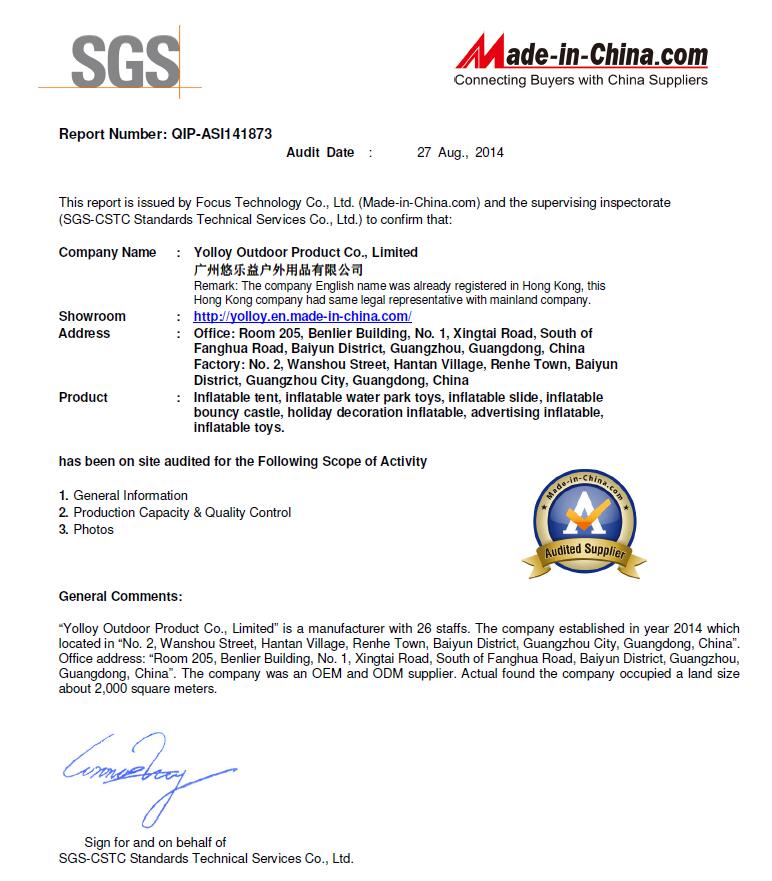
Certification

News

• New Order Successfully Finished for Long-Time Cooperated Japanese Client | YOLLOY Wins Full Client Recognition

• YOLLOY Custom Inflatable Pool Tent for Danish Client: Professional Pool Repair Shelter & Debris Protection

• Trusted Once Again! Greek Captain Re-orders Our Products After 4 Years

• Revolutionize Your Outdoors: The All-Terrain Inflatable Floating Tent for Land & Water

• Elevate Your Summer Fun: The Ultimate Inflatable Water Floating Volleyball Court Trampoline

• Innovative Inflatable Nightclub Tents & Pop-Up Bars: The Ultimate Solution for Portable Party Venues

Contact Us

Name: Sunny Yang
Tel: +86-20-8370 0771
Fax: +86-20-8370 0771
Mobile: 13570587575
E-mail: [email protected]
Add: No 5,Xiong wei Bo Nan Road,ZhongLuoTan Town,Baiyun district,Guangzhou,China
Friend me on Facebook Follow me on Twitter Add me to your circles Follow me on Pinterest Watch my channel on YouTube
News

What are the features of a tent for car detailing?

Author:yolloy Date:2026/8/17 2:24:07
Car detailing is a job that depends on control. Dust, wind, direct sunlight, and overspray can all ruin a freshly polished panel or a just-applied ceramic coating. A tent built for car detailing gives you a sheltered, cleaner workspace whether you are running a mobile wash service, spraying paint, or spending a weekend on your own car. But a tent is only as good as its features. Knowing what to look for helps you pick one that protects your work, survives frequent use, and actually pays for itself.
Material and build quality
The fabric is the first thing that separates a professional booth from a weekend canopy. Commercial-grade PVC tarpaulin is the most common choice for inflatable detailing tents because it resists punctures, wipes clean easily, and holds up to repeated inflation and deflation. Depending on the application, manufacturers may also use Oxford fabric, nylon, or TPU. Whichever material is chosen, the seams matter just as much. Reinforced stitching with waterproof nylon thread, extra reinforcement at high-load areas, and high-temperature welding for airtight sections all extend the life of the tent and keep it stable while the blower is running.
Size and working space
A detailing tent needs to fit the vehicle and still leave room to move around it. Compact booths work for motorcycles and small cars, while larger units can enclose SUVs, vans, and even a full spray booth setup. Before you choose, measure the vehicle and add working clearance on every side. If you are buying from a factory, sizes can usually be adjusted to your exact needs rather than being locked to a fixed catalog dimension.
Ventilation and airflow
For detailing, airflow is not a luxury. A continuous blower keeps the structure inflated and, at the same time, drives air exchange inside the tent. That matters when you are spraying paint, applying coatings, or working with solvents, because it helps carry fumes and overspray out of your breathing zone. Look for tents with multiple air outlets and consider whether filter panels can be added to trap dust and particles before the air recirculates.
Anchoring and wind resistance
Outdoor detailing means dealing with wind. A well-built inflatable tent includes anchor points such as D-rings or round metal anchor systems so it can be pegged or weighted down securely. Combined with a properly sized blower, good anchoring keeps the structure stable on breezy days and prevents it from shifting while you work around the vehicle.
Setup speed and portability
One of the biggest advantages of an inflatable detailing tent is how quickly it goes up and down. With a blower connected, most units inflate in a few minutes, and they deflate just as fast for storage. When packed, the whole booth fits into a carry bag, which makes it practical for mobile detailers who move between driveways, parking lots, and client sites. If you plan to set up and tear down often, check the packing size and weight before buying.
Lighting and visibility
Good light is essential for spotting swirls, checking paint correction, and masking panels accurately. Clear PVC windows and transparent wall panels let natural daylight in, and many tents include hanging points or loops where you can attach work lights. A tent that stays bright inside makes the detail work easier and more accurate, especially in the evening.
Customization options
For businesses, a stock tent is rarely the final answer. A custom inflatable tent can be built to your preferred size, color, and layout, with your logo or artwork printed on the fabric. Manufacturers such as YOLLOY can develop a design from a description, drawing, sketch, photograph, or site plan, and the minimum order quantity is as low as one piece. That flexibility is what lets a detailing business get a booth that fits its vehicles, its branding, and its workflow.
Inflatable booths versus frame canopies
Frame canopies are quick to set up and fine for shade, but they are open on the sides and do little to control dust or overspray. Inflatable booths create a fully enclosed space, which is what detailing and light painting work really need. The trade-off is that an inflatable booth depends on a continuous blower, so you need a reliable power source and, ideally, a spare blower on hand. For most detailing work, the enclosed environment is worth the extra equipment.
How to choose the right tent
1. Measure your workspace and vehicle, then add clearance for doors, lights, and movement.
2. Confirm the blower voltage and power available at your site, whether 110V, 220V, or 380V.
3. Check the fabric, seam construction, and whether the tent includes anchor points for outdoor use.
4. Look at ventilation and whether filters can be added for paint or coating work.
5. Consider how often you will set it up and whether the packed size suits your transport.
6. If you need a specific size or branding, ask the factory about customization before ordering.
Frequently asked questions
How long does an inflatable detailing tent take to set up?
With a blower connected, most inflatable tents inflate within a few minutes. Deflating and packing takes a similar amount of time, which is why they suit mobile detailing work.
What blower do I need?
The blower must match the size of the tent and the voltage available at your site. Suppliers can provide blowers for 110V, 220V, or 380V, and it is wise to keep a backup unit for long sessions.
Can I use a detailing tent outdoors in windy conditions?
Yes, provided the tent is properly anchored. Look for D-ring or round metal anchor systems and always secure the tent with stakes or weights before working outside.
What materials are used for a car detailing tent?
Commercial-grade PVC tarpaulin is the most common, with Oxford fabric, nylon, or TPU used for certain applications. Reinforced seams and high-temperature welding are standard on professionally made booths.
Can I order a custom size or printed logo?
Yes. Custom sizes, colors, and printed logos are available, and the minimum order quantity can be as low as one piece, so even a single booth can be made to your specification.
If you are comparing options, remember that an inflatable car tent is only as good as its materials, airflow, and anchoring. YOLLOY is an inflatable tent manufacturer in Guangzhou, China, producing custom inflatable booths for detailing, spray painting, and vehicle care. Its inflatable spray booth for car detailing is built with commercial-grade materials, supplied with the right blower, and can be customized to your size and branding. Contact YOLLOY to discuss your requirements and get a booth designed around your workflow.


What are the features of a tent for car detailing?

Author:yolloy Date:2026/8/17 2:24:07

Car detailing is a job that depends on control. Dust, wind, direct sunlight, and overspray can all ruin a freshly polished panel or a just-applied ceramic coating. A tent built for car detailing gives you a sheltered, cleaner workspace whether you are running a mobile wash service, spraying paint, or spending a weekend on your own car. But a tent is only as good as its features. Knowing what to look for helps you pick one that protects your work, survives frequent use, and actually pays for itself.
Material and build quality
The fabric is the first thing that separates a professional booth from a weekend canopy. Commercial-grade PVC tarpaulin is the most common choice for inflatable detailing tents because it resists punctures, wipes clean easily, and holds up to repeated inflation and deflation. Depending on the application, manufacturers may also use Oxford fabric, nylon, or TPU. Whichever material is chosen, the seams matter just as much. Reinforced stitching with waterproof nylon thread, extra reinforcement at high-load areas, and high-temperature welding for airtight sections all extend the life of the tent and keep it stable while the blower is running.
Size and working space
A detailing tent needs to fit the vehicle and still leave room to move around it. Compact booths work for motorcycles and small cars, while larger units can enclose SUVs, vans, and even a full spray booth setup. Before you choose, measure the vehicle and add working clearance on every side. If you are buying from a factory, sizes can usually be adjusted to your exact needs rather than being locked to a fixed catalog dimension.
Ventilation and airflow
For detailing, airflow is not a luxury. A continuous blower keeps the structure inflated and, at the same time, drives air exchange inside the tent. That matters when you are spraying paint, applying coatings, or working with solvents, because it helps carry fumes and overspray out of your breathing zone. Look for tents with multiple air outlets and consider whether filter panels can be added to trap dust and particles before the air recirculates.
Anchoring and wind resistance
Outdoor detailing means dealing with wind. A well-built inflatable tent includes anchor points such as D-rings or round metal anchor systems so it can be pegged or weighted down securely. Combined with a properly sized blower, good anchoring keeps the structure stable on breezy days and prevents it from shifting while you work around the vehicle.
Setup speed and portability
One of the biggest advantages of an inflatable detailing tent is how quickly it goes up and down. With a blower connected, most units inflate in a few minutes, and they deflate just as fast for storage. When packed, the whole booth fits into a carry bag, which makes it practical for mobile detailers who move between driveways, parking lots, and client sites. If you plan to set up and tear down often, check the packing size and weight before buying.
Lighting and visibility
Good light is essential for spotting swirls, checking paint correction, and masking panels accurately. Clear PVC windows and transparent wall panels let natural daylight in, and many tents include hanging points or loops where you can attach work lights. A tent that stays bright inside makes the detail work easier and more accurate, especially in the evening.
Customization options
For businesses, a stock tent is rarely the final answer. A custom inflatable tent can be built to your preferred size, color, and layout, with your logo or artwork printed on the fabric. Manufacturers such as YOLLOY can develop a design from a description, drawing, sketch, photograph, or site plan, and the minimum order quantity is as low as one piece. That flexibility is what lets a detailing business get a booth that fits its vehicles, its branding, and its workflow.
Inflatable booths versus frame canopies
Frame canopies are quick to set up and fine for shade, but they are open on the sides and do little to control dust or overspray. Inflatable booths create a fully enclosed space, which is what detailing and light painting work really need. The trade-off is that an inflatable booth depends on a continuous blower, so you need a reliable power source and, ideally, a spare blower on hand. For most detailing work, the enclosed environment is worth the extra equipment.
How to choose the right tent
1. Measure your workspace and vehicle, then add clearance for doors, lights, and movement.
2. Confirm the blower voltage and power available at your site, whether 110V, 220V, or 380V.
3. Check the fabric, seam construction, and whether the tent includes anchor points for outdoor use.
4. Look at ventilation and whether filters can be added for paint or coating work.
5. Consider how often you will set it up and whether the packed size suits your transport.
6. If you need a specific size or branding, ask the factory about customization before ordering.
Frequently asked questions
How long does an inflatable detailing tent take to set up?
With a blower connected, most inflatable tents inflate within a few minutes. Deflating and packing takes a similar amount of time, which is why they suit mobile detailing work.
What blower do I need?
The blower must match the size of the tent and the voltage available at your site. Suppliers can provide blowers for 110V, 220V, or 380V, and it is wise to keep a backup unit for long sessions.
Can I use a detailing tent outdoors in windy conditions?
Yes, provided the tent is properly anchored. Look for D-ring or round metal anchor systems and always secure the tent with stakes or weights before working outside.
What materials are used for a car detailing tent?
Commercial-grade PVC tarpaulin is the most common, with Oxford fabric, nylon, or TPU used for certain applications. Reinforced seams and high-temperature welding are standard on professionally made booths.
Can I order a custom size or printed logo?
Yes. Custom sizes, colors, and printed logos are available, and the minimum order quantity can be as low as one piece, so even a single booth can be made to your specification.
If you are comparing options, remember that an inflatable car tent is only as good as its materials, airflow, and anchoring. YOLLOY is an inflatable tent manufacturer in Guangzhou, China, producing custom inflatable booths for detailing, spray painting, and vehicle care. Its inflatable spray booth for car detailing is built with commercial-grade materials, supplied with the right blower, and can be customized to your size and branding. Contact YOLLOY to discuss your requirements and get a booth designed around your workflow.