Products Category
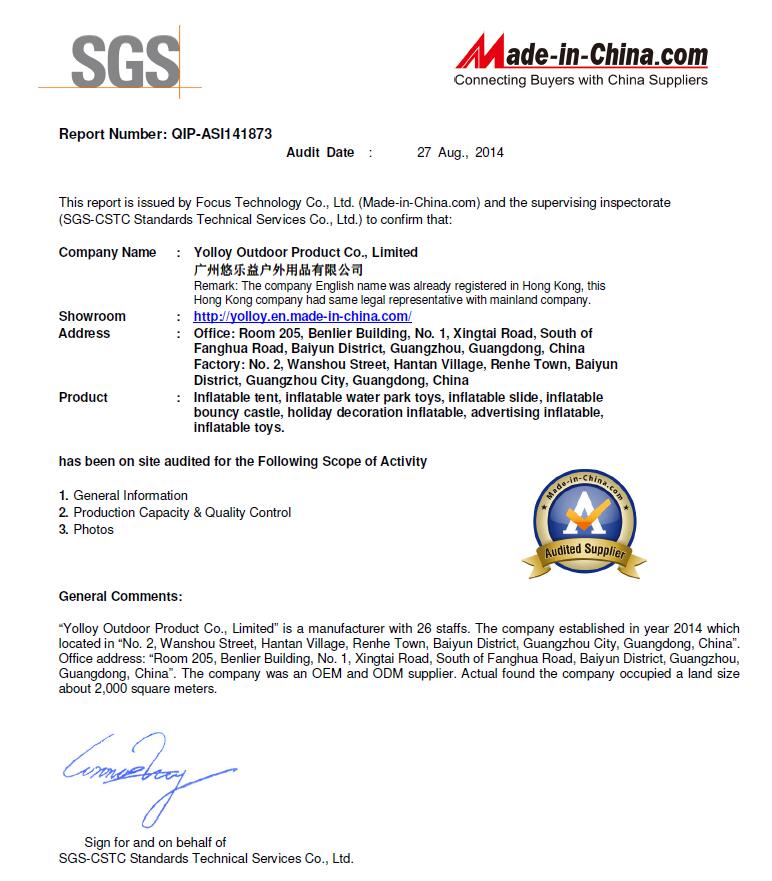
Certification

News

• New Order Successfully Finished for Long-Time Cooperated Japanese Client | YOLLOY Wins Full Client Recognition

• YOLLOY Custom Inflatable Pool Tent for Danish Client: Professional Pool Repair Shelter & Debris Protection

• Trusted Once Again! Greek Captain Re-orders Our Products After 4 Years

• Revolutionize Your Outdoors: The All-Terrain Inflatable Floating Tent for Land & Water

• Elevate Your Summer Fun: The Ultimate Inflatable Water Floating Volleyball Court Trampoline

• Innovative Inflatable Nightclub Tents & Pop-Up Bars: The Ultimate Solution for Portable Party Venues

Contact Us

Name: Sunny Yang
Tel: +86-20-8370 0771
Fax: +86-20-8370 0771
Mobile: 13570587575
E-mail: [email protected]
Add: No 5,Xiong wei Bo Nan Road,ZhongLuoTan Town,Baiyun district,Guangzhou,China
Friend me on Facebook Follow me on Twitter Add me to your circles Follow me on Pinterest Watch my channel on YouTube
News

Is backyard inflatable water slides safe for children?

Author:yolloy Date:2026/8/16 15:13:44

Every summer, parents ask the same question before setting up a backyard water slide: is it actually safe for children? The honest answer is yes, but with conditions. A backyard inflatable water slide is safe when it is built from quality materials, set up correctly, and used under active adult supervision. Most injuries happen not because inflatables are inherently dangerous, but because of poor anchoring, overcrowding, or ignoring age and weight limits. This article explains what makes a children's inflatable water slide safe, what to check before you buy, and how to use one responsibly so the kids can play without worry.

The Short Answer: Yes, When Used Correctly

Backyard inflatable water slides are a popular and generally safe choice for family play when the right precautions are followed. Safety agencies that monitor inflatable play structures consistently point to the same risk factors: exceeding the recommended number of users, weak anchoring, and a lack of supervision. When a slide is properly anchored, set up on level ground, and watched by an adult, the risk drops dramatically. The key is understanding that the product is only one part of the equation. How you set it up and supervise it matters just as much as the quality of the slide itself.

Materials and Build Quality Are the Foundation

The foundation of safety is the material and construction. A safe children's inflatable water slide is made from commercial-grade PVC tarpaulin or heavy Oxford fabric with reinforced seams. The seams are where inflatables most often fail, so look for double-stitched or welded seams at every stress point. Quality manufacturers test their materials against recognized safety standards: EN 14960 covers inflatable play equipment, while inflatable water parks reference EN 15649. Materials that pass EN71 and RoHS-related testing give parents extra confidence that the products are free from harmful substances. When you buy from a manufacturer that builds to these standards, you are starting from a much safer product.

Anchoring and Setup Location

How you set up the slide matters more than most people realize. Choose a flat, level area on grass, and never set up on concrete, asphalt, or packed earth, because falls onto hard surfaces cause the most serious injuries. Clear the area of rocks, sticks, and sharp objects. Keep at least a few feet of clearance on all sides, away from trees, fences, buildings, and overhead power lines. Then anchor the slide properly. Quality inflatables come with D-ring or round metal anchor systems and stakes that hold the structure down. Secure every anchor point before children play, and check that the unit cannot shift or lift. Never use the slide in windy or rainy conditions, since wind can lift an improperly anchored inflatable.

Adult Supervision and Age Limits

Active adult supervision is non-negotiable. An adult should watch the slide at all times, stay close enough to intervene, and enforce the rules. Follow the manufacturer's recommendations for the number of children allowed at once, along with the age and weight limits. Do not let big kids and toddlers share the slide at the same time, and do not let children do flips or somersaults, climb the walls, or climb the ladder at the same time as another child. If the slide has a splash pool, keep the water depth shallow enough to avoid drowning risk but deep enough to cushion landings.

Blower and Electrical Safety

The blower keeps the slide inflated and must be handled carefully around water. Choose a slide with a blower that meets CE or UL requirements, and place the power source well away from the splash pool. Many quality slides use a GFCI-protected plug, which cuts power instantly if it senses a fault near water. Avoid using extension cords where possible, and never run the blower with a damaged cord or plug. Check the cord and plug regularly for wear, and replace any damaged part before the next use.

Maintenance and Storage

A well-maintained slide is a safe slide. Inspect the unit before each use for leaks, punctures, or damage to the seams, cord, plug, and pump, and do not use a damaged product. After use, drain all water, allow the slide to dry completely before storing, and fold it carefully to prevent mold and mildew. Most quality manufacturers supply a repair kit with each inflatable, so small punctures can be fixed quickly before they grow into a bigger problem.

Common Mistakes That Cause Injuries

Most injuries on backyard water slides come from a handful of repeatable mistakes:

  • Overcrowding. Letting more children on the slide than its rated capacity, which stretches seams and increases collisions.
  • Mixing sizes. Letting children of very different ages and sizes play together on the same slide.
  • Skipping the stakes. Failing to anchor the slide, which lets it tip or lift in the wind.
  • Hard surfaces. Setting up on concrete or asphalt instead of level grass.
  • No supervision. Leaving children unattended, even for a minute.

Avoiding these five mistakes eliminates most of the risk and turns a potential hazard into a safe, active summer activity.

How to Choose a Safe Backyard Water Slide

When shopping, ask the right questions before you buy. Check the material thickness and seam construction. Confirm the age and weight limits match your children. Look for anchoring systems, high sidewalls, safety netting at the top platform, and a splash pool with a sensible depth. Verify that the blower is included and meets CE or UL requirements. And buy from a manufacturer with a track record of quality control and safety testing. For parents and businesses looking for childrens inflatable water slides, working directly with experienced inflatable water slide manufacturers means you can specify the size, colors, and safety features you need, and get a product built to commercial standards rather than a thin, single-season toy.

Choosing a Manufacturer That Puts Safety First

YOLLOY is an inflatable-product manufacturer based in Guangzhou, China, specializing in custom inflatable water slides, water parks, bounce houses, and commercial inflatable products. Its slides are built from commercial-grade PVC tarpaulin with precision sewing, reinforced seams, waterproof nylon thread, and extra reinforcement at high-load areas. The company states that its materials have passed EN71, EN14960, and RoHS-related testing, that inflatable water parks reference EN 15649, and that blowers meet CE or UL requirements. D-ring or round metal anchor systems are incorporated where needed for installation and wind resistance, and a repair kit is supplied with each inflatable product. YOLLOY also offers custom sizes and colors, with a minimum order quantity of one piece and a typical production time of 6 to 15 days for a regular inflatable product. For a backyard inflatable water park or a commercial slide built to safety standards, this kind of direct-from-factory sourcing gives you full control over the design and the quality.

Conclusion

So, are backyard inflatable water slides safe for children? Yes, when you choose a well-built slide, set it up on level ground with proper anchoring, supervise children actively, and follow the age and weight limits. The product quality, the setup, and the supervision together determine how safe the experience is. A slide built from commercial-grade materials to recognized safety standards, combined with responsible use, gives children hours of safe summer fun.

FAQ

Q: Are inflatable water slides safe for toddlers?
Many slides are designed for children aged three and up. Always check the manufacturer's age recommendation and weight limit, and keep toddlers on low, gentle slides with adult supervision at all times.

Q: How do I anchor a backyard water slide?
Use the stakes or D-ring anchor system that comes with the slide, secure every anchor point into the ground, and set up on flat grass. On hard surfaces, use heavy sandbags instead.

Q: Can I use an inflatable water slide on concrete?
No. Set up on level grass or another soft surface. Falls onto concrete or asphalt can cause serious injuries.

Q: How often should I check the slide for damage?
Inspect the seams, material, cord, plug, and blower before every use, and dry the slide completely before storing it.


Is backyard inflatable water slides safe for children?

Author:yolloy Date:2026/8/16 15:13:44

Every summer, parents ask the same question before setting up a backyard water slide: is it actually safe for children? The honest answer is yes, but with conditions. A backyard inflatable water slide is safe when it is built from quality materials, set up correctly, and used under active adult supervision. Most injuries happen not because inflatables are inherently dangerous, but because of poor anchoring, overcrowding, or ignoring age and weight limits. This article explains what makes a children's inflatable water slide safe, what to check before you buy, and how to use one responsibly so the kids can play without worry.

The Short Answer: Yes, When Used Correctly

Backyard inflatable water slides are a popular and generally safe choice for family play when the right precautions are followed. Safety agencies that monitor inflatable play structures consistently point to the same risk factors: exceeding the recommended number of users, weak anchoring, and a lack of supervision. When a slide is properly anchored, set up on level ground, and watched by an adult, the risk drops dramatically. The key is understanding that the product is only one part of the equation. How you set it up and supervise it matters just as much as the quality of the slide itself.

Materials and Build Quality Are the Foundation

The foundation of safety is the material and construction. A safe children's inflatable water slide is made from commercial-grade PVC tarpaulin or heavy Oxford fabric with reinforced seams. The seams are where inflatables most often fail, so look for double-stitched or welded seams at every stress point. Quality manufacturers test their materials against recognized safety standards: EN 14960 covers inflatable play equipment, while inflatable water parks reference EN 15649. Materials that pass EN71 and RoHS-related testing give parents extra confidence that the products are free from harmful substances. When you buy from a manufacturer that builds to these standards, you are starting from a much safer product.

Anchoring and Setup Location

How you set up the slide matters more than most people realize. Choose a flat, level area on grass, and never set up on concrete, asphalt, or packed earth, because falls onto hard surfaces cause the most serious injuries. Clear the area of rocks, sticks, and sharp objects. Keep at least a few feet of clearance on all sides, away from trees, fences, buildings, and overhead power lines. Then anchor the slide properly. Quality inflatables come with D-ring or round metal anchor systems and stakes that hold the structure down. Secure every anchor point before children play, and check that the unit cannot shift or lift. Never use the slide in windy or rainy conditions, since wind can lift an improperly anchored inflatable.

Adult Supervision and Age Limits

Active adult supervision is non-negotiable. An adult should watch the slide at all times, stay close enough to intervene, and enforce the rules. Follow the manufacturer's recommendations for the number of children allowed at once, along with the age and weight limits. Do not let big kids and toddlers share the slide at the same time, and do not let children do flips or somersaults, climb the walls, or climb the ladder at the same time as another child. If the slide has a splash pool, keep the water depth shallow enough to avoid drowning risk but deep enough to cushion landings.

Blower and Electrical Safety

The blower keeps the slide inflated and must be handled carefully around water. Choose a slide with a blower that meets CE or UL requirements, and place the power source well away from the splash pool. Many quality slides use a GFCI-protected plug, which cuts power instantly if it senses a fault near water. Avoid using extension cords where possible, and never run the blower with a damaged cord or plug. Check the cord and plug regularly for wear, and replace any damaged part before the next use.

Maintenance and Storage

A well-maintained slide is a safe slide. Inspect the unit before each use for leaks, punctures, or damage to the seams, cord, plug, and pump, and do not use a damaged product. After use, drain all water, allow the slide to dry completely before storing, and fold it carefully to prevent mold and mildew. Most quality manufacturers supply a repair kit with each inflatable, so small punctures can be fixed quickly before they grow into a bigger problem.

Common Mistakes That Cause Injuries

Most injuries on backyard water slides come from a handful of repeatable mistakes:

  • Overcrowding. Letting more children on the slide than its rated capacity, which stretches seams and increases collisions.
  • Mixing sizes. Letting children of very different ages and sizes play together on the same slide.
  • Skipping the stakes. Failing to anchor the slide, which lets it tip or lift in the wind.
  • Hard surfaces. Setting up on concrete or asphalt instead of level grass.
  • No supervision. Leaving children unattended, even for a minute.

Avoiding these five mistakes eliminates most of the risk and turns a potential hazard into a safe, active summer activity.

How to Choose a Safe Backyard Water Slide

When shopping, ask the right questions before you buy. Check the material thickness and seam construction. Confirm the age and weight limits match your children. Look for anchoring systems, high sidewalls, safety netting at the top platform, and a splash pool with a sensible depth. Verify that the blower is included and meets CE or UL requirements. And buy from a manufacturer with a track record of quality control and safety testing. For parents and businesses looking for childrens inflatable water slides, working directly with experienced inflatable water slide manufacturers means you can specify the size, colors, and safety features you need, and get a product built to commercial standards rather than a thin, single-season toy.

Choosing a Manufacturer That Puts Safety First

YOLLOY is an inflatable-product manufacturer based in Guangzhou, China, specializing in custom inflatable water slides, water parks, bounce houses, and commercial inflatable products. Its slides are built from commercial-grade PVC tarpaulin with precision sewing, reinforced seams, waterproof nylon thread, and extra reinforcement at high-load areas. The company states that its materials have passed EN71, EN14960, and RoHS-related testing, that inflatable water parks reference EN 15649, and that blowers meet CE or UL requirements. D-ring or round metal anchor systems are incorporated where needed for installation and wind resistance, and a repair kit is supplied with each inflatable product. YOLLOY also offers custom sizes and colors, with a minimum order quantity of one piece and a typical production time of 6 to 15 days for a regular inflatable product. For a backyard inflatable water park or a commercial slide built to safety standards, this kind of direct-from-factory sourcing gives you full control over the design and the quality.

Conclusion

So, are backyard inflatable water slides safe for children? Yes, when you choose a well-built slide, set it up on level ground with proper anchoring, supervise children actively, and follow the age and weight limits. The product quality, the setup, and the supervision together determine how safe the experience is. A slide built from commercial-grade materials to recognized safety standards, combined with responsible use, gives children hours of safe summer fun.

FAQ

Q: Are inflatable water slides safe for toddlers?
Many slides are designed for children aged three and up. Always check the manufacturer's age recommendation and weight limit, and keep toddlers on low, gentle slides with adult supervision at all times.

Q: How do I anchor a backyard water slide?
Use the stakes or D-ring anchor system that comes with the slide, secure every anchor point into the ground, and set up on flat grass. On hard surfaces, use heavy sandbags instead.

Q: Can I use an inflatable water slide on concrete?
No. Set up on level grass or another soft surface. Falls onto concrete or asphalt can cause serious injuries.

Q: How often should I check the slide for damage?
Inspect the seams, material, cord, plug, and blower before every use, and dry the slide completely before storing it.