Sourcing the right inflatable bunkers for your paintball field, airsoft arena, or training facility is a decision that directly affects gameplay quality, player safety, and your long-term operating costs. With so many suppliers on the market, knowing what to look for can save you from costly mistakes. Here are the key factors to evaluate when choosing an inflatable bunkers supplier.
1. Check Manufacturing Experience and Industry Focus
Not all inflatable manufacturers are the same. Some focus on low-cost consumer toys, while others specialize in commercial-grade products. When evaluating a supplier, ask how long they have been in the inflatable industry and whether they have specific experience with paintball and airsoft equipment.
A supplier with a dedicated focus on commercial inflatables will understand the unique demands of paintball inflatable bunkers — impact resistance, rapid deployment, and frequent setup and teardown cycles. Look for a manufacturer that exports to multiple regions including Europe, North America, the Middle East, and South America, as this indicates a proven track record of meeting diverse market requirements.
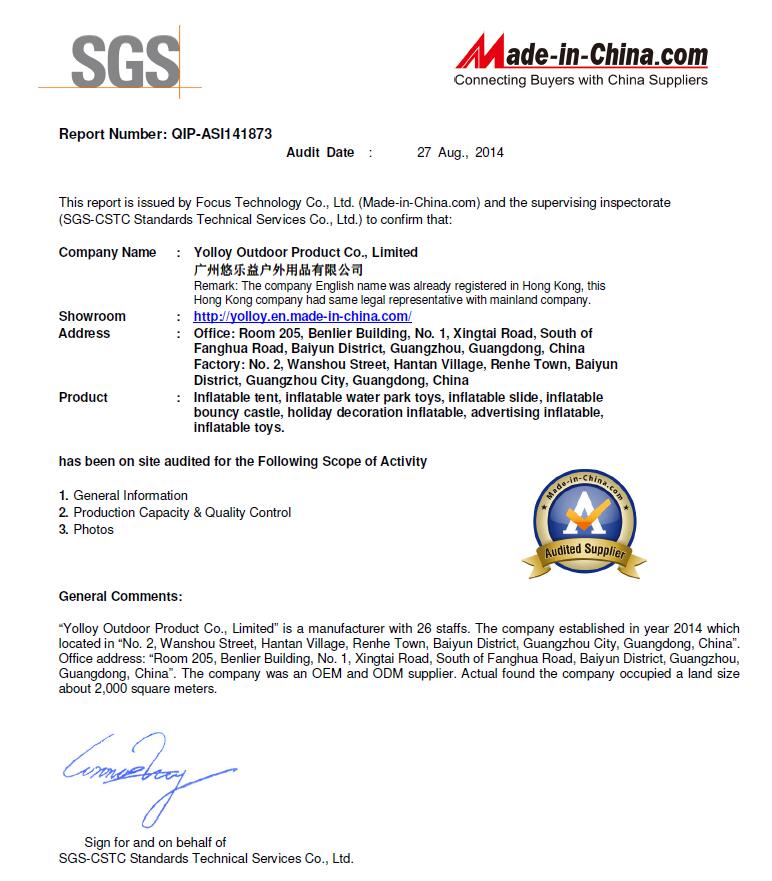
YOLLOY, for instance, has years of experience designing and manufacturing inflatable paintball bunkers for clients worldwide, with exports to over 100 countries and more than 3,000 completed projects across the inflatable industry.
2. Verify Material Quality and Safety Certifications
The durability of inflatable bunkers depends heavily on the materials used. Commercial-grade PVC tarpaulin is the industry standard for paintball bunkers because it offers excellent puncture resistance, tear strength, and weather durability.
Key material specifications to check:
- PVC tarpaulin thickness suitable for commercial use
- Reinforced double or quadruple stitching at seams with waterproof nylon thread
- Additional reinforcement at high-load stress points and anchor areas
- UV resistance for prolonged outdoor use
Safety certifications are equally important. A reliable supplier should provide test reports and comply with recognized international standards. Important certifications include EN71 for product safety, EN14960 for inflatable play equipment, and RoHS for hazardous substance restrictions. Blowers should meet CE or UL requirements.
Always ask the supplier for material samples and certification documentation before placing a bulk order.
3. Evaluate Product Range and Customization Capability
Your paintball field may need different types of bunkers to create varied gameplay scenarios. A good supplier should offer a range of shapes and configurations — including speedball air bunkers, barrel obstacles, wall barriers, inflatable air frame arenas, and full obstacle sets.
A strong supplier also provides custom design services. Whether you need bunkers in specific colors to match your brand, custom logo printing, or unique shapes tailored to your field layout, the ability to customize is a major advantage. Look for manufacturers that offer:
- 2D/3D design renderings before production
- Custom sizing and color options
- Custom branding and logo printing
- The ability to work from your sketches, photos, or site plans
This flexibility ensures your inflatable paintball bunkers fit your specific needs rather than forcing you to adapt to off-the-shelf products.
4. Assess Quality Control and Testing Procedures
A professional inflatable bunkers supplier should have rigorous quality control processes in place. Key areas to ask about include:
- In-process inspections during manufacturing
- Final inflation testing before shipment
- Air-tightness and pressure retention testing
- Seam strength and puncture resistance verification
Products should be inspected and tested before they leave the factory. A supplier that provides a repair kit with each order shows confidence in their product's long-term usability and a genuine commitment to customer support. High-temperature fusion and welding equipment should be used for airtight products, while precision sewing equipment ensures consistent seam quality.
5. Understand Pricing, MOQ, and Value
Price is important, but the lowest quote is rarely the best value. Extremely low prices often mean thinner materials, weaker seams, or skipped quality control steps — all of which lead to shorter product life and higher replacement costs.
When comparing quotes, ask about what is included in the price: blowers, repair kits, stakes, ropes, and packaging. Also confirm the minimum order quantity (MOQ). A manufacturer offering a low MOQ — even one piece — gives you the flexibility to test quality with a small order before committing to a large purchase. Check whether volume discounts are available and whether custom design fees are separate or included in the quotation.
6. Check Production Lead Time and Delivery Reliability
Production time and delivery reliability are critical for business planning. Typical lead times range from 6 to 15 days for regular inflatable products, with larger or more complex custom orders taking longer.
Ask the supplier about their on-time delivery rate. A track record of 95% or higher on-time delivery is a strong indicator of reliability. Also confirm the shipping methods available:
- Air freight (approximately 5–7 days transit)
- Sea freight (approximately 15–30 days or more transit)
A good supplier will help you choose the most cost-effective shipping option based on your order size and timeline, and provide appropriate packaging including soft carpet protection, waterproof PVC bags, and outer PE film.
7. Evaluate Communication and After-Sales Support
Clear, responsive communication is a hallmark of a professional supplier. Pay attention to how quickly they respond to inquiries — within 24 hours is a good benchmark. Evaluate whether they provide clear, detailed answers to technical questions and whether they understand international trade requirements.
A supplier that offers a warranty period — such as a three-year service life expectation under normal use and proper maintenance — demonstrates confidence in their product quality. Repair kits included with each order also reflect a commitment to ongoing customer support. Confirm that blowers compatible with your local voltage requirements (110V, 220V, or 380V) are available.
8. Confirm Shipping and Logistics Capability
Inflatable paintball bunkers are bulky items, so logistics planning matters. A reliable supplier should provide appropriate packaging solutions, help arrange sea or air shipping, offer guidance on customs clearance, and use D-ring or round metal anchor systems where needed for installation and wind resistance. Proper packaging — including soft carpet protection, waterproof PVC bags, and steel pallets for large orders — ensures your products arrive in good condition.
Conclusion
Choosing the right inflatable bunkers supplier involves more than comparing prices. It requires evaluating manufacturing experience, material quality, certifications, customization capability, quality control, lead times, communication, and logistics support. Take the time to vet potential suppliers thoroughly. Request samples, ask for certifications, and start with a small trial order to verify quality before scaling up. A reliable partner will be transparent about their processes, responsive to your questions, and committed to your long-term success.