Products Category
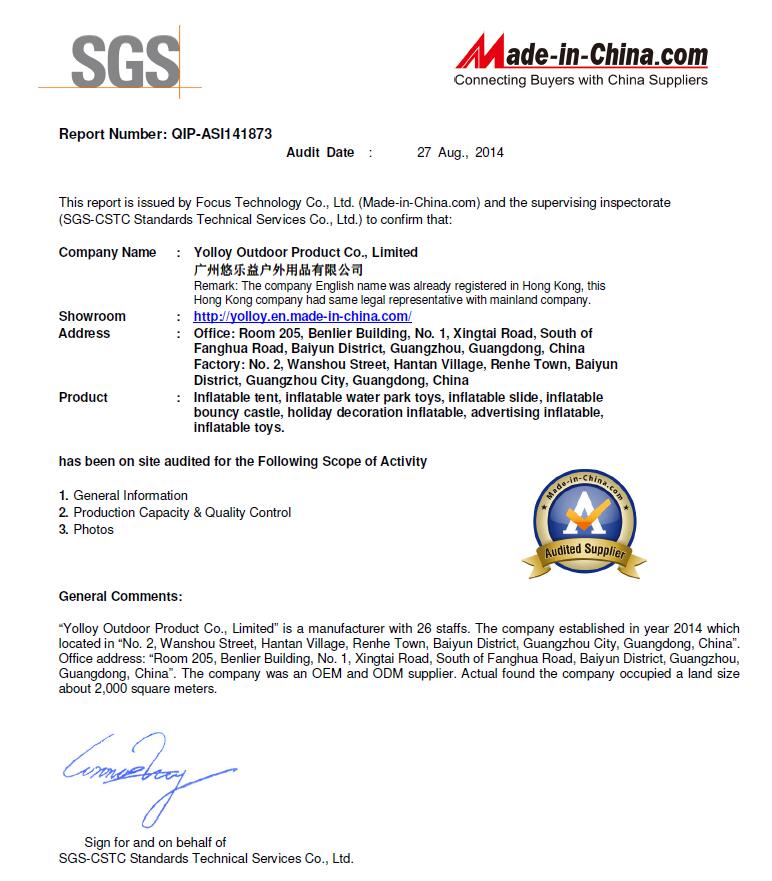
Certification

News

• New Order Successfully Finished for Long-Time Cooperated Japanese Client | YOLLOY Wins Full Client Recognition

• YOLLOY Custom Inflatable Pool Tent for Danish Client: Professional Pool Repair Shelter & Debris Protection

• Trusted Once Again! Greek Captain Re-orders Our Products After 4 Years

• Revolutionize Your Outdoors: The All-Terrain Inflatable Floating Tent for Land & Water

• Elevate Your Summer Fun: The Ultimate Inflatable Water Floating Volleyball Court Trampoline

• Innovative Inflatable Nightclub Tents & Pop-Up Bars: The Ultimate Solution for Portable Party Venues

Contact Us

Name: Sunny Yang
Tel: +86-20-8370 0771
Fax: +86-20-8370 0771
Mobile: 13570587575
E-mail: [email protected]
Add: No 5,Xiong wei Bo Nan Road,ZhongLuoTan Town,Baiyun district,Guangzhou,China
Friend me on Facebook Follow me on Twitter Add me to your circles Follow me on Pinterest Watch my channel on YouTube
News

How to choose inflatable jump house for business use?

Author:yolloy Date:2026/8/15 4:05:24

Starting a bounce house rental business can be a profitable venture, but the foundation of your success lies in the quality of the equipment you purchase. Choosing the right inflatable jump house for commercial use is not as simple as picking the cheapest option or the most colorful design. The decision you make today affects your profitability, safety record, and brand reputation for years to come. This guide walks you through the key factors to consider when selecting a commercial inflatable bounce house for sale that will serve your business reliably.

Commercial vs. Residential: Know the Difference

The most common mistake new business owners make is buying residential-grade bounce houses for commercial use. While residential units may look similar and cost less upfront, they are built for occasional backyard use, not daily commercial deployment.

Residential bounce houses are typically made from lightweight nylon or thin polyester fabric with single-stitched seams. They are designed for a handful of children under supervision, not for the wear and tear of back-to-back weekend rentals. Using a residential unit in a commercial setting leads to rapid deterioration, seam failure, and potential safety hazards.

Commercial bounce houses, on the other hand, are constructed from heavy-duty PVC tarpaulin, typically 0.55mm thick, with a high-denier polyester base fabric for tear resistance. They feature double or quadruple stitching at stress points, reinforced anchor tabs, and continuous-run blowers that maintain constant air pressure. These units are built to handle hundreds of rental cycles while keeping users safe.

Material Quality: What to Look For

When evaluating a commercial bounce house, the material is the single most important factor. Premium commercial units use PVC tarpaulin that is lead-free, fire-retardant, and UV-resistant. The PVC coating should be thick enough to resist punctures and abrasions from footwear, yet flexible enough to fold without cracking in cold weather.

Here are the key material specifications to look for:

  • PVC thickness of at least 0.55mm
  • High-denier polyester base fabric (1000D or higher)
  • UV stabilizers to prevent color fading and material degradation
  • Fire-retardant certification for safety compliance
  • Double or quadruple stitching at high-stress areas

The thread quality matters just as much as the fabric. Commercial units should use heavy-duty, UV-resistant polyester thread that will not fray or snap under continuous use. Reinforced seams at corner joints, anchor tabs, and entry points are essential for long-term durability. When you work with a reputable inflatable bounce house manufacturer, these material specifications should be standard, not optional upgrades.

Types of Bounce Houses for Your Business

The type of bounce house you choose should match your target market. A diverse fleet allows you to serve different customer segments and maximize bookings throughout the year.

Standard Bounce Houses

The most versatile option for any rental fleet. A 13x13 or 15x15 foot unit with neutral, colorful themes works for birthday parties, school events, and community gatherings. These are the workhorse units that will generate the bulk of your bookings.

Combo Units with Slides

Combo units combine a bouncing area with an attached slide. These units typically command 30 to 50 percent higher rental rates than standard bouncers. Wet/dry combos with a splash pool attachment are especially valuable because they can be rented year-round — as a dry slide in cooler months and a water slide in summer.

Themed Bounce Houses

Castle designs, pirate ships, jungle themes, and princess castles attract parents planning themed birthday parties. While themed units may have narrower appeal, they often rent at premium rates and can set your business apart from competitors. A well-chosen theme can become your signature offering.

Obstacle Courses and Sports Games

As your business grows, consider adding inflatable obstacle courses and interactive sports games to your fleet. These appeal to older children and even adults, expanding your customer base beyond toddler parties and into corporate events, team-building activities, and school field days.

Safety Certifications and Standards

Safety is non-negotiable in the inflatable rental business. Before purchasing any commercial bounce house, verify that it meets recognized safety standards. The CE-EN14960 certification is the international benchmark for inflatable play equipment safety, covering material flame retardancy, structural integrity, anchor point requirements, and safety netting specifications.

Other important certifications to look for include EN71 for toy safety standards, ROHS compliance for hazardous substance restrictions, and UL or CE certification for blower electrical safety. A professional inflatable bounce house supplier will provide documentation of these certifications and stand behind their products with a clear warranty policy.

Customization: Making Your Fleet Stand Out

One of the biggest advantages of working directly with a manufacturer is the ability to customize your bounce houses. Custom colors, printed logos, and unique artwork help your units stand out at events and reinforce your brand identity. Many manufacturers offer design services where you can submit a sketch, photograph, or description and receive a simulation rendering before production begins.

Customization goes beyond appearance. You can specify blower voltage requirements — 110V, 220V, or 380V — to match local electrical standards. You can request additional anchor points for windy locations, or choose specific dimensions to fit your transport vehicle. This flexibility ensures your equipment works exactly the way your business needs it to.

Sourcing from a Reliable Manufacturer

Where you buy your bounce house is just as important as what you buy. Working directly with an experienced manufacturer offers several advantages over purchasing from middlemen or retail websites. Direct factory sourcing typically means lower prices, since you eliminate distributor markups. It also gives you access to customization services, better communication about production timelines, and direct support for warranty claims or replacement parts.

A professional manufacturer should offer the following:

  • A flexible minimum order policy — many factories accept orders starting from a single piece
  • Transparent production timelines, typically 6 to 15 days for standard units
  • Multiple shipping options including air freight (5 to 7 days) and sea freight (15 to 30 days)
  • A repair kit included with each unit for minor field repairs
  • Responsive customer service, with inquiries answered within 24 hours
  • Pre-shipment inspection and testing of every unit

When evaluating a supplier, ask about their quality control process. Do they inspect and test every unit before shipping? What materials do they use? Can they provide references from other business customers? A trustworthy manufacturer will answer these questions openly and confidently.

Cost, ROI, and Maintenance

A commercial bounce house is a capital asset that should pay for itself. A general industry benchmark is that a quality unit should recover its purchase cost within 10 to 15 rentals. For example, a combo unit that rents for $250 to $350 per day can break even within a single busy season if you book it every weekend. After that, the remaining years of the unit's service life are almost pure profit.

To maximize your return on investment, proper maintenance is essential. Always clean units between rentals using non-bleach disinfectants. Fully dry water units after each use to prevent mold and mildew. Inspect seams, zippers, and anchor points regularly. A well-maintained commercial bounce house can deliver reliable service for three to five years or longer.

Each unit should come with a repair kit for minor fixes in the field. For more significant repairs, having a direct relationship with the manufacturer means faster turnaround and access to matching materials.

Conclusion

Choosing the right inflatable jump house for your business is a decision that affects your safety record, customer satisfaction, and bottom line. Focus on commercial-grade materials, verified safety certifications, and a reputable manufacturer that offers customization and responsive support. By investing in quality equipment from the start, you build a foundation for a profitable, sustainable rental business that customers trust and recommend.


How to choose inflatable jump house for business use?

Author:yolloy Date:2026/8/15 4:05:24

Starting a bounce house rental business can be a profitable venture, but the foundation of your success lies in the quality of the equipment you purchase. Choosing the right inflatable jump house for commercial use is not as simple as picking the cheapest option or the most colorful design. The decision you make today affects your profitability, safety record, and brand reputation for years to come. This guide walks you through the key factors to consider when selecting a commercial inflatable bounce house for sale that will serve your business reliably.

Commercial vs. Residential: Know the Difference

The most common mistake new business owners make is buying residential-grade bounce houses for commercial use. While residential units may look similar and cost less upfront, they are built for occasional backyard use, not daily commercial deployment.

Residential bounce houses are typically made from lightweight nylon or thin polyester fabric with single-stitched seams. They are designed for a handful of children under supervision, not for the wear and tear of back-to-back weekend rentals. Using a residential unit in a commercial setting leads to rapid deterioration, seam failure, and potential safety hazards.

Commercial bounce houses, on the other hand, are constructed from heavy-duty PVC tarpaulin, typically 0.55mm thick, with a high-denier polyester base fabric for tear resistance. They feature double or quadruple stitching at stress points, reinforced anchor tabs, and continuous-run blowers that maintain constant air pressure. These units are built to handle hundreds of rental cycles while keeping users safe.

Material Quality: What to Look For

When evaluating a commercial bounce house, the material is the single most important factor. Premium commercial units use PVC tarpaulin that is lead-free, fire-retardant, and UV-resistant. The PVC coating should be thick enough to resist punctures and abrasions from footwear, yet flexible enough to fold without cracking in cold weather.

Here are the key material specifications to look for:

  • PVC thickness of at least 0.55mm
  • High-denier polyester base fabric (1000D or higher)
  • UV stabilizers to prevent color fading and material degradation
  • Fire-retardant certification for safety compliance
  • Double or quadruple stitching at high-stress areas

The thread quality matters just as much as the fabric. Commercial units should use heavy-duty, UV-resistant polyester thread that will not fray or snap under continuous use. Reinforced seams at corner joints, anchor tabs, and entry points are essential for long-term durability. When you work with a reputable inflatable bounce house manufacturer, these material specifications should be standard, not optional upgrades.

Types of Bounce Houses for Your Business

The type of bounce house you choose should match your target market. A diverse fleet allows you to serve different customer segments and maximize bookings throughout the year.

Standard Bounce Houses

The most versatile option for any rental fleet. A 13x13 or 15x15 foot unit with neutral, colorful themes works for birthday parties, school events, and community gatherings. These are the workhorse units that will generate the bulk of your bookings.

Combo Units with Slides

Combo units combine a bouncing area with an attached slide. These units typically command 30 to 50 percent higher rental rates than standard bouncers. Wet/dry combos with a splash pool attachment are especially valuable because they can be rented year-round — as a dry slide in cooler months and a water slide in summer.

Themed Bounce Houses

Castle designs, pirate ships, jungle themes, and princess castles attract parents planning themed birthday parties. While themed units may have narrower appeal, they often rent at premium rates and can set your business apart from competitors. A well-chosen theme can become your signature offering.

Obstacle Courses and Sports Games

As your business grows, consider adding inflatable obstacle courses and interactive sports games to your fleet. These appeal to older children and even adults, expanding your customer base beyond toddler parties and into corporate events, team-building activities, and school field days.

Safety Certifications and Standards

Safety is non-negotiable in the inflatable rental business. Before purchasing any commercial bounce house, verify that it meets recognized safety standards. The CE-EN14960 certification is the international benchmark for inflatable play equipment safety, covering material flame retardancy, structural integrity, anchor point requirements, and safety netting specifications.

Other important certifications to look for include EN71 for toy safety standards, ROHS compliance for hazardous substance restrictions, and UL or CE certification for blower electrical safety. A professional inflatable bounce house supplier will provide documentation of these certifications and stand behind their products with a clear warranty policy.

Customization: Making Your Fleet Stand Out

One of the biggest advantages of working directly with a manufacturer is the ability to customize your bounce houses. Custom colors, printed logos, and unique artwork help your units stand out at events and reinforce your brand identity. Many manufacturers offer design services where you can submit a sketch, photograph, or description and receive a simulation rendering before production begins.

Customization goes beyond appearance. You can specify blower voltage requirements — 110V, 220V, or 380V — to match local electrical standards. You can request additional anchor points for windy locations, or choose specific dimensions to fit your transport vehicle. This flexibility ensures your equipment works exactly the way your business needs it to.

Sourcing from a Reliable Manufacturer

Where you buy your bounce house is just as important as what you buy. Working directly with an experienced manufacturer offers several advantages over purchasing from middlemen or retail websites. Direct factory sourcing typically means lower prices, since you eliminate distributor markups. It also gives you access to customization services, better communication about production timelines, and direct support for warranty claims or replacement parts.

A professional manufacturer should offer the following:

  • A flexible minimum order policy — many factories accept orders starting from a single piece
  • Transparent production timelines, typically 6 to 15 days for standard units
  • Multiple shipping options including air freight (5 to 7 days) and sea freight (15 to 30 days)
  • A repair kit included with each unit for minor field repairs
  • Responsive customer service, with inquiries answered within 24 hours
  • Pre-shipment inspection and testing of every unit

When evaluating a supplier, ask about their quality control process. Do they inspect and test every unit before shipping? What materials do they use? Can they provide references from other business customers? A trustworthy manufacturer will answer these questions openly and confidently.

Cost, ROI, and Maintenance

A commercial bounce house is a capital asset that should pay for itself. A general industry benchmark is that a quality unit should recover its purchase cost within 10 to 15 rentals. For example, a combo unit that rents for $250 to $350 per day can break even within a single busy season if you book it every weekend. After that, the remaining years of the unit's service life are almost pure profit.

To maximize your return on investment, proper maintenance is essential. Always clean units between rentals using non-bleach disinfectants. Fully dry water units after each use to prevent mold and mildew. Inspect seams, zippers, and anchor points regularly. A well-maintained commercial bounce house can deliver reliable service for three to five years or longer.

Each unit should come with a repair kit for minor fixes in the field. For more significant repairs, having a direct relationship with the manufacturer means faster turnaround and access to matching materials.

Conclusion

Choosing the right inflatable jump house for your business is a decision that affects your safety record, customer satisfaction, and bottom line. Focus on commercial-grade materials, verified safety certifications, and a reputable manufacturer that offers customization and responsive support. By investing in quality equipment from the start, you build a foundation for a profitable, sustainable rental business that customers trust and recommend.