If you have been browsing the market for air-pole camping shelters, you have likely come across two popular terms: inflatable family tent and inflatable house tent. While both use air beam technology instead of traditional poles, they serve different camping styles and user needs. This article breaks down the key differences to help you make the right choice.
What Is an Inflatable Family Tent?
An inflatable family tent is a spacious camping shelter designed to accommodate multiple people — typically four to eight or more — using inflatable air beams instead of traditional metal or fiberglass poles. These tents prioritize multi-room layouts with separate sleeping compartments, a central living area, and ample storage space. The air beam structure makes setup remarkably fast: a single person can pitch a large family tent in under 15 minutes using a manual or electric pump.
Key features of inflatable family tents include:
- Multiple separate sleeping pods for parents and children, giving each person privacy
- Large central living area for dining, relaxing, or storing camping gear
- Sturdy air beam construction that flexes in wind rather than snapping like rigid poles
- Fully sewn-in groundsheets to keep insects and moisture out of the sleeping area
- Multiple doors and mesh windows for cross-ventilation on warm days
What Is an Inflatable House Tent?
An inflatable house tent — sometimes called a cabin tent or house-style tent — is defined by its near-vertical walls and high ceiling clearance that create a room-like interior. Unlike dome tents with sharply sloped sides, house tents use straight-sided air beams that maintain consistent width from floor to ceiling. This design maximizes usable floor space and allows adults to stand upright throughout most of the interior.
The "house" designation comes from the tent's resemblance to a small building: tall doorways, straight walls, and a peaked or flat roof. These tents are popular for glamping setups, extended camping trips, and commercial applications such as outdoor events, pop-up hospitality venues, and exhibition spaces.
Key features of inflatable house tents include:
- Near-vertical walls for maximum usable interior volume — every square foot counts
- Standing-height ceilings often reaching 6 feet (1.8 meters) or higher throughout
- Cabin-like appearance with tall doorways and a structured, building-like silhouette
- Open-plan interior ideal for glamping resorts, trade show booths, and events
- Versatile commercial use as pop-up shops, outdoor dining spaces, and hospitality shelters
Key Differences Between Inflatable Family Tents and Inflatable House Tents
Although both types use air beam technology, the differences in design philosophy and intended use are significant. The table below summarizes the main distinctions:
| Feature | Inflatable Family Tent | Inflatable House Tent |
|---|
| Primary Purpose | Accommodating families with divided sleeping areas | Creating a spacious, room-like shelter |
| Interior Layout | Multi-room with separate sleeping pods | Open-plan with a single large living space |
| Wall Design | Slightly curved or tunnel-style | Near-vertical, cabin-style walls |
| Ceiling Height | Varies by model; typically 5-6 feet in center | Consistently high throughout; often 6+ feet |
| Best For | Family camping trips, weekend getaways | Glamping, events, commercial use, long stays |
| Setup Complexity | Moderate; multiple chambers may need separate inflation | Simple; often single-valve inflation |
| Portability | Moderate weight and pack size | Heavier and bulkier due to larger structure |
Space and Layout: Which Offers More Room?
When comparing interior space, inflatable house tents generally offer more standing room and a more open feel due to their vertical wall design. You can walk upright throughout the floor area, set up furniture, and organize gear without crouching. This makes them excellent for situations where you will spend extended time inside — such as glamping resorts, trade show booths, or basecamp setups.
Inflatable family tents, by contrast, optimize space differently. Instead of one large open room, they divide the interior into functional zones: sleeping pods for privacy, a central living area for gathering, and sometimes vestibule spaces for gear storage. This layout works better for families who need separate sleeping arrangements and a dedicated common area.
For a family of four spending a weekend at a campsite, a family tent's segmented layout is often more practical. For a couple running a luxury camping business or hosting an outdoor event, a house tent's open, room-like interior creates a more impressive guest experience.
Setup and Portability Considerations
Both tent types use air beam technology, which means setup is significantly faster than traditional pole tents. However, inflatable house tents tend to be heavier and pack into larger bags because their taller walls and broader dimensions require more material. This makes them best suited for car camping and drive-up locations rather than situations where you need to carry gear long distances.
Family tents strike a middle ground — spacious enough for group camping but generally lighter and more compact than full house tents. Many models from experienced inflatable tent manufacturers are designed with single-valve inflation systems, allowing one person to inflate the entire structure in minutes.
Durability and Weather Performance
Both designs benefit from the inherent flexibility of air beams. Unlike rigid poles that can snap in strong gusts, inflatable beams bend under pressure and rebound to their original shape. This makes both family tents and house tents surprisingly resilient in windy conditions, provided they are properly staked and inflated to the recommended pressure.
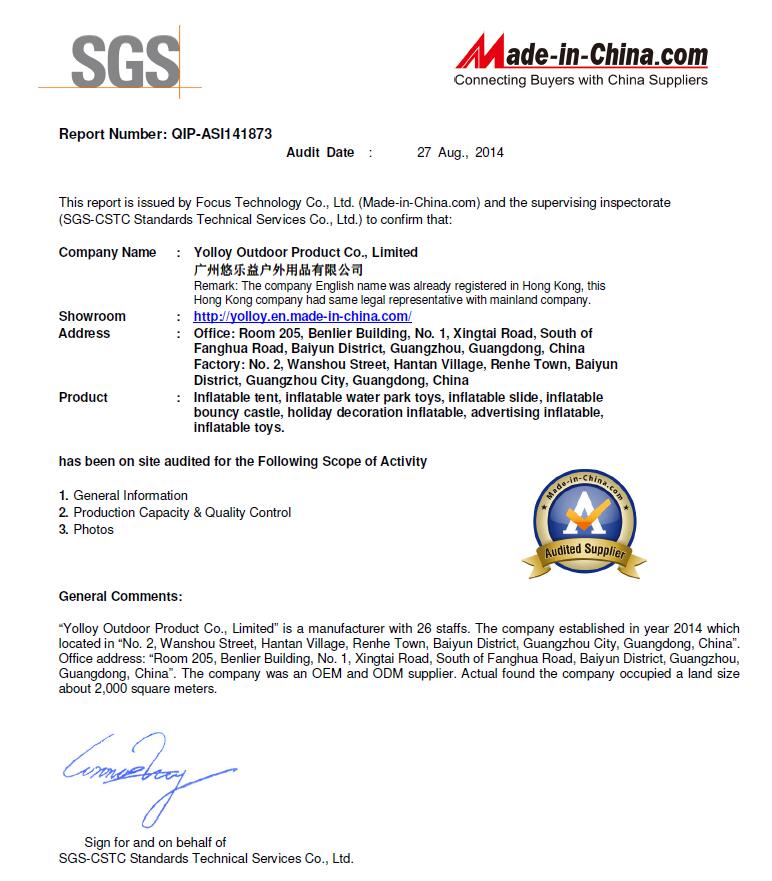
YOLLOY manufactures its inflatable tents for camping using commercial-grade PVC tarpaulin, Oxford fabric, or TPU materials depending on the model and customer requirements. All seams are reinforced with waterproof nylon thread, and high-load areas receive additional reinforcement. Each product is inspected and tested before shipment to ensure it meets quality standards. The company also supplies appropriately powered blowers compatible with 110V, 220V, or 380V requirements.
Key Quality Points from YOLLOY
Materials used in YOLLOY inflatable tents have passed EN71, EN14960, and RoHS-related testing. Blowers meet CE or UL requirements. A repair kit is supplied with each inflatable product, and the company states a 95% on-time delivery rate with air and sea shipping options available.
Which One Should You Choose?
Your choice ultimately depends on how you plan to use the tent:
Choose an inflatable family tent if you are:
- Camping with children and need separate sleeping areas
- Looking for a practical, well-organized shelter for group outdoor trips
- Interested in a balanced combination of space and portability
- Planning weekend getaways where privacy and organization matter
Choose an inflatable house tent if you are:
- Running a glamping site, event venue, or outdoor hospitality business
- Prioritizing standing height and a room-like feel above all else
- Hosting trade shows, exhibitions, or pop-up retail experiences
- Setting up a long-term basecamp where comfort is the top priority
Custom Inflatable Tents from YOLLOY
Both family tents and house tents are available from YOLLOY with full customization. You can specify dimensions, colors, door and window placement, and even add your logo or branding. As a leading inflatable tent manufacturer based in Guangzhou, China, YOLLOY provides custom design-to-production service with a minimum order quantity of just one piece. Contact the team at [email protected] to discuss your project.
Conclusion
Inflatable family tents and inflatable house tents share the same core technology — air beam construction — but serve different purposes. Family tents excel at organized, multi-person camping with divided living spaces and practical layouts for groups. House tents deliver a spacious, room-like interior with near-vertical walls and standing-height ceilings, making them ideal for glamping and commercial applications. Whichever style you choose, investing in a well-made inflatable tent from a reliable manufacturer ensures years of comfortable and hassle-free outdoor stays.