Camping with the whole family is one of the most rewarding ways to spend a weekend, but it usually comes with one big headache: wrestling with poles, sleeves and guy lines while the kids lose patience and the weather turns. That is exactly why more and more families are switching to an inflatable camping tent. Instead of assembling a metal frame, you simply pump up the air beams and the tent stands by itself in minutes. This guide walks through everything you should look at before buying, so you end up with a shelter that fits your family and lasts for years.
Why an inflatable tent suits family camping
The main reason families love air-beam tents is speed. A large family shelter that would take twenty minutes or more to pitch with poles can usually be inflated in well under ten minutes, which matters a lot when you arrive late or in light rain. There is also nothing to snap or bend: no fiberglass poles to break, no sleeves to fight with in the dark. The air beams flex slightly in the wind instead of resisting it rigidly, which makes the whole structure feel steadier during gusts.
For families, interior space is where inflatable tents really shine. Because the frame is made of pressurised beams rather than thin poles, designers can create tall, open layouts with generous headroom, wide doors and separate sleeping areas. A good inflatable family tent feels more like a small room than a cramped shelter, which makes rainy days and bedtime far more comfortable for children and adults alike.
Size and capacity: buy for the way you actually camp
Manufacturers rate tents by how many people can sleep inside, but those numbers assume everyone is lying shoulder to shoulder with no gear. A sensible rule for families is to add at least one person to your real headcount. A family of four should look at six-person models, and a family of five should consider eight-person layouts. Think about the floor plan too: a single open room is fine for sleeping, while a two-room design with a divider gives parents privacy and gives kids their own space.
Standing height is another point families often overlook. If you can stand up inside the tent, getting dressed, changing nappies and moving around become much easier. Check the peak height before you buy, and remember that a dome-shaped shelter usually offers the best balance of headroom and wind resistance for a family-sized footprint.
Fabric and build quality: what the material actually tells you
The fabric is the first thing that separates a tent that lasts from one that leaks after a season. Commercial-grade PVC tarpaulin is the most common choice for heavy-duty inflatable shelters because it resists tearing, UV damage and abrasion. For lighter family camping tents, Oxford fabric, nylon or TPU are also used, and each has its own trade-off between weight and durability. Whatever the material, ask what coating it has and how the seams are joined.
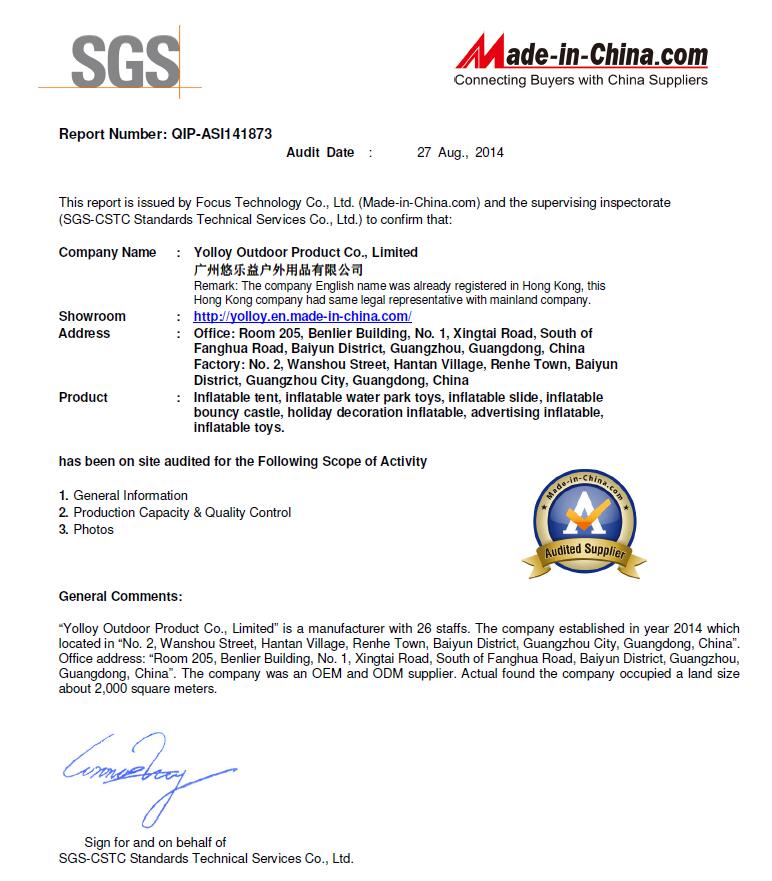
Seams matter just as much as the fabric itself. Look for reinforced stitching with waterproof thread and extra reinforcement at high-load areas, or high-frequency welding for airtight sections. A tent that is sewn with care and welded where it needs to be airtight will hold its shape and stay dry far longer than one built to a budget. Reputable manufacturers inspect and test every product before it ships, which is worth asking about before you commit.
Air beams and inflation: the heart of the tent
The air beams are what hold everything up, so their quality decides how stable the tent feels. Multi-chamber designs are safer than a single large tube, because if one chamber loses pressure the rest of the frame keeps the tent standing. The valves are another quiet failure point: a good valve seals firmly, lets you adjust pressure quickly and does not leak overnight. In cold weather, air pressure naturally drops, so a tent with solid valves and easy re-inflation is a real advantage on chilly nights.
Think about the blower too. Most family tents come with a pump that plugs into a car or mains socket, and some suppliers can provide blowers for 110V, 220V or 380V depending on where you live. A tent that inflates in a few minutes with a proper blower is far more practical for family trips than one that depends on a slow hand pump.
Weather resistance: staying dry and steady
A family tent needs to handle rain and wind without drama. Check how the floor and walls are sealed, whether the seams are taped or welded, and whether the tent comes with storm flaps over the zips. For anchoring, look for D-ring or round metal anchor systems built into the base, which let you peg the tent down firmly and keep it steady in gusty conditions. A well-anchored inflatable dome tent copes with strong wind far better than an unpegged one, whatever the brand.
Ventilation is the part of weather resistance that most buyers forget. A tent that traps moisture will feel damp by morning, especially with several people breathing inside all night. Look for mesh panels, roof vents and doors that open on more than one side so air can flow through. Good airflow keeps condensation down and makes the tent far more comfortable in both hot and cold weather.
Safety and certification: non-negotiable for families
When children are involved, safety is not something to compromise on. Ask the supplier which standards the materials meet. Inflatable toys and play products are commonly tested against EN 14960, while water-based inflatables reference EN 15649, and many materials also pass EN71 and RoHS-related testing. Blowers should meet CE or UL requirements. A manufacturer that can tell you exactly which certifications its products carry is usually a manufacturer you can trust.
It is also worth checking the practical side of service. Does the supplier answer questions within a day or two? Do they supply a repair kit with each tent so you can patch a small puncture on the spot? What is the expected service life with proper care? These details tell you a lot about whether the company stands behind its products.
Customisation: getting exactly what your family needs
One advantage of buying directly from a manufacturer is that you are not limited to off-the-shelf designs. Many suppliers can adjust sizes and colours, print your logo or artwork on the fabric, and even build a tent from a description, drawing, sketch or photograph. If your family has specific needs, such as a particular layout, extra windows or a custom footprint, ask whether the factory can make it. The minimum order is often just one piece, so you do not need to buy in bulk to get a tent tailored to you.
A quick checklist before you buy
- Add one person to your real headcount when choosing capacity.
- Check the peak height so adults can stand up inside.
- Confirm the fabric type and how the seams are sealed.
- Prefer multi-chamber air beams and reliable valves.
- Make sure the blower matches your local voltage.
- Look for D-ring or metal anchor points and storm flaps.
- Ask about certifications, repair kits and warranty terms.
- Check delivery time and whether air or sea shipping suits your schedule.
Caring for your inflatable tent
A little care goes a long way. Clean the tent with mild soap and water after muddy trips, dry it fully before packing so mould does not form, and store it loosely in a cool, dry place rather than compressed for months. Keep the repair kit handy and patch small punctures as soon as you notice them. With reasonable care, a well-made inflatable tent can serve a family for several seasons, which makes the upfront cost easy to justify.
Frequently asked questions
How long does it take to set up an inflatable family tent?
With a proper blower, most inflatable tents are up and standing within minutes. The exact time depends on the size of the tent and the power of the blower, but the whole process is far faster than assembling a pole tent of the same size.
Are inflatable tents safe in strong wind?
Yes, when they are properly anchored. Use all the pegs and guy lines provided, and make sure the tent has solid anchor points such as D-rings. A dome-shaped inflatable tent that is fully pegged down handles gusty conditions well because the beams flex and absorb the force instead of snapping.
What if the tent gets a puncture?
Most inflatable tents come with a repair kit, and small punctures can be patched in minutes. Multi-chamber designs mean the rest of the frame keeps the tent standing even if one section loses air, so a small leak does not end your trip.
Can I get a tent made to my own design?
Yes. Many manufacturers, including YOLLOY, can build custom inflatable tents from a description, drawing, sketch or photograph, with custom sizes, colours and printed logos, often with a minimum order of just one piece.
Final thoughts
Choosing the best inflatable camping tent for your family comes down to a few clear priorities: size that matches how you really camp, fabric and seams built to last, reliable air beams and valves, solid weather protection, and a manufacturer you can trust for safety and service. If you are looking for a custom-made inflatable dome tent or family shelter, YOLLOY is a Guangzhou-based manufacturer that designs and produces inflatable tents, clear domes and outdoor shelters to order, with commercial-grade materials, certified safety standards and worldwide shipping. Send them your idea, and their team will turn it into a tent your family will enjoy for years.