Products Category
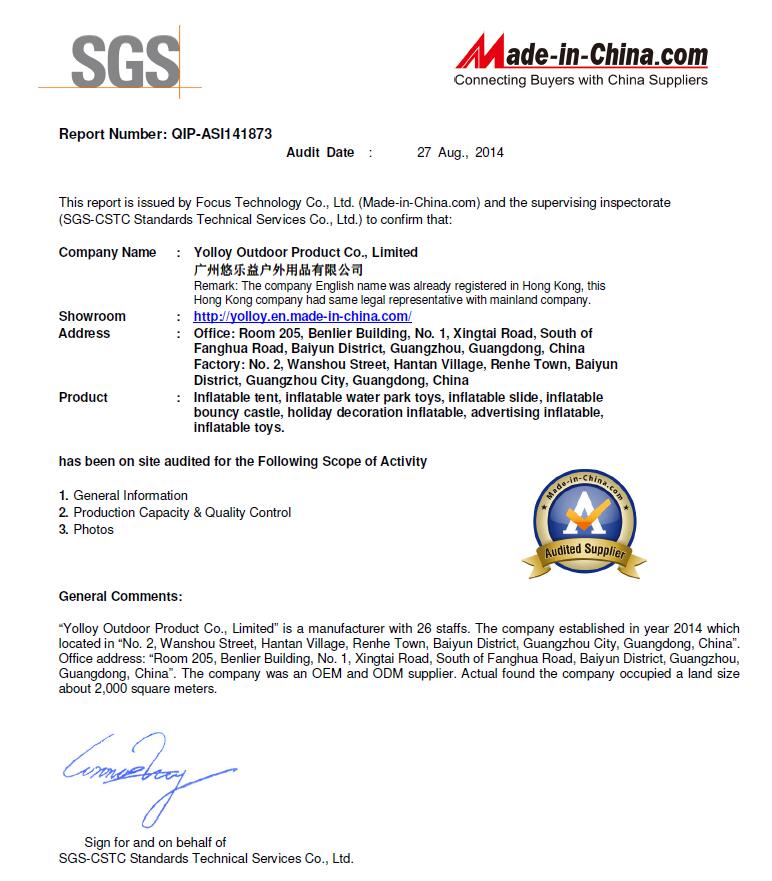
Certification

News

• New Order Successfully Finished for Long-Time Cooperated Japanese Client | YOLLOY Wins Full Client Recognition

• YOLLOY Custom Inflatable Pool Tent for Danish Client: Professional Pool Repair Shelter & Debris Protection

• Trusted Once Again! Greek Captain Re-orders Our Products After 4 Years

• Revolutionize Your Outdoors: The All-Terrain Inflatable Floating Tent for Land & Water

• Elevate Your Summer Fun: The Ultimate Inflatable Water Floating Volleyball Court Trampoline

• Innovative Inflatable Nightclub Tents & Pop-Up Bars: The Ultimate Solution for Portable Party Venues

Contact Us

Name: Sunny Yang
Tel: +86-20-8370 0771
Fax: +86-20-8370 0771
Mobile: 13570587575
E-mail: [email protected]
Add: No 5,Xiong wei Bo Nan Road,ZhongLuoTan Town,Baiyun district,Guangzhou,China
Friend me on Facebook Follow me on Twitter Add me to your circles Follow me on Pinterest Watch my channel on YouTube
News

How to Choose an Inflatable Tent That Best Fits Your Needs

Author:yolloy Date:2026/8/17 14:58:45

Inflatable tents have moved far beyond the campsite. They now shelter events, weddings, emergency operations, workshops, sports simulators, and even car detailing booths. That breadth is exactly why "best inflatable tent" is a trap until you pin down what the tent actually has to do. This guide walks through the choices that matter, so you end up with a tent that fits your needs instead of the other way around.

Start With the Job, Not the Product

Before comparing fabrics or pump sizes, decide how the tent will be used. The right tent for a weekend family outing is a very different thing from the right tent for a weekend trade show. Ask three questions right away:

  • Is this for personal camping, or for a business, event, or commercial use?
  • How many people need to fit, and will they sit, stand, sleep, or move equipment inside?
  • What weather, season, and ground conditions will it face?

Answering honestly halves your options immediately. A private camper cares about setup speed and comfort. An event planner or shop owner typically cares more about usable floor area, branding, and how many times the structure can be set up and taken down.

Pick the Right Type of Tent

Inflatable tents come in several shapes, and each one solves a specific problem:

  • Cube and tunnel tents give near-vertical walls, which maximize usable floor space and standing room. They are the practical workhorse for shelters, events, and commercial use.
  • Dome tents are wind-resistant and simple to anchor, making them a reliable everyday choice.
  • Clear dome and bubble tents use transparent walls for stargazing, glamping, photography, and social events where the view is part of the experience.
  • Car, garage, workshop, and booth tents are built around a job, such as a spray painting booth or a golf simulator enclosure.
  • Larger event and party tents trade portability for interior scale, suited to weddings, classes, and public gatherings.

If you need something between these categories, a custom inflatable tent lets a manufacturer adapt size, shape, and features to the actual job rather than forcing you into a generic size.

Check Size Against Real Capacity

Listed occupancies are almost always optimistic. A tent rated for eight people assumes adults sleeping shoulder to shoulder with no gear, which almost never matches reality. Apply a simple rule: subtract roughly a third from the listed person count for comfortable family use, and add more margin if people will stand, move around, or store equipment.

Pay attention to the footprint, not just the headline number. Dome-shaped roofs slope inward and waste edge space, while tents with vertical walls use nearly all of their floor area. If you plan to fit tables, a car, or two large mattresses, measure the actual base dimensions against your equipment before you commit.

Inspect the Air Beams and Fabric

The inflatable frame is the real skeleton of the tent, and this is where budget and quality diverge most.

  • Beam diameter and number of chambers. Thicker, independent beams hold their shape better through temperature swings. When beams have separate inflation points, a slow leak in one chamber does not flatten the whole structure.
  • Fabric and coating. Materials such as Oxford fabric, nylon, TPU, and PVC tarpaulin each balance weight, durability, and cold-weather behavior differently. Choose based on how often and where you set up.
  • Seams and reinforcement. Look for precision sewing, waterproof thread, and extra reinforcement at high-load points, plus a floor rated for the abrasion and moisture it will face.

For commercial or high-use applications, do not settle for materials that advertise only "easy setup." The structure should be able to survive repeated inflation, weather, and packing without sagging by morning.

Plan for the Blower, Anchoring, and Wind

An inflatable tent is only as reliable as its air supply and its hold on the ground.

  • Blower power. The pump must match the volume of the tent and the power available on site. Confirm whether you need a 110V, 220V, or 380V unit before ordering a large structure.
  • Anchoring. In windy or open locations, D-ring or round metal anchor systems keep a tent planted. Skimping here undoes every other quality feature.

Even a sturdy unit needs a solid anchor plan, especially if it will host people or equipment. If you are unsure what your site requires, an experienced supplier should be able to advise on anchoring and blower sizing rather than leaving it to guesswork.

Hold Commercial Suppliers to a Higher Standard

When the tent is part of a business, the stakes go up, and so should your checklist. Confirm that materials and manufacturing meet recognized safety and quality standards, such as EN71, EN14960, or RoHS-related testing, and that quality control includes inspection before shipment. Ask directly about repair kits, warranty expectations, and how long production and delivery will take.

If you need a tent in your own colors, with a printed logo, or built to an unusual size, confirm that the factory can design from your description, drawing, sketch, photograph, or budget and revise until you approve. Whether you buy a best inflatable tent off the shelf or commission a large inflatable tent, clarity on customization, lead times, and after-sales service protects your investment.

Common Questions

What size inflatable tent do I really need?

Work backward from how many people must sleep, stand, or work inside. Add generous space for gear and movement, and remember that vertical-wall designs use their floor area far more efficiently than domed roofs.

Are inflatable tents durable enough for repeated use?

Yes, when the frame beams are thick, the fabric is commercial grade, and the seams are reinforced and waterproof. For frequent commercial use, prioritize durability and inspect quality certifications over the lowest price.

Can I get an inflatable tent in custom colors or with my branding?

Most manufacturers can print logos and artwork and offer custom sizes and colors. For a fully tailored result, work with a factory that can design to your specification from concept to production.

Do inflatable tents work in cold or windy weather?

They can, with the right setup: a blower sized to the structure, secure anchoring, and beams that hold pressure in changing temperatures. Cold air contracts, so check and top up pressure rather than leaving a deflated tent to fight the wind.

Buy What Matches the Real Job

The best inflatable tent is simply the one that lines up with how you will actually use it. Define the use case first, then judge size, frame, fabric, blower, and anchoring against that job rather than against any single brand's claims. When your needs run outside the standard range, a capable manufacturer can bend the design to fit you instead of the other way around.


How to Choose an Inflatable Tent That Best Fits Your Needs

Author:yolloy Date:2026/8/17 14:58:45

Inflatable tents have moved far beyond the campsite. They now shelter events, weddings, emergency operations, workshops, sports simulators, and even car detailing booths. That breadth is exactly why "best inflatable tent" is a trap until you pin down what the tent actually has to do. This guide walks through the choices that matter, so you end up with a tent that fits your needs instead of the other way around.

Start With the Job, Not the Product

Before comparing fabrics or pump sizes, decide how the tent will be used. The right tent for a weekend family outing is a very different thing from the right tent for a weekend trade show. Ask three questions right away:

  • Is this for personal camping, or for a business, event, or commercial use?
  • How many people need to fit, and will they sit, stand, sleep, or move equipment inside?
  • What weather, season, and ground conditions will it face?

Answering honestly halves your options immediately. A private camper cares about setup speed and comfort. An event planner or shop owner typically cares more about usable floor area, branding, and how many times the structure can be set up and taken down.

Pick the Right Type of Tent

Inflatable tents come in several shapes, and each one solves a specific problem:

  • Cube and tunnel tents give near-vertical walls, which maximize usable floor space and standing room. They are the practical workhorse for shelters, events, and commercial use.
  • Dome tents are wind-resistant and simple to anchor, making them a reliable everyday choice.
  • Clear dome and bubble tents use transparent walls for stargazing, glamping, photography, and social events where the view is part of the experience.
  • Car, garage, workshop, and booth tents are built around a job, such as a spray painting booth or a golf simulator enclosure.
  • Larger event and party tents trade portability for interior scale, suited to weddings, classes, and public gatherings.

If you need something between these categories, a custom inflatable tent lets a manufacturer adapt size, shape, and features to the actual job rather than forcing you into a generic size.

Check Size Against Real Capacity

Listed occupancies are almost always optimistic. A tent rated for eight people assumes adults sleeping shoulder to shoulder with no gear, which almost never matches reality. Apply a simple rule: subtract roughly a third from the listed person count for comfortable family use, and add more margin if people will stand, move around, or store equipment.

Pay attention to the footprint, not just the headline number. Dome-shaped roofs slope inward and waste edge space, while tents with vertical walls use nearly all of their floor area. If you plan to fit tables, a car, or two large mattresses, measure the actual base dimensions against your equipment before you commit.

Inspect the Air Beams and Fabric

The inflatable frame is the real skeleton of the tent, and this is where budget and quality diverge most.

  • Beam diameter and number of chambers. Thicker, independent beams hold their shape better through temperature swings. When beams have separate inflation points, a slow leak in one chamber does not flatten the whole structure.
  • Fabric and coating. Materials such as Oxford fabric, nylon, TPU, and PVC tarpaulin each balance weight, durability, and cold-weather behavior differently. Choose based on how often and where you set up.
  • Seams and reinforcement. Look for precision sewing, waterproof thread, and extra reinforcement at high-load points, plus a floor rated for the abrasion and moisture it will face.

For commercial or high-use applications, do not settle for materials that advertise only "easy setup." The structure should be able to survive repeated inflation, weather, and packing without sagging by morning.

Plan for the Blower, Anchoring, and Wind

An inflatable tent is only as reliable as its air supply and its hold on the ground.

  • Blower power. The pump must match the volume of the tent and the power available on site. Confirm whether you need a 110V, 220V, or 380V unit before ordering a large structure.
  • Anchoring. In windy or open locations, D-ring or round metal anchor systems keep a tent planted. Skimping here undoes every other quality feature.

Even a sturdy unit needs a solid anchor plan, especially if it will host people or equipment. If you are unsure what your site requires, an experienced supplier should be able to advise on anchoring and blower sizing rather than leaving it to guesswork.

Hold Commercial Suppliers to a Higher Standard

When the tent is part of a business, the stakes go up, and so should your checklist. Confirm that materials and manufacturing meet recognized safety and quality standards, such as EN71, EN14960, or RoHS-related testing, and that quality control includes inspection before shipment. Ask directly about repair kits, warranty expectations, and how long production and delivery will take.

If you need a tent in your own colors, with a printed logo, or built to an unusual size, confirm that the factory can design from your description, drawing, sketch, photograph, or budget and revise until you approve. Whether you buy a best inflatable tent off the shelf or commission a large inflatable tent, clarity on customization, lead times, and after-sales service protects your investment.

Common Questions

What size inflatable tent do I really need?

Work backward from how many people must sleep, stand, or work inside. Add generous space for gear and movement, and remember that vertical-wall designs use their floor area far more efficiently than domed roofs.

Are inflatable tents durable enough for repeated use?

Yes, when the frame beams are thick, the fabric is commercial grade, and the seams are reinforced and waterproof. For frequent commercial use, prioritize durability and inspect quality certifications over the lowest price.

Can I get an inflatable tent in custom colors or with my branding?

Most manufacturers can print logos and artwork and offer custom sizes and colors. For a fully tailored result, work with a factory that can design to your specification from concept to production.

Do inflatable tents work in cold or windy weather?

They can, with the right setup: a blower sized to the structure, secure anchoring, and beams that hold pressure in changing temperatures. Cold air contracts, so check and top up pressure rather than leaving a deflated tent to fight the wind.

Buy What Matches the Real Job

The best inflatable tent is simply the one that lines up with how you will actually use it. Define the use case first, then judge size, frame, fabric, blower, and anchoring against that job rather than against any single brand's claims. When your needs run outside the standard range, a capable manufacturer can bend the design to fit you instead of the other way around.