When people think of a tent, they picture a shelter pitched on grass, dirt, or sand — held up by poles, staked into the ground. But what happens when you take that concept and place it on water? An inflatable tent designed for the water is a fundamentally different product from a regular camping tent, and understanding those differences can help you choose the right solution for your next outdoor adventure or commercial project.
1. The Core Structural Difference: Air Beams vs. Rigid Poles
A regular tent relies on a framework of metal or fiberglass poles that must be threaded through fabric sleeves and bent into shape. This tried-and-true system works well on solid ground, but it has clear limitations. Poles can snap under stress, the assembly process is time-consuming, and the entire structure depends on ground stakes for stability.
An inflatable camping tent replaces poles with air-filled beams made from high-strength, commercial-grade PVC tarpaulin or reinforced TPU materials. These beams are inflated with an electric pump in minutes. The result is a structure that flexes with wind and wave motion rather than resisting it — a crucial advantage when you are floating on water. YOLLOY's inflatable water tents use precision high-temperature fusion welding to create airtight seams, and the beams are reinforced at high-load areas for lasting durability.
2. Buoyancy: The Defining Feature of a Water Tent
The most obvious difference between a water tent and a regular tent is that one floats and the other does not. A regular tent has no buoyancy whatsoever. Place it on water and it will sink immediately.
An inflatable floating tent is built on a drop-stitch inflatable platform or a multi-chamber air deck that provides stable, rigid buoyancy. When inflated to high pressure, the drop-stitch construction creates a surface that is firm enough to stand and walk on — much like a solid dock. This is not a pool float; it is a legitimate floating platform engineered to support weight, resist tipping, and handle light wave conditions. YOLLOY manufactures floating platforms, inflatable boats, and floating docks using the same core technology, making them a versatile inflatable tent manufacturer for water-based products.
| Feature | Inflatable Water Tent | Regular Tent |
|---|
| Foundation | Built-in drop-stitch floating platform or air deck | Groundsheet on soil, grass, or sand |
| Structural support | Air beams that flex with wind and waves | Rigid poles that can bend or snap |
| Setup time | 5–10 minutes with an electric pump | 20–30 minutes with manual pole assembly |
| Anchoring | Water anchors, mooring lines, D-ring tie-downs | Ground stakes and guylines |
| Water resistance | Fully waterproof, marine-grade materials | Water-resistant rainfly, ground-level seepage risk |
| Use location | Lakes, calm bays, marinas, pools | Land-based campsites only |
3. Material Engineering for Water Environments
Regular tents are typically made from nylon or polyester with a water-resistant coating. These materials are lightweight and affordable, but they are not designed for prolonged exposure to water, UV rays, or the constant motion of a floating environment.
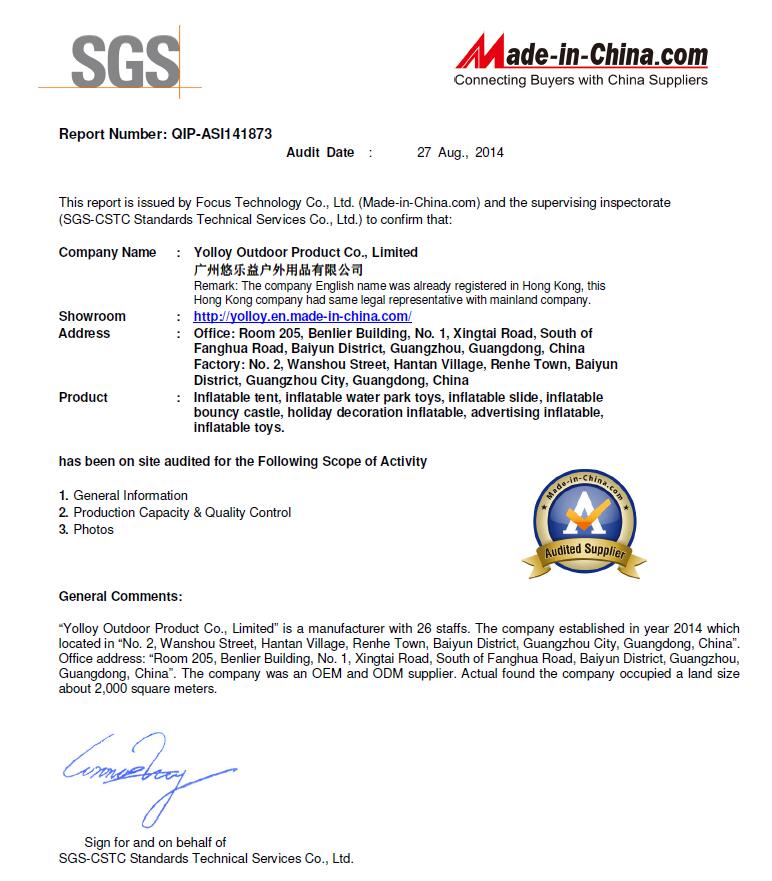
Water tents demand commercial-grade materials. YOLLOY uses PVC tarpaulin that has passed EN71, EN14960, and RoHS testing standards. For tent projects, Oxford fabric, nylon, and TPU are also available depending on specific requirements. The seams are double-reinforced with waterproof nylon thread, and high-load connection points feature additional reinforcement. Every product is inspected and tested before shipment, and a repair kit is included with each unit — a practical detail that makes a real difference when you are out on the water far from shore.
4. Anchoring on Water vs. Anchoring on Land
A regular tent is secured by driving metal stakes into the ground and tensioning guylines. The ground provides a fixed, immovable anchor point. On water, there is no fixed ground. Everything is in constant motion.
A water tent uses a completely different anchoring approach. Instead of stakes, it relies on mooring lines attached to D-ring or round metal anchor points integrated into the floating platform. These can be tied to a dock, a boat, or weighted anchors dropped to the lakebed. The tent's air-beam structure absorbs wave motion, and the flexible anchoring system allows the tent to rise and fall with the water level without losing stability. This is a core design consideration that separates a water tent from a regular tent in both concept and execution.
5. Setup Experience: From Hassle to Effortless
Setting up a regular tent involves sorting poles, threading them through sleeves, bending them into arches, and hoping nothing snaps. On uneven or rocky ground, this can be a frustrating 20-to-30-minute process. In the rain, it is even worse.
An inflatable water tent changes the experience entirely. Unroll the tent, connect the pump, and in 5 to 10 minutes the entire structure is inflated and ready. YOLLOY supplies appropriately powered blowers compatible with 110V, 220V, or 380V requirements, so the tent can be set up using a portable power source, a boat's electrical system, or a shore connection. The pump does the heavy lifting, leaving you free to enjoy the water.
6. Who Needs a Water Tent and Why?
A regular tent serves campers, hikers, and festival-goers — people who need shelter on land. A water tent serves an entirely different audience with different needs:
- Yacht and boat owners — Add a private floating lounge or extra sleeping area next to the vessel without taking up deck space.
- Waterfront resort and marina operators — Offer guests a unique on-water accommodation experience that sets your property apart.
- Event planners — Create floating VIP lounges, bars, or relaxation zones for lakeside weddings, parties, and corporate events.
- Water sports enthusiasts — Use the floating platform as a rest station, sunbathing deck, or base camp for swimming, fishing, and paddleboarding.
- Photographers and nature observers — Gain a quiet, stable vantage point on the water for wildlife photography without the noise and motion of a boat.
Customization note: YOLLOY offers fully customizable water tents and floating platforms. Custom sizes, colors, and printed logos are available. The design team can work from a description, sketch, photograph, or site plan. The minimum order quantity is just one piece, with a typical production time of 6 to 15 days for a standard product.
7. Durability and Maintenance: Built for the Elements
A regular tent, with proper care, can last several seasons of occasional use. A water tent, however, is engineered for continuous exposure to sun, water, and wind — conditions that would quickly degrade a standard camping tent.
YOLLOY's inflatable water products use precision sewing equipment, reinforced seams, and high-temperature welding for airtight chambers. The materials resist UV damage and are easy to clean with mild soap and water. Should a puncture occur, the included repair kit allows for on-the-spot fixes. Properly maintained, these products are designed for a service life of three years or more, and the company backs them with responsive support — emails are answered within 24 hours.
8. The Verdict: Two Different Products for Two Different Worlds
Comparing an inflatable water tent to a regular tent is like comparing a boat to a car — both get you from point A to point B, but they operate in fundamentally different environments with different engineering requirements. A regular tent is your go-to shelter for land-based camping: lightweight, affordable, and sufficient for grass and dirt. An inflatable water tent is a purpose-built floating platform with a shelter on top — engineered for buoyancy, water resistance, and stability on moving water. If your adventures take you onto the lake, the bay, or the marina, a water tent opens up possibilities that a regular tent simply cannot match. And when you are ready to invest in one, working with an experienced inflatable tent manufacturer like YOLLOY ensures you get a product built to the right standards from day one.