Products Category
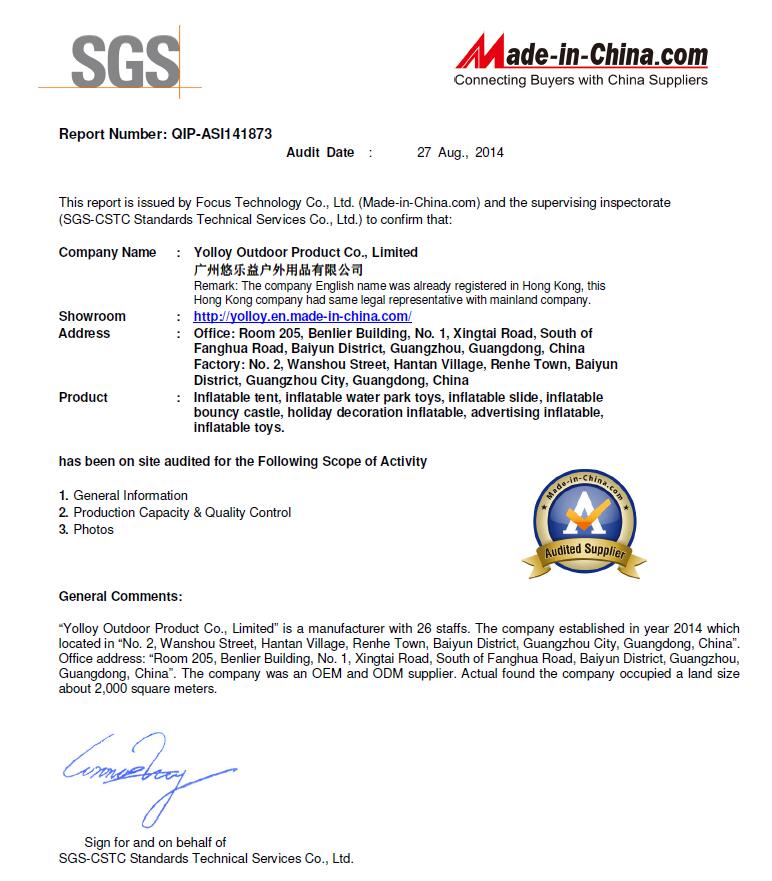
Certification

News

• New Order Successfully Finished for Long-Time Cooperated Japanese Client | YOLLOY Wins Full Client Recognition

• YOLLOY Custom Inflatable Pool Tent for Danish Client: Professional Pool Repair Shelter & Debris Protection

• Trusted Once Again! Greek Captain Re-orders Our Products After 4 Years

• Revolutionize Your Outdoors: The All-Terrain Inflatable Floating Tent for Land & Water

• Elevate Your Summer Fun: The Ultimate Inflatable Water Floating Volleyball Court Trampoline

• Innovative Inflatable Nightclub Tents & Pop-Up Bars: The Ultimate Solution for Portable Party Venues

Contact Us

Name: Sunny Yang
Tel: +86-20-8370 0771
Fax: +86-20-8370 0771
Mobile: 13570587575
E-mail: [email protected]
Add: No 5,Xiong wei Bo Nan Road,ZhongLuoTan Town,Baiyun district,Guangzhou,China
Friend me on Facebook Follow me on Twitter Add me to your circles Follow me on Pinterest Watch my channel on YouTube
News

How to choose inflatable rock climbing wall?

Author:yolloy Date:2026/8/14 16:20:07

An inflatable rock climbing wall is one of the most exciting attractions you can add to an amusement park, water park, resort, or private event. It combines the thrill of traditional rock climbing with the safety and portability of inflatable structures. But with so many options on the market, how do you choose the right one? This guide walks you through every key factor you need to evaluate before making a purchase.

1. Determine Your Purpose and Use Case

The first step is to clarify exactly how and where you plan to use the climbing wall. Different use cases demand different specifications.

  • Commercial amusement parks need high-capacity units that can handle hundreds of climbers daily. Durability and throughput are your top priorities.
  • Water parks and resorts require waterproof, UV-resistant materials and floating platform designs suitable for lake, pool, or oceanfront installation.
  • Yacht and superyacht owners need compact, easily deployable walls that attach securely to the vessel and stow away when not in use.
  • Event rental businesses prioritize portability, quick setup and takedown, and versatile sizing to fit different venues.
  • Private home use calls for smaller, family-friendly designs with lower heights and gentler climbing routes.

If you are sourcing from a professional inflatable water park manufacturer, clearly communicating your use case helps them recommend the right configuration from the start.

2. Size and Space Requirements

Measure your available space carefully before selecting a model. An inflatable climbing wall needs room not only for the structure itself but also for a safety buffer zone around all sides. As a general rule, allow at least 2 meters of clear space beyond the footprint of the wall.

Consider the height: taller walls (4-6 meters) offer more challenge and visual impact, but they require stronger anchoring and more overhead clearance. The width determines how many climbers can use the wall simultaneously — a well-designed commercial wall typically accommodates 4 to 6 climbers at once, reducing wait times and keeping guests engaged.

If you have space constraints, many inflatable water park manufacturers offer custom sizing to match your exact dimensions. Custom dimensions ensure you get maximum fun without compromising safety.

3. Material Quality and Construction

The material is the foundation of both safety and longevity. Here is what to look for:

Material FeatureWhat to Look ForWhy It Matters
PVC Tarpaulin Thickness0.9mm to 1.2mm for commercial useThicker material resists punctures, abrasions, and tearing under heavy use
Seam ConstructionDouble-stitched with heat-welded overlaysHigh-frequency welding creates an impermeable, airtight bond that prevents leaks
UV ProtectionAnti-UV coating on all exterior surfacesPrevents fading, brittleness, and material degradation from sun exposure
Drop-Stitch TechnologyHigh-strength polyester thread coreCreates a rigid, board-like platform surface for stable footing on floating units
ReinforcementExtra layers at high-stress zonesProtects the base, handhold attachments, and anchor points from premature wear

YOLLOY uses commercial-grade PVC tarpaulin with EN71 and EN14960 certified materials. All products undergo 100% leak detection testing before shipment, ensuring that every seam and weld point meets professional standards.

4. Safety Certifications and Features

Safety is non-negotiable. Before purchasing, verify that the climbing wall carries recognized safety certifications:

  • EN71 — The European safety standard for toys, covering material toxicity, flammability, and structural integrity. Certified materials are free of harmful substances like phthalates and heavy metals.
  • EN14960 — Specifically covers inflatable play equipment, including anchoring, stability, and maximum user capacity requirements.
  • CE Marking — Indicates compliance with EU health, safety, and environmental protection standards.
  • ASTM F2374 — The American standard for inflatable amusement devices, covering design, manufacture, and operational safety.

Beyond certifications, inspect the built-in safety features: non-slip climbing grips, reinforced D-ring anchor points, sturdy safety handles, padded landing zones, and emergency deflation valves. A well-designed inflatable obstacle course or climbing wall should have all these features integrated into the design, not added as afterthoughts.

5. Climbing Surface and Difficulty Levels

A single-level wall limits your audience. The best inflatable climbing walls offer multiple difficulty zones on different faces of the structure, turning one attraction into three or four distinct experiences:

  • Beginner Zone (Green Route): A gentle slope with oversized, brightly colored grips placed close together. Ergonomic footholds help young children build confidence with every climb.
  • Intermediate Zone (Blue Route): A steeper, often vertical face with moderately spaced holds. Climbers need to plan their route, shift body weight, and use basic technique.
  • Expert Zone (Black Diamond): A near-vertical or slightly overhanging wall with sparse, challenging grip placement. Designed for fit adults and experienced climbers seeking a real challenge.

Multi-level designs keep the attraction engaging for all ages — from toddlers to teenagers to adults — maximizing the entertainment value and return on your investment.

6. Anchoring and Stability

Proper anchoring is essential for safety. The wall should include heavy-duty D-ring or round metal anchor points spaced evenly around the base — typically every 1.5 to 2 meters. For ground installations, use steel ground stakes or weighted sandbags. For water-based setups, you need mooring lines, weighted anchors, and buoyancy calculations to keep the entire structure stable under dynamic loads.

The anchoring system must handle not only the static weight of the inflated structure but also the dynamic forces of multiple climbers moving simultaneously, plus wind loads for outdoor installations. A reputable manufacturer will provide detailed anchoring instructions and include all necessary hardware with the purchase.

7. Blower and Inflation System

The blower is the heart of your inflatable climbing wall — it runs continuously to maintain constant internal pressure while the wall is in use. Key considerations include:

  • CFM Rating: Match the blower's cubic-feet-per-minute output to the structure's volume. Larger walls need higher CFM ratings to maintain proper inflation.
  • Motor Power: Commercial units typically require 1.0 to 1.5 HP blowers. Underpowered blowers lead to soft walls, which compromise safety and climbing performance.
  • Voltage Compatibility: Confirm power requirements (110V, 220V, or 380V) match your local electrical supply. YOLLOY can supply blowers configured for any voltage standard.
  • Noise Level: For resorts, hotels, and residential settings, consider quieter blower models to maintain a pleasant atmosphere.
  • Backup Blower: For commercial operations, keeping a spare blower on hand prevents downtime if the primary unit fails.

8. Customization Options

Off-the-shelf products rarely match your exact needs. Working with a manufacturer that offers OEM/ODM services gives you the flexibility to create a climbing wall that aligns with your brand and space. Common customization options include:

  • Custom color schemes and graphics to match your brand identity
  • Logo printing on the climbing surface and side panels
  • Custom dimensions to fit your specific venue or yacht freeboard height
  • Themed designs — jungle, mountain, castle, space, pirate ship, and more
  • Integrated water slides, splash pools, or bounce areas
  • Custom difficulty route configurations

YOLLOY's design team uses 3D modeling software to create digital prototypes before production begins. You can review the layout, color scheme, and logo placement and request revisions before any fabric is cut.

9. Maintenance and Warranty

Even the best-built inflatable requires proper care. Here is what to expect from a quality product:

  • Repair Kit: A comprehensive repair kit should be included, containing matching PVC material, commercial-grade adhesive, and detailed instructions.
  • Cleaning: The PVC surface should be treated to resist mildew and mold. A simple rinse with fresh water after saltwater or chlorine exposure is usually sufficient.
  • Storage: Always dry the product completely before rolling it up for long-term storage to prevent musty odors and material degradation.
  • Warranty: A 2-3 year warranty is standard for commercial-grade inflatables. YOLLOY offers a 3-year warranty on its products when used and maintained correctly.
  • After-Sales Support: Responsive support matters. YOLLOY responds to inquiries within 24 hours and maintains a 95% on-time delivery rate.

10. Budget and Total Cost of Ownership

While the upfront price tag is important, the cheapest option often costs more over time. Evaluate the total cost of ownership:

Cost FactorConsiderations
Purchase PriceFactory-direct pricing from manufacturers typically offers better value than buying through distributors
ShippingAir freight (5-7 days) vs. sea freight (15-30+ days); factor in port fees and local delivery
Blower & AccessoriesConfirm whether the blower, anchor stakes, and repair kit are included in the quoted price
LifespanA well-built commercial wall can last 3+ years of heavy use; cheaper units may need replacement within a single season
MaintenanceQuality materials and heat-welded seams reduce ongoing repair costs
WarrantyA longer warranty period reflects the manufacturer's confidence in their product

Conclusion

Choosing the right inflatable rock climbing wall comes down to understanding your specific needs — commercial vs. residential, water-based vs. dry land, high-capacity vs. small group. Prioritize material quality, safety certifications, climbing surface design, and the manufacturer's reputation over the lowest price.

YOLLOY Outdoor Product Co., Limited, based in Guangzhou, China, has over a decade of experience designing and manufacturing inflatable products for clients in over 100 countries across Europe, Asia, South America, the Middle East, and beyond. Their inflatable rock climbing walls feature commercial-grade PVC tarpaulin, EN71-certified materials, reinforced heat-welded seams, and fully customizable designs. The minimum order quantity is one piece, and every product is supplied with an appropriately powered blower and a comprehensive repair kit.

Whether you need a floating climbing wall for a luxury yacht, a high-capacity unit for a busy amusement park, or a themed attraction for a beach resort, working with an experienced manufacturer ensures you receive a product that is safe, durable, and perfectly tailored to your requirements. Contact YOLLOY today to discuss your project and receive a custom quotation.

How to choose inflatable rock climbing wall?

Author:yolloy Date:2026/8/14 16:20:07

An inflatable rock climbing wall is one of the most exciting attractions you can add to an amusement park, water park, resort, or private event. It combines the thrill of traditional rock climbing with the safety and portability of inflatable structures. But with so many options on the market, how do you choose the right one? This guide walks you through every key factor you need to evaluate before making a purchase.

1. Determine Your Purpose and Use Case

The first step is to clarify exactly how and where you plan to use the climbing wall. Different use cases demand different specifications.

  • Commercial amusement parks need high-capacity units that can handle hundreds of climbers daily. Durability and throughput are your top priorities.
  • Water parks and resorts require waterproof, UV-resistant materials and floating platform designs suitable for lake, pool, or oceanfront installation.
  • Yacht and superyacht owners need compact, easily deployable walls that attach securely to the vessel and stow away when not in use.
  • Event rental businesses prioritize portability, quick setup and takedown, and versatile sizing to fit different venues.
  • Private home use calls for smaller, family-friendly designs with lower heights and gentler climbing routes.

If you are sourcing from a professional inflatable water park manufacturer, clearly communicating your use case helps them recommend the right configuration from the start.

2. Size and Space Requirements

Measure your available space carefully before selecting a model. An inflatable climbing wall needs room not only for the structure itself but also for a safety buffer zone around all sides. As a general rule, allow at least 2 meters of clear space beyond the footprint of the wall.

Consider the height: taller walls (4-6 meters) offer more challenge and visual impact, but they require stronger anchoring and more overhead clearance. The width determines how many climbers can use the wall simultaneously — a well-designed commercial wall typically accommodates 4 to 6 climbers at once, reducing wait times and keeping guests engaged.

If you have space constraints, many inflatable water park manufacturers offer custom sizing to match your exact dimensions. Custom dimensions ensure you get maximum fun without compromising safety.

3. Material Quality and Construction

The material is the foundation of both safety and longevity. Here is what to look for:

Material FeatureWhat to Look ForWhy It Matters
PVC Tarpaulin Thickness0.9mm to 1.2mm for commercial useThicker material resists punctures, abrasions, and tearing under heavy use
Seam ConstructionDouble-stitched with heat-welded overlaysHigh-frequency welding creates an impermeable, airtight bond that prevents leaks
UV ProtectionAnti-UV coating on all exterior surfacesPrevents fading, brittleness, and material degradation from sun exposure
Drop-Stitch TechnologyHigh-strength polyester thread coreCreates a rigid, board-like platform surface for stable footing on floating units
ReinforcementExtra layers at high-stress zonesProtects the base, handhold attachments, and anchor points from premature wear

YOLLOY uses commercial-grade PVC tarpaulin with EN71 and EN14960 certified materials. All products undergo 100% leak detection testing before shipment, ensuring that every seam and weld point meets professional standards.

4. Safety Certifications and Features

Safety is non-negotiable. Before purchasing, verify that the climbing wall carries recognized safety certifications:

  • EN71 — The European safety standard for toys, covering material toxicity, flammability, and structural integrity. Certified materials are free of harmful substances like phthalates and heavy metals.
  • EN14960 — Specifically covers inflatable play equipment, including anchoring, stability, and maximum user capacity requirements.
  • CE Marking — Indicates compliance with EU health, safety, and environmental protection standards.
  • ASTM F2374 — The American standard for inflatable amusement devices, covering design, manufacture, and operational safety.

Beyond certifications, inspect the built-in safety features: non-slip climbing grips, reinforced D-ring anchor points, sturdy safety handles, padded landing zones, and emergency deflation valves. A well-designed inflatable obstacle course or climbing wall should have all these features integrated into the design, not added as afterthoughts.

5. Climbing Surface and Difficulty Levels

A single-level wall limits your audience. The best inflatable climbing walls offer multiple difficulty zones on different faces of the structure, turning one attraction into three or four distinct experiences:

  • Beginner Zone (Green Route): A gentle slope with oversized, brightly colored grips placed close together. Ergonomic footholds help young children build confidence with every climb.
  • Intermediate Zone (Blue Route): A steeper, often vertical face with moderately spaced holds. Climbers need to plan their route, shift body weight, and use basic technique.
  • Expert Zone (Black Diamond): A near-vertical or slightly overhanging wall with sparse, challenging grip placement. Designed for fit adults and experienced climbers seeking a real challenge.

Multi-level designs keep the attraction engaging for all ages — from toddlers to teenagers to adults — maximizing the entertainment value and return on your investment.

6. Anchoring and Stability

Proper anchoring is essential for safety. The wall should include heavy-duty D-ring or round metal anchor points spaced evenly around the base — typically every 1.5 to 2 meters. For ground installations, use steel ground stakes or weighted sandbags. For water-based setups, you need mooring lines, weighted anchors, and buoyancy calculations to keep the entire structure stable under dynamic loads.

The anchoring system must handle not only the static weight of the inflated structure but also the dynamic forces of multiple climbers moving simultaneously, plus wind loads for outdoor installations. A reputable manufacturer will provide detailed anchoring instructions and include all necessary hardware with the purchase.

7. Blower and Inflation System

The blower is the heart of your inflatable climbing wall — it runs continuously to maintain constant internal pressure while the wall is in use. Key considerations include:

  • CFM Rating: Match the blower's cubic-feet-per-minute output to the structure's volume. Larger walls need higher CFM ratings to maintain proper inflation.
  • Motor Power: Commercial units typically require 1.0 to 1.5 HP blowers. Underpowered blowers lead to soft walls, which compromise safety and climbing performance.
  • Voltage Compatibility: Confirm power requirements (110V, 220V, or 380V) match your local electrical supply. YOLLOY can supply blowers configured for any voltage standard.
  • Noise Level: For resorts, hotels, and residential settings, consider quieter blower models to maintain a pleasant atmosphere.
  • Backup Blower: For commercial operations, keeping a spare blower on hand prevents downtime if the primary unit fails.

8. Customization Options

Off-the-shelf products rarely match your exact needs. Working with a manufacturer that offers OEM/ODM services gives you the flexibility to create a climbing wall that aligns with your brand and space. Common customization options include:

  • Custom color schemes and graphics to match your brand identity
  • Logo printing on the climbing surface and side panels
  • Custom dimensions to fit your specific venue or yacht freeboard height
  • Themed designs — jungle, mountain, castle, space, pirate ship, and more
  • Integrated water slides, splash pools, or bounce areas
  • Custom difficulty route configurations

YOLLOY's design team uses 3D modeling software to create digital prototypes before production begins. You can review the layout, color scheme, and logo placement and request revisions before any fabric is cut.

9. Maintenance and Warranty

Even the best-built inflatable requires proper care. Here is what to expect from a quality product:

  • Repair Kit: A comprehensive repair kit should be included, containing matching PVC material, commercial-grade adhesive, and detailed instructions.
  • Cleaning: The PVC surface should be treated to resist mildew and mold. A simple rinse with fresh water after saltwater or chlorine exposure is usually sufficient.
  • Storage: Always dry the product completely before rolling it up for long-term storage to prevent musty odors and material degradation.
  • Warranty: A 2-3 year warranty is standard for commercial-grade inflatables. YOLLOY offers a 3-year warranty on its products when used and maintained correctly.
  • After-Sales Support: Responsive support matters. YOLLOY responds to inquiries within 24 hours and maintains a 95% on-time delivery rate.

10. Budget and Total Cost of Ownership

While the upfront price tag is important, the cheapest option often costs more over time. Evaluate the total cost of ownership:

Cost FactorConsiderations
Purchase PriceFactory-direct pricing from manufacturers typically offers better value than buying through distributors
ShippingAir freight (5-7 days) vs. sea freight (15-30+ days); factor in port fees and local delivery
Blower & AccessoriesConfirm whether the blower, anchor stakes, and repair kit are included in the quoted price
LifespanA well-built commercial wall can last 3+ years of heavy use; cheaper units may need replacement within a single season
MaintenanceQuality materials and heat-welded seams reduce ongoing repair costs
WarrantyA longer warranty period reflects the manufacturer's confidence in their product

Conclusion

Choosing the right inflatable rock climbing wall comes down to understanding your specific needs — commercial vs. residential, water-based vs. dry land, high-capacity vs. small group. Prioritize material quality, safety certifications, climbing surface design, and the manufacturer's reputation over the lowest price.

YOLLOY Outdoor Product Co., Limited, based in Guangzhou, China, has over a decade of experience designing and manufacturing inflatable products for clients in over 100 countries across Europe, Asia, South America, the Middle East, and beyond. Their inflatable rock climbing walls feature commercial-grade PVC tarpaulin, EN71-certified materials, reinforced heat-welded seams, and fully customizable designs. The minimum order quantity is one piece, and every product is supplied with an appropriately powered blower and a comprehensive repair kit.

Whether you need a floating climbing wall for a luxury yacht, a high-capacity unit for a busy amusement park, or a themed attraction for a beach resort, working with an experienced manufacturer ensures you receive a product that is safe, durable, and perfectly tailored to your requirements. Contact YOLLOY today to discuss your project and receive a custom quotation.