Products Category
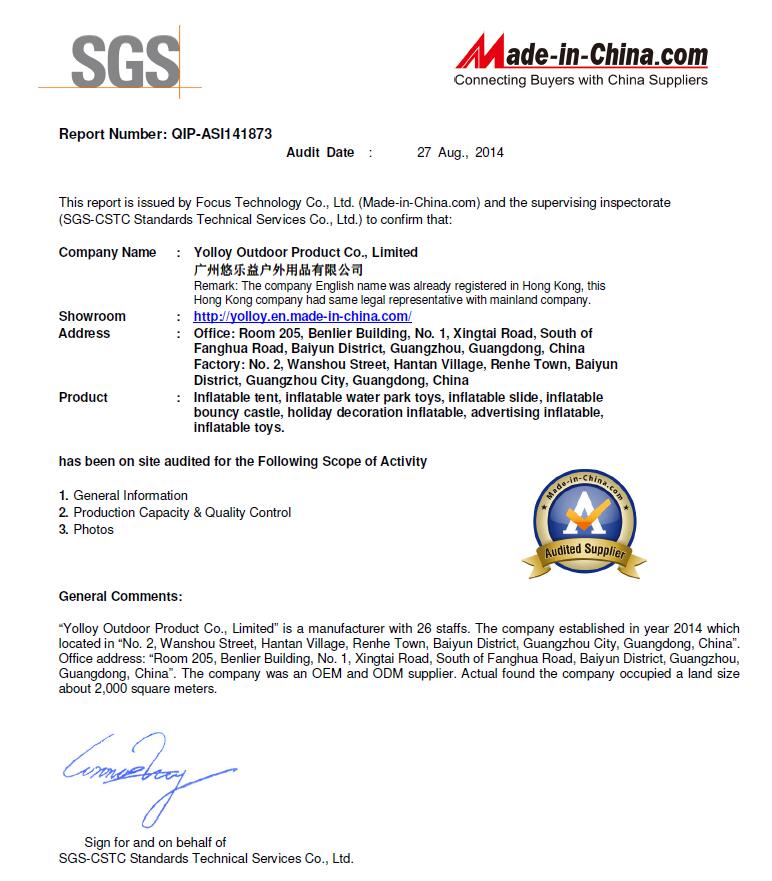
Certification

News

• New Order Successfully Finished for Long-Time Cooperated Japanese Client | YOLLOY Wins Full Client Recognition

• YOLLOY Custom Inflatable Pool Tent for Danish Client: Professional Pool Repair Shelter & Debris Protection

• Trusted Once Again! Greek Captain Re-orders Our Products After 4 Years

• Revolutionize Your Outdoors: The All-Terrain Inflatable Floating Tent for Land & Water

• Elevate Your Summer Fun: The Ultimate Inflatable Water Floating Volleyball Court Trampoline

• Innovative Inflatable Nightclub Tents & Pop-Up Bars: The Ultimate Solution for Portable Party Venues

Contact Us

Name: Sunny Yang
Tel: +86-20-8370 0771
Fax: +86-20-8370 0771
Mobile: 13570587575
E-mail: [email protected]
Add: No 5,Xiong wei Bo Nan Road,ZhongLuoTan Town,Baiyun district,Guangzhou,China
Friend me on Facebook Follow me on Twitter Add me to your circles Follow me on Pinterest Watch my channel on YouTube
News

How does an inflatable event tent differ from a traditional tent?

Author:yolloy Date:2026/8/18 4:54:06

When you are planning an outdoor event, the tent is usually the biggest decision you will make. For years, the default choice was a traditional pole tent with aluminum or steel frames and canvas or polyester covers. But inflatable event tents have become a serious alternative, and more event organizers are asking how they really compare.

The short answer is that an inflatable event tent replaces rigid poles with pressurized air beams. That single change affects everything about the tent: how fast it goes up, how it handles wind, how it packs away, and how much it costs to run. This guide walks through the practical differences so you can decide which one makes sense for your next event.

The core difference: air beams instead of poles

A traditional tent gets its shape from a rigid frame. The poles are assembled piece by piece, and then the fabric is draped over the frame and tensioned into place. An inflatable event tent works differently. It uses airtight fabric tubes, called air beams, that are filled with air from a blower. Once pressurized, those beams hold the tent's shape on their own, with no poles at all.

Because there are no poles to assemble, an inflatable tent goes from a flat bundle to a standing structure in minutes. And because the frame is soft rather than rigid, there is less risk of damage during transport, setup, or high winds.

Setup time and labor

This is where the difference is most obvious on the day of the event. A traditional event tent can take 30 to 60 minutes and several people to assemble. An inflatable event tent typically inflates in 5 to 10 minutes with one or two people and a blower.

That speed matters twice: at setup and at teardown. Faster setup means lower labor cost, more flexibility in scheduling, and less time your crew spends on the same task. For a business that runs events every week, those minutes turn into real savings.

Portability and storage

Traditional tents come with long, rigid poles that are awkward to carry and store. Inflatable tents deflate into compact bundles that fit easily into a van or trailer, and they weigh less than a pole tent of the same size. If you move your own equipment between venues, the savings in space and weight add up quickly.

Durability and weather resistance

Quality matters more than the type of tent. A well-made inflatable event tent uses commercial-grade PVC tarpaulin with reinforced seams and welded joints, and it can stand up to years of regular use. The air-beam structure also spreads wind load across the whole frame instead of concentrating it at pole joints, which helps the tent stay stable in gusty conditions.

That said, inflatables have their own maintenance needs. A puncture can be patched with a repair kit, and the blower needs to keep running to maintain pressure. For most events this is a minor consideration, but it is worth planning for.

Customization and branding

This is where inflatable tents pull ahead for events. Because they are made from printed fabric, they can be produced in custom colors, shapes, and sizes, and your logo or artwork can be printed directly on the panels. A branded inflatable tent turns shelter into advertising, something a plain white pole tent cannot do.

Custom inflatable tents can be designed from a sketch, a drawing, a photograph, or even just a description and a budget. Manufacturers like YOLLOY, an inflatable tent manufacturer based in Guangzhou, China, produce custom sizes and colors with a minimum order of just one piece, and can supply blowers for 110V, 220V, or 380V power.

Cost and long-term value

Inflatable event tents often cost more upfront than a basic pole tent of the same size. But the total cost of ownership can be lower: less labor at every setup, cheaper transport, and fewer replacement parts. For a business that runs events regularly, the time savings alone can justify the higher price.

Which one should you choose?

Choose a traditional tent if you need a very large, permanent-style structure, you already own the poles and hardware, or your site has constraints that favor a rigid frame.

Choose an inflatable event tent if you value speed, portability, branding, and easy storage, especially for weddings, parties, corporate launches, festivals, and other events where setup time and visual impact matter.

Frequently asked questions

How long does it take to set up an inflatable event tent?
Most inflatable tents go up in 5 to 10 minutes with one or two people and a blower.

Are inflatable tents safe in wind?
A properly anchored inflatable with a suitable blower handles gusty conditions well, but every tent should be anchored and monitored in severe weather.

Can inflatable event tents be customized?
Yes. Custom sizes, colors, and printed logos are standard for most manufacturers, and YOLLOY can design a tent from a sketch, drawing, or photo with a minimum order of one piece.

How long do inflatable tents last?
With proper care and maintenance, a commercial-grade inflatable can serve for years. YOLLOY expects a three-year service life when its products are used and maintained correctly.

How are inflatable tents repaired?
Small punctures are patched with a repair kit, which is supplied with each inflatable product.

The bottom line

The difference between an inflatable event tent and a traditional tent comes down to one idea: replacing rigid poles with pressurized air. That change delivers faster setup, easier transport, better branding options, and a softer, more forgiving structure, at the cost of a higher upfront price and the need to keep the blower running. For most event organizers, the trade-off is worth it.

If you are planning an event and want a tent that is quick to deploy and easy to brand, talk to an inflatable tent manufacturer about custom options. YOLLOY designs and produces custom inflatable event tents, inflatable party tents, and dome tents in Guangzhou, China, with a minimum order of one piece and blowers for any voltage. Contact [email protected] for a quote.

How does an inflatable event tent differ from a traditional tent?

Author:yolloy Date:2026/8/18 4:54:06

When you are planning an outdoor event, the tent is usually the biggest decision you will make. For years, the default choice was a traditional pole tent with aluminum or steel frames and canvas or polyester covers. But inflatable event tents have become a serious alternative, and more event organizers are asking how they really compare.

The short answer is that an inflatable event tent replaces rigid poles with pressurized air beams. That single change affects everything about the tent: how fast it goes up, how it handles wind, how it packs away, and how much it costs to run. This guide walks through the practical differences so you can decide which one makes sense for your next event.

The core difference: air beams instead of poles

A traditional tent gets its shape from a rigid frame. The poles are assembled piece by piece, and then the fabric is draped over the frame and tensioned into place. An inflatable event tent works differently. It uses airtight fabric tubes, called air beams, that are filled with air from a blower. Once pressurized, those beams hold the tent's shape on their own, with no poles at all.

Because there are no poles to assemble, an inflatable tent goes from a flat bundle to a standing structure in minutes. And because the frame is soft rather than rigid, there is less risk of damage during transport, setup, or high winds.

Setup time and labor

This is where the difference is most obvious on the day of the event. A traditional event tent can take 30 to 60 minutes and several people to assemble. An inflatable event tent typically inflates in 5 to 10 minutes with one or two people and a blower.

That speed matters twice: at setup and at teardown. Faster setup means lower labor cost, more flexibility in scheduling, and less time your crew spends on the same task. For a business that runs events every week, those minutes turn into real savings.

Portability and storage

Traditional tents come with long, rigid poles that are awkward to carry and store. Inflatable tents deflate into compact bundles that fit easily into a van or trailer, and they weigh less than a pole tent of the same size. If you move your own equipment between venues, the savings in space and weight add up quickly.

Durability and weather resistance

Quality matters more than the type of tent. A well-made inflatable event tent uses commercial-grade PVC tarpaulin with reinforced seams and welded joints, and it can stand up to years of regular use. The air-beam structure also spreads wind load across the whole frame instead of concentrating it at pole joints, which helps the tent stay stable in gusty conditions.

That said, inflatables have their own maintenance needs. A puncture can be patched with a repair kit, and the blower needs to keep running to maintain pressure. For most events this is a minor consideration, but it is worth planning for.

Customization and branding

This is where inflatable tents pull ahead for events. Because they are made from printed fabric, they can be produced in custom colors, shapes, and sizes, and your logo or artwork can be printed directly on the panels. A branded inflatable tent turns shelter into advertising, something a plain white pole tent cannot do.

Custom inflatable tents can be designed from a sketch, a drawing, a photograph, or even just a description and a budget. Manufacturers like YOLLOY, an inflatable tent manufacturer based in Guangzhou, China, produce custom sizes and colors with a minimum order of just one piece, and can supply blowers for 110V, 220V, or 380V power.

Cost and long-term value

Inflatable event tents often cost more upfront than a basic pole tent of the same size. But the total cost of ownership can be lower: less labor at every setup, cheaper transport, and fewer replacement parts. For a business that runs events regularly, the time savings alone can justify the higher price.

Which one should you choose?

Choose a traditional tent if you need a very large, permanent-style structure, you already own the poles and hardware, or your site has constraints that favor a rigid frame.

Choose an inflatable event tent if you value speed, portability, branding, and easy storage, especially for weddings, parties, corporate launches, festivals, and other events where setup time and visual impact matter.

Frequently asked questions

How long does it take to set up an inflatable event tent?
Most inflatable tents go up in 5 to 10 minutes with one or two people and a blower.

Are inflatable tents safe in wind?
A properly anchored inflatable with a suitable blower handles gusty conditions well, but every tent should be anchored and monitored in severe weather.

Can inflatable event tents be customized?
Yes. Custom sizes, colors, and printed logos are standard for most manufacturers, and YOLLOY can design a tent from a sketch, drawing, or photo with a minimum order of one piece.

How long do inflatable tents last?
With proper care and maintenance, a commercial-grade inflatable can serve for years. YOLLOY expects a three-year service life when its products are used and maintained correctly.

How are inflatable tents repaired?
Small punctures are patched with a repair kit, which is supplied with each inflatable product.

The bottom line

The difference between an inflatable event tent and a traditional tent comes down to one idea: replacing rigid poles with pressurized air. That change delivers faster setup, easier transport, better branding options, and a softer, more forgiving structure, at the cost of a higher upfront price and the need to keep the blower running. For most event organizers, the trade-off is worth it.

If you are planning an event and want a tent that is quick to deploy and easy to brand, talk to an inflatable tent manufacturer about custom options. YOLLOY designs and produces custom inflatable event tents, inflatable party tents, and dome tents in Guangzhou, China, with a minimum order of one piece and blowers for any voltage. Contact [email protected] for a quote.