Products Category
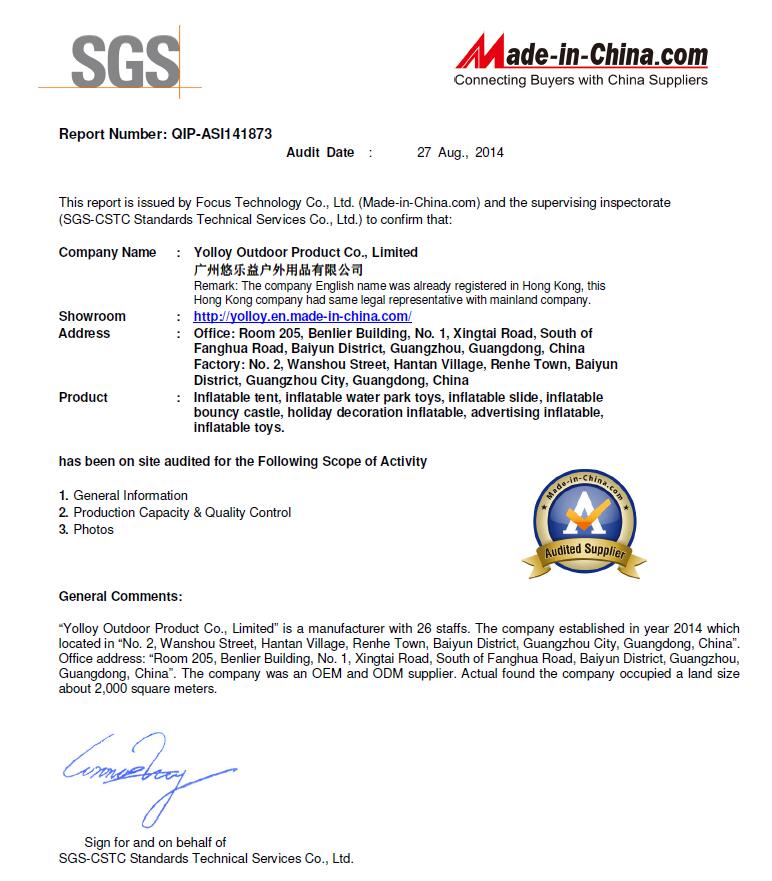
Certification

News

• New Order Successfully Finished for Long-Time Cooperated Japanese Client | YOLLOY Wins Full Client Recognition

• YOLLOY Custom Inflatable Pool Tent for Danish Client: Professional Pool Repair Shelter & Debris Protection

• Trusted Once Again! Greek Captain Re-orders Our Products After 4 Years

• Revolutionize Your Outdoors: The All-Terrain Inflatable Floating Tent for Land & Water

• Elevate Your Summer Fun: The Ultimate Inflatable Water Floating Volleyball Court Trampoline

• Innovative Inflatable Nightclub Tents & Pop-Up Bars: The Ultimate Solution for Portable Party Venues

Contact Us

Name: Sunny Yang
Tel: +86-20-8370 0771
Fax: +86-20-8370 0771
Mobile: 13570587575
E-mail: [email protected]
Add: No 5,Xiong wei Bo Nan Road,ZhongLuoTan Town,Baiyun district,Guangzhou,China
Friend me on Facebook Follow me on Twitter Add me to your circles Follow me on Pinterest Watch my channel on YouTube
News

How do you order china portable planetarium dome products?

Author:yolloy Date:2026/8/14 23:05:00

If you run a science center, museum, school, or event company, you have probably looked into buying a portable planetarium dome. China is one of the world's largest manufacturing hubs for inflatable structures, and ordering from a Chinese factory often means getting a custom-built product at a competitive price. But the process can feel unfamiliar if you have never done it before. This guide walks you through each step—from initial inquiry to final delivery—so you know exactly what to expect.

Step 1: Define Your Requirements Before Reaching Out

Before you contact any supplier, pin down the basics. A clear brief saves time on both sides and helps manufacturers give you an accurate quote right away.

  • Diameter and height. How many people will be inside at once? A 4-meter dome works for small groups of 10–15, while a 7-meter or larger dome can seat 40 or more. Common sizes range from 3 to 12 meters in diameter.
  • Indoor or outdoor use. Outdoor domes need stronger anchoring, weather-resistant seams, and UV-stable materials. Indoor domes can be lighter.
  • Projection setup. Will the projector sit inside the dome or outside through a port? Let the manufacturer know so they can add cable openings and ventilation where needed.
  • Portability needs. If you plan to move the dome between venues, ask about carry bags, compact folding, and setup time. A well-designed dome inflates in under 10 minutes with a standard electric blower.
  • Custom printing. Do you want your logo, a constellation pattern, or a themed exterior? Many china portable planetarium dome suppliers offer custom printing if you provide artwork files (AI or CDR format).
Step 2: Find and Evaluate Manufacturers

Not all inflatable manufacturers are the same. Some specialize in bounce houses and water slides; others have dedicated experience with projection domes. When you search for a portable planetarium dome supplier, look for these signals:

  • Relevant product range. A manufacturer whose catalog includes projection domes, planetarium tents, and educational inflatables is more likely to understand your needs than one that only makes advertising inflatables.
  • Material transparency. Ask what fabrics they use. Quality domes are often made from TPU (light-blocking, non-toxic, and flexible) or commercial-grade PVC tarpaulin. Suppliers should be able to tell you the material spec without hesitation.
  • Certifications. For educational and public-use settings, look for EN71, RoHS, or REACH compliance on materials. These confirm the fabric is free of harmful substances and safe for children.
  • Customization capability. If the supplier offers 3D mockups or simulation renderings before production, that is a good sign they take custom orders seriously rather than shipping off-the-shelf stock.
  • Communication responsiveness. Send an inquiry and note how quickly and clearly they reply. A supplier that responds within 24 hours with detailed answers is more likely to be reliable throughout the order process.
Step 3: Request and Compare Quotes

Once you have a shortlist of two or three manufacturers, send each one the same specification sheet. This makes it easy to compare their offers side by side.

A proper quote should include:

  • Unit price and currency (most Chinese suppliers quote in USD).
  • Minimum order quantity. Many manufacturers—including Yolloy—accept orders starting from just one piece, which is ideal if you are buying a single dome for a pilot program.
  • What is included in the package. Typically you should get the dome, an electric blower (CE or UL certified), a PVC floor mat, sandbags or ropes for anchoring, and a repair kit.
  • Production time. For a standard custom dome, expect 7 to 15 working days after design approval. Larger or more complex builds may take longer.
  • Shipping options and estimated transit times. Air freight takes roughly 5–7 days; sea freight takes 15–30 days or more depending on the destination port.

Do not automatically pick the lowest price. Compare what each quote includes. A slightly higher price that covers a blower, repair kit, and floor mat is often better value than a bare-bones offer that requires you to source accessories separately.

Step 4: Review the Design and Approve the Mockup

After you place a deposit (typically 30% to 50% of the total), the manufacturer will prepare a detailed design for your approval. This is where working with a capable inflatable planetarium dome tent supplier really pays off.

During this stage you should:

  • Review the 3D rendering or CAD drawing carefully. Check that dimensions, entrance positions, cable ports, and logo placements match what you discussed.
  • Confirm the color scheme. Dome interiors are usually dark gray or black to minimize light reflection. Exteriors can be blue, white, or custom-printed.
  • Ask about ventilation. If you expect audiences to stay inside for 30 minutes or longer, built-in air vents or mesh windows keep the space comfortable.
  • Request a material sample if you are unsure about the fabric. Seeing and touching a swatch can help you judge light-blocking quality and overall feel.

Do not rush this step. Changes made after production starts are harder and more expensive than adjustments made during the design review.

Step 5: Production, Quality Checks, and Balance Payment

Once you approve the final design, the factory moves into production. A reliable manufacturer will keep you updated throughout this phase.

  • Progress updates. Some suppliers assign a dedicated project manager who sends photos or short videos as the dome takes shape.
  • Pre-shipment inspection. Before packing, the dome should be inflated and tested for airtightness, seam strength, and projection surface quality. Ask for photos or a video of the inflated dome so you can confirm the finished product matches the approved design.
  • Balance payment. The remaining 50%–70% is typically due after you confirm the inspection photos and before the goods are shipped.

Also ask what packaging method is used. Domes should be folded with soft carpet protection, wrapped in waterproof PVC bags, and sealed with outer PE film. For large or heavy orders, steel pallets offer extra protection during transit.

Step 6: Shipping, Customs, and Receiving Your Dome

Shipping is often the part first-time buyers worry about, but it is straightforward once you understand the options.

  • Air freight. Fast (5–7 days) and suitable for a single dome or small order. The cost is higher, but you avoid long port delays.
  • Sea freight. More economical for larger orders. Transit time ranges from 15 to 30 days or more. Your supplier can recommend a freight forwarder or work with one you provide.
  • Customs clearance. Ask the manufacturer for a packing list, commercial invoice, and any required certificates (EN71, RoHS, CE for the blower). Having these documents ready speeds up clearance at your local customs office.

When the dome arrives, open the package promptly and inspect everything. Inflate the dome if possible. Check for any shipping damage and test the blower. If anything is missing or wrong, contact the supplier immediately—reputable manufacturers include a warranty and will work with you to resolve issues.

Practical Tips for First-Time Buyers

Start with a single dome if you are testing the market. Many Chinese manufacturers accept one-piece orders, so you can evaluate quality before committing to a larger purchase. Also, ask about the repair kit that should come with your dome—it usually includes fabric patches, adhesive, and a spare valve cap. Basic maintenance like patching a small puncture takes minutes and extends the dome's service life significantly.

Ready to Get Started?

Ordering a portable planetarium dome from China is not complicated. It comes down to three things: knowing your requirements before you start, choosing a manufacturer that communicates clearly and shows real expertise, and staying involved during the design review stage. With those basics in place, you can have a custom-built dome delivered to your door—ready to bring the universe to your audience.


How do you order china portable planetarium dome products?

Author:yolloy Date:2026/8/14 23:05:00

If you run a science center, museum, school, or event company, you have probably looked into buying a portable planetarium dome. China is one of the world's largest manufacturing hubs for inflatable structures, and ordering from a Chinese factory often means getting a custom-built product at a competitive price. But the process can feel unfamiliar if you have never done it before. This guide walks you through each step—from initial inquiry to final delivery—so you know exactly what to expect.

Step 1: Define Your Requirements Before Reaching Out

Before you contact any supplier, pin down the basics. A clear brief saves time on both sides and helps manufacturers give you an accurate quote right away.

  • Diameter and height. How many people will be inside at once? A 4-meter dome works for small groups of 10–15, while a 7-meter or larger dome can seat 40 or more. Common sizes range from 3 to 12 meters in diameter.
  • Indoor or outdoor use. Outdoor domes need stronger anchoring, weather-resistant seams, and UV-stable materials. Indoor domes can be lighter.
  • Projection setup. Will the projector sit inside the dome or outside through a port? Let the manufacturer know so they can add cable openings and ventilation where needed.
  • Portability needs. If you plan to move the dome between venues, ask about carry bags, compact folding, and setup time. A well-designed dome inflates in under 10 minutes with a standard electric blower.
  • Custom printing. Do you want your logo, a constellation pattern, or a themed exterior? Many china portable planetarium dome suppliers offer custom printing if you provide artwork files (AI or CDR format).
Step 2: Find and Evaluate Manufacturers

Not all inflatable manufacturers are the same. Some specialize in bounce houses and water slides; others have dedicated experience with projection domes. When you search for a portable planetarium dome supplier, look for these signals:

  • Relevant product range. A manufacturer whose catalog includes projection domes, planetarium tents, and educational inflatables is more likely to understand your needs than one that only makes advertising inflatables.
  • Material transparency. Ask what fabrics they use. Quality domes are often made from TPU (light-blocking, non-toxic, and flexible) or commercial-grade PVC tarpaulin. Suppliers should be able to tell you the material spec without hesitation.
  • Certifications. For educational and public-use settings, look for EN71, RoHS, or REACH compliance on materials. These confirm the fabric is free of harmful substances and safe for children.
  • Customization capability. If the supplier offers 3D mockups or simulation renderings before production, that is a good sign they take custom orders seriously rather than shipping off-the-shelf stock.
  • Communication responsiveness. Send an inquiry and note how quickly and clearly they reply. A supplier that responds within 24 hours with detailed answers is more likely to be reliable throughout the order process.
Step 3: Request and Compare Quotes

Once you have a shortlist of two or three manufacturers, send each one the same specification sheet. This makes it easy to compare their offers side by side.

A proper quote should include:

  • Unit price and currency (most Chinese suppliers quote in USD).
  • Minimum order quantity. Many manufacturers—including Yolloy—accept orders starting from just one piece, which is ideal if you are buying a single dome for a pilot program.
  • What is included in the package. Typically you should get the dome, an electric blower (CE or UL certified), a PVC floor mat, sandbags or ropes for anchoring, and a repair kit.
  • Production time. For a standard custom dome, expect 7 to 15 working days after design approval. Larger or more complex builds may take longer.
  • Shipping options and estimated transit times. Air freight takes roughly 5–7 days; sea freight takes 15–30 days or more depending on the destination port.

Do not automatically pick the lowest price. Compare what each quote includes. A slightly higher price that covers a blower, repair kit, and floor mat is often better value than a bare-bones offer that requires you to source accessories separately.

Step 4: Review the Design and Approve the Mockup

After you place a deposit (typically 30% to 50% of the total), the manufacturer will prepare a detailed design for your approval. This is where working with a capable inflatable planetarium dome tent supplier really pays off.

During this stage you should:

  • Review the 3D rendering or CAD drawing carefully. Check that dimensions, entrance positions, cable ports, and logo placements match what you discussed.
  • Confirm the color scheme. Dome interiors are usually dark gray or black to minimize light reflection. Exteriors can be blue, white, or custom-printed.
  • Ask about ventilation. If you expect audiences to stay inside for 30 minutes or longer, built-in air vents or mesh windows keep the space comfortable.
  • Request a material sample if you are unsure about the fabric. Seeing and touching a swatch can help you judge light-blocking quality and overall feel.

Do not rush this step. Changes made after production starts are harder and more expensive than adjustments made during the design review.

Step 5: Production, Quality Checks, and Balance Payment

Once you approve the final design, the factory moves into production. A reliable manufacturer will keep you updated throughout this phase.

  • Progress updates. Some suppliers assign a dedicated project manager who sends photos or short videos as the dome takes shape.
  • Pre-shipment inspection. Before packing, the dome should be inflated and tested for airtightness, seam strength, and projection surface quality. Ask for photos or a video of the inflated dome so you can confirm the finished product matches the approved design.
  • Balance payment. The remaining 50%–70% is typically due after you confirm the inspection photos and before the goods are shipped.

Also ask what packaging method is used. Domes should be folded with soft carpet protection, wrapped in waterproof PVC bags, and sealed with outer PE film. For large or heavy orders, steel pallets offer extra protection during transit.

Step 6: Shipping, Customs, and Receiving Your Dome

Shipping is often the part first-time buyers worry about, but it is straightforward once you understand the options.

  • Air freight. Fast (5–7 days) and suitable for a single dome or small order. The cost is higher, but you avoid long port delays.
  • Sea freight. More economical for larger orders. Transit time ranges from 15 to 30 days or more. Your supplier can recommend a freight forwarder or work with one you provide.
  • Customs clearance. Ask the manufacturer for a packing list, commercial invoice, and any required certificates (EN71, RoHS, CE for the blower). Having these documents ready speeds up clearance at your local customs office.

When the dome arrives, open the package promptly and inspect everything. Inflate the dome if possible. Check for any shipping damage and test the blower. If anything is missing or wrong, contact the supplier immediately—reputable manufacturers include a warranty and will work with you to resolve issues.

Practical Tips for First-Time Buyers

Start with a single dome if you are testing the market. Many Chinese manufacturers accept one-piece orders, so you can evaluate quality before committing to a larger purchase. Also, ask about the repair kit that should come with your dome—it usually includes fabric patches, adhesive, and a spare valve cap. Basic maintenance like patching a small puncture takes minutes and extends the dome's service life significantly.

Ready to Get Started?

Ordering a portable planetarium dome from China is not complicated. It comes down to three things: knowing your requirements before you start, choosing a manufacturer that communicates clearly and shows real expertise, and staying involved during the design review stage. With those basics in place, you can have a custom-built dome delivered to your door—ready to bring the universe to your audience.