Every parent wants their child to enjoy sports without the fear of injuries. Traditional soccer fields — with hard ground, metal goalposts, and unforgiving surfaces — can be intimidating for young players still learning coordination and balance. An inflatable soccer arena offers a softer, safer alternative. But is it really safe enough for children? Let's examine the facts.
What Makes an Inflatable Soccer Arena Different from a Traditional Field?
A traditional soccer field, whether grass or artificial turf, has rigid boundaries and hard surfaces. When a child falls on grass, they still hit compacted soil. When they collide with a metal goalpost, the result can be serious. An inflatable football arena replaces these hard elements with air-filled, cushioned surfaces and padded walls. The entire playing area — including the floor, side walls, and goal structures — is inflated, creating a bouncy environment that absorbs impacts rather than transferring them to the child's body.
This design fundamentally changes the risk profile of the game. Falls that would result in scraped knees or bruised elbows on a regular field often end with the child simply bouncing back up and continuing to play.
Key Safety Features to Look For
Not all inflatable arenas are built to the same standard. When evaluating whether an inflatable football pitch is safe for children, these features matter most:
Material Quality and Non-Toxic Certification
The material used in the arena directly affects both physical safety and health. High-quality inflatable arenas use commercial-grade PVC tarpaulin that is free from phthalates, lead, and other harmful chemicals. Look for EN71 certification — the European safety standard for children's toys and play equipment. EN71 testing covers material toxicity, flame resistance, physical strength, and small parts hazards. Products that pass EN71 have been independently verified as safe for children of all ages.
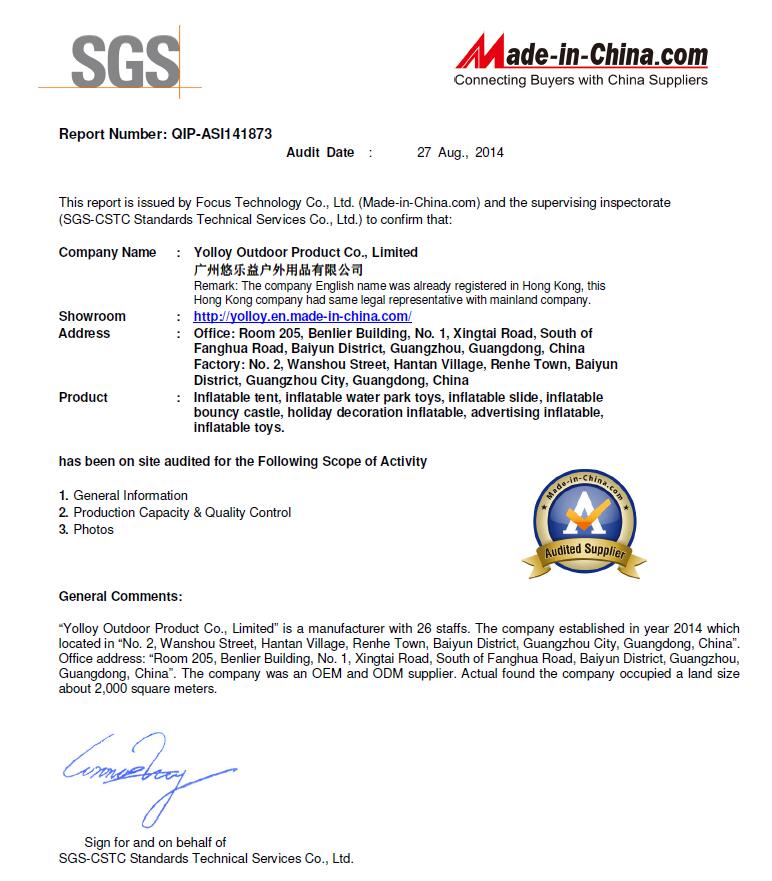
Yolloy's inflatable football arena uses thick, fireproof PVC tarpaulin that meets EN71 standards. The material is also water-resistant and UV-resistant, meaning it stays safe and intact even after extended outdoor use.
Structural Integrity: Seams, Blowers, and Deflation Prevention
A sudden deflation during play could cause children to fall or become entangled. That's why seam strength is critical. Quality arenas use double-stitched, heat-sealed seams tested to withstand far more pressure than normal play generates. The blower system should provide continuous airflow, keeping the arena fully inflated throughout use. Yolloy equips its arenas with CE or UL-compliant blowers, and each product is inspected and tested before shipment.
Soft Edges and Rounded Corners
Traditional goalposts have metal frames with sharp corners. An inflatable arena replaces these with air-filled goal structures that have no hard edges. The walls are rounded and padded, and inflation valves are recessed to prevent snagging on clothing or skin. Every surface a child can touch or fall against is designed to be forgiving.
Safety Comparison: Inflatable Arena vs. Traditional Field
| Safety Factor | Traditional Grass Field | Inflatable Soccer Arena |
|---|
| Fall impact | Hard ground, compacted soil | Cushioned air-filled surface |
| Goalpost collisions | Metal or rigid plastic frames | Inflatable padded goal structures |
| Boundary walls | None or hard fencing | Soft, bouncy side walls |
| Surface consistency | Uneven, holes, mud patches | Uniform, non-slip surface |
| Material safety | Pesticides, fertilizers on grass | EN71-certified non-toxic PVC |
| Weather risks | Muddy and slippery when wet | Water-resistant, quick-dry surface |
What Age Group Is an Inflatable Soccer Arena Suitable For?
Inflatable soccer arenas are designed with young children in mind, but they can accommodate a range of ages depending on the size and configuration. Smaller arenas with lower walls (around 1.2 meters high) work well for children aged 3 to 6, providing a contained space where toddlers can run, kick, and stumble safely. Larger models with higher walls suit children aged 7 to 12 and can even host small-sided games for teenagers.
The key is choosing the right size. A properly sized arena ensures that children have enough room to play without being crowded, and the wall height is appropriate for their age group so parents and supervisors can easily see inside.
Practical Tips for Safe Use
Even the safest equipment requires proper use. Here are practical steps to ensure children stay safe while playing in an inflatable arena:
- Adult supervision is essential. At least one adult should monitor play at all times, especially with younger children who may need help navigating the space.
- Limit the number of players. Overcrowding increases the risk of collisions. Follow the manufacturer's recommended capacity for the arena size.
- Encourage soft-soled shoes or bare feet. Cleats can damage the material and increase injury risk during falls. Soft-soled trainers or bare feet are ideal.
- Set up on level ground. Ensure the surface beneath the arena is free of sharp objects, rocks, and debris before inflation.
- Check the blower and seams before each use. A quick visual inspection takes seconds and catches potential issues early.
- Avoid use in strong winds. While the arena is anchored with D-ring or metal anchor systems, high winds can create instability.
Quick tip: Yolloy includes a repair kit with every inflatable product. Keep it handy — a small puncture is easy to fix on the spot and won't interrupt play for long.
Durability and Long-Term Safety
Safety isn't just about the first day of use — it's about how the product holds up over months and years. An inflatable arena that deteriorates quickly becomes a safety hazard. Yolloy's inflatable soccer arena is built with reinforced seams, waterproof nylon thread, and additional reinforcement at high-load areas. The PVC tarpaulin resists wear from repeated use, and products are tested before leaving the factory.
With proper care and maintenance, a well-made inflatable arena can serve families, schools, and community centers for years. The materials are chosen not just for initial safety certification but for their ability to maintain those safety properties through repeated inflation, deflation, outdoor exposure, and active play.
The Bottom Line
So, is an inflatable soccer arena safe for children? When built with certified materials, reinforced construction, and thoughtful safety design — yes. It offers a level of impact protection that traditional fields simply cannot match. The soft surfaces, padded walls, and non-toxic materials create an environment where children can run, fall, and get back up without the scrapes and bruises that often come with outdoor sports.
Key takeaway: An EN71-certified inflatable football arena from a reputable manufacturer like Yolloy provides a safer alternative to hard-surface play. It lets children develop soccer skills, build confidence, and enjoy physical activity — while giving parents peace of mind.
If you're considering an inflatable arena for your family, school, or community, focus on certification, material quality, and construction. A well-made inflatable football pitch is not just a play space — it's a safety investment that lets kids be kids, without the "what ifs" that keep parents up at night.