When you walk into a trade show or exhibition hall, the first thing that grabs your attention is rarely a small, flat screen mounted on a booth wall. It is the massive, curved display glowing with vivid content — a structure that seems to float above the crowd. That is the power of an inflatable projection screen. For exhibition organizers, event planners, and brand marketers, choosing the right projection screen can make the difference between a forgettable booth and a show-stopping experience. So what is the best projection screen inflatable for exhibitions? The answer depends on your specific needs — venue size, audience scale, content type, and portability requirements — but the right choice always comes down to a few key factors.
Why Inflatable Projection Screens Excel in Exhibitions
Exhibitions are high-stakes environments where brands compete for attention in crowded halls. Traditional rigid screens are limited by their weight, transport complexity, and flat rectangular form factor. An inflatable projection screen solves these problems by being lightweight, portable, and capable of unique shapes — from curved walls to full domes. They inflate in minutes with an electric blower, require no heavy rigging equipment, and pack down into compact carrying cases for easy transport between venues.
Beyond logistics, inflatable screens offer unmatched visual impact. A screen measuring 5 meters, 8 meters, or even larger commands attention from across the hall. The curved or dome-shaped surfaces create immersive viewing experiences that flat screens cannot replicate. When paired with a high-lumen projector, the projection quality is sharp, vibrant, and eye-catching — exactly what you need to stand out in a sea of competing booths.
Types of Inflatable Projection Screens for Exhibitions
Not all inflatable projection screens are the same. The best choice for your exhibition depends on the type of experience you want to create. Here are the main categories:
Flat Inflatable Projection Screens
These are the most straightforward option — a large, rectangular or square inflatable frame that holds a projection surface taut. They are ideal for front-and-center displays at trade show booths, product launches, and outdoor film screenings. Sizes typically range from 3 meters to over 12 meters wide, making them suitable for audiences of 100 to 500 people. Setup is fast, often taking under 30 minutes with a single operator.
Inflatable Dome Projection Screens
A dome-shaped inflatable screen wraps the projection around the audience, creating a 360-degree immersive environment. This is where the portable planetarium dome shines — it transforms a standard exhibition space into a fully immersive theater. Domes are perfect for planetarium shows, educational exhibitions, brand storytelling experiences, and virtual reality demonstrations. They range from 3 meters to 10 meters in diameter and can accommodate groups of 20 to 100 people at a time.
Clear Inflatable Dome Tents with Projection
For exhibitions that blend indoor and outdoor aesthetics, clear inflatable dome tents with built-in projection surfaces offer a unique visual experience. The transparent PVC material allows ambient light to filter through while still displaying crisp projections. This creates a dreamy, ethereal effect — imagine a glowing dome at an evening outdoor exhibition, visible from across the venue. These are particularly effective for luxury brand launches, wedding expos, and high-end product showcases.
Key Features to Evaluate When Choosing the Best Inflatable Projection Screen
To find the best inflatable projection screen for your exhibition, focus on these five measurable criteria:
1. Material Quality and Durability
Look for screens made from commercial-grade PVC tarpaulin or high-tensile Oxford fabric. These materials resist tearing, withstand repeated inflation cycles, and maintain a smooth projection surface without sagging. Quality materials also ensure the screen can handle outdoor conditions including light wind and temperature changes.
2. Screen Size and Audience Capacity
Match the screen size to your expected audience. A 5-meter-wide screen works well for 50–150 people at close range, while an 8–12 meter screen is better for 200–500 attendees. For dome screens, a 5-meter diameter comfortably seats 30–40 people, and a 10-meter dome accommodates 80–100.
3. Setup Speed and Portability
Exhibition schedules are tight. The best inflatable screens inflate in under 5 minutes and can be fully operational within 30 minutes. When deflated, they should pack into one or two carry bags that fit in a standard vehicle. Check the blower specifications — integrated blowers with auto-pressure adjustment are more convenient than external units.
4. Projection Surface Quality
The screen surface should be matte white or light gray with minimal texture. A gain rating around 1.0 to 1.1 provides the best balance of brightness and wide viewing angles. For dome projections, the interior surface must be uniformly coated to avoid hot spots or dark areas.
5. Stability and Anchoring
Even indoor exhibition halls can have drafts from HVAC systems. The screen should include reinforced anchor points, D-rings, and ground stakes or sandbag loops. For outdoor use, ensure the screen is rated for wind speeds typical of your venue location.
Inflatable vs. Traditional Screens: A Quick Comparison
| Feature |
Inflatable Projection Screen |
Traditional Rigid Screen |
LED Video Wall |
| Setup Time |
15–30 minutes |
2–4 hours |
4–8 hours |
| Portability |
Excellent — fits in carry bags |
Poor — requires truck transport |
Poor — heavy modular panels |
| Shape Flexibility |
High — flat, curved, dome |
Low — flat and rectangular only |
Medium — curved possible |
| Cost Efficiency |
High — affordable investment |
Medium |
Low — expensive hardware |
| Visual Impact |
High — immersive, unique shapes |
Medium — standard appearance |
High — bright, sharp |
| Best For |
Trade shows, festivals, pop-ups |
Fixed auditoriums |
Permanent installations |
How to Choose the Right Inflatable Projection Screen for Your Exhibition
Follow this practical decision checklist to narrow down your options:
Step 1: Define your exhibition format. Is it an indoor trade show booth, an outdoor festival, an educational pop-up, or a product launch event? Indoor venues with controlled lighting are more forgiving, while outdoor exhibitions require weather-resistant materials and sturdy anchoring.
Step 2: Determine your audience size. Estimate how many people will view the screen at once. For intimate brand experiences with 20–50 people, a dome screen works beautifully. For large-scale presentations to 200 or more attendees, a flat screen of 8 meters or wider is the better choice.
Step 3: Assess your content type. Are you showing standard video presentations, interactive 360-degree content, or live demonstrations? Dome screens are ideal for immersive content, while flat screens handle standard video formats with ease.
Step 4: Check venue constraints. Measure ceiling height, floor load capacity, and available power outlets. Most inflatable screens run on standard 110V or 220V power via the included blower. Confirm that your projector has sufficient lumens — 5,000 ANSI lumens or more is recommended for well-lit exhibition halls.
Step 5: Plan for transport and storage. If you exhibit at multiple events per year, invest in a screen that packs compactly and can be set up by one or two people. The time saved on logistics adds up quickly across a busy exhibition calendar.
Why YOLLOY Is a Trusted Choice for Exhibition Inflatable Projection Screens
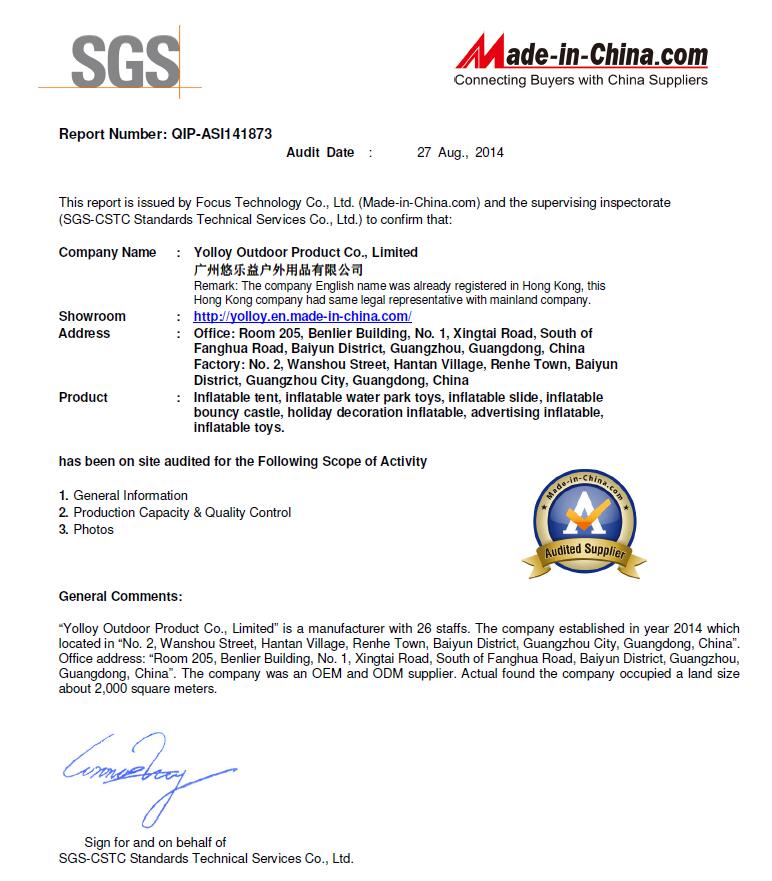
When sourcing an inflatable projection screen for your exhibition, working with an experienced manufacturer makes a substantial difference. YOLLOY Outdoor Product Co., Limited, based in Guangzhou, China, specializes in custom inflatable solutions for exhibitions, events, and commercial entertainment. With a product range that includes inflatable projection screens, portable planetarium domes, clear inflatable dome tents, and outdoor inflatable tents, YOLLOY offers a one-stop solution for exhibition display needs.
Every YOLLOY product is made from commercial-grade PVC tarpaulin with reinforced seams, precision sewing, and high-temperature fusion welding for airtight construction. The materials meet international safety standards, and each product is inspected and tested before shipment. YOLLOY also provides appropriately powered blowers compatible with 110V, 220V, or 380V requirements, ensuring your screen operates reliably at any venue worldwide.
Customization is a core strength. YOLLOY can design screens to your exact specifications — custom sizes, shapes, colors, and printed logos or artwork. Whether you need a single unit for a one-time event or a fleet of screens for a touring exhibition, the minimum order quantity is just one piece. Production typically takes 6–15 days, and both air and sea shipping options are available to destinations across Europe, Asia, the Americas, the Middle East, and beyond.
Practical Tips for Exhibition Success
Test before the event. Always inflate the screen and test the projection setup at least one day before the exhibition opens. Check for surface wrinkles, alignment issues, and blower performance.
Bring a backup blower. The blower is the only moving part. Having a spare on hand costs little and can save your exhibition if the primary unit fails.
Control ambient lighting. While inflatable screens perform well in moderately lit environments, reducing direct overhead lighting on the screen surface noticeably improves contrast and color vibrancy.
Clean and store properly. After each use, wipe the screen surface with a damp microfiber cloth, let it dry completely, and store it rolled (not folded) in a cool, dry place. Proper care extends the screen's service life to three years or more.
Conclusion
The best projection screen inflatable for exhibitions is the one that matches your specific event format, audience size, content type, and logistical requirements. For most exhibition scenarios — trade shows, product launches, outdoor festivals, and educational pop-ups — an inflatable projection screen offers the winning combination of visual impact, portability, quick setup, and cost efficiency that traditional rigid screens and LED walls cannot match.
If you need a flat screen for large-scale presentations, look for a durable PVC surface with a gain rating around 1.0 and a blower with auto-pressure adjustment. If you want to create an immersive, memorable experience, a portable planetarium dome or clear inflatable dome tent with projection capability is the way to go. For custom solutions tailored to your exact exhibition needs, contact YOLLOY to discuss your project and get a design started.
|